Raíces-Carlos Maldonado



Two tasting menus, Básico and Hechos de Barro, draw on La Mancha's larder through technically ambitious cooking, served on custom ceramics that reference the city's centuries-old pottery tradition. Open Thursday to Sunday for lunch and dinner; price range €€€.
Pearl is the En Primeur Club membership app — saves, bookings, and concierge access live there. Same editors, same standards.
- Address
- Rda. del Cañillo, 3, 45600 Talavera de la Reina, Toledo, Spain
- Phone
- +34 671 42 21 15
- Website
- raicescarlosmaldonado.es
- Directions
- Get directions
 Saves & bookings on Pearl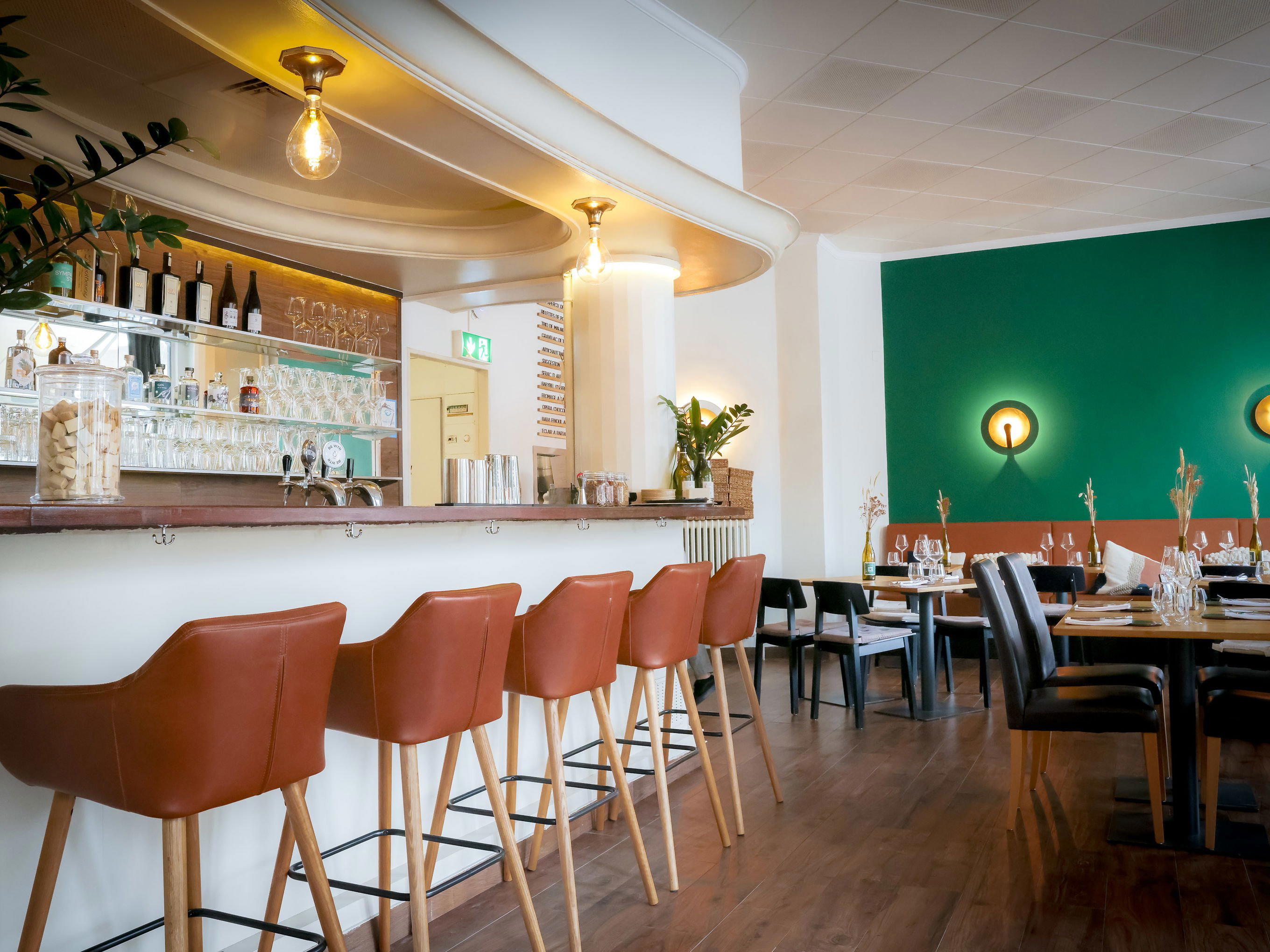
Raíces-Carlos Maldonado is a one-Michelin-star restaurant in Talavera de la Reina, Toledo, serving a Creative Spanish Tasting Menu at about €180 per person. A discreet façade gives almost nothing away, and in a country where particularly decorated kitchens tend to cluster in San Sebastián, Madrid, and the Catalan coast, that reticence is part of the point.
La Mancha as a Creative Framework
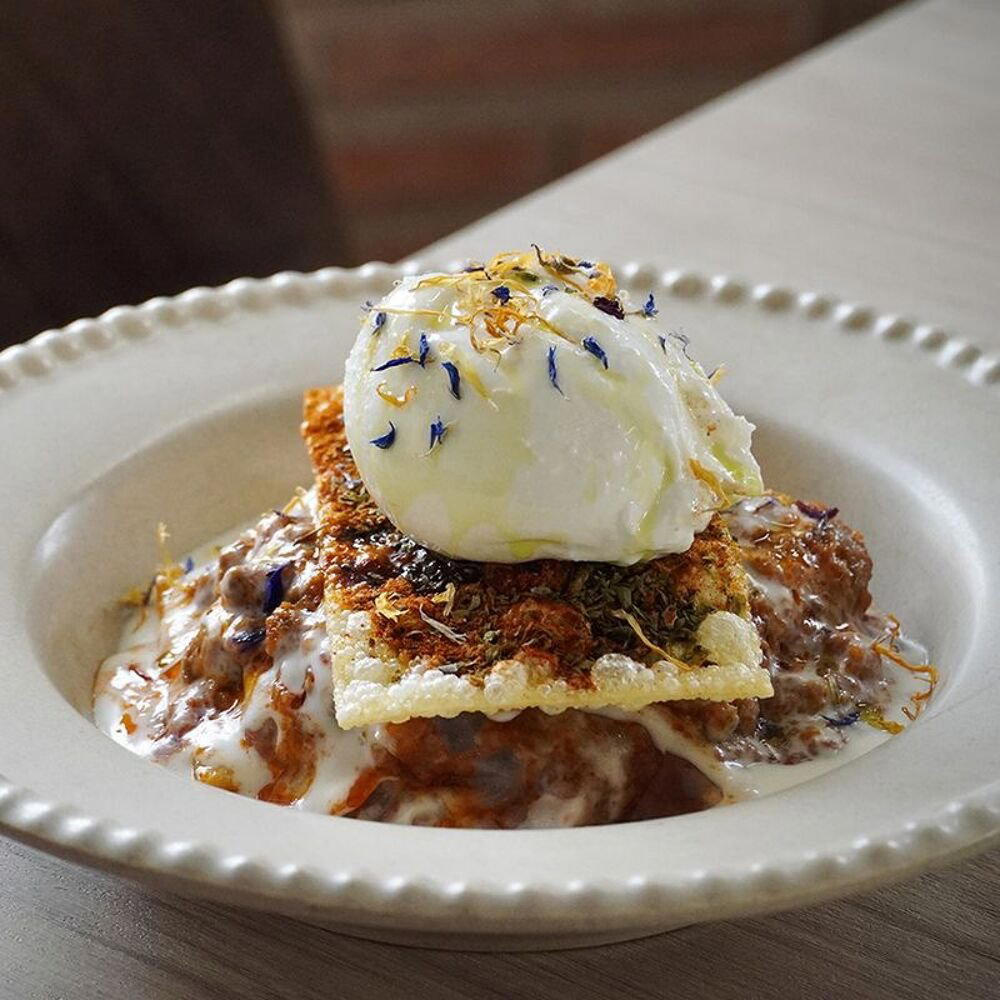
Central Spain's food identity has historically been written off as background to the region's wines or as the rural setting for Cervantes. That reading undersells a larder that includes partridge, trout from cold Castilian streams, saffron, and the ceramic craft of Talavera itself, one of Spain's oldest and most documented pottery traditions, with production documented from the sixteenth century. Creative Spanish cooking in the Basque Country and Catalonia built its reputation by interrogating local ingredients through technique. The same logic applies in La Mancha, and the menus at Raíces work within that framework: snacks include smoked partridge breast with caviar tartlet, partridge "bonbon", trout with ajo verde salsa, and calamari rolls, all arriving on ceramics designed in-house and produced in dialogue with Talavera's tile and pottery heritage. The tableware is not a styling decision; it is an argument about where the restaurant stands culturally.
The cross-border reference point that shapes part of the menu's conceptual reach is the twinning between Talavera de la Reina and Puebla, Mexico, two cities linked by the transfer of ceramic technique and design vocabulary in the colonial period. Talavera-style pottery is now a UNESCO-recognised craft in both cities. For a kitchen that takes its regional identity seriously, that connection opens a legitimate corridor to Mexican flavour references without the exercise becoming arbitrary fusion. It is an approach that aligns Raíces with a broader current in Spanish creative cooking: using documented cultural exchange as a justification for cross-cultural technique, rather than simply borrowing ingredients for novelty.
The Format: Two Menus, One Logic
The tasting menu format has become the default vehicle for this tier of Spanish creative cooking, from Arzak in San Sebastián to Disfrutar in Barcelona and El Celler de Can Roca in Girona. Two menus, Básico and Hechos de Barro, allow the kitchen to operate at different levels of ambition within the same sitting. The name Hechos de Barro (Made of Clay) makes the ceramic and terroir reference explicit in the menu's title. Dishes across both menus are described by Michelin's inspectors as daring and highly technical, positioning the kitchen in the upper register of regional creative cooking rather than in the more accessible contemporary Spanish category.
Opening sequence of snacks is worth pausing on as a structural choice. At restaurants like Aponiente in El Puerto de Santa María and Quique Dacosta in Dénia, the snack sequence functions as a condensed manifesto, a rapid inventory of the kitchen's range before the meal's main architecture begins. At Raíces, the snacks arrive on a single piece of local ceramic, combining the visual statement of Talavera craft with the culinary statement of the kitchen's technique. It is a format choice with clear editorial intent.
The Room
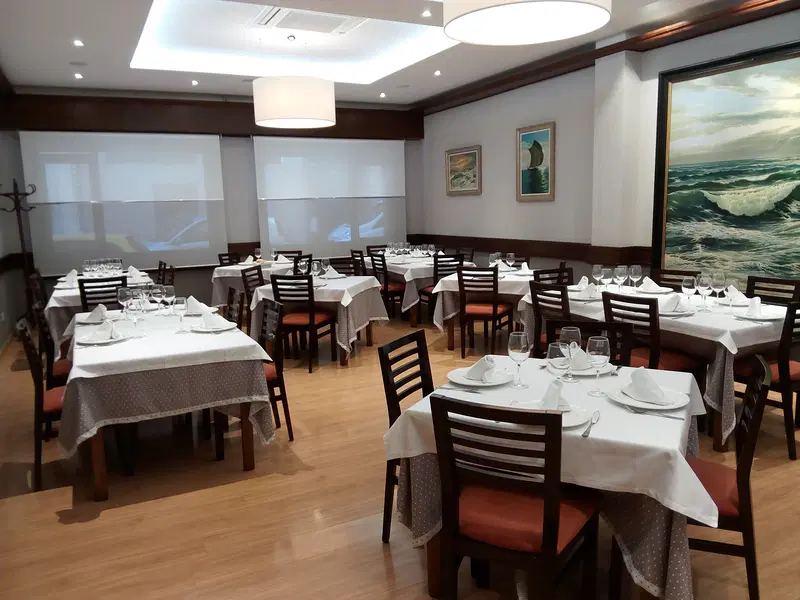
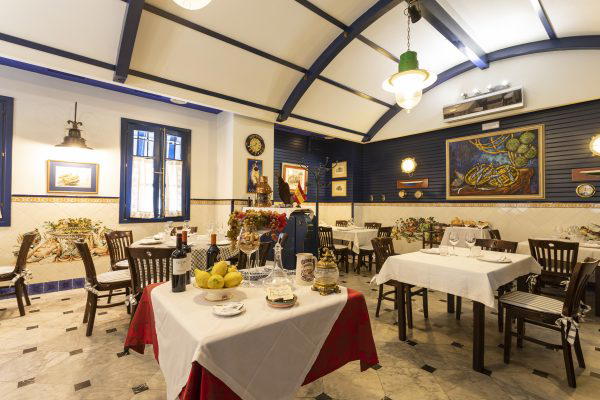
Inside, the decor is described as classic-contemporary in varying tones of white. An adjoining dining room with curtains hanging from the ceiling creates a more enclosed atmosphere at individual tables. The overall effect is a space that does not compete with the food for attention, a common discipline in this tier of Spanish creative restaurants, where the plate is expected to carry the experience. The modest exterior continues inside: this is not a restaurant that signals its ambitions through interior spectacle in the manner of, say, DiverXO in Madrid, where the room is part of the theatrical proposition. Raíces directs attention to the table.
Where Raíces Sits in Spain's Creative Tier
Spain's Michelin-starred creative kitchen scene is heavily concentrated in a handful of cities and regions. The Basque Country holds Arzak, Azurmendi, and Martin Berasategui; Catalonia has Disfrutar and El Celler de Can Roca; the Valencia coast has Quique Dacosta and Ricard Camarena. Castile-La Mancha does not feature prominently in the standard narrative of contemporary Spanish gastronomy. A one-star kitchen in Talavera de la Reina, awarded in 2024, is therefore not a minor footnote, it is evidence that the Michelin Guide is acknowledging creative cooking that draws on a less-represented regional tradition. The €€€ pricing also places Raíces in a different accessibility bracket from the €€€€ peers listed above, which matters for readers evaluating whether a detour from Madrid (Talavera is roughly 120 kilometres southwest by road) is proportionate to the investment.
For international context, the trajectory of anchoring technically ambitious cooking in regional culture rather than metropolitan prestige is visible in restaurants like Alléno Paris au Pavillon Ledoyen in France and Enrico Bartolini in Milan, though those operate at greater scale and visibility. The closer structural parallel is Mugaritz in Errenteria, a restaurant that built its identity in a small Basque town rather than a major city and used that remove from the centre as a creative argument. Raíces is earlier in that arc.
Planning Your Visit
The restaurant operates Thursday through Sunday, with a lunch service from 1:30 PM to 4:30 PM and dinner from 8:00 PM to 10:00 PM. Monday, Tuesday, and Wednesday are closed. Advance booking is essential. Talavera de la Reina sits in the province of Toledo, accessible by road from Madrid or Toledo city.
- Bollo de calamares
- Tartaleta de pechuga de perdiz ahumada y caviar
- Bombón de perdiz
- Pichón mole poblano y caviar
- Lomo de gamo y ajo negro
- Bollo de chocolate blanco y fresas
Budget Reality Check
Comparable venues nearby, for context on price, style, and recognition.
| Venue | Cuisine | Price | Awards | Notes |
|---|---|---|---|---|
| Raíces-Carlos MaldonadoThis venue — the venue you are viewing | Creative | $$$ | Michelin 1 Star | Not listed |
| Los Trujis | Not listed | $$ | Michelin Plate | central residential, Creative Spanish with Local Game |
| Raíces | Not listed | $$$ | Not listed | Talavera de la Reina, Modern Spanish Fine Dining |
| Restaurante Montia | Not listed | $$$$ | Michelin 1 Star | San Lorenzo de El Escorial, Modern Spanish Farm-to-Table |
| Ancestral | Illescas, Modern Spanish Fine Dining | $$$$ | Michelin 1 Star | Not listed |
| Pablo | Modern Spanish Fine Dining | $$$ | Michelin 1 Star | Not listed |
Recognition history
Dated appearances from independent guides and award organizations, with the underlying list record or original source where available.
Guía Repsol 1 Sol
Guía Repsol
Macarfi 7.7 Food Rating
Macarfi
Michelin 1 Star
Michelin
Michelin 1 Star
Michelin
Michelin 1 Star
Michelin
Continue exploring
More in Talavera de la Reina
Restaurants in Talavera de la Reina
Browse all →

At a Glance
- Elegant
- Intimate
- Modern
- Sophisticated
- Date Night
- Special Occasion
- Celebration
- Open Kitchen
- Private Dining
- Design Destination
- Sommelier Led
- Local Sourcing
Current opening hours
- Monday
- Closed
- Tuesday
- Closed
- Wednesday
- Closed
- Thursday
- 1:30–4:30 PM, 8–10 PM
- Friday
- 1:30–4:30 PM, 8–10 PM
- Saturday
- 1:30–4:30 PM, 8–10 PM
- Sunday
- 1:30–4:30 PM, 8–10 PM
Hours can change for holidays and private events. Last verified .
Classic-contemporary aesthetic in white tones with an adjoining intimate dining room featuring ceiling-hung curtains; minimalist yet refined with striking murals and artisanal ceramic tableware designed by the chef's son.