


1 Michelin Star · The Best Chef One Knife
Our verdict
On Maha Chai Road in Bangkok's Phra Nakhon district, Raan Jay Fai has occupied a counter-and-wok format for decades, earning recognition across three consecutive years in the Opinionated About Dining Casual Asia rankings. The kitchen runs four days a week, accepts no reservations, and operates on cash only. The crab omelet, crisp, golden, and packed with fresh crab, is why people queue.

Pearl is the En Primeur Club membership app, where members save venues, book tables and use the concierge.
The menu
What to order
- Crab Omelette
- Drunken Noodles
- Crab Yellow Curry
A Street Wok at the Intersection of Tradition and Recognition
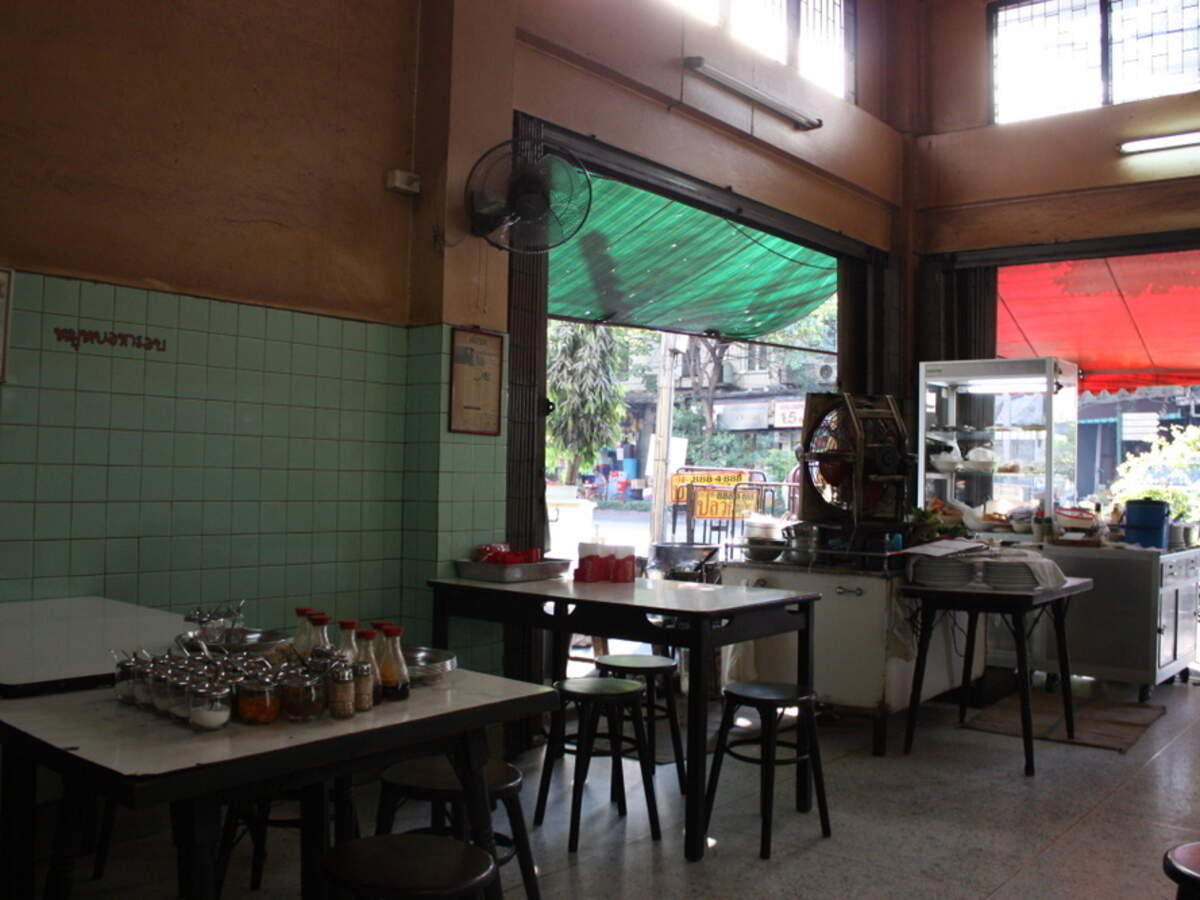
Maha Chai Road in Phra Nakhon sits at an older edge of Bangkok, where the street grid tightens and shopfronts carry the patina of decades rather than seasons. Approaching Raan Jay Fai on a Wednesday or Friday morning, the cues are direct: a queue forming outside a modest open-fronted kitchen, smoke rising from high-heat woks, and the smell of crab and egg moving fast through hot oil. There is no signage designed for Instagram, no lobby, no tasting menu printed on card stock. What you encounter is a working kitchen that has not needed to reframe itself for contemporary dining culture because the product has always done that work on its own.
The open-fire wok format is one of the oldest high-heat cooking disciplines in Southeast Asian street food, and it demands a different kind of skill than the slow-cooked or fermented traditions that have attracted much of Bangkok's recent fine-dining energy. Proteins cook in seconds rather than hours. Temperature control is entirely manual. The omelet at Raan Jay Fai is an expression of that technique applied to a specific ingredient: blue crab, in quantity, wrapped in egg that has been driven to a particular texture, crisp on the outside, softly cooked within, by extremely high and consistent flame. The result is not a vehicle for the crab so much as a collaboration between shell, egg, and fire that requires all three elements working simultaneously.
What the Rankings Actually Measure Here
Raan Jay Fai has appeared in the Opinionated About Dining Casual Asia rankings three years running: ranked 6th in 2023, 5th in 2024, and 8th in 2025. The OAD Casual Asia list is notable in this context because it does not require a formal dining room, a tasting menu, or a wine program. It measures execution and consistency at whatever format a kitchen has chosen. Placing in the leading ten three consecutive times in that category positions Raan Jay Fai inside a very small cohort of street-format operations that reviewers return to repeatedly, not out of nostalgia or curiosity, but because the cooking continues to deliver.
This is meaningfully different from the acclaim structure that defines Bangkok's fine-dining circuit, where restaurants like Sorn (Southern Thai), Baan Tepa (Thai contemporary), Gaa (Modern Indian), Sühring (German), and Côte by Mauro Colagreco (Mediterranean) operate in the leading price tier with prix-fixe formats and booking windows measured in weeks. Raan Jay Fai occupies a different competitive set altogether, one where the absence of a reservation system and the presence of a queue are not operational failures but structural features of a format that has never pretended to be something else. See our full Bangkok restaurants guide to map both ends of this range.
Sourcing Inside a High-Volume Wok Kitchen
The sustainability conversation in Southeast Asian dining has largely been shaped by tasting-menu restaurants, places with the operational capacity to develop supplier relationships, audit sourcing chains, and print provenance notes on menus. Raan Jay Fai operates outside that infrastructure, which makes the sourcing question both harder to document and, in some ways, more immediate.
Crab at this level of volume and quality requires a supply chain that delivers consistent, fresh product on the days the kitchen is open. The four-day operating week, Wednesday through Saturday, 9 AM to 7:30 PM, is itself a form of operational discipline that concentrates both sourcing and service into a window that can be managed with appropriate attention. Running a shorter week rather than extending hours to maximize covers is not a sustainability statement in the branded sense, but it reflects a kitchen logic where quality control depends on not overextending supply.
High-heat wok cooking is also, by nature, a low-waste format. The prep cycle for an omelet is short; the cooking time is measured in minutes. There is no multi-day fermentation, no extended aging program, no component that accumulates and requires management. Ingredients enter the kitchen and move to the plate rapidly, which in a seafood kitchen that relies on freshness is both a quality argument and a functional argument for reducing spoilage.
The Menu in Practice
The crab omelet is the primary reason most first-time visitors queue, and it is the dish that has defined the kitchen's reputation in international food media. But the wider menu operates across the same high-heat discipline. The stir-fried prawns in yellow curry represent a different register of the same technique, aromatic spice blended into shellfish under high heat, requiring timing as precise as the omelet. The noodle dishes offer a third entry point for those less focused on the signature preparation. Regulars with several visits tend to work across these categories rather than defaulting to the same order each time, which is the clearest evidence that the cooking holds at depth, not just at the most-photographed dish.
For a broader frame on how Thai regional traditions are expressed through different service formats across the country, it is worth cross-referencing with kitchens in other cities: AKKEE in Pak Kret, PRU in Phuket, Aeeen in Chiang Mai, Angeum in Phra Nakhon Si Ayutthaya, and Agave in Ubon Ratchathani each reflect a different geographic and culinary register of Thai cooking. For wellness-adjacent dining experiences, The Spa in Lamai Beach sits at a different point on the spectrum entirely. Internationally, the closest conceptual parallel to a single-technique kitchen maintaining this level of sustained critical recognition over decades might be Le Bernardin in New York City or Atomix in New York City, though the formats and price tiers are entirely different.
Know Before You Go
Know Before You Go
- Address: 327 Maha Chai Rd, Samran Rat, Phra Nakhon, Bangkok 10200, Thailand
- Open: Wednesday to Saturday, 9 AM – 7:30 PM. Closed Sunday, Monday, and Tuesday.
- Reservations: Not accepted. Walk-in queue only.
- Payment: Cash only.
- Practical note: Arrive early in the operating window. The queue is organised but long waits are common, particularly on weekends. Build buffer time into your plans accordingly.
- Wider Bangkok: See our guides to hotels, bars, wineries, and experiences in Bangkok.
Questions Visitors Ask
What is Raan Jay Fai known for?
Raan Jay Fai is known primarily for its crab omelet: egg cooked to a crisp, golden exterior over high flame with a generous filling of fresh crab meat. The kitchen has been recognised across three consecutive years in the Opinionated About Dining Casual Asia rankings (2023, 2024, 2025), placing it among the most consistently reviewed street-format kitchens in the region. Jay Fai, the chef behind the wok, has become a reference point in discussions about Bangkok street food at a serious level, identifiable in part by the protective goggles worn during cooking to manage high-heat oil.
What do regulars order at Raan Jay Fai?
The crab omelet is the most-ordered dish and the one most cited in awards citations and published reviews. Beyond it, the stir-fried prawns in yellow curry and the seafood noodle dishes are the preparations that regulars return to. Visitors who limit themselves to a single order typically choose the crab omelet on a first visit; those returning work through the wider menu to test the kitchen's range across different high-heat preparations.
Recognition, Side-by-Side
| Venue | Cuisine | Price | Awards | Notes |
|---|---|---|---|---|
| Raan Jay FaiThis venue (the venue you are viewing) | Michelin-Starred Thai Street Food | $30–50 | 1 Michelin Star · The Best Chef One Knife | Not listed |
| Sorn | Fine Southern Thai | $200–300 | 3 Michelin Stars · World's 50 Best #12 | Southern Thai, ฿฿฿฿ |
| Côte by Mauro Colagreco | Riviera Mediterranean Fine Dining | $200–300 | 2 Michelin Stars · World's 50 Best #91 | Mediterranean, Modern Cuisine, ฿฿฿฿ |
| Baan Tepa | Creative Thai Fine Dining | $150–200 | 2 Michelin Stars · World's 50 Best #53 | Thai contemporary, ฿฿฿฿ |
| Gaa | Modern Indian Fine Dining with Thai Influences | $150–200 | 2 Michelin Stars · World's 50 Best #95 | Modern Indian, Indian, ฿฿฿฿ |
| Sühring | Modern German Fine Dining | $200–300 | 3 Michelin Stars · World's 50 Best #18 | German, ฿฿฿฿ |
Recognition history
Dated appearances from independent guides and award organizations, with the underlying list record or original source where available.
Michelin 1 Star
Michelin
Opinionated About Dining Casual in Asia Ranked #12
Opinionated About Dining
The Best Chef One Knife
The Best Chef
Full recognition history (7 entries)
Michelin 1 Star
Michelin
Opinionated About Dining Casual in Asia Ranked #8
Opinionated About Dining
Opinionated About Dining Casual in Asia Ranked #5
Opinionated About Dining
Opinionated About Dining Casual in Asia Ranked #6
Opinionated About Dining
Continue exploring
More in Bangkok
Restaurants in Bangkok
All restaurants in Bangkok →
Bars in Bangkok
All bars in Bangkok →




Details
- Well Known
- Lively
- Special Occasion
- Casual Hangout
- Open Kitchen
- Local Sourcing
- Street Scene
- A La Carte
Current opening hours
- Monday
- Closed
- Tuesday
- Closed
- Wednesday
- 9 AM–7:30 PM
- Thursday
- 9 AM–7:30 PM
- Friday
- 9 AM–7:30 PM
- Saturday
- 9 AM–7:30 PM
- Sunday
- Closed
Hours can change for holidays and private events. Hours as of .
Open-air street-side shophouse with simple tables, stools, green tiled walls, and energetic wok cooking atmosphere.