
1 Michelin Star
Our verdict
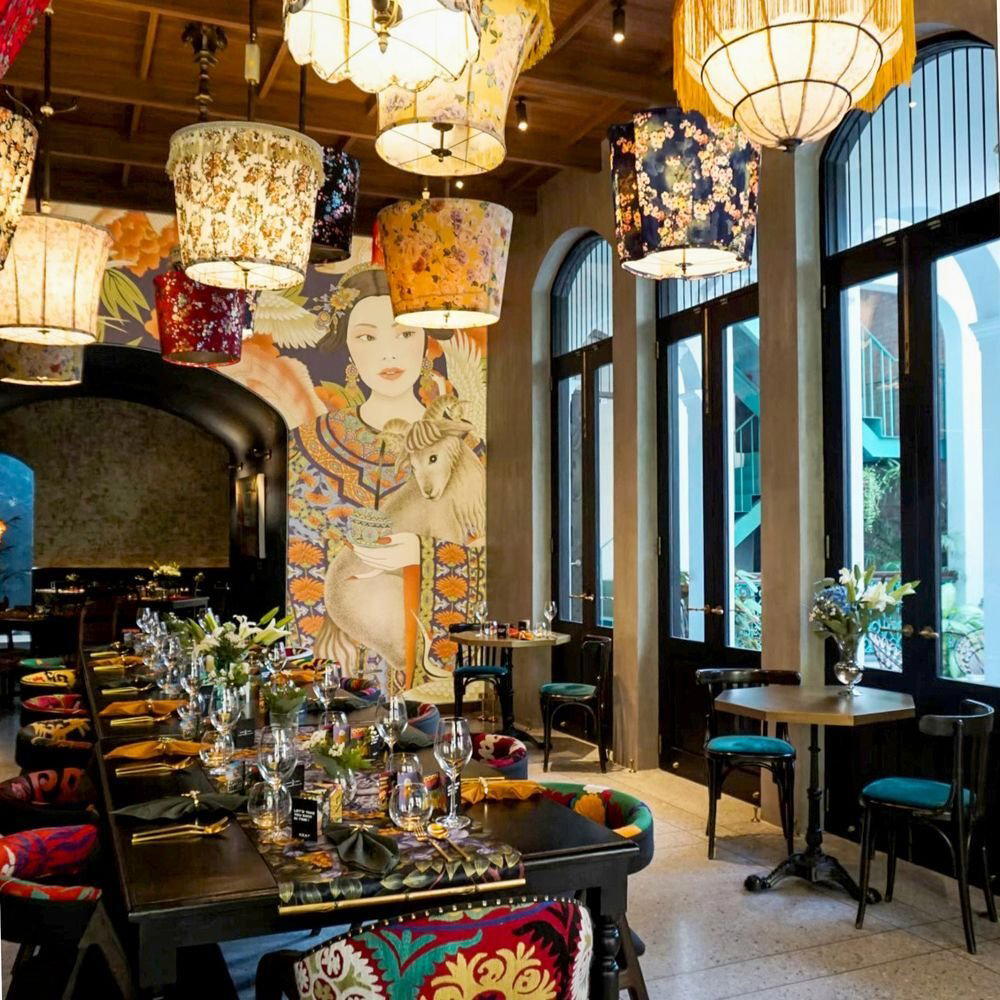
GOAT occupies a converted space on Ekkamai 10 with Sino-Portuguese interior detailing and a Thai seasonal concept that draws together Thai, Chinese, and Western techniques. The kitchen sources ingredients from across Thailand, grows herbs onsite, and produces fermented soft drinks as non-alcoholic pairings. Open Wednesday through Sunday from 6 PM, it sits in Bangkok's mid-to-upper contemporary Thai tier at ฿฿฿.

Pearl is the En Primeur Club membership app, where members save venues, book tables and use the concierge.
The menu
What to order
- Mae Hong Son pork jowl
- Gulf of Thailand blue crab
- Surin Thai wagyu tartare
Ekkamai's Approach to Contemporary Thai
Bangkok's contemporary Thai dining scene has fractured into distinct tiers over the past decade. At the leading, Sorn and Baan Tepa operate at the ฿฿฿฿ level with Michelin recognition anchoring their positioning. Below that, a smaller cohort of ฿฿฿ restaurants occupies more experimental ground, working with seasonal Thai produce and hybrid culinary references without the institutional weight of starred recognition. GOAT, on Ekkamai 10 in the Watthana district, belongs to this second group: a restaurant where the cultural reference points are multiple and the format is deliberately loose.
Ekkamai itself has become one of Bangkok's more interesting neighbourhoods for this kind of dining. Removed from the Silom and Sukhumvit dining corridors, the area around Ekkamai BTS has accumulated a collection of independent restaurants and bars that tend to attract a local, food-literate crowd rather than hotel guests or tourists following a published list. The address on Ekkamai 10 puts GOAT slightly off the main strip, which filters the walk-in traffic and concentrates the room toward deliberate diners.
Sino-Portuguese Design as Cultural Argument
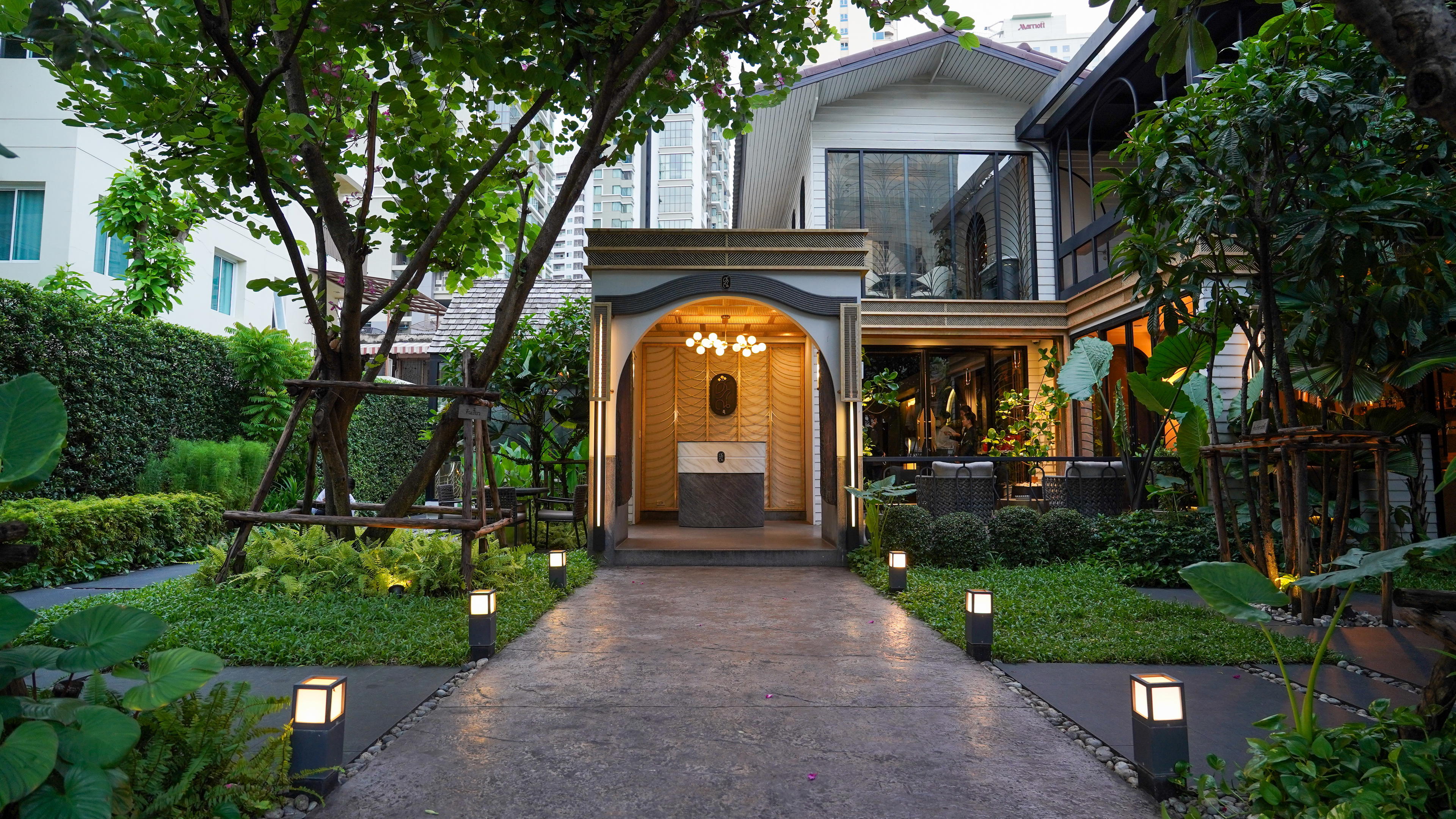
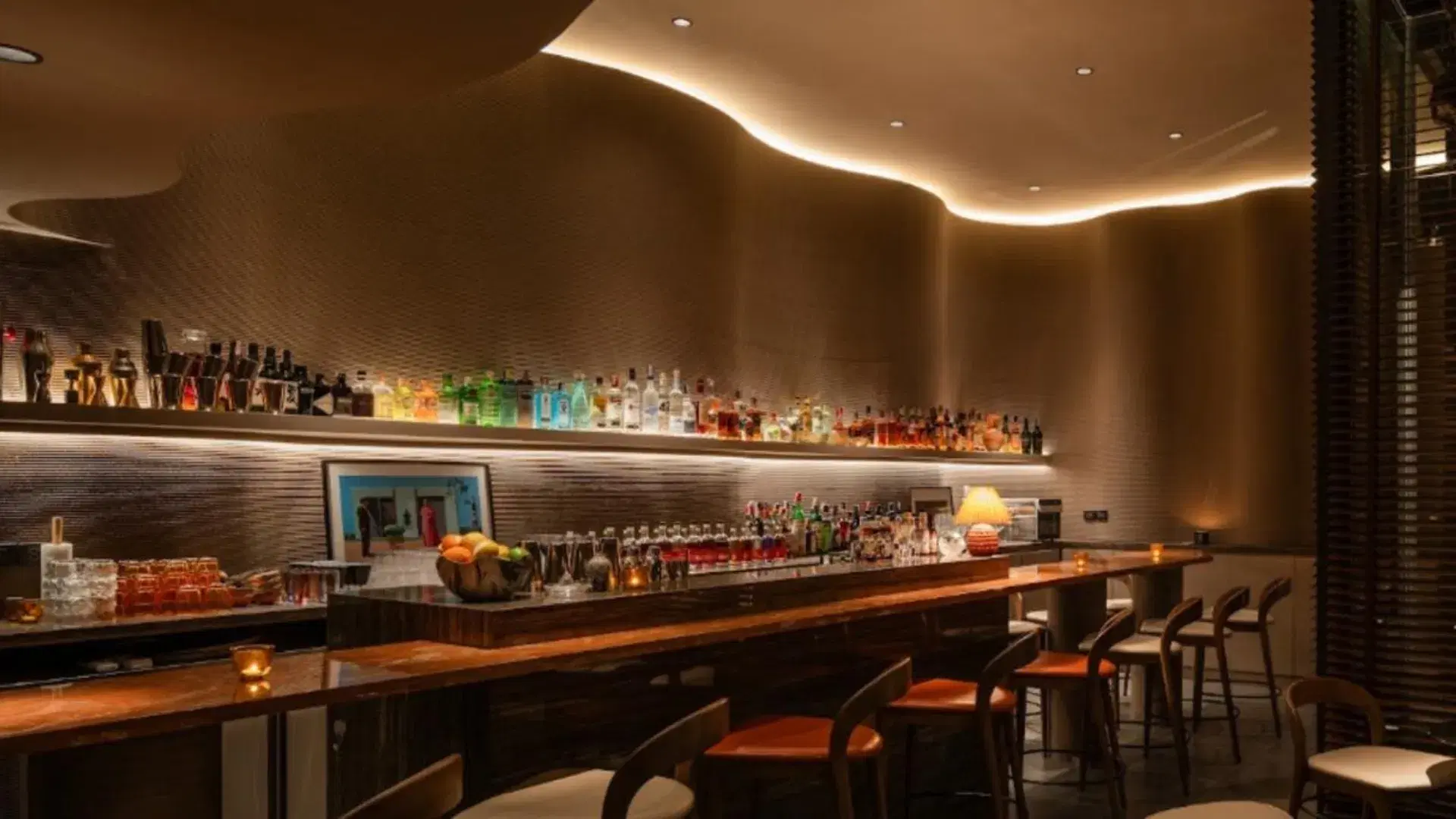
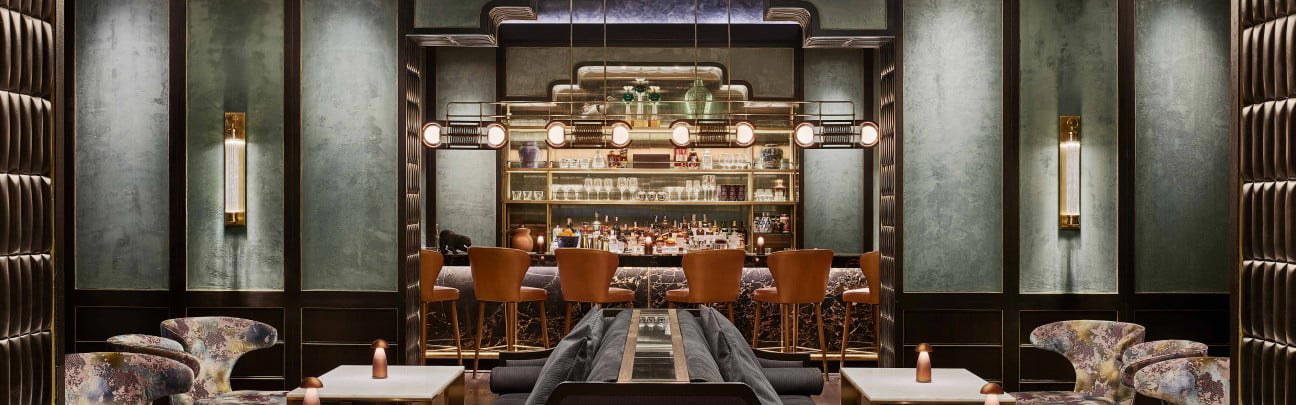
The interior at GOAT signals its cultural position before any food arrives. Sino-Portuguese design, with its layering of Chinese motifs and southern European colour palettes, originates from the trading port communities of Melaka, Penang, and Phuket, where Chinese merchant families absorbed Portuguese colonial aesthetics over several generations. Using that visual language in a Bangkok restaurant is a deliberate reference to the broader Sinicized cultures of mainland and peninsular Southeast Asia, the same networks that shaped Thai-Chinese cooking in Bangkok's Chinatown district and continue to run through the city's food culture.
High ceilings extend the visual effect of those colours, giving the room a quality of light that changes across an evening service. This is a design approach that several Bangkok restaurants in the contemporary tier have adopted, using architectural space as a frame for the food rather than as theatre in its own right. Compare it to the more stripped international aesthetic at Côte by Mauro Colagreco or the domestic Thai materiality at Gaa, and GOAT's choice reads as a statement about provenance rather than about spectacle.
Where Three Culinary Traditions Meet
The question that matters most about any restaurant operating in the Thai-contemporary category is which cultural debts it acknowledges and how it handles them. Thai cooking already contains centuries of Chinese influence, from the wok techniques and fermented condiments of the Teochew diaspora to the noodle traditions that run through Bangkok street food. Adding a Western culinary framework on top of that is not neutral; it either clarifies or complicates the cultural signal depending on how the kitchen manages proportions.
At GOAT, the framework is a Thai seasonal concept, which means that the Thai ingredient base and its seasonal rhythms drive the menu rather than serving as decoration on a European tasting format. The Chinese and Western elements function as technique and structure rather than as flavour dominants. This places GOAT in a similar philosophical position to AKKEE in Pak Kret, where local produce and regional identity take precedence over imported culinary grammar, and at some distance from the more India-forward approach at Gaa, where a single non-Thai culinary tradition sets the tone.
Across Thailand, restaurants working in this mode have proliferated since roughly 2018. PRU in Phuket and Aeeen in Chiang Mai both demonstrate that the seasonal-Thai-contemporary format is now a national pattern rather than a Bangkok-specific phenomenon, with each region feeding its own produce traditions into a broadly similar structural approach.
Onsite Herbs and the Sourcing Argument
Growing herbs onsite at a restaurant is a practice that has moved from novelty to standard signal in fine dining globally, from the rooftop gardens of tasting-menu restaurants in Copenhagen to the kitchen plots attached to farm-to-table operations in the American northeast. In Bangkok's context, where the supply of fresh aromatics is rarely the constraint, the choice to grow onsite is less about access and more about specificity: it signals that the kitchen wants particular varieties at particular stages of maturity, not the uniform bundles available from the wholesale markets.
Sourcing ingredients from across Thailand adds a different dimension. Thailand's agricultural geography ranges from the northern highlands, where temperate vegetables and highland herbs grow, through the rice-farming central plains, to the mangrove-edged south with its shellfish and fermented seafood traditions. Drawing on that range within a single seasonal menu creates complexity that no single-region sourcing policy could match. It also positions GOAT within a broader argument being made by Thai chefs who want to document and use regional ingredient diversity before industrial agriculture narrows it further. Restaurants like Angeum in Phra Nakhon Si Ayutthaya are making parallel arguments from their own regional bases.
Fermented Soft Drinks as a Pairing Format
Non-alcoholic pairing programs have become a serious category at tasting-menu restaurants over the past five years. The question for any kitchen producing its own fermented soft drinks is whether the drinks extend the food's logic or simply replace wine with expensive juice. When the source ingredients are Thai produce and the fermentation is calibrated to the menu, the drinks become another expression of the same seasonal sourcing argument rather than an afterthought. Restaurants operating at the ฿฿฿฿ tier in Bangkok, including those with Michelin recognition, have leaned into non-alcoholic pairing as a way to serve guests who do not drink alcohol without falling back on generic alternatives. GOAT's approach at the ฿฿฿ price point brings the same format to a slightly broader audience.
For context on how the broader Bangkok scene handles beverage programs, see our full Bangkok bars guide and our full Bangkok wineries guide.
Planning Your Visit
GOAT operates Wednesday through Sunday, 6 PM to 10 PM, and is closed Monday and Tuesday. The address is 12 Ekkamai 10, Yaek 2, Khlong Tan Nuea, Watthana, Bangkok 10110. Ekkamai BTS station is the practical access point, with the restaurant a short ride into the soi from there. The ฿฿฿ price positioning places it below the ฿฿฿฿ tier occupied by starred Bangkok restaurants, which makes it a reasonable option for those working through the city's contemporary Thai scene without committing to the higher price points at Sorn or Baan Tepa on every night. Given the evening-only format and the seasonal menu structure, booking ahead is advisable rather than treating it as a walk-in option. For broader planning, see our full Bangkok restaurants guide, our full Bangkok hotels guide, and our full Bangkok experiences guide.
Frequently asked questions
What should I eat at GOAT?
The menu operates as a Thai seasonal concept, meaning what appears on the plate reflects current sourcing from across Thailand rather than a fixed repertoire. The kitchen works with onsite-grown herbs and produce drawn from multiple Thai regions, so the most useful approach is to commit to whatever the current format offers rather than arriving with specific dish expectations. The fermented soft drinks produced in-house are designed to pair with each course, making the non-alcoholic pairing a coherent alternative to wine rather than an incidental option. For comparison points in the same seasonal-Thai category, Baan Tepa and Coda both offer structured seasonal menus at different price tiers.
What do critics highlight about GOAT?
Published descriptions of GOAT focus on three elements: the design coherence between the Sino-Portuguese interior and the multi-cultural culinary approach; the discipline of the seasonal sourcing framework; and the in-house fermented drink program as a genuine pairing alternative rather than a novelty. The cultural layering, Thai base with Chinese and Western structural references, is treated as a considered position rather than a compromise. Within Bangkok's contemporary Thai tier, that kind of conceptual consistency is noted as the differentiating factor from restaurants that use international technique without equivalent attention to the local ingredient argument. Peers working in adjacent territory include Gaa and, at a higher price point, Sorn.
Does GOAT serve a set menu or à la carte?
Based on available information, GOAT operates as a showcase format driven by the chef's current seasonal inspirations rather than a static à la carte list, which is consistent with the tasting-menu structure common to Bangkok's contemporary Thai restaurants in this price tier. The evening-only schedule, Wednesday through Sunday from 6 PM, and the focus on seasonal Thai ingredients sourced from across Thailand both indicate a structured progression rather than an open order format. Guests looking for a similar set-menu approach at a higher price bracket can compare with Baan Tepa or, for a different cultural register, Côte by Mauro Colagreco. Confirming the current menu format directly with the restaurant before visiting is advisable given the seasonal nature of the program.
Pricing, Compared
| Venue | Cuisine | Price | Awards | Notes |
|---|---|---|---|---|
| GOATThis venue (the venue you are viewing) | Modern Thai Fusion Tasting Menu | $200–300 | 1 Michelin Star | Not listed |
| Sorn | Fine Southern Thai | $200–300 | 3 Michelin Stars · World's 50 Best #12 | Southern Thai, ฿฿฿฿ |
| Côte by Mauro Colagreco | Riviera Mediterranean Fine Dining | $200–300 | 2 Michelin Stars · World's 50 Best #91 | Mediterranean, Modern Cuisine, ฿฿฿฿ |
| Baan Tepa | Creative Thai Fine Dining | $150–200 | 2 Michelin Stars · World's 50 Best #53 | Thai contemporary, ฿฿฿฿ |
| Gaa | Modern Indian Fine Dining with Thai Influences | $150–200 | 2 Michelin Stars · World's 50 Best #95 | Modern Indian, Indian, ฿฿฿฿ |
| Sühring | Modern German Fine Dining | $200–300 | 3 Michelin Stars · World's 50 Best #18 | German, ฿฿฿฿ |
Recognition history
Dated appearances from independent guides and award organizations, with the underlying list record or original source where available.
Michelin 1 Star
Michelin
Full recognition history (2 entries)
Michelin 1 Star
Michelin
Continue exploring
More in Bangkok
Restaurants in Bangkok
All restaurants in Bangkok →
Bars in Bangkok
All bars in Bangkok →

Details
- Sophisticated
- Modern
- Elegant
- Minimalist
- Special Occasion
- Date Night
- Business Dinner
- Open Kitchen
- Rooftop
- Chefs Counter
- Craft Cocktails
- Local Sourcing
- Farm To Table
- Zero Waste
- Tasting Menu
- Natural Wine
Current opening hours
- Monday
- Closed
- Tuesday
- Closed
- Wednesday
- 6–10 PM
- Thursday
- 6–10 PM
- Friday
- 6–10 PM
- Saturday
- 6–10 PM
- Sunday
- 6–10 PM
Hours can change for holidays and private events. Hours as of .
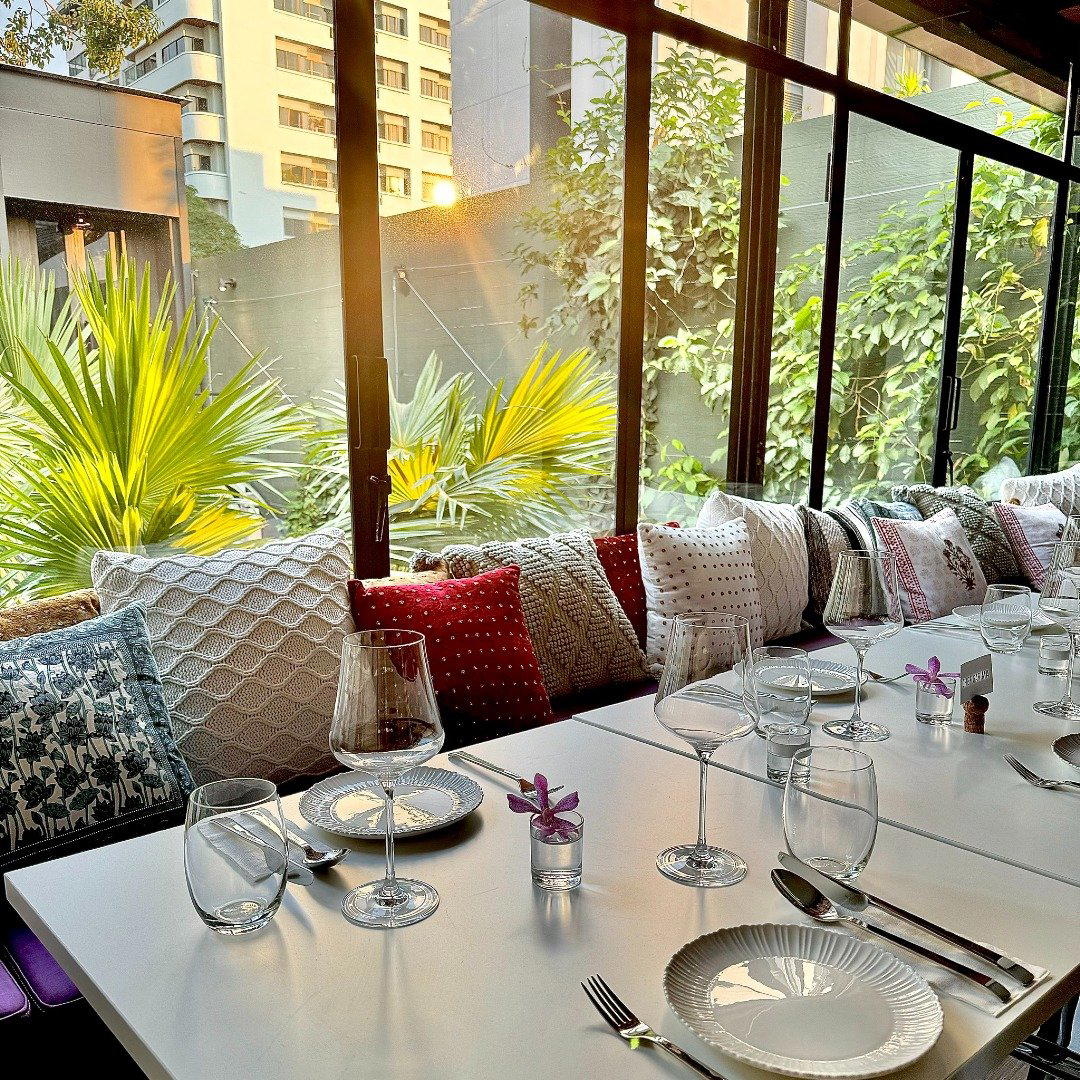
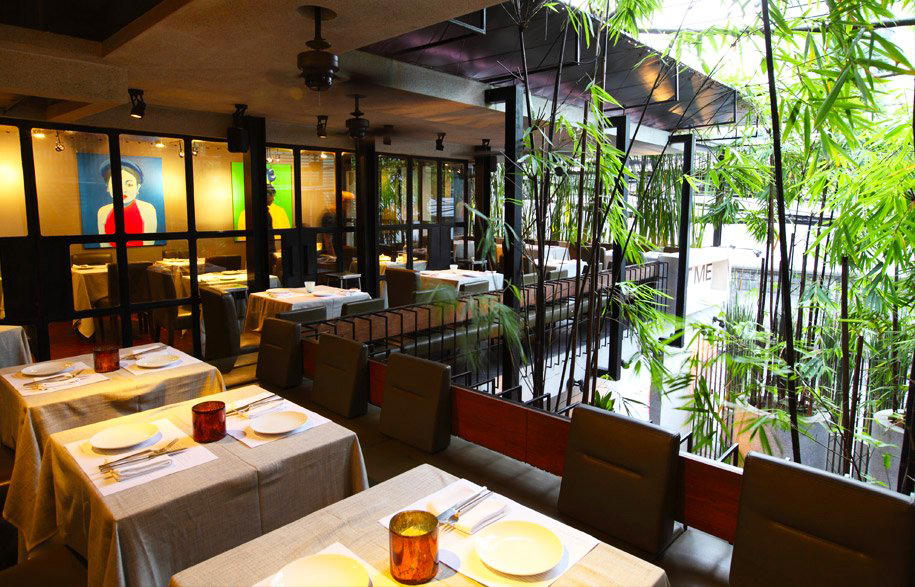
Warm lighting in Sino-Portuguese-inspired interior with high ceilings, open kitchen, and subtle artistic details creating an intimate, refined atmosphere.