Porto Elia sits on Obere Waiblinger Strasse in Stuttgart's Bad Cannstatt district, a neighbourhood that trades in everyday hospitality rather than destination dining.
Pearl is the En Primeur Club membership app — saves, bookings, and concierge access live there. Same editors, same standards.
- Address
- Ob. Waiblinger Str. 153, 70374 Stuttgart, Germany
- Phone
- +4949711523684
- Website
- porto-elia.de
- Directions
- Get directions
 Saves & bookings on Pearl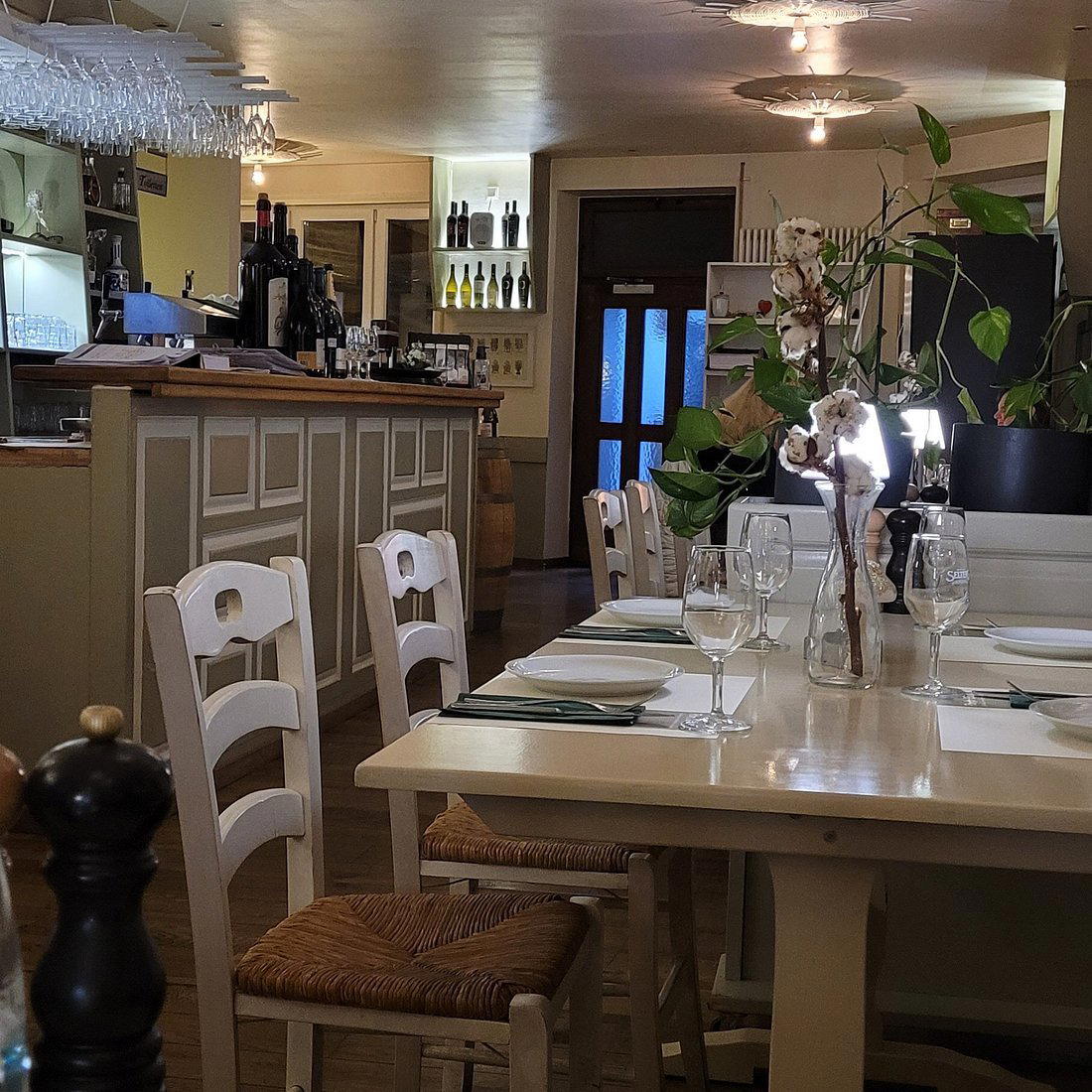
Bad Cannstatt's Dining Register and Where Porto Elia Fits
Stuttgart's restaurant conversation tends to cluster around the centre and the Bohnenviertel, where addresses like Speisemeisterei and Délice anchor the city's fine-dining tier, and Der Zauberlehrling holds its place in the creative-casual bracket. The further you move from that core, the more the dining character shifts: fewer tasting menus, more neighbourhood rhythm, rooms that feel built for regulars rather than first-time visitors making a special occasion of it. Porto Elia is a traditional Greek restaurant at Ob. Waiblinger Str. 153, 70374 Stuttgart, Germany, in Bad Cannstatt.
That positioning matters. Restaurants in Bad Cannstatt tend to compete on consistency and familiarity rather than on ambition signalling. The physical spaces in this part of the city often reflect that: rooms built for conversation, lighting calibrated for comfort rather than drama, layouts that prioritise function. Whether Porto Elia follows that spatial grammar or departs from it is something the address alone cannot confirm, but the neighbourhood context sets a reasonable prior.
The Space as Signal: Reading a Room Without Michelin Stars
Germany's premium dining tier has become increasingly codified in its physical language. Addresses like Aqua in Wolfsburg or Vendôme in Bergisch Gladbach operate in rooms where the architecture is itself a statement: controlled acoustics, deliberate table spacing, surfaces chosen to complement plating rather than compete with it. Further down the tier, at addresses like Hegel Eins within Stuttgart itself, the spatial decisions become more pragmatic, though no less considered in what they communicate to the guest about pace and formality.
The restaurant's location in a residential stretch of Bad Cannstatt suggests a different spatial logic entirely. Streets like Obere Waiblinger Strasse are not designed around destination visitors; the buildings are mixed-use, the footfall is local, and restaurants that survive there do so by becoming part of the neighbourhood's daily fabric rather than by positioning against a wider competitive field. In practice, that often means interiors that prioritise warmth over spectacle: tighter seating, materials that age well rather than photograph well, and a room temperature, metaphorically speaking, that invites repeat visits.
This is a meaningful distinction when set against the trend in German fine dining toward highly staged environments. Restaurants such as CODA Dessert Dining in Berlin or JAN in Munich have invested heavily in the room as part of the experience proposition. The restaurant, based on what its address implies, operates in a register where the room serves the meal rather than framing it.
Stuttgart's Neighbourhood Dining and What It Offers
Stuttgart's dining scene has a geographic bifurcation that visitors rarely account for. The city's awarded restaurants, including 5 in the modern cuisine bracket, concentrate in a relatively small central zone. Outside that zone, the city supports a substantial neighbourhood dining culture that feeds a large residential population with less interest in destination dining than in reliable, well-priced cooking within their own districts.
Bad Cannstatt is one of the larger residential nodes in this system. It has its own market, its own café culture, and a dining scene that skews toward everyday cuisine rather than special-occasion formats. The German dining category that operates here most effectively is the gasthaus-adjacent model: accessible price points, cooking that draws on regional or European traditions, and spaces that function as community anchors. Mediterranean-influenced restaurants, including Greek and Italian-leaning addresses, have historically performed well in this kind of neighbourhood context across German cities, offering a combination of familiar flavour profiles and sociable formats that work for both weeknight dinners and longer weekend meals.
The restaurant serves traditional Greek cooking and is priced in the midrange. What the neighbourhood context does confirm is the general competitive environment: local rather than destination-driven, with hospitality standards set by repeat custom rather than critical review.
Germany's Broader Dining Spectrum and Where Local Addresses Register
Germany's Michelin-starred tier is geographically distributed in ways that do not always map to city size. Addresses like Schwarzwaldstube in Baiersbronn and Waldhotel Sonnora in Dreis demonstrate that destination-level cooking can operate far from major urban centres. Within Stuttgart specifically, the starred tier at addresses like Speisemeisterei competes in a national conversation, benchmarking itself against restaurants in Hamburg (see Restaurant Haerlin), in the Moselle valley (see Schanz in Piesport), and internationally (as the programmes at Le Bernardin in New York and Atomix demonstrate for their respective cities).
The restaurant operates in a local dining context rather than the national starred tier. The restaurants that sustain neighbourhoods like Bad Cannstatt are not competing for guides; they are competing for the kind of loyalty that comes from being the place a household returns to every few weeks. That is a harder competitive position in some respects than chasing awards, and it requires a consistency that critic-facing restaurants do not always need to maintain outside review seasons. For a fuller picture of what Stuttgart's dining range looks like across price tiers and formats, the EP Club Stuttgart restaurants guide maps the city's key addresses, from the leading awarded tables to the neighbourhood tier where the restaurant operates. Comparable destination-level addresses outside Stuttgart, such as ES:SENZ in Grassau and Victor's Fine Dining by Christian Bau in Perl, illustrate just how wide that national spectrum runs.
Planning a Visit: What to Confirm in Advance
The restaurant is at Ob. Waiblinger Str. 153, 70374 Stuttgart, Germany, in Bad Cannstatt. For a neighbourhood restaurant of this type, walk-in availability is plausible, but confirming by phone or in person before making the trip is advisable, particularly on weekend evenings when local demand tends to concentrate.
Pricing, Compared
Comparable venues nearby, for context on price, style, and recognition.
| Venue | Cuisine | Price | Notes |
|---|---|---|---|
| Porto EliaThis venue — the venue you are viewing | Berg, Traditional Greek | $$ | Not listed |
| The Greek Taste | Gablenberg, Modern Greek | $$ | Not listed |
| Burger House | Gablenberg, American Burgers | $$ | Not listed |
| Andalucia-Casamuu | Not listed | $$ | Heslach, Authentic Spanish Tapas & Paella |
| Pops Burger | Berg, American Smashed Burgers | $$ | Not listed |
| Makamba | Gablenberg, Traditional Ethiopian | $$ | Not listed |
Continue exploring
More in Stuttgart
Restaurants in Stuttgart
Browse all →
Bars in Stuttgart
Browse all →

Hotels in Stuttgart
Browse all →

At a Glance
- Cozy
- Rustic
- Classic
- Date Night
- Special Occasion
Current opening hours
- Monday
- Closed
- Tuesday
- 5–11 PM
- Wednesday
- 5–11 PM
- Thursday
- 5–11 PM
- Friday
- 5–11 PM
- Saturday
- 5–11 PM
- Sunday
- 12:30–10 PM
Hours can change for holidays and private events. Last verified .
Beautiful interior and warm, welcoming atmosphere as described by guests.