Pitango Gelato
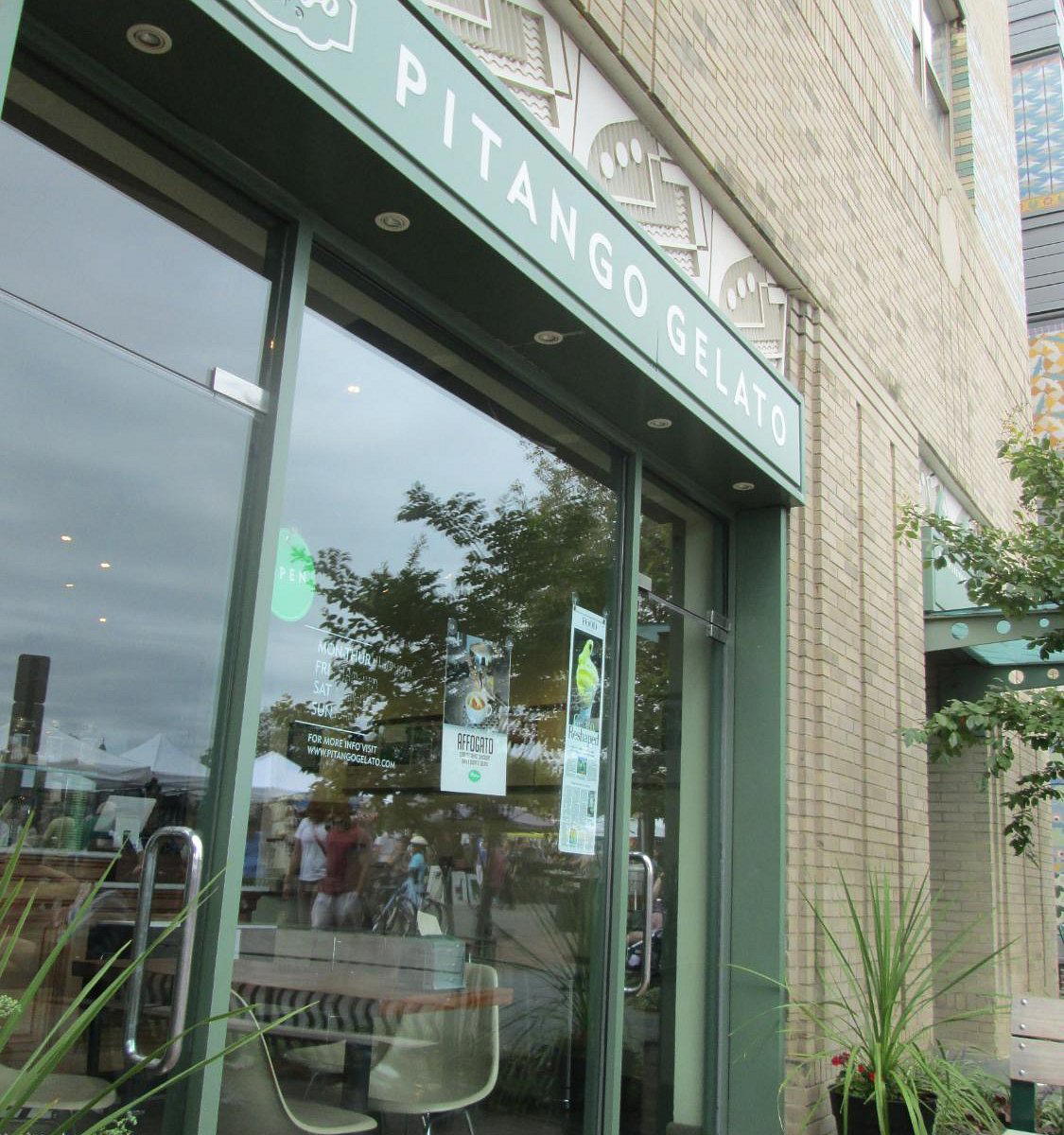
Pitango Gelato on 7th Street NW occupies a different register from Washington D.C.'s tasting-menu circuit, trading multi-course architecture for the immediate, ingredient-forward discipline of Italian-style gelato. Where comparable shops rely on stabilizers and industrial bases, Pitango's approach to small-batch production has drawn a consistent local following in Penn Quarter, positioning it alongside the neighbourhood's broader commitment to producer-led food culture.
 Discover on Pearl
Pearl is the En Primeur Club membership app — saves, bookings, and concierge access live there. Same editors, same standards.
- Address
- 413 7th St NW, Washington, DC 20004
- Phone
- +12028859607
- Website
- pitangogelato.com
Penn Quarter's Slower Pace of Eating
Washington, D.C.'s Penn Quarter has, over the past decade, consolidated into one of the capital's most concentrated blocks of serious dining. The neighbourhood runs from the arena district toward the Mall corridor, and on any given evening its streets fill with pre-theatre crowds, government workers, and tourists looking for something between a museum café and a full tasting-menu commitment. That middle register is exactly where gelato operates as a format, and it is worth understanding what distinguishes a thoughtful gelato counter from the generic frozen-dessert shops that fill the same price and footfall bracket across American cities.
Pitango Gelato, at 413 7th St NW, sits in that Penn Quarter stretch. The address places it within walking distance of a cluster of restaurants that define the neighbourhood's culinary ambition: minibar, José Andrés's molecular counter that operates at the opposite extreme of the format spectrum, and Jônt, which runs a modern French tasting program with considerable technical precision. Pitango does not compete in that tier; it is a walk-in gelato counter where a meal ends, or where an afternoon slows down, and the ritual of choosing and tasting becomes its own structured encounter with food.
The Ritual of the Gelato Counter
Italian gelato culture has its own etiquette, one that gets compressed or lost when the format travels. At a traditional gelateria, the act of choosing is deliberate: you read the case, you ask for a small taste of something unfamiliar, and you accept that the person behind the counter has an opinion about which flavours hold together in combination. The pace is unhurried. The vessel, cone or cup, and which size, carries meaning about how long you intend to stand there.
That ritual depends entirely on what is in the case. Gelato made with fresh, seasonal ingredients and without heavy stabilizer loads changes week to week, sometimes day to day. The customer who visits regularly learns to read shifts in the case as signals about what is in season or what the batch that morning produced particularly well. This is a different mode of engagement from reading a fixed menu, and it places more interpretive responsibility on the person at the counter.
Across American cities, this format has split into two recognisable camps: chains that standardise their case for predictability and shelf life, and smaller producer-led shops that accept variation as a feature rather than a problem. Pitango belongs to the latter camp, which is what gives its Penn Quarter location a different character from the national frozen-dessert brands that have moved into comparable D.C. neighbourhoods.
Where It Sits in Washington's Eating Culture
Washington has developed a dining culture that increasingly rewards ingredient specificity and producer transparency, particularly in the years since the farm-to-table vocabulary moved from novelty to baseline expectation. That shift shows most clearly at restaurants like Oyster Oyster, which runs a sustainable New American program at the $$$ price point, or Causa, where Peruvian sourcing principles anchor a $$$$ tasting format. Albi brings Middle Eastern sourcing rigour to a similar fine-dining bracket.
What connects these places is a shared orientation toward the ingredient as the primary unit of interest. Gelato, made correctly, operates by the same logic: the milk, the fruit, the nut, and the extract all have to carry the flavour without the coating effect of excess fat or the structural shortcut of heavy gums. When that discipline holds, the result is a product that reads transparently, you taste the thing it is made from, not a processed approximation of it.
Pitango functions well as a standalone stop in that itinerary, before a performance at the nearby venues, after a longer lunch, or as a deliberate mid-afternoon pause.
The Gelato Format Against the Tasting-Menu Moment
It is useful to place the gelato counter in context against the dominant format of premium American dining right now. Tasting menus have expanded across most serious dining cities: Alinea in Chicago, The French Laundry in Napa, Lazy Bear in San Francisco, Single Thread Farm in Healdsburg, Blue Hill at Stone Barns in Tarrytown, Addison in San Diego, Providence in Los Angeles, and The Inn at Little Washington, among others. These are multi-hour, multi-course experiences structured around a fixed progression and a considerable financial commitment.
The gelato counter is the structural opposite: no reservation, no fixed sequence, and no time constraint imposed by the format. What it shares with the tasting-menu model is the expectation that the person at the counter has made considered decisions about sourcing and technique. The discipline is the same; the format and the price point are entirely different. Internationally, this pattern holds as well, from 8 1/2 Otto e Mezzo Bombana in Hong Kong to Le Bernardin in New York or Emeril's in New Orleans, the defining fine-dining venues of a city share a commitment to ingredient quality that filters down through the city's food culture broadly. Pitango exists within that ecology, not above or below it.
For D.C. visitors building a food itinerary that includes both ends of the format range, a stop at a producer-led gelato counter is a logical component. It takes about fifteen minutes, costs about $10 per person, and when the product is made with care, it delivers a clear read on seasonal ingredients.
The Korean-American tasting counter Atomix in New York has made the case that format innovation does not require abandoning ingredient transparency. Pitango makes a similar case from the opposite direction: that a simple, ancient format can hold the same commitment to sourcing without any of the formal architecture.
Know Before You Go
| Address | 413 7th St NW, Washington, DC 20004 |
|---|---|
| Neighbourhood | Penn Quarter |
| Format | Walk-in gelato counter; no reservation required |
| Hours | Mon: 10 AM-11 PM; Tue: 10 AM-11 PM; Wed: 10 AM-11 PM; Thu: 10 AM-11 PM; Fri: 10 AM-12 AM; Sat: 10 AM-12 AM; Sun: 10 AM-11 PM |
| Price | About $10 per person |
| Booking | Walk-in friendly |
At a Glance
Comparable venues nearby, for context on price, style, and recognition.
| Venue | Cuisine | Price | Notes |
|---|---|---|---|
| Pitango GelatoThis venue — the venue you are viewing | East End, Authentic Italian Gelato | $$ | |
| Gordon Ramsay Street Pizza - Washington DC | $$ | Penn Quarter, Modern Italian Street Pizza | |
| Capa Tosta | Pleasant Plains, Modern Italian Bistro | $$ | |
| DuPont Italian Kitchen | Dupont Circle, Classic Italian Trattoria | $$ | |
| Slice & Pie | Cardozo, Neapolitan-Style Pizza | $$ | |
| We, The Pizza | Eastern Market, New York-Style Pizza | $$ |
Continue exploring
More in Washington DC
Restaurants in Washington DC
Browse all →
Bars in Washington DC
Browse all →
Hotels in Washington DC
Browse all →


At a Glance
- Trendy
- Modern
- Cozy
- Casual Hangout
- Family
- Open Kitchen
- Craft Cocktails
- Organic
- Local Sourcing
Stylish and modern café atmosphere with a focus on fresh, high-quality gelato and coffee.