Our verdict
On Calle de la Cebada in Madrid's La Latina district, Pisco & Lima by José Antonio brings Peruvian technique to a city increasingly serious about Latin American dining. The kitchen operates within a tradition where pisco sours, ceviche, and causa anchor the menu, and the address places it squarely inside one of the capital's most characterful eating neighbourhoods.

Pearl is the En Primeur Club membership app — saves, bookings, and concierge access live there. Same editors, same standards.
La Latina's Peruvian Counter, in Context
Calle de la Cebada runs through the heart of La Latina, a neighbourhood where tapas bars have operated for generations and where newer restaurants from outside the Iberian tradition have found, somewhat surprisingly, a receptive audience. The street sits close to the Mercado de la Cebada and the Sunday El Rastro market circuit, which means foot traffic here skews local and repeat rather than purely tourist. Pisco & Lima by José Antonio occupies this address as part of a broader pattern: Madrid's appetite for Peruvian cooking has grown steadily over the past decade, driven partly by the city's large Peruvian community and partly by the global critical attention that Peruvian cuisine has attracted since Lima-based restaurants began appearing on international lists.
That context matters when positioning this restaurant. Madrid now has a range of Peruvian options, from casual cevicherías to more formal presentations. Pisco & Lima sits within that spectrum, and the name alone signals a dual focus: the pisco-based cocktail tradition of Peru and the city of Lima, which functions as shorthand for the technique-forward end of Peruvian cooking rather than its street-food register.
What Peruvian Cooking Means at This Address
Peruvian cuisine carries one of the more coherent sustainability arguments of any Latin American tradition. The country's extraordinary ecological range, from Pacific coastline to Andean highlands to Amazon basin, produces ingredients that travel short distances within the national supply chain. At the restaurant level, this translates into menus built around fish caught off Peru's Humboldt Current coast, Andean tubers like purple potato and oca, and fermented chili pastes such as ají amarillo and ají panca that replace the need for long-chain imported condiments.
In Madrid, a restaurant operating in this tradition faces a different sourcing reality. Spanish fish markets, particularly those supplied from Galician and Cantabrian Atlantic fisheries, offer high-quality white fish suitable for ceviche preparation. The leche de tigre marinade, the acidic citrus-and-chili base that defines ceviche, relies on ingredients available without significant import dependency. Andean staples like quinoa and purple corn are now distributed through European specialty importers with established fair-trade channels. The cumulative effect is a menu that can operate with a relatively short, traceable supply chain even when transplanted to southern Europe.
This is the structural sustainability argument for well-run Peruvian kitchens in Madrid: the cuisine's reliance on simple, high-quality primary ingredients, acid-based preservation techniques, and starch-forward dishes like causa and arroz con leche means that kitchen waste and energy consumption can be kept lower than in more complex European tasting-menu formats.
The Pisco Dimension
The pisco side of the menu connects to a tradition that has been formally protected by Peruvian denomination of origin regulations since the 1990s. Pisco is a grape brandy produced in specific coastal valleys, and its quality range spans from mass-produced clear spirit to single-varietal, estate-bottled expressions from producers working with indigenous Peruvian grape varieties like Quebranta, Torontel, and Italia. At a restaurant named partly for pisco, the spirits selection signals something about the kitchen's relationship to the source tradition.
In cocktail terms, the pisco sour is Peru's most recognized export, and its preparation at good Peruvian restaurants follows a consistent technique: pisco base, fresh lime juice, simple syrup, egg white, and Angostura bitters on leading. The variables that distinguish one pisco sour from another are the quality of the pisco itself and the ratio discipline of the bartender. Madrid's cocktail culture has become increasingly technical over the past five years, and a Peruvian restaurant on a well-trafficked street in La Latina is operating within a city that now expects precision in its poured drinks.
La Latina and Its Dining Register
La Latina occupies a different position in Madrid's restaurant geography than the high-end creative Spanish dining concentrated further north in Salamanca or around the Gran Vía axis. The neighbourhood's character is more communal and less formal, and the restaurants that work here tend to offer strong value relative to central Madrid's premium tier. For comparison, the city's most decorated kitchens, including DiverXO (Progressive - Asian, Creative), Coque (Spanish, Creative), Deessa (Modern Spanish, Creative), DSTAgE (Modern Spanish, Creative), and Paco Roncero (Creative), operate at €€€€ price points and tasting-menu formats that require advance planning and a different kind of commitment from the diner.
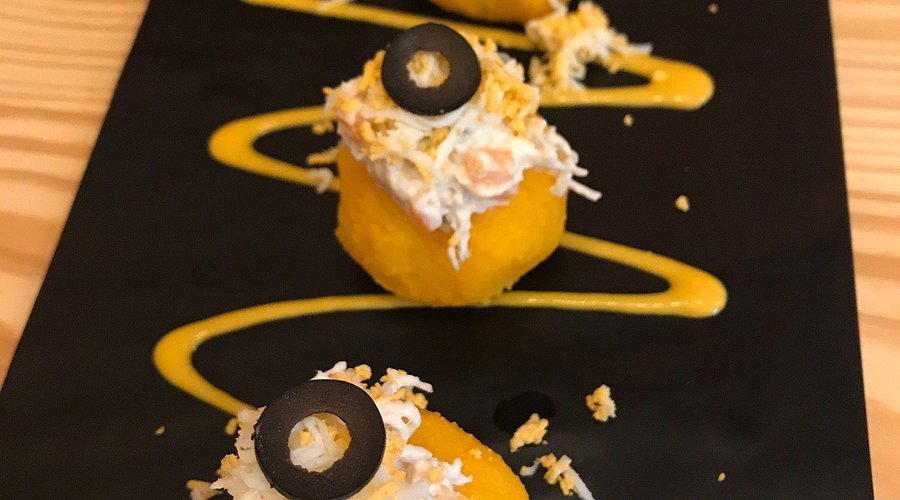
Pisco & Lima exists in a register that allows for more spontaneous use. La Latina rewards the kind of grazing approach that Spanish dining culture has always accommodated: a ceviche and a pisco sour at the bar, or a fuller table meal anchored by a lomo saltado or ají de gallina. The neighbourhood's grid of streets around Plaza de la Paja and Calle Cava Baja creates a natural dining circuit, and a Peruvian kitchen here functions as a distinct node within that circuit rather than a destination in isolation.
Peru's Place in Spain's Broader Dining Conversation
Spain's restaurant culture at the high end has historically been defined by the Basque Country and Catalonia, with Madrid operating as the commercial centre that absorbs talent from those regions. The Michelin-starred kitchens that draw international visitors, from Arzak in San Sebastián and Mugaritz in Errenteria to El Celler de Can Roca in Girona and Martin Berasategui in Lasarte-Oria, are predominantly rooted in northern Spanish and Catalan traditions. Peruvian restaurants occupy a parallel track, valued for a completely different set of techniques and flavour profiles.
The broader Spanish fine dining map also includes sustainability-forward kitchens like Azurmendi in Larrabetzu, which has built its reputation partly on biodynamic sourcing and kitchen garden integration, and Aponiente in El Puerto de Santa María, where chef Ángel León's focus on marine ingredients and zero-waste ocean cooking has become one of the defining projects in Spanish gastronomy. Peruvian kitchens in Madrid operate in a different price band and format, but the underlying sourcing logic connects: cuisine built around fish, acid, and starch is structurally less resource-intensive than protein-heavy European tasting menus.
For readers tracking Spanish restaurant culture across regions, the full picture extends to Quique Dacosta in Dénia, Ricard Camarena in València, Cocina Hermanos Torres in Barcelona, and Atrio in Cáceres. Madrid's own scene is covered in depth in our full Madrid restaurants guide.
Planning Your Visit
| Detail | Pisco & Lima by José Antonio | Comparable Peruvian-style / casual Madrid options |
|---|---|---|
| Location | C. de la Cebada, 3, La Latina, 28005 Madrid | Spread across Lavapiés, La Latina, Malasaña |
| Price tier | Not confirmed — verify on arrival | Generally €20–45 per head at comparable venues |
| Booking | Walk-ins common at casual Peruvian restaurants | |
| Leading timing | La Latina busiest Fri–Sat evening and Sunday post-Rastro | Weekday lunch typically quieter across the neighbourhood |
| Format | Peruvian ceviche and pisco bar format (unconfirmed) | À la carte standard across neighbourhood category |
Frequently asked questions
What's the vibe at Pisco & Lima by José Antonio?
Pisco & Lima sits on Calle de la Cebada in La Latina, a street where neighbourhood bars have been the default format for decades. The register here is informal and counter-oriented rather than formal dining, which fits the surrounding block well. Expect a lively room shaped more by the energy of pisco-based drinks and shared plates than by white-tablecloth ceremony.
Where is Pisco & Lima by José Antonio located?
Pisco & Lima by José Antonio is located at C. de la Cebada, 3, Centro, 28005 Madrid, Spain, Madrid.
Is Pisco & Lima by José Antonio a good option for experiencing Peruvian cuisine in Madrid's La Latina neighbourhood?
La Latina is defined by Spanish tapas tradition, which makes a Peruvian counter on Calle de la Cebada a deliberate counterpoint rather than a category default. Peru's cuisine carries one of the more coherent cross-cultural arguments of any Latin American tradition — nikkei, chifa, and coastal Creole techniques all within a single menu framework — and Madrid has become one of Europe's more active cities for this food. Pisco & Lima by José Antonio sits at the intersection of that broader Spanish-Peruvian dining conversation and a neighbourhood with its own strong local identity.
What do regulars order at Pisco & Lima by José Antonio?
The pisco-driven drinks programme is a consistent draw given pisco's protected denomination of origin status in Peru — regulars tend to anchor an evening around those before moving to food. Peruvian cooking in Madrid typically centres on ceviche, tiradito, and causa formats, which align with what a kitchen named Pisco & Lima would logically anchor its menu around. Specific dishes are best confirmed directly with the venue.
Do they take walk-ins at Pisco & Lima by José Antonio?
La Latina operates on a walk-in culture more than most Madrid neighbourhoods, and smaller Peruvian counters in the area tend to accommodate drop-ins, particularly outside Friday and Saturday peak hours. That said, booking ahead is the lower-risk approach for a venue on a well-trafficked street like Calle de la Cebada. Contact the venue to confirm their current reservation policy.
What's the signature at Pisco & Lima by José Antonio?
The name itself signals the dual focus: pisco as the drinks backbone and Lima as the culinary reference point. Pisco carries a formal denomination of origin regulated since the 1990s, so the spirits list is likely to reflect that regional specificity rather than a generic Latin American spirits approach. The food signature would logically follow Lima's canon — acid-led, seafood-forward preparations built around leche de tigre and similar techniques.
What if I have allergies at Pisco & Lima by José Antonio?
Peruvian cooking relies heavily on seafood, citrus, and chilli as structural ingredients across most dishes, so shellfish and fish allergies are worth flagging before you order. Ají amarillo and other Peruvian chillies appear across most cuisine in this tradition, which matters for spice sensitivities. check the venue's official channels on arrival or in advance to discuss specific requirements, as menu compositions shift seasonally.
Style and Standing
Comparable venues nearby, for context on price, style, and recognition.
| Venue | Cuisine | Price | Awards | Notes |
|---|---|---|---|---|
| Pisco & Lima by José AntonioThis venue — the venue you are viewing | Authentic Peruvian Ceviche and Cocina | $50–100 | Not listed | Not listed |
| Mosaico | Creative Mediterranean-Spanish | $30–50 | Not listed | Universidad |
| Sr. Ito | Japanese-Spanish Fusion | $30–50 | Macarfi 6.5 Food Rating | Chueca |
| Sala de despiece | Modern Spanish Avant-Garde Tapas | $50–100 | Not listed | Rios Rosas |
| La Dorita | Authentic Argentine Parrilla | $30–50 | Not listed | Nueva Espana |
| ZÍNGARA MADRID | Modern Vegetarian Fusion | $30–50 | Macarfi 6.8 Food Rating | Justicia |