Pierogi Boys
Pierogi Boys brings Polish-American comfort cooking to New York City, centering its menu on the dumpling tradition that defines Central European home kitchens. In a city where Polish cuisine occupies a narrow but loyal niche, the restaurant positions itself as a casual, filling-forward counterpoint to the tasting-menu tier. Expect pierogi in multiple forms, hearty accompaniments, and pricing that sits well below the city's fine-dining bracket.
Pearl is the En Primeur Club membership app — saves, bookings, and concierge access live there. Same editors, same standards.
- Address
- New York City, United States
- Phone
- +19293682768
- Website
- pierogiboys.com
- Directions
- Get directions
 Saves & bookings on Pearl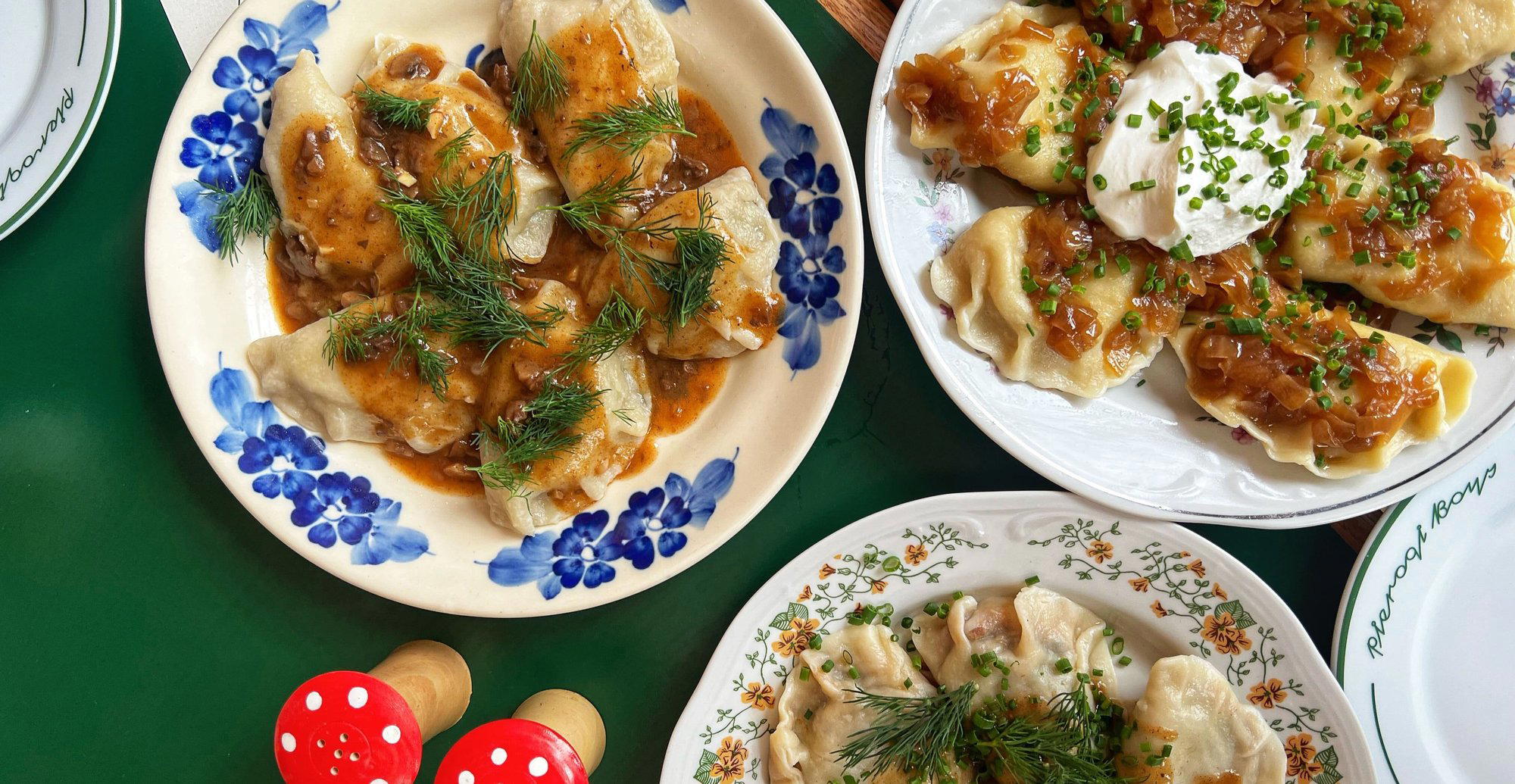
The Dumpling as Menu Architecture
In most New York restaurants, the menu is an argument. What a kitchen chooses to repeat, vary, and anchor tells you more about its identity than any mission statement. At Pierogi Boys, that argument is built almost entirely around a single format: the pierogi. The folded, boiled, and often pan-crisped dumpling of Central European tradition becomes not a single menu item but the organizing principle of the entire offer. Fillings, toppings, and accompaniments radiate outward from that center. That kind of focused structure is relatively rare in a city where menus tend toward range and eclecticism, and it places Pierogi Boys in a different competitive conversation than its neighborhood peers.
Polish cuisine in New York has never commanded the same critical attention as, say, the Korean kitchens at Atomix or the French precision of Le Bernardin. That gap is partly cultural, Polish-American food in this country arrived through immigrant communities in Brooklyn and Queens rather than through fine-dining institutions, and partly because the cuisine resists the tasting-menu format that earns Michelin attention. You cannot stretch a pierogi into twelve courses at the price point of Masa or Per Se. What you can do is execute the dumpling with consistency, vary the filling repertoire thoughtfully, and let the product speak without architectural flourish.
What the Filling Roster Reveals
A pierogi menu functions like a wine list organized by grape variety: the format is fixed, so differentiation lives entirely in what goes inside and how the exterior is treated after boiling. The traditional Polish range runs from potato and farmer's cheese through sauerkraut and mushroom to meat-filled variants, with sweet options appearing in some regional traditions. A kitchen that expands that roster into American or fusion territory is making a statement about its audience; one that holds close to the Central European canon is making a different statement about authenticity and source material. Pierogi Boys, as its name suggests, situates itself on the side of the tradition rather than away from it, though the specifics of its current filling list are best confirmed directly with the venue before visiting.
The comparable restaurant in the international Polish dining conversation is Matka in Paris, which approaches Polish home cooking from a modern European editorial position, and Restauracja Solmarina in Wiślinka, which operates in a regional Polish context with access to local produce and traditions. New York's Polish-American kitchens occupy a third position: diaspora cooking with its own evolution, shaped by ingredient availability and by the preferences of a community that has been in the city for generations. The closest direct peer in New York is Pierozek, another Polish-focused venue in the city that similarly anchors its menu in the dumpling tradition.
Where Polish Fits in New York's Casual Dining Tier
New York's casual dining tier has expanded significantly over the past decade, with cuisines from across Eastern and Central Europe finding more consistent footing alongside the long-established Polish-American enclaves of Greenpoint in Brooklyn. The Greenpoint neighborhood, sometimes called Little Poland, has historically been where the city's Polish community concentrated its food culture: butcher shops, bakeries, and sit-down restaurants serving bigos, kielbasa, and pierogi to a largely local clientele. That geography still holds, though the audience has broadened as the neighborhood's demographic has shifted.
A dumpling-specialist format, regardless of national tradition, has proven durable across New York's borough dining culture. The model works because it offers clear value, a legible menu, and a product that travels reasonably well for those ordering off-premise. It also builds a recognizable identity quickly, which matters in a city where restaurants compete for attention against establishments with the marketing infrastructure of Blue Hill at Stone Barns and the institutional prestige of The French Laundry. Specialization is one of the few reliable ways to generate word-of-mouth in that environment.
Across the United States, regional and ethnic comfort-food specialists have shown staying power in cities with strong food cultures. Emeril's in New Orleans built its identity around a specific regional cuisine; Bacchanalia in Atlanta anchors its menu in Southern and American seasonal produce. The mechanism is different at the casual end of the market, but the principle holds: clarity of focus builds a more loyal return audience than generic breadth.
The Experience at Ground Level
Dining at a pierogi specialist in New York is a different register from the precision-service environments of Alinea in Chicago or the farm-to-counter ambition of Single Thread Farm in Healdsburg. The format is inherently informal. Pierogi arrive in portions rather than as composed plates, and the meal tends to be organized around appetite rather than a chef-set progression. That informality is not a deficit; it is the product category. Polish home cooking was never a tasting-menu tradition, and restaurants that try to reframe it as one typically lose the thing that made it worth eating in the first place: the directness, the weight, the lack of affectation.
For visitors approaching Pierogi Boys from outside the Polish-American dining context, particularly useful framing is to think of it as a dumpling house in the Eastern European mode rather than a pan-Asian dumpling bar. The flavors are rooted in dairy, pork, fermented vegetables, and earthy mushrooms; the fats are butter and sour cream rather than soy and sesame. It is filling food built for cold-weather appetites, and it does not apologize for that. Restaurants like Providence in Los Angeles or Addison in San Diego operate in an entirely different register of technique and occasion; the restaurant serves a different purpose and a different moment in a diner's week.
Planning a Visit
Visitors should verify current location and operating hours directly before making a trip. The restaurant's name and format suggest a casual, walk-in-friendly operation rather than a reservations-required destination, but that should be confirmed. For anyone building a wider Polish dining itinerary in New York, Pierozek is the natural companion stop, and the Greenpoint neighborhood in Brooklyn provides one concentrated context for understanding the city's Polish food culture outside of a single restaurant visit. Readers interested in how premium tasting formats compare across the country will find useful reference points at Lazy Bear in San Francisco and The Inn at Little Washington, though both operate at a considerable distance from the restaurant in price, format, and occasion.
The Minimal Set
Comparable venues nearby, for context on price, style, and recognition.
| Venue | Cuisine | Price | Notes |
|---|---|---|---|
| Pierogi BoysThis venue — the venue you are viewing | Not listed | $ | Not listed |
| Lhasa Fast Food | Jackson Heights, Tibetan Momos | $ | Not listed |
| Industria Argentina | Not listed | $$ | Tribeca-Civic Center, Authentic Argentine Steakhouse |
| B&H Dairy | East Village, Kosher Vegetarian Dairy | $ | Not listed |
| Seafood Momo | Not listed | $ | Queensbridge-Ravenswood-Dutch Kills, Tibetan Momo |
| Kalye | Not listed | $$ | Lower East Side, Authentic Filipino Street Food |
Continue exploring
More in New York City
Restaurants in New York City
Browse all →
Bars in New York City
Browse all →
Hotels in New York City
Browse all →







At a Glance
- Cozy
- Rustic
- Casual Hangout
- Open Kitchen
- Beer Program
Cozy Eastern European comfort food spot in bustling market hall with fresh dumpling preparation visible.