B&H Dairy

A Second Avenue fixture since the 1930s, B&H Dairy is an East Village kosher luncheonette recognized by New York Magazine's 43 Best Restaurants in New York (2025). The menu reads like a document of Ashkenazi dairy-counter tradition: borscht, blintzes, challah French toast, and daily soups in a counter-and-booth room that has changed remarkably little over the decades.
Pearl is the En Primeur Club membership app — saves, bookings, and concierge access live there. Same editors, same standards.
- Address
- 127 2nd Ave, New York, NY 10003, United States
- Phone
- +1 212-505-8065
- Website
- bandhdairykosher.com
- Directions
- Get directions
 Saves & bookings on Pearl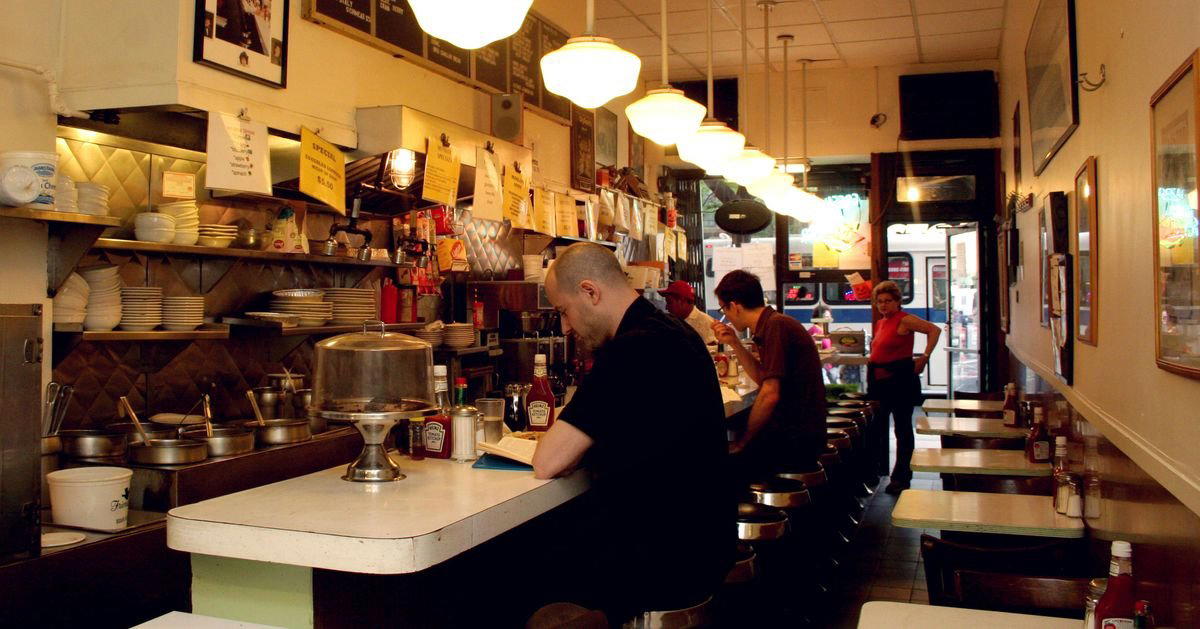
The East Village Counter Tradition
Second Avenue between St. Mark's Place and 10th Street was once called the Yiddish Broadway, a corridor of theatres, cafes, and dairy restaurants that served the Lower East Side's immigrant communities through the early and mid-twentieth century. Most of that infrastructure is gone. B&H; Dairy, at 127 2nd Avenue, is a kosher vegetarian dairy restaurant in New York City. Its continued presence on New York Magazine's list of the 43 Best Restaurants in New York for 2025 is not sentimental recognition; it reflects the fact that the food remains the point.
The dairy luncheonette format was an answer to dietary law. Kosher observance prohibits mixing meat and dairy, which created a distinct restaurant category: the milchig counter, where eggs, cheese, fish, soups, and baked goods could be served without the complications of a meat kitchen. These counters were never luxury operations. Their credibility came from consistency, from borscht made the same way every week, from challah that arrived fresh, from soups that changed with the day but stayed within a recognizable register. The menu was the institution, and the institution was the menu.
Reading the Menu as a Document
The menu architecture at B&H; Dairy reflects that tradition directly. It is organized around categories that predate contemporary restaurant logic: soups, eggs, blintzes, sandwiches, and daily specials. There is no tasting progression, no chef's narrative arc, no seasonal introduction written in the second paragraph of a printed card. The format communicates something specific: this is a counter, these are the dishes, here is what is available today.
That structural plainness is itself an editorial position. At a time when New York's dining scene places significant weight on menu storytelling, from the multi-course omakase format at Masa to the vegetable-led progression at Eleven Madison Park, the B&H; menu refuses the frame entirely. It does not invite the diner into a concept. It presents options. The borscht is borscht. The challah French toast is challah French toast. The implicit argument is that the dish itself is sufficient reason to be here.
The soup program anchors the menu in a way that reveals kitchen priorities. Rotating daily soups at a small counter require either a simplified production system or genuine commitment to the format. The soup list at B&H; has historically included mushroom barley, cabbage, lentil, and split pea alongside the borscht that functions as the near-permanent fixture. For the dairy counter tradition, soup was never a starter in the contemporary sense; it was often the meal, served with bread, representing the economics and practicality of the original customer base.
Where B&H; Sits in New York's Dining Conversation
New York's restaurant conversation in 2025 is concentrated at price points and formats that have almost nothing in common with a kosher luncheonette. The comparison set for the city's most-covered restaurants runs from Le Bernardin and Per Se at the three-Michelin-star end to technically ambitious newcomers like Atomix. The significance of B&H; appearing on the same New York Magazine list is that the editors are making a specific claim about what constitutes a meaningful restaurant in this city.
That claim has a track record. Luncheonettes and counter restaurants have periodically attracted serious critical attention not despite their simplicity but because of what their longevity implies about quality and community function. The Yiddish Broadway corridor no longer exists as a cultural district, but the food it produced is specific enough, technically identifiable enough, that a counter still executing it well occupies a distinct position in any honest account of New York's dining range. It is not a curiosity. It is a data point about what this city has been willing to keep.
The East Village as Context
The neighbourhood around 127 2nd Avenue has cycled through significant demographic and commercial change since B&H; opened in the 1930s. The East Village of 2025 is a different place from the one that originally sustained the dairy counter trade. Rents have shifted the commercial character of Second Avenue, and the Jewish immigrant community that created the dairy restaurant format has largely dispersed. What remains is a counter serving a mixed clientele, some of whom come for the tradition and some of whom encounter the format for the first time without that context.
This is a pattern visible in other American cities where mid-century ethnic restaurant traditions have outlasted their original communities. What were once neighbourhood institutions serving a specific population become, over time, both a resource for that community's descendants and an entry point for diners outside it. The menu holds the institutional memory regardless of who is sitting at the counter. Comparable survivals exist in other formats and cities; the lunch counter tradition in New Orleans documented at Emeril's in New Orleans and the persistence of regional American cooking at places like Lazy Bear in San Francisco point to the same underlying pattern: restaurants that maintain a clear identity across decades accumulate a different kind of authority than those defined by a single moment or trend.
For more reference points on American regional cooking at the destination end of the spectrum, Alinea in Chicago, Single Thread Farm in Healdsburg, The French Laundry in Napa, and Providence in Los Angeles each represent the opposite pole of the same national conversation about what American restaurants can be. Internationally, 8 1/2 Otto e Mezzo Bombana in Hong Kong and Alain Ducasse at Louis XV in Monte Carlo demonstrate the range of contexts in which sustained culinary identity earns long-term recognition.
Credentials Lens
Comparable venues nearby, for context on price, style, and recognition.
| Venue | Cuisine | Price | Notes |
|---|---|---|---|
| B&H DairyThis venue — the venue you are viewing | Kosher Vegetarian Dairy | $ | Not listed |
| CoCo Fresh Tea & Juice | Bubble Tea & Fresh Juice | $ | Flushing-Willets Point |
| Benfaremo, the Lemon Ice King of Corona | Italian Ice | $ | Corona |
| Crown Finish Caves | Artisanal Cheese Affinage Facility | $$ | Crown Heights (North) |
| Village Café | Authentic Azerbaijani | $$ | Gravesend (East)-Homecrest |
| Oda House | Authentic Georgian | $$ | Upper East Side-Lenox Hill-Roosevelt Island |
Recognition history
Dated appearances from independent guides and award organizations, with the underlying list record or original source where available.
New York Magazine The 43 Best Restaurants in New York
New York Magazine
Continue exploring
More in New York City
Restaurants in New York City
Browse all →
Bars in New York City
Browse all →
Hotels in New York City
Browse all →





At a Glance
- Classic
- Cozy
- Well Known
- Casual Hangout
- Solo
- Brunch
- Historic Building
Current opening hours
- Monday
- Closed
- Tuesday
- 7 a.m.–11 p.m.
- Wednesday
- 7 a.m.–11 p.m.
- Thursday
- 7 a.m.–11 p.m.
- Friday
- 7 a.m.–11 p.m.
- Saturday
- 7 a.m.–11 p.m.
- Sunday
- 7 a.m.–11 p.m.
Hours can change for holidays and private events. Last verified .
Narrow, cramped counter seating with a lively, nostalgic diner atmosphere featuring busy counter staff shouting orders amid the hum of classic New York Jewish soul food preparation.