Petty Cash occupies a fixed address on Adelaide Street West in Toronto's Entertainment District, where the city's mid-market dining conversation plays out in real time. The menu structure here signals priorities before a single dish arrives, placing it in a distinct tier from both the tasting-menu circuit and the casual-order format that dominates the surrounding blocks. A useful reference point for understanding how Toronto's non-tasting-menu category is developing.
Pearl is the En Primeur Club membership app — saves, bookings, and concierge access live there. Same editors, same standards.
- Address
- 487 Adelaide St W, Toronto, ON M5V 1T4, Canada
- Phone
- +16475602411
- Website
- pettycashtoronto.com
- Directions
- Get directions
 Saves & bookings on Pearl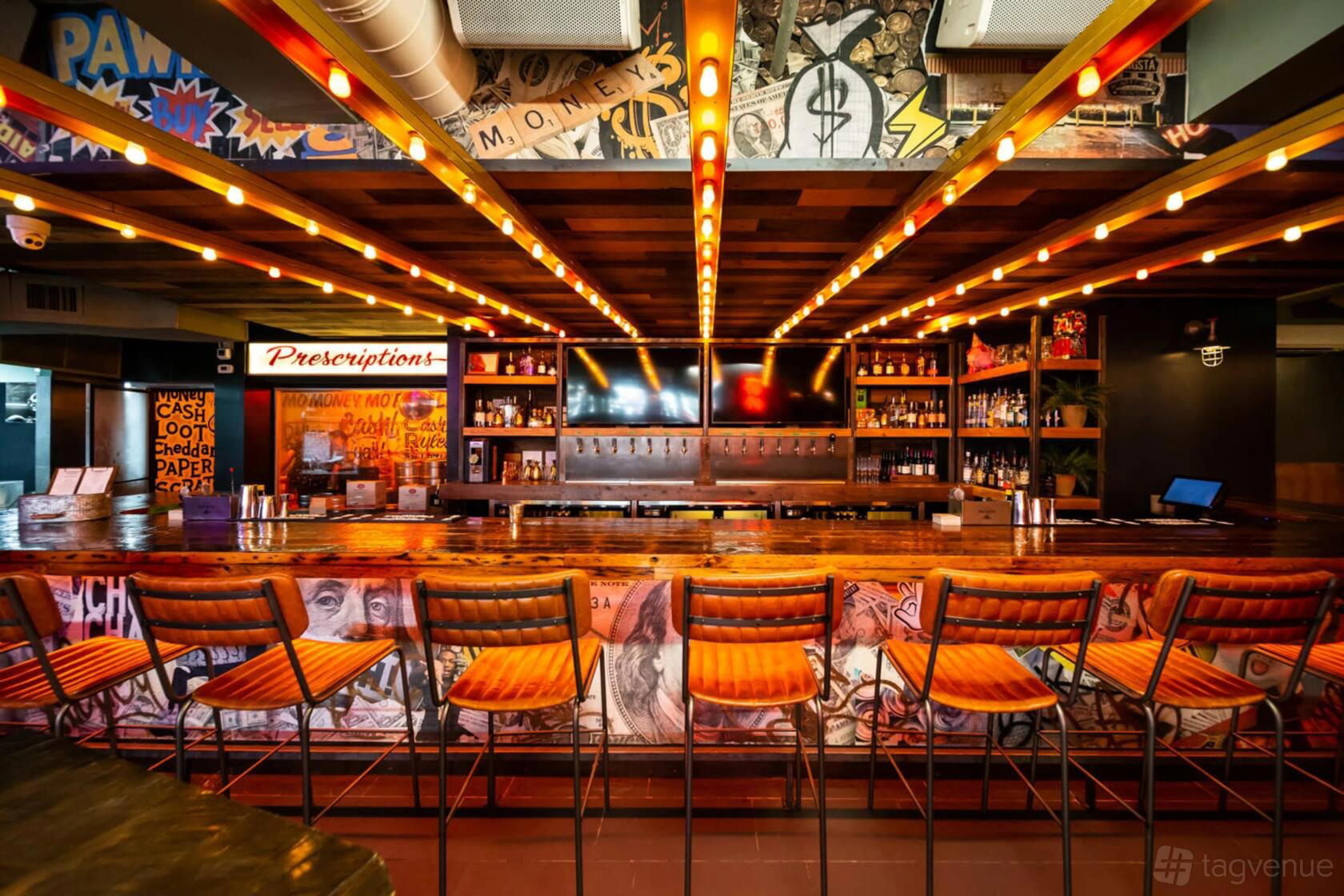
Adelaide West and the Mid-Market Question
It is not the city's most celebrated address: that distinction belongs further north, where Alo anchors Toronto's tasting-menu tier at the summit of the price range, and where omakase counters like Sushi Masaki Saito and kaiseki formats like Aburi Hana operate at $$$$ with strict format discipline. Adelaide West plays a different game. This is where restaurants compete on menu architecture rather than prestige format, where the structure of a list, how many sections, how ordering flows, what the kitchen chooses to foreground, does more to define the experience than the room or the reputation.
Petty Cash sits at 487 Adelaide St W inside that context. With no listed chef name in the public record and no declared awards, it operates with a lower profile than the formal Italian programs at DaNico or Don Alfonso 1890. That lower profile is itself an editorial data point: in Toronto's current dining environment, the restaurants that resist easy categorization are often the ones worth reading carefully.
What the Menu Structure Reveals
Menu architecture, as a critical tool, is underused. Most diners scan for familiar terms or price anchors. But the way a kitchen organizes its offerings, whether it separates starters from mains with strict formality, whether it flattens everything into a single sharing format, whether it prices by portion or by ingredient, communicates the kitchen's assumptions about how its guests eat and what kind of evening they are building.
Toronto's mid-market segment has largely moved toward a sharing-plate model borrowed from the wave of Australian and Spanish-influenced restaurants that reshaped the city's approach to informal dining in the early 2010s. That format flattens hierarchy: there are no starters and mains in the old sense, only larger and smaller plates that can arrive in any order the kitchen chooses. It suits a certain kind of social dining, and it has become so prevalent in the Entertainment District that a restaurant choosing a more structured format now reads as a deliberate counter-statement.
The useful comparison is to the broader category behavior of similarly positioned venues on the same street. It sits inside the larger, less curated field of independent mid-market restaurants where the menu itself carries most of the communicative weight. That is a harder position to hold: there is no award shorthand, no format prestige, no celebrity chef credential to do the work. The kitchen has to earn its argument on the plate.
Toronto's Independent Tier in Context
Canada's most discussed restaurants in 2024 span a wide geographic and stylistic range. Tanière³ in Quebec City operates with a hyper-regional Nordic-influenced tasting format that has attracted sustained national attention. AnnaLena in Vancouver holds a position in the Pacific Northwest's ingredient-driven mid-range, and Jérôme Ferrer's Europea in Montreal anchors a formal French-influenced tier in Quebec's largest city. Ontario's contribution to this broader Canadian conversation is not limited to Toronto's downtown core: Restaurant Pearl Morissette in Lincoln and Eigensinn Farm in Singhampton represent a rurally anchored, destination-dining mode that has no equivalent in the city center.
Within Toronto itself, independent restaurants without tasting-menu commitments occupy a competitive space that is both large and poorly mapped. There are hundreds of options. Venues that hold a loyal regular crowd without sustained media coverage tend to do so through consistency of execution and a menu that rewards repeat visits, not through a single signature dish that photographs well and generates one-time traffic. Petty Cash's presence at its Adelaide West address suggests it is operating in that repeat-visit register. That is not a consolation prize. In Toronto's volume-heavy Entertainment District, it is a meaningful form of durability.
For readers building a broader Ontario itinerary, the province's dining range extends to venues like The Pine in Creemore, Barra Fion in Burlington, and further afield to Narval in Rimouski. The historic register is covered by venues like Aux Anciens Canadiens in Quebec. For international comparison points at the formal end of the spectrum, Le Bernardin in New York City and Atomix in New York City represent the tasting-menu ceiling that Toronto's top tier benchmarks against.
The Entertainment District as Dining Environment
The Entertainment District around King and Adelaide West is Toronto's highest-turnover dining zone. Pre-theatre traffic, post-work groups, and weekend visitors from outside the core cycle through at a pace that rewards efficient, high-volume kitchens. Restaurants that survive here across multiple years are either operating at significant scale or have found a loyal neighborhood-adjacent crowd that fills seats on slower midweek nights when the theatre buses don't run.
This context shapes what a menu needs to do. Dishes that are too cerebral or too slow lose the room during peak service. Pricing that reads as poor value against the street's competition drives guests toward the next block. The sustained presence of independently operated restaurants in this corridor, without chain infrastructure to absorb losses, is a reasonable proxy for quality of execution even where award signals are absent.
For a sense of how the city's formal end compares to international peers, Bearspaw Golf Club in Calgary offers a western Canadian reference point for the country's club-dining format.
Know Before You Go
- Address: 487 Adelaide St W, Toronto, ON M5V 1T4, Canada
- Neighbourhood: Entertainment District, Toronto
- Price tier: Moderate, about $38 per person
- Reservations: Recommended
- Hours: Mon: 5 PM-12 AM; Tue: 5 PM-2 AM; Wed: 5 PM-2 AM; Thu: 5 PM-2 AM; Fri: 5 PM-2 AM; Sat: 5 PM-2 AM; Sun: 5 PM-2 AM
- Nearest context: Adjacent to the Adelaide West corridor's mid-market dining cluster
Peers Worth Knowing
Comparable venues nearby, for context on price, style, and recognition.
| Venue | Cuisine | Price | Notes |
|---|---|---|---|
| Petty CashThis venue — the venue you are viewing | Modern American Gastropub | $$ | Not listed |
| Aloette Go | Modern American Burgers & Fried Chicken | $$ | Liberty Village |
| Indie Alehouse Brewing Co. | Craft Brewpub with Wood-Fired Pizza | $$ | The Junction |
| The County General | Southern Comfort & BBQ Fusion | $$ | West Queen West |
| Holy Chuck | Gourmet Burgers | $$ | Deer Park |
| Almond Butterfly Bistro | Gluten-Free American Bistro | $$ | Little Italy |
Continue exploring
More in Toronto
Restaurants in Toronto
Browse all →
Bars in Toronto
Browse all →

Hotels in Toronto
Browse all →

At a Glance
- Lively
- Trendy
- Energetic
- Casual Hangout
- Group Dining
- After Work
- Open Kitchen
- Craft Cocktails
Current opening hours
- Monday
- 5 PM–12 AM
- Tuesday
- 5 PM–2 AM
- Wednesday
- 5 PM–2 AM
- Thursday
- 5 PM–2 AM
- Friday
- 5 PM–2 AM
- Saturday
- 5 PM–2 AM
- Sunday
- 5 PM–2 AM
Hours can change for holidays and private events. Last verified .
Lively and fun with a casual, energetic vibe well-suited for hanging out.