perretxiCo Narváez sits in the Retiro district on Calle de Narváez, operating within Madrid's expanding tier of neighbourhood-rooted Basque-influenced dining. The address places it away from the Grand Via circuit, in a residential pocket where the dining room itself does a significant share of the editorial work. For visitors calibrating between the capital's headline creative tables and something more grounded in regional Spanish tradition, this is a considered stop.
Pearl is the En Primeur Club membership app — saves, bookings, and concierge access live there. Same editors, same standards.
- Address
- C. de Narváez, 40, Retiro, 28009 Madrid, Spain
- Phone
- +34918752079
- Website
- perretxico.es
- Directions
- Get directions
 Saves & bookings on Pearl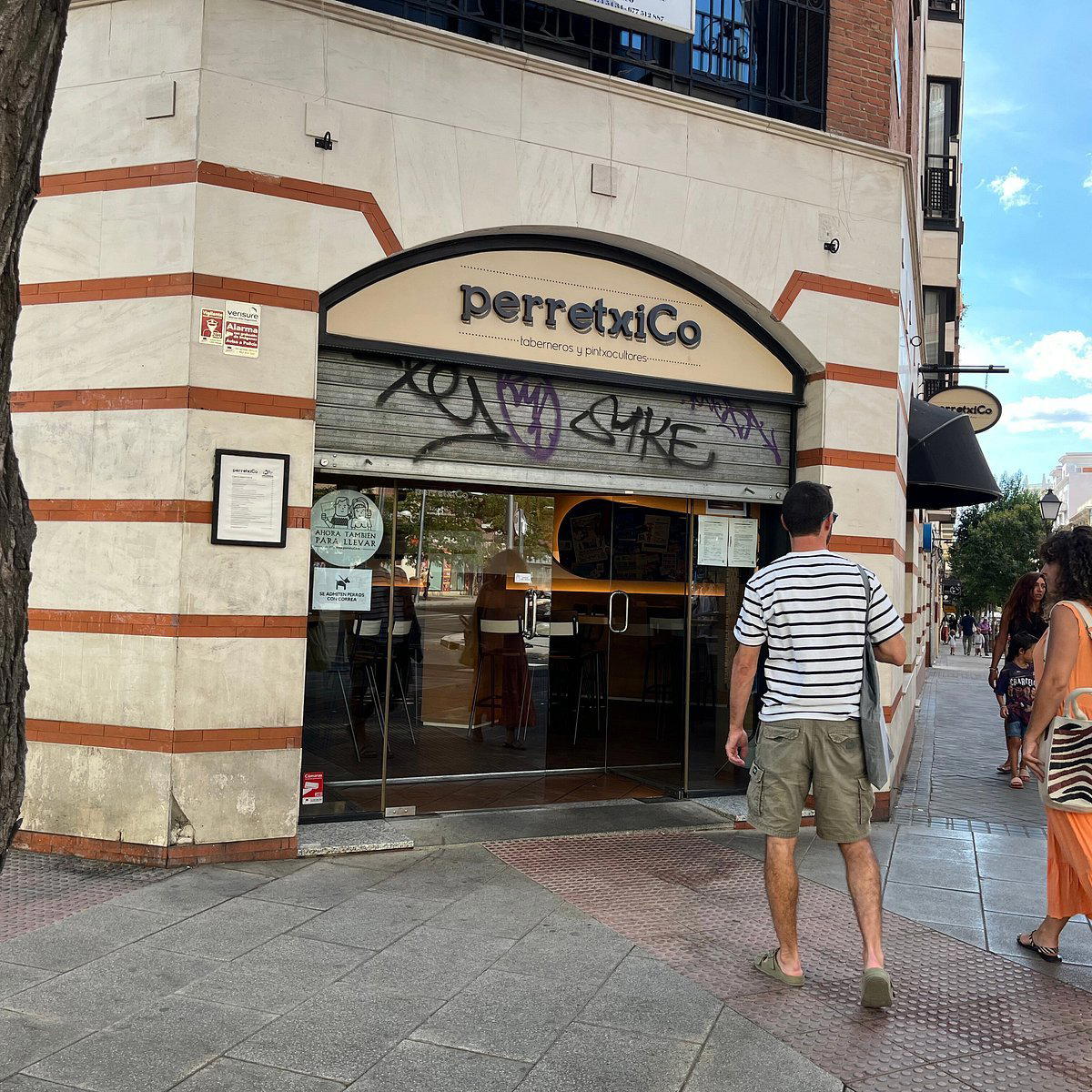
The Room Before the Plate
In Madrid's Retiro district, the dining rooms that hold attention longest tend to be the ones that resist decoration as performance. Calle de Narváez, running through a residential quarter east of the Retiro park, has attracted a cluster of serious-minded restaurants precisely because the neighbourhood doesn't demand spectacle. The street-level context is unhurried: apartment blocks, local commerce, the kind of foot traffic that belongs to people who live nearby rather than people who have arrived on a tour itinerary. perretxiCo Narváez is a Basque pintxos and traditional Spanish restaurant in Madrid's Retiro district.
The name itself is a signal. Perretxiko is the Basque word for the St George's mushroom, a wild fungi prized in northern Spanish cooking for its brief spring appearance and its intensity relative to its size. Naming a Madrid restaurant after that ingredient is a positioning choice: it orients the kitchen toward Basque culinary tradition without literally relocating it. That tension between the capital's appetite for cosmopolitan ambition and the Basque Country's deep-rooted product discipline is one of the more productive creative pressures in contemporary Spanish dining.
Space as Editorial Statement
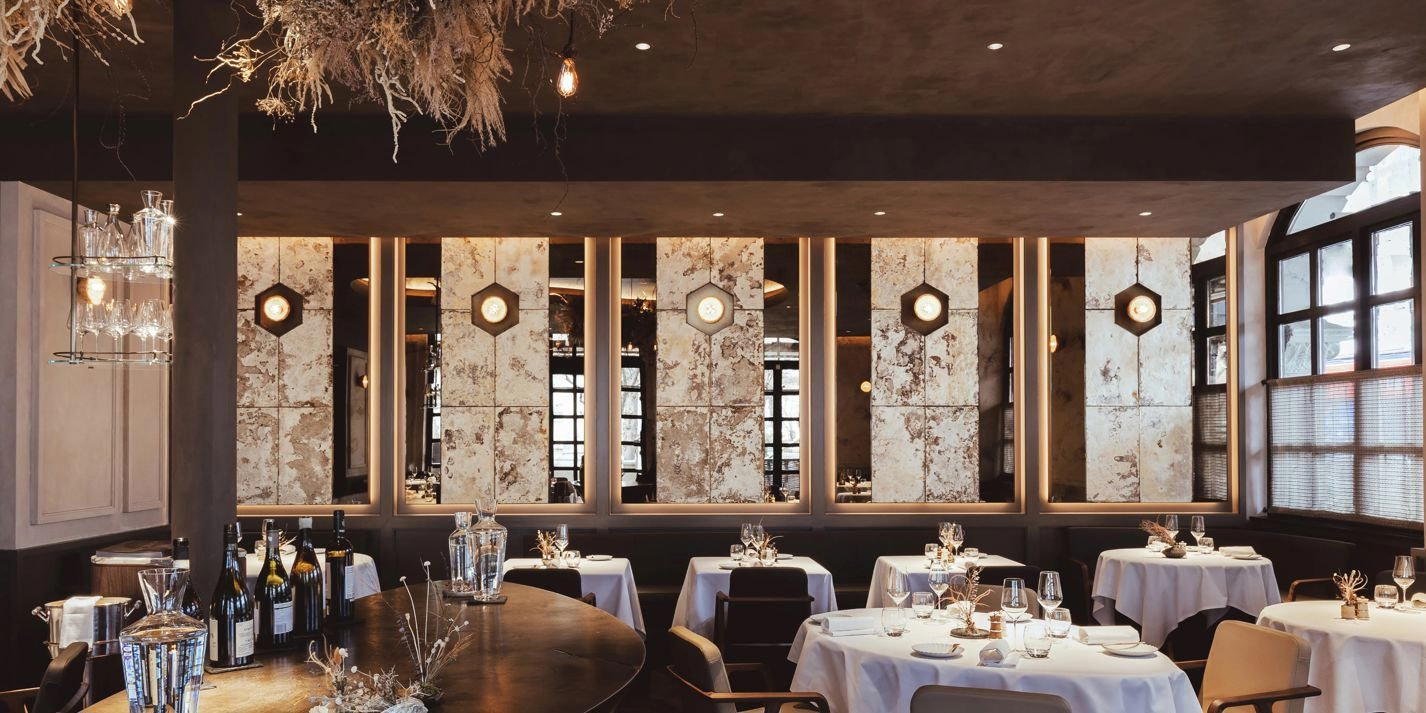
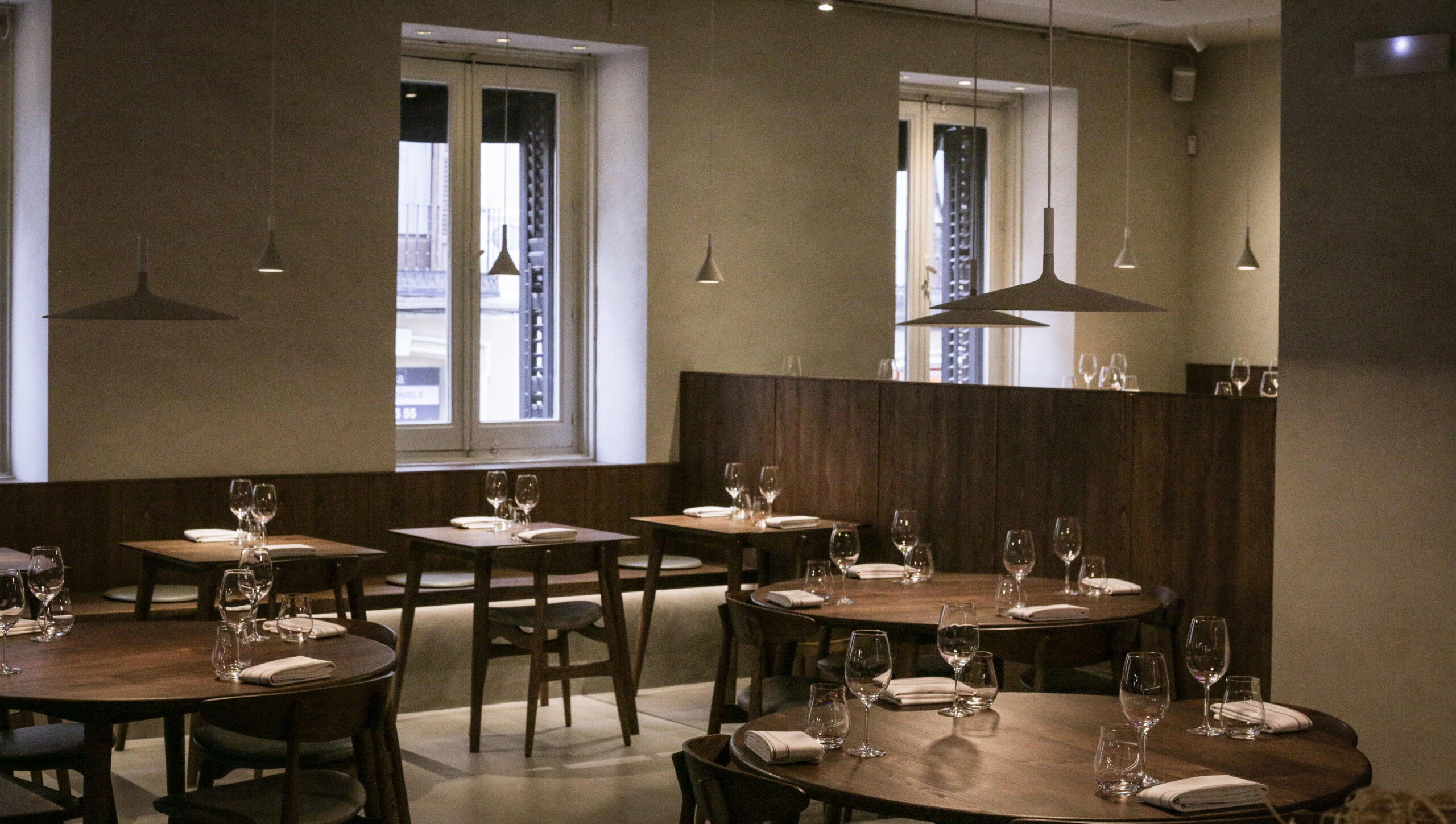
Madrid's upper-middle dining tier has spent the last decade splitting between two spatial philosophies. One school produces rooms designed for social visibility: high ceilings, open kitchens framed like theatre stages, lighting calibrated for photography. The other produces spaces where the architecture recedes, where seating arrangements prioritise conversation over display, and where the physical container signals that the kitchen, not the room, is meant to carry the evening. perretxiCo Narváez belongs to the second tendency.
That placement in the quieter spatial register is increasingly rare in a city where restaurant design has trended toward statement interiors as competitive differentiation. Retiro's residential character supports it: the neighbourhood doesn't deliver the same walk-in tourist volume as Chueca or Malasaña, which means the room doesn't need to work as a billboard. It can function as a dining room in the older sense, a space where the seating arrangement and the pace of service are the primary design moves.
Compare the spatial logic here with Coque, where a 19th-century soda factory provides an enormous, historically layered container, or DiverXO, where the room is engineered as an extension of the kitchen's surrealist register. perretxiCo Narváez takes neither approach, which is itself an editorial stance.
Basque Influence in a Madrid Context
The Basque culinary tradition has exercised disproportionate influence over Spanish fine dining for decades. From the nueva cocina vasca movement of the 1970s through the technical laboratories of San Sebastián and the broader Basque Country, the region produced a grammar of precision, product obsession, and iterative technique that the rest of Spain has been in dialogue with ever since. Arzak in San Sebastián and Mugaritz in Errenteria both operate within that tradition at its highest registered tier, with multi-decade track records and sustained international attention.
Bringing that sensibility to Madrid involves translation rather than transplantation. The capital's dining culture is more eclectic, more open to simultaneous influences, and less anchored to a single regional identity than the Basque Country's tightly coherent gastronomic community. A restaurant working with Basque product logic in Madrid is operating in a context where it competes laterally across traditions rather than within a defined regional hierarchy. That makes the creative brief simultaneously more open and more exposed.
El Celler de Can Roca in Girona, Azurmendi in Larrabetzu, and Quique Dacosta in Dénia each represent regional traditions operating at the summit of the Spanish critical register. Within Madrid specifically, DSTAgE, Deessa, and Paco Roncero each occupy positions in the creative modern Spanish tier at the €€€€ price point. The restaurant operates within this competitive environment, distinguished primarily by its Basque-inflected identity and its Retiro address rather than a Grand Via or Salamanca location.
What the Address Signals
Location in Madrid is not incidental to a restaurant's identity. The city's dining geography has developed distinct registers: the Salamanca district carries a traditional affluence associated with classic Spanish cooking and established European formats; the centre's creative cluster around Chueca and Malasaña sustains more experimental programmes; and Retiro occupies a middle position, residential enough to attract a local repeat clientele but connected enough to the centre to draw visitors with specific intent.
A restaurant choosing Calle de Narváez is making a statement about its intended audience. The walk-in rate from tourists is lower than in more central locations. The repeat visit rate from nearby residents is correspondingly higher. That dynamic shapes everything from the pace of service to the degree of experimentation in the menu, because a kitchen cooking for regulars can take longer views than one recalibrating constantly for first-time visitors. Comparable neighbourhood-level commitments elsewhere in Spain are visible at Ricard Camarena in València and Cocina Hermanos Torres in Barcelona, both of which have built significant reputations from addresses that require deliberate effort to reach.
Planning Your Visit
For the purposes of calibrating the restaurant against nearby alternatives, the table below positions it within the relevant Madrid creative dining tier.
| Venue | Area | Price Tier | Style |
|---|---|---|---|
| The restaurant | Retiro | Not confirmed | Basque-influenced |
| Coque | Almagro | €€€€ | Spanish, Creative |
| Deessa | Salamanca | €€€€ | Modern Spanish, Creative |
| DSTAgE | Centre | €€€€ | Modern Spanish, Creative |
| Paco Roncero | Centre | €€€€ | Creative |
For a broader orientation to eating well in the Spanish capital, see our full Madrid restaurants guide. Those planning a wider Spain itinerary around serious dining may also want to reference Aponiente in El Puerto de Santa María, Martin Berasategui in Lasarte-Oria, and Atrio in Cáceres as reference points across the country's premium dining spread.
Category Peers
Comparable venues nearby, for context on price, style, and recognition.
| Venue | Cuisine | Price | Notes |
|---|---|---|---|
| perretxiCo NarváezThis venue — the venue you are viewing | Basque Pintxos and Traditional Spanish | $$ | Not listed |
| Casa Maravillas | Traditional Madrid Cocido & Tapas | $$ | Goya |
| La Flaca | Traditional Spanish Tapas | $$ | Castellana |
| Cucurucho AZCA | Andalusian Seafood & Tapas | $$ | Cuatro Caminos |
| La Retasca | Traditional Madrid Tavern Tapas | $$ | Ibiza |
| Restaurante Adrede | Traditional Spanish Tapas | $$ | Jeronimos |
Continue exploring
More in Madrid
Restaurants in Madrid
Browse all →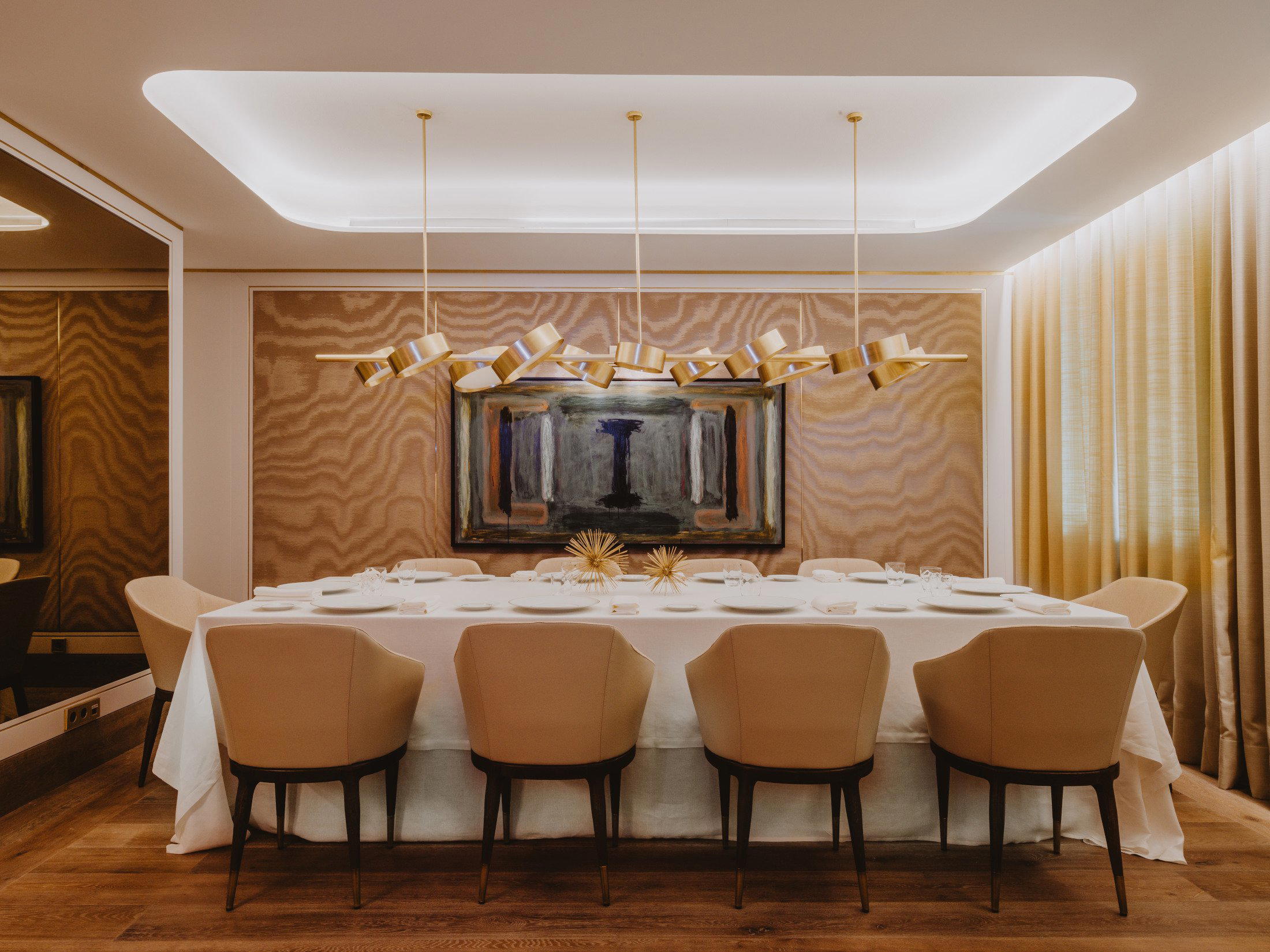
Bars in Madrid
Browse all →
Hotels in Madrid
Browse all →


At a Glance
- Lively
- Cozy
- Casual Hangout
- After Work
- Late Night
- Open Kitchen
Current opening hours
- Monday
- 8 AM–4 PM, 7 PM–12 AM
- Tuesday
- 8 AM–4 PM, 7 PM–12 AM
- Wednesday
- 8 AM–4 PM, 7 PM–12 AM
- Thursday
- 8 AM–4 PM, 7 PM–12 AM
- Friday
- 8 AM–1 AM
- Saturday
- 12 PM–1 AM
- Sunday
- 12–10 PM
Hours can change for holidays and private events. Last verified .
Lively and casual atmosphere with a cozy tavern feel, ideal for tapas and drinks.