Peking Duck House
On Mott Street in Manhattan's Chinatown, Peking Duck House has spent decades as the neighbourhood's most direct answer to the question of what ceremonial roast duck looks like in New York. Positioned below the $$$$ omakase tier of Midtown but above casual takeout, it occupies a deliberate middle ground where the ritual of tableside carving still structures the meal.
Pearl is the En Primeur Club membership app — saves, bookings, and concierge access live there. Same editors, same standards.
- Address
- 28 Mott St A, New York, NY 10013
- Phone
- (212) 227-1810
- Website
- pekingduckhousenyc.com
- Directions
- Get directions
 Saves & bookings on Pearl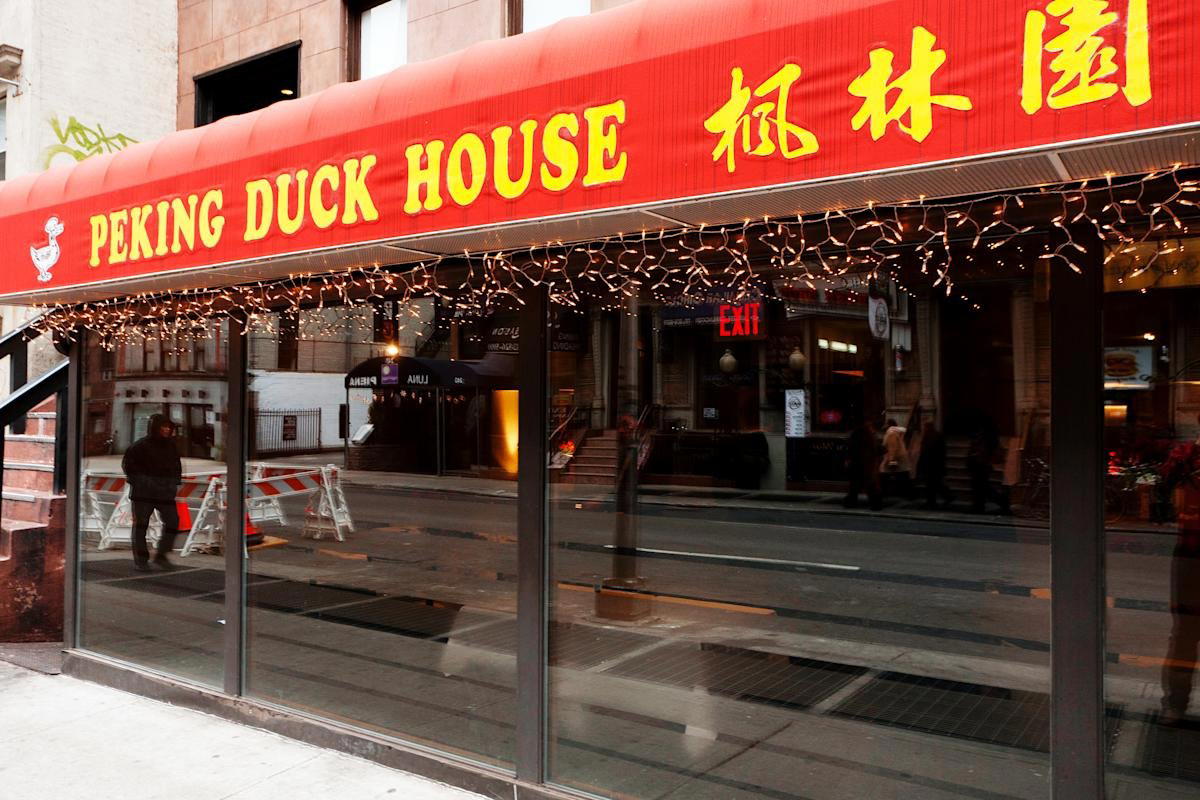
Chinatown's Ceremonial Duck Counter, Placed in Context
Mott Street has been the axis of Manhattan's Chinatown since the late nineteenth century, and the restaurants that have lasted here have done so not through novelty but through function: they serve a specific dish, serve it repeatedly, and let the dish make the argument for return visits. Peking Duck House at 28 Mott Street sits inside that tradition. The preparation it anchors its reputation on, Peking duck, is one of the oldest codified dishes in Chinese cuisine, with imperial court origins documented as far back as the Yuan Dynasty. In a city where tasting-menu formats at places like Masa or Per Se have displaced the shared centrepiece as the dominant premium dining format, a restaurant built around one ceremonial bird feels almost counter-programmatic.
The Ritual at the Table
Peking duck as a culinary category requires a specific production logic: the duck is inflated to separate skin from fat, air-dried, then roasted at high heat to produce the lacquered, crackling skin that is the point of the dish. The skin is served first, wrapped in thin pancakes with scallion and hoisin, and the remaining meat typically follows as a secondary course. This two-act structure is a feature of the tradition, not a compromise. It is what separates a duck house from a general Chinese restaurant that lists Peking duck as one of forty items. In Chinatown specifically, where the density of restaurants is high and price competition is real, the ceremonial duck format functions as a differentiator.
The comparison with the upper end of New York dining is instructive. At Le Bernardin or Atomix, the price per head reflects kitchen labour, ingredient sourcing at a high specification, and a wine and beverage program of significant depth. Peking Duck House operates at a different price point and serves a different purpose, but the structural idea of a single dominant preparation around which the meal is organised is shared. The duck is the menu's argument, and everything else is supporting evidence.
On the Question of Wine at a Duck House
The editorial angle here is worth addressing directly, because wine and Peking duck is a pairing question that generates genuine disagreement. The classic guidance points toward Pinot Noir, particularly from Burgundy or cooler New World regions, on the basis that the dish's fat content and the slight sweetness of hoisin want a wine with both structure and fruit without excessive tannin. Riesling, particularly from Alsace or the Mosel, is the other credible answer: residual sweetness in a demi-sec or spätlese offsets the saltiness of the skin, and the acid cuts through fat cleanly.
Broader point about wine programs at Chinatown restaurants is that they have historically operated with limited cellar depth. This is not a failing distinctive to the neighbourhood; it reflects the economics of a dining category where bottle prices are kept low and beer and tea do most of the work. Diners who want serious wine with their duck are therefore in a position that several New York restaurants at other price tiers handle differently. Jungsik New York, for instance, maintains a sommelier-led program designed to pair with Korean ingredients that present similar pairing challenges: fermentation, fat, and spice in combination. That kind of cellar investment belongs to a different category and price point, but it is useful as a reference for what beverage depth looks like when it is built deliberately around a cuisine's specific demands.
For a duck house in Chinatown, the practical wine answer is to arrive with knowledge of what you want and verify availability. Alternatively, the traditional pairing of Shaoxing rice wine or cold Tsingtao is not a compromise; it is the historically accurate accompaniment and it works well against the dish's fat and char.
Chinatown as a Dining District
Mott Street in 2024 sits within a Chinatown that has experienced significant pressure from rising rents and neighbourhood change, while simultaneously benefiting from renewed interest in regional Chinese cooking across New York. The broader trend in American Chinese dining has moved toward regional specificity: Sichuan, Shanghainese, and Cantonese cooking have all found dedicated audiences in New York, and the demand for technically precise, regionally accurate Chinese food has increased. Peking duck, which is a northern Chinese preparation associated with Beijing rather than the Cantonese tradition that dominated early American Chinese restaurants, fits into that moment of greater specificity.
The gap between a Mott Street duck house and a Midtown tasting counter is not just price; it is format, pace, and intent. Both have a place in a serious diner's rotation.
Planning a Visit
| Venue | Price Tier | Format | Booking Lead Time | Primary Category |
|---|---|---|---|---|
| Peking Duck House (28 Mott St) | $$ | Shared centrepiece, à la carte | Walk-in or short notice | Ceremonial roast duck |
| Atomix | $$$$ | Tasting menu, counter | Months in advance | Modern Korean |
| Jungsik New York | $$$$ | À la carte and tasting | Weeks in advance | Progressive Korean |
| Le Bernardin | $$$$ | Tasting and prix fixe | Weeks in advance | French seafood |
| Per Se | $$$$ | Tasting menu | Months in advance | French contemporary |
Readers planning multi-city itineraries that include dining at American restaurants with comparable ceremony and craft should also consider The French Laundry in Napa, Alinea in Chicago, Blue Hill at Stone Barns in Tarrytown, and Single Thread Farm in Healdsburg as reference points at the tasting-menu tier. For seafood-led fine dining, Providence in Los Angeles and Addison in San Diego both operate at high specification. Further afield, 8½ Otto e Mezzo Bombana in Hong Kong and Alain Ducasse at Louis XV in Monte Carlo represent the international fine dining tier for comparison on cellar depth and service format. For regional American dining at the formal end, The Inn at Little Washington, Bacchanalia in Atlanta, Emeril's in New Orleans, and Lazy Bear in San Francisco each anchor their respective cities in distinct ways.
Just the Basics
Comparable venues nearby, for context on price, style, and recognition.
| Venue | Price | Notes |
|---|---|---|
| Peking Duck HouseThis venue — the venue you are viewing | $$$ | Not listed |
| Atlas Kitchen | $$ | Morningside Heights, Modern Chinese (Hunan & Sichuan) |
| Joe's Ginger | $$ | Chinatown-Two Bridges, Shanghai Soup Dumplings |
| Dimsum Garden | $$ | Murray Hill-Kips Bay, Hong Kong-Style Dim Sum |
| Din Tai Fung | $$$ | Midtown-Times Square, Taiwanese Soup Dumplings |
| Mission Chinese Food | $$ | Chinatown-Two Bridges, Sichuan Fusion Chinese |
Continue exploring
More in New York City
Restaurants in New York City
Browse all →
Bars in New York City
Browse all →
Hotels in New York City
Browse all →







At a Glance
- Classic
- Elegant
- Group Dining
- Special Occasion
- Celebration
- Open Kitchen
- Sake Program
Current opening hours
- Monday
- 11:30 AM–10 PM
- Tuesday
- 11:30 AM–10 PM
- Wednesday
- 11:30 AM–10 PM
- Thursday
- 11:30 AM–10 PM
- Friday
- 11:30 AM–11 PM
- Saturday
- 11:30 AM–11 PM
- Sunday
- 11:30 AM–10 PM
Hours can change for holidays and private events. Last verified .
Contemporary and comfortable with bright saffron curtains, offering a snazzy and clean atmosphere above Chinatown norms.