Mission Chinese Food
Our verdict
Mission Chinese Food arrived in New York's Lower East Side in the early 2010s and rewrote the rules for Sichuan-influenced cooking in America. Chef Danny Bowien's kitchen blends Sichuan and Xi'an traditions with irreverent American instincts, producing dishes like kung pao pastrami that belong to no established category. The restaurant currently operates as a pop-up at Cha Kee in Manhattan's Chinatown on Mott Street.

Pearl is the En Primeur Club membership app, where members save venues, book tables and use the concierge.
The menu
What to order
- Chongqing Chicken Wings
- Hot & Sour Glass Noodles
- Drunken Fish
A Chinatown Pop-Up That Refuses Easy Categories
When Mission Chinese Food first appeared in San Francisco around 2010 and then landed in New York shortly after, it arrived at a moment when the American dining conversation was almost entirely fixated on European fine-dining lineages. The restaurants commanding the most critical attention in New York were places like Le Bernardin, Per Se, and Eleven Madison Park, all of them operating within clearly defined European frameworks. Mission Chinese Food operated from a different premise entirely: that Sichuan and Xi'an cooking traditions could absorb American ingredients and cultural references without losing structural integrity. The result was not fusion in the diluted sense. It was a genuinely new genre.
The restaurant now operates as a pop-up at Cha Kee, a longstanding Cantonese tea house at 45 Mott Street in Manhattan's Chinatown. The Mott Street address places it deep inside one of the most historically dense food corridors in the United States, a street where roast duck shops, fish markets, and bubble tea counters have coexisted for generations. Hosting a pop-up here, inside an existing room with its own established clientele, is a deliberate choice that collapses the distance between institutional Chinatown and the more restless, genre-bending cooking Mission Chinese Food represents.
What the Kitchen Actually Does
Sichuan cooking is built on the interaction between mala heat, the numbing quality of Sichuan peppercorn combined with dried chili, and the deep fermented bass notes of doubanjiang and black bean. Xi'an cooking, from China's northwest, skews toward cumin, lamb, and hand-pulled wheat noodles. Both traditions carry a physicality that polished tasting-menu formats tend to soften. Mission Chinese Food keeps that physicality intact while layering in references drawn from American diner culture, Jewish deli traditions, and the specific ingredient vocabulary of professional kitchens trained in the United States.
The chongqing wings are the clearest expression of how this works in practice. Chongqing chicken, in its Sichuan original form, arrives buried in a pile of dried chilies and Sichuan peppercorn, with the protein almost incidental to the aromatic mass surrounding it. The wing format transplants that logic into an American bar-food frame without softening the heat load. The kung pao pastrami operates on a similar principle: a brined, smoked cut associated with New York delicatessen culture is finished through a kung pao preparation, the sauce carrying the sweet-sour-spicy balance of the classic Sichuan dish. The combination is not a novelty exercise. It works because both the pastrami and the kung pao sauce share an appetite for assertive seasoning and fat.
Across its various incarnations, from the original San Francisco kitchen to the New York Lower East Side location and now the Chinatown pop-up, the cooking has consistently prioritised intensity over refinement. That places it in a different conversation from the high-minimalism of Atomix or the architectural precision of Masa.
The Atmosphere at 45 Mott Street
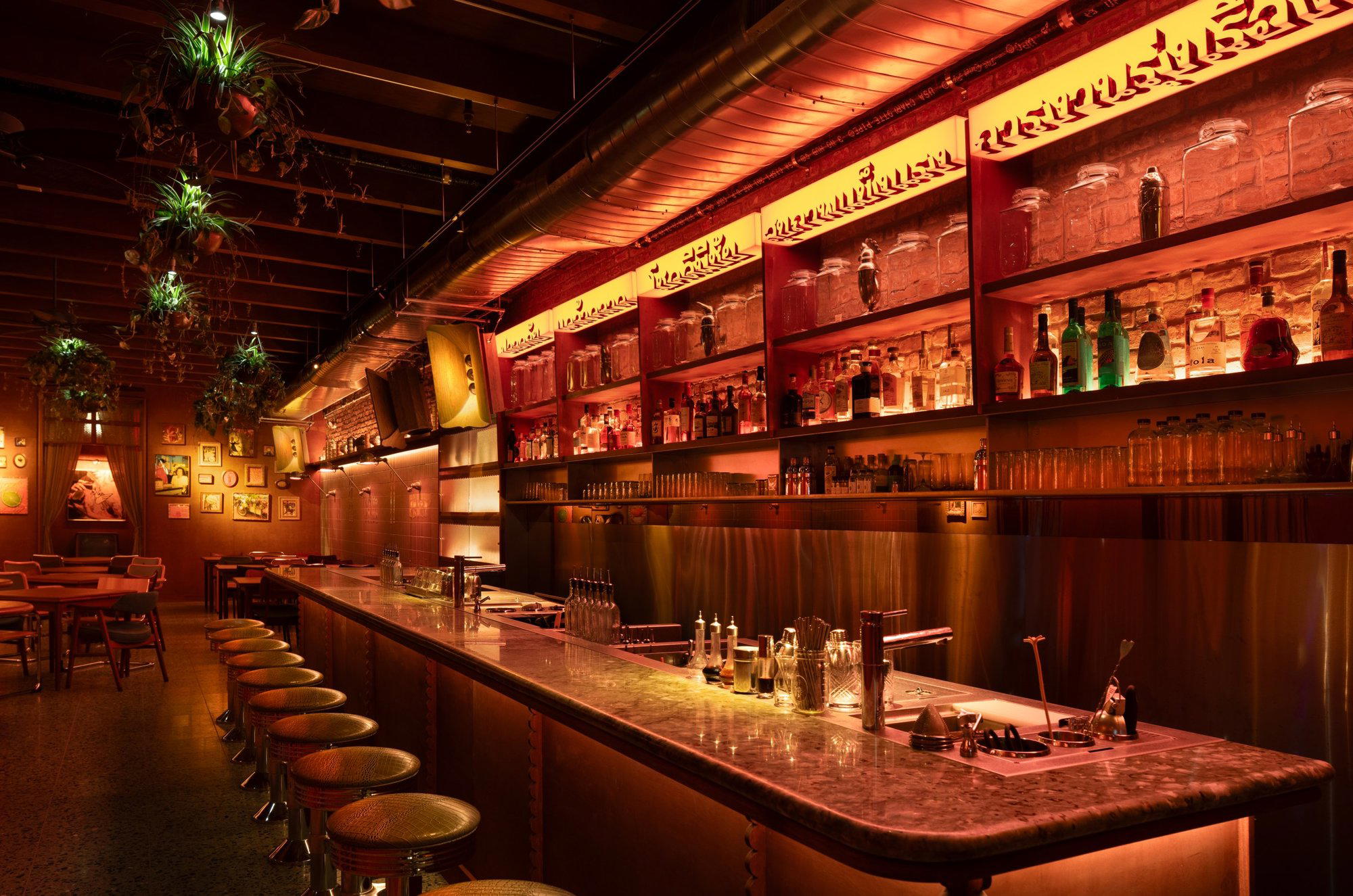
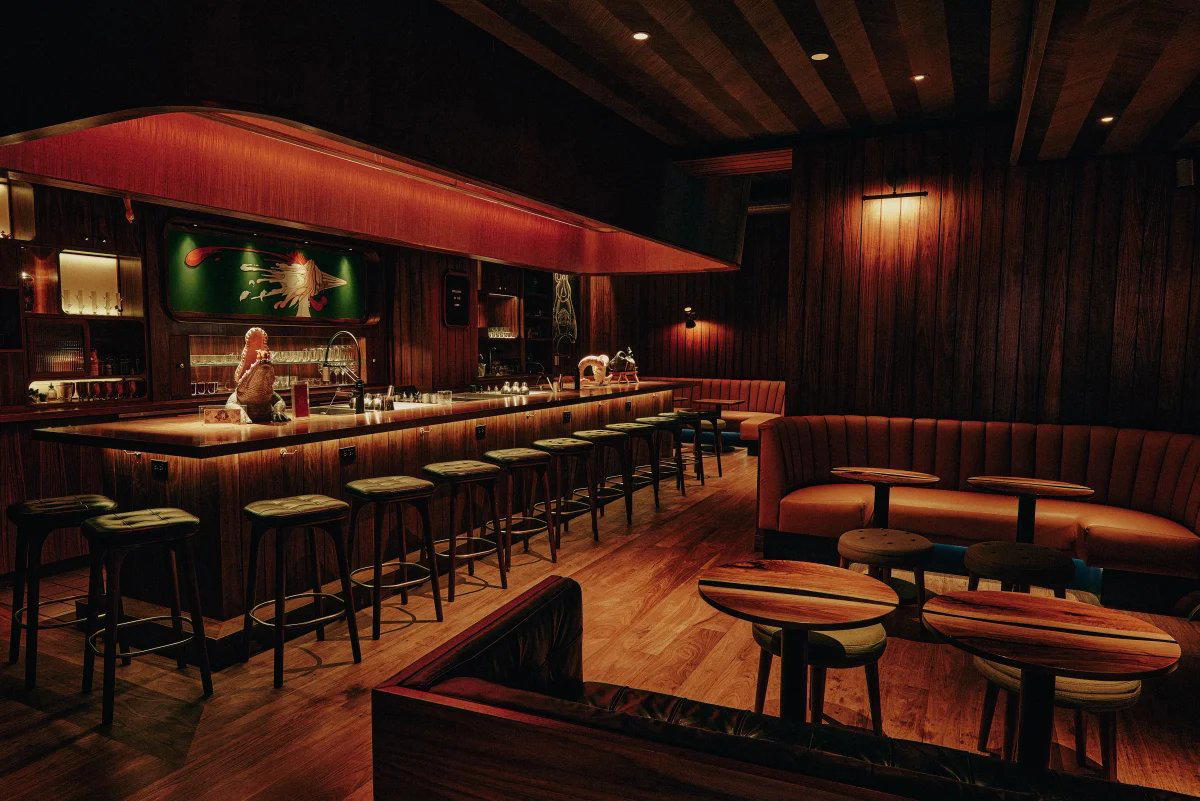
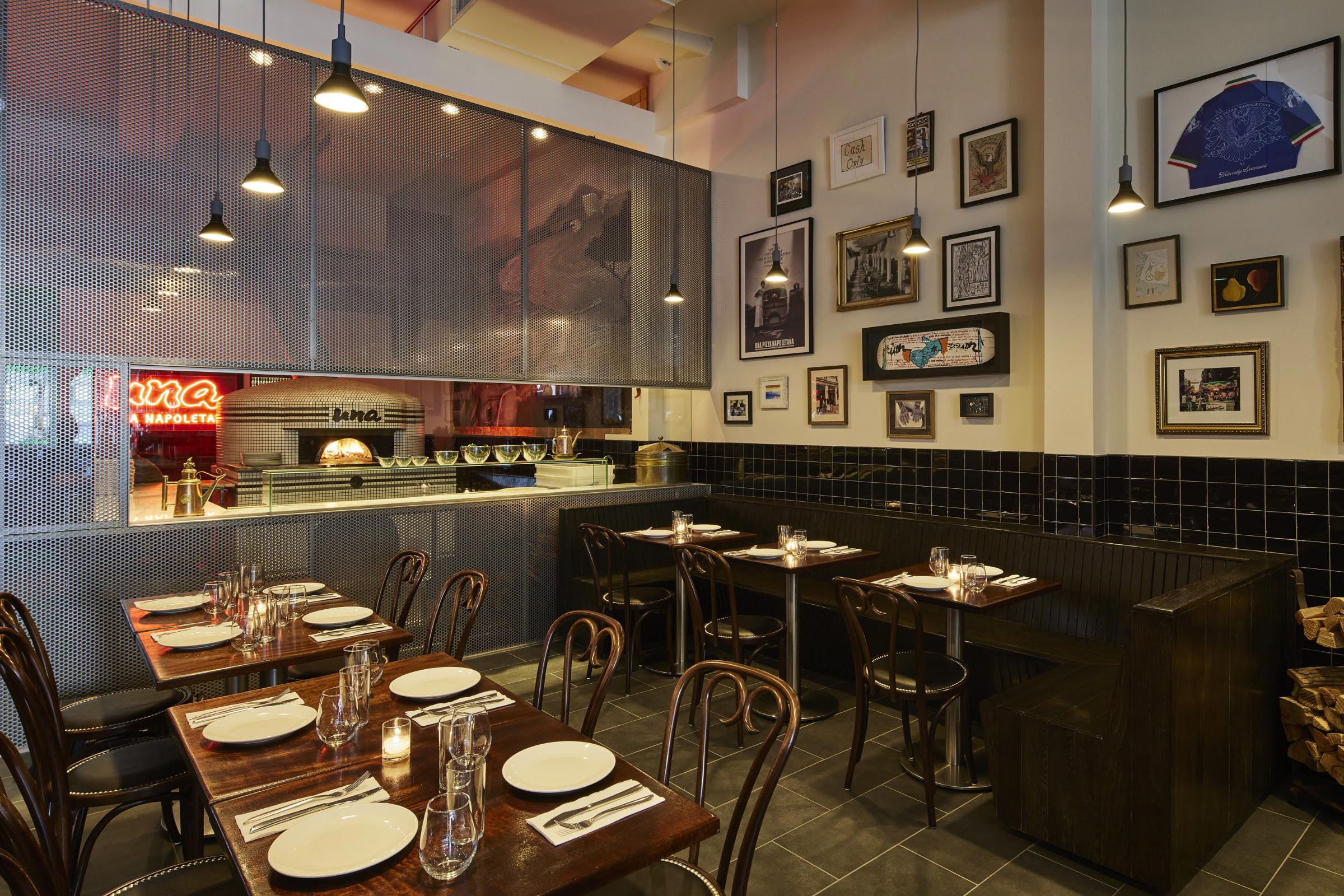
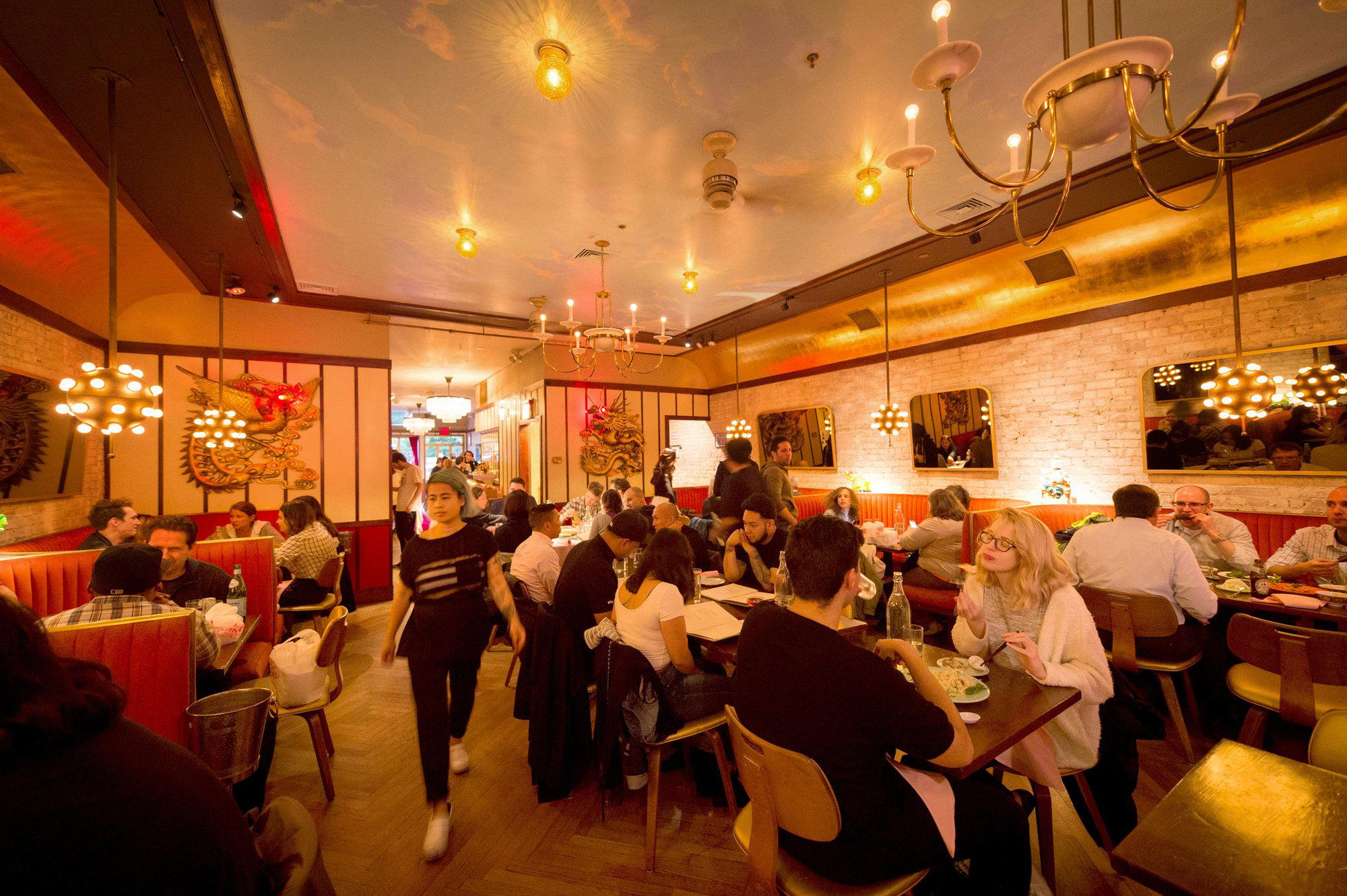
Chinatown operates on a different sensory frequency from Midtown or the West Village. Mott Street in particular carries a compressed urban density: the smell of char siu from roasting windows, the sound of Cantonese conversations from doorways, the visual clutter of hand-lettered signs and crates of produce stacked at pavement level. A pop-up inside Cha Kee absorbs all of that ambient texture. The room itself carries the patina of a long-running neighbourhood institution, the kind of space where the lighting is functional rather than designed and the furniture has absorbed decades of service.
That context amplifies what Mission Chinese Food has always done well: placing cooking that could easily read as trendy inside rooms and contexts that refuse trendiness. The original San Francisco location operated out of a pre-existing Mission district Chinese restaurant. The New York pop-up format extends that logic. The food arrives with no softening theatrical frame, no designed backdrop engineered to signal premium experience. The intensity of the cooking is the experience.
For readers building a broader New York itinerary, the contrast between this register and the formally structured rooms of The French Laundry or the refined seasonal frameworks of Single Thread Farm in Healdsburg illustrates how wide the spectrum of serious cooking in the United States has become. Mission Chinese Food sits at the informal, high-impact end of that spectrum deliberately. Comparable international reference points, where intensity-forward cooking operates outside fine-dining structure, include kitchens like 8½ Otto e Mezzo Bombana in Hong Kong and Alain Ducasse at Louis XV in Monte Carlo, though in format and register they occupy opposite poles.
Planning Your Visit
The pop-up format at Cha Kee means operating hours, reservation availability, and specific menu offerings can shift with each iteration. Confirm current scheduling directly through Mission Chinese Food's public channels before planning around a specific date. The Mott Street location sits at the southern end of Manhattan's Chinatown, walkable from Canal Street subway stations served by multiple lines. The neighbourhood rewards arriving early and spending time on the street before or after eating, particularly along Mott, Bayard, and Doyers streets, where the food infrastructure of the wider community is on continuous display.
For a full picture of where Mission Chinese Food sits within New York's broader dining scene, see our full New York City restaurants guide. For hotels, bars, wineries, and experiences in the city, see our New York City hotels guide, our New York City bars guide, our New York City wineries guide, and our New York City experiences guide. Readers with interest in how American chefs are applying similar cross-cultural methodologies in other cities may find Emeril's in New Orleans and Providence in Los Angeles useful points of comparison.
Quick reference: Mission Chinese Food pop-up at Cha Kee, 45 Mott St, Manhattan's Chinatown. Confirm current hours and availability before visiting.
Frequently asked questions
What kind of recognition has Mission Chinese Food received?
Mission Chinese Food has received recognition including: Mission Chinese Food is a groundbreaking restaurant by Chef Danny Bowien, known for its Sichuan and Xi'an influenced Chinese cuisine. Signature dishes include the chongqing wings and kung pao pastrami. It is currently operating as a pop-up ….
Where exactly is Mission Chinese Food?
Mission Chinese Food is located at 45 Mott St, New York, NY 10013, New York City.
What should I order at Mission Chinese Food?
The chongqing wings and kung pao pastrami are the two dishes most associated with Danny Bowien's approach at Mission Chinese Food. Both reflect the restaurant's core premise: Sichuan and Xi'an technique applied to ingredients and combinations that sit outside traditional Chinese cooking. The pop-up format at Cha Kee means the menu can rotate, so confirm current offerings before visiting 45 Mott St.
How far ahead should I plan for Mission Chinese Food?
Because Mission Chinese Food is currently operating as a pop-up at Cha Kee in Manhattan's Chinatown, availability and scheduling follow pop-up logic rather than a fixed dining calendar. Check current operating dates and reservation windows directly through Cha Kee or Mission Chinese Food's active channels before planning around a specific date.
What do critics highlight about Mission Chinese Food?
Critical attention to Mission Chinese Food has consistently focused on Danny Bowien's willingness to treat Sichuan and Xi'an cooking as a living framework rather than a fixed canon. Dishes like kung pao pastrami read as provocation with structural logic: the mala heat profile holds, but the protein choice reframes the context. The restaurant is widely credited with influencing how a generation of American chefs approached Chinese regional cuisine.
Can Mission Chinese Food handle vegetarian requests?
Mission Chinese Food's Sichuan and Xi'an-influenced cooking incorporates vegetable-forward preparations alongside meat-centred dishes, and the kitchen has historically offered options outside the signature meat dishes. Since the menu shifts with each pop-up iteration at Cha Kee, 45 Mott St, check the venue's official channels to confirm current vegetarian availability.
Comparable Venues
Comparable venues nearby, for context on price, style, and recognition.
| Venue | Cuisine | Price | Notes |
|---|---|---|---|
| Mission Chinese FoodThis venue (the venue you are viewing) | Sichuan Fusion Chinese | $30–50 | Not listed |
| Zen Vegetarian | Chinese Vegetarian | $10–20 | Flatbush |
| Pig Heaven | Taiwanese-Style Chinese with Pork Specialties | $30–50 | Upper East Side-Carnegie Hill |
| Junzi Kitchen | Northern Chinese Fast Casual | $10–20 | Morningside Heights |
| Sifu Chio | Cantonese Wonton Noodles | Not listed | Flushing-Willets Point |
| Ho Foods | Taiwanese Beef Noodle Soup | $20–30 | East Village |
Recognition history
Dated appearances from independent guides and award organizations, with the underlying list record or original source where available.
Robb Report 100 Greatest American Restaurants of the 21st Century #36
Robb Report