Joe's Ginger
Joe's Ginger at 25 Pell Street sits at the intersection of Chinatown's oldest dim sum traditions and the kind of technique-forward kitchen instincts that have made the broader block a reference point for New York's Chinese dining scene. The room draws a mix of neighbourhood regulars and destination diners, with a menu that rewards those willing to move beyond the obvious.
Pearl is the En Primeur Club membership app — saves, bookings, and concierge access live there. Same editors, same standards.
- Address
- 25 Pell St, New York, NY 10013
- Phone
- +12122850999
- Website
- joesginger.com
- Directions
- Get directions
 Saves & bookings on Pearl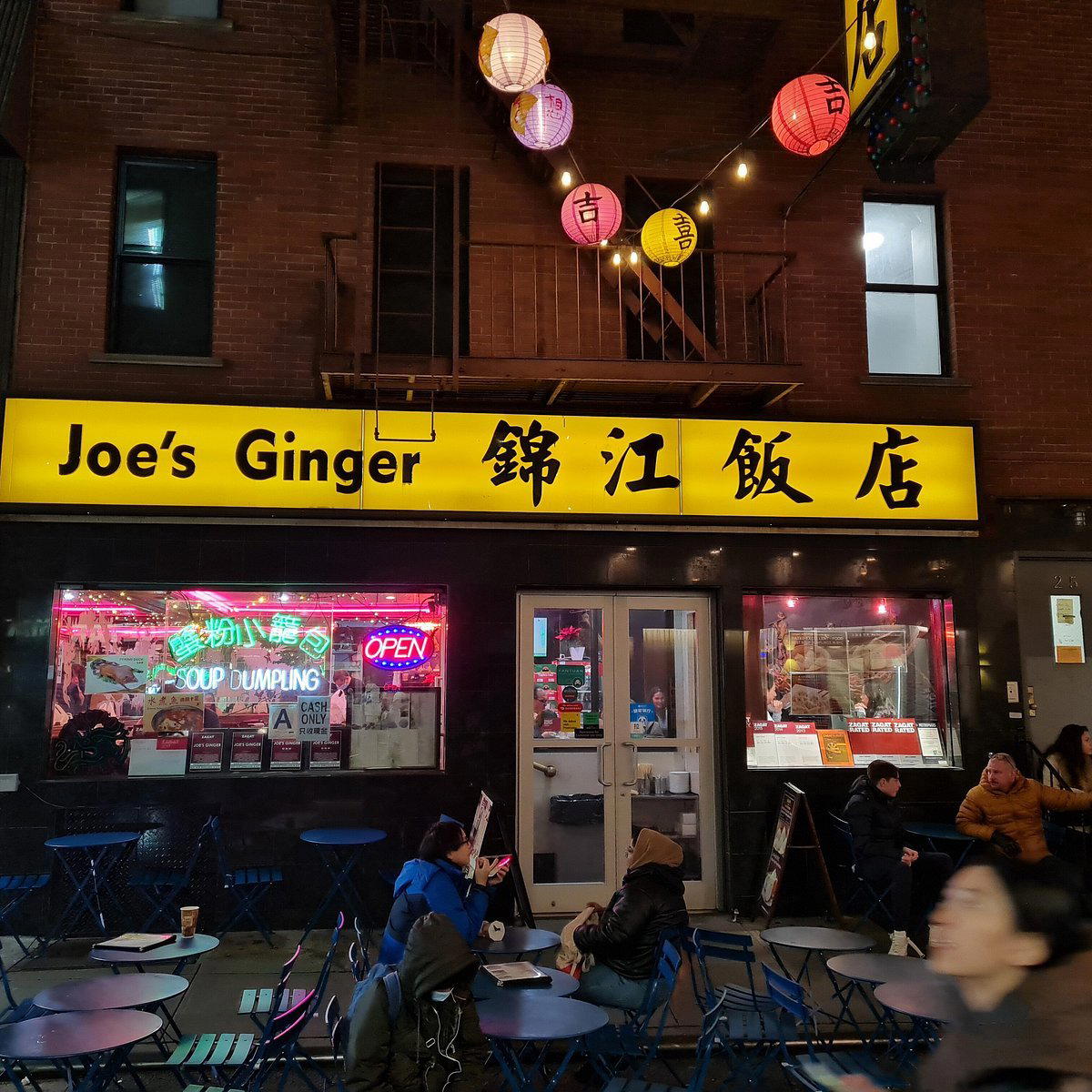
Pell Street and the Shape of Chinatown's Chinese Kitchen
Chinatown's Pell Street has functioned as a corridor of Cantonese and Fujianese dining for well over a century, and the dynamics of that block tell you something useful before you even sit down. The street operates on a compressed competitive logic: walk fifty metres in either direction and you encounter three or four kitchens serving overlapping menus at similar price points. Survival in that context has historically required either volume, specialisation, or a combination of both. Joe's Ginger, at 25 Pell St, is a casual Shanghai Soup Dumplings restaurant in Manhattan's Chinatown.Atomix or Jungsik New York, but no less seriously considered by the diners who seek it out.
The broader question worth asking in 2024 is what a Chinatown stalwart actually offers that higher-priced Manhattan dining does not. Venues like Le Bernardin, Per Se, and Masa operate with imported technique calibrated to a specific conception of luxury. The Pell Street model is different: the technique is embedded in repetition and kitchen muscle memory rather than in formal training pedigrees, and the product is often more ingredient-led than the fine dining alternative. That's the editorial frame worth holding onto when approaching Joe's Ginger.
The Local-Ingredient, Technique Argument
One of the defining features of Cantonese-rooted cooking, particularly as practised in American Chinatown kitchens that developed through the late 20th century, is the negotiation between imported culinary grammar and whatever market proximity allows. The technique base is Chinese: steaming protocols, wok-heat management, sauce-building sequences that require precise timing and heat control that takes years of line experience to replicate. The ingredients, however, have always been partly local by necessity and partly local by preference, with produce sourced from the Canal Street and East Broadway vendors who stock what the surrounding community actually cooks with at home.
That intersection, imported method, locally sourced product, is what differentiates the better Chinatown kitchens from both the generic Chinese-American food that dominated mid-century New York and the sanitised pan-Asian formats that appeared in the 1990s. You can trace a similar negotiation in how American kitchens across the country have worked through the same question: Blue Hill at Stone Barns in Tarrytown built an entire identity around it from a farm-to-table angle; Single Thread Farm in Healdsburg does it through Japanese kaiseki with Northern California produce. Joe's Ginger is doing the same thing at a different price point and with different culinary roots, but the structural logic is comparable.
The ginger in the name is not incidental. Ginger functions as a seasoning agent and a digestive counterbalance in Cantonese cooking, and kitchens that treat it seriously, adjusting quantity, freshness, and preparation method by dish rather than treating it as a fixed background note, are signalling something about their relationship to ingredient specificity. That kind of calibration separates a kitchen paying attention from one running on autopilot.
Chinatown's Position in New York's Broader Dining Argument
New York's Chinese dining scene has diversified considerably over the past fifteen years. Flushing's food court ecosystem established a northern Chinese and Sichuan vocabulary that repositioned what New Yorkers expected from Chinese food; the arrival of regional Yunnanese, Shanghainese, and Xinjiang kitchens in the outer boroughs expanded the frame further. Manhattan's Chinatown occupies a specific role in that expanded picture: it holds the historical weight of where New York's relationship with Chinese food formally began, even as its menus have evolved to reflect the Fujianese immigration waves that reshaped the neighbourhood from the 1980s onward.
For visiting diners oriented around high-end comparison points, say, those who have already worked through Alinea in Chicago, The French Laundry in Napa, or Providence in Los Angeles, Chinatown offers a completely different calibration of what a dining experience is actually about. The value signal is different, the room aesthetic is different, and the measure of success is more about technique fidelity and ingredient quality than about sequenced narrative or service choreography.
Comparable venues in other cities that operate this kind of embedded neighbourhood-anchor role include Emeril's in New Orleans, which anchors a district's dining identity even as the scene around it has shifted, and Bacchanalia in Atlanta, which holds a reference position relative to newer arrivals. The mechanisms differ, but the structural position is analogous.
Ordering Strategy and What the Menu Signals
What can be said with confidence, from the category context, is that kitchens rooted in Cantonese-Fujianese traditions in this part of Manhattan tend to reward ordering from categories where preparation technique is most visible: steamed and braised dishes show kitchen confidence more clearly than deep-fried items, and soups signal stock quality directly. If a kitchen is using ginger as a primary identity signal, as the name suggests, dishes where that ingredient appears as a key flavour agent rather than background aromatics are the logical place to calibrate the kitchen's level of attention. See the FAQ section below for more on ordering priorities.
International comparison points that illuminate the upper end of Chinese fine dining include 8 1/2 Otto e Mezzo Bombana in Hong Kong, where the conversation between Italian technique and Chinese ingredient sourcing runs in the opposite cultural direction, and Alain Ducasse's Louis XV in Monte Carlo and Lazy Bear in San Francisco and Addison in San Diego as reference points for how technique-led kitchens operate at different price registers and with different source ingredients. The Inn at Little Washington offers yet another model of locality-rooted technique, in a completely different cultural register.
Planning Your Visit
The restaurant is located at 25 Pell St, New York, NY 10013, in Manhattan's Chinatown. The surrounding block offers easy walking access to Canal Street subway connections and the wider Chinatown dining corridor. The restaurant is walk-in friendly and open daily from 11 AM to 9 PM.
Quick reference: 25 Pell St, New York, NY 10013. Chinatown, Manhattan. Walk-in friendly, open daily from 11 AM to 9 PM.
Price and Positioning
Comparable venues nearby, for context on price, style, and recognition.
| Venue | Cuisine | Price | Notes |
|---|---|---|---|
| Joe's GingerThis venue — the venue you are viewing | Not listed | $$ | Not listed |
| Atlas Kitchen | Not listed | $$ | Morningside Heights, Modern Chinese (Hunan & Sichuan) |
| Deli Chin | Upper West Side, Chinese Deli | $$ | Not listed |
| Wok In Duane | Not listed | $$ | Tribeca-Civic Center, Modern Pan-Asian Wok |
| Tim Ho Wan Hell's Kitchen | Hell's Kitchen, Hong Kong-Style Dim Sum | $$ | Not listed |
| China River | Not listed | $$ | Hell's Kitchen, Authentic Sichuan Chinese |
Continue exploring
More in New York City
Restaurants in New York City
Browse all →
Bars in New York City
Browse all →
Hotels in New York City
Browse all →






At a Glance
- Classic
- Casual Hangout
- Beer Program
Current opening hours
- Monday
- 11 AM–9 PM
- Tuesday
- 11 AM–9 PM
- Wednesday
- 11 AM–9 PM
- Thursday
- 11 AM–9 PM
- Friday
- 11 AM–9 PM
- Saturday
- 11 AM–9 PM
- Sunday
- 11 AM–9 PM
Hours can change for holidays and private events. Last verified .
Typical Chinatown decor - functional and no-frills with a flat atmosphere.