Pappas New York
Pappas New York occupies a MacDougal Street address in Greenwich Village, placing it in one of Manhattan's most layered dining corridors, where decades of neighborhood dining culture sit alongside newer arrivals. The venue draws visitors and locals alike to a stretch of the Village that has long rewarded those willing to look past the block's busier surface. See our full editorial take below.
Pearl is the En Primeur Club membership app — saves, bookings, and concierge access live there. Same editors, same standards.
- Address
- 105 MacDougal St, New York, NY 10012
- Phone
- +16464102911
- Website
- pappasnewyork.com
- Directions
- Get directions
 Saves & bookings on Pearl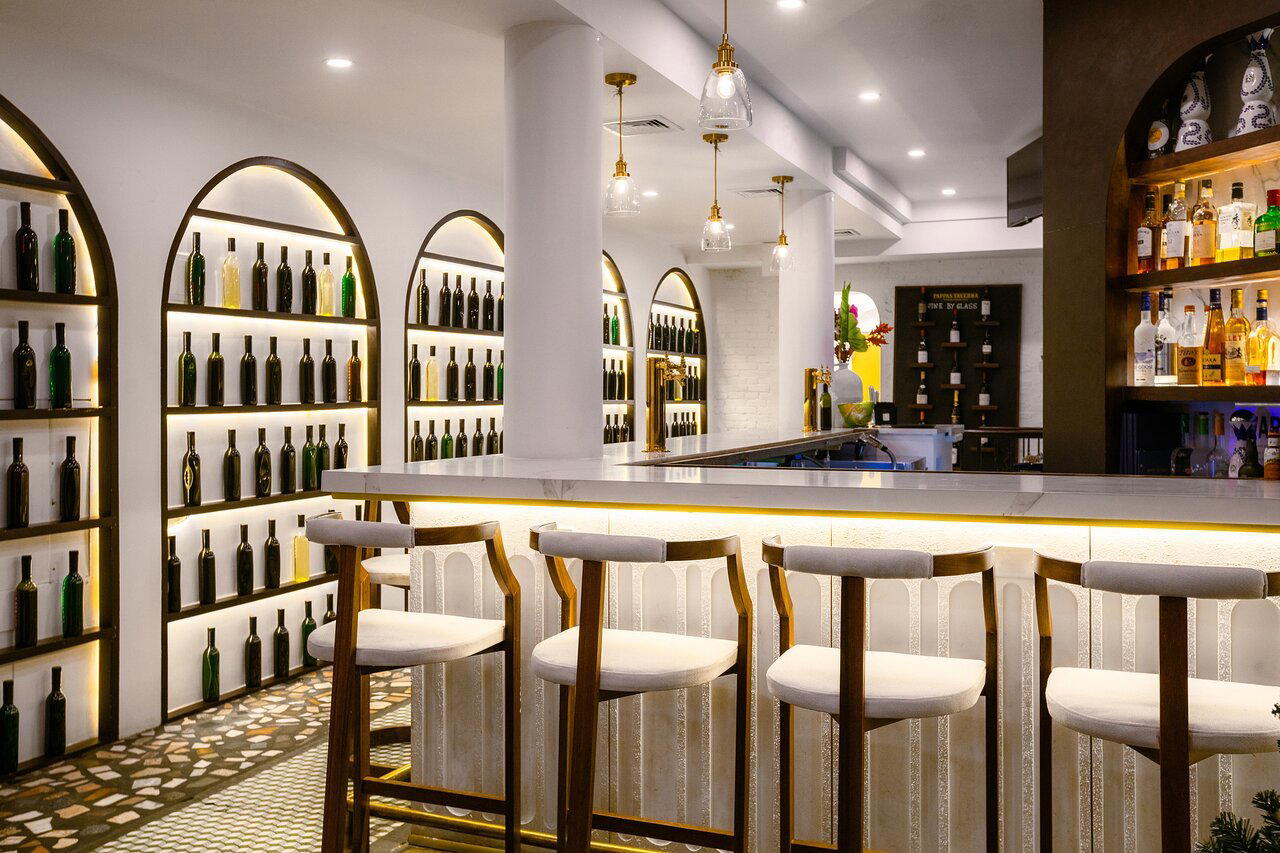
MacDougal Street and the Village Dining Context
Greenwich Village has long been one of Manhattan's most interesting dining corridors. MacDougal Street, specifically, has a particular character: it carries the density of a tourist-facing strip while also hosting the kind of long-running neighborhood institutions that survive precisely because locals keep returning. The result is a street where the gap between lunch and dinner service often tells you more about a venue than any menu description can. Daytime on MacDougal runs quieter, foot traffic skews residential, and restaurants that hold a neighborhood following tend to show it in how they operate during off-peak hours. Evening service shifts the register entirely, the block fills, the energy moves faster, and the competitive pressure of a Saturday night in the Village becomes visible from the sidewalk.
Pappas New York, at 105 MacDougal St, sits inside that dynamic. The address alone positions it within reach of Washington Square Park to the east and Bleecker Street's denser restaurant cluster to the west, which means it draws from both the park's transient foot traffic and the more deliberate dining decisions that characterize the surrounding blocks. For anyone mapping a Greenwich Village evening or looking for a midday option that doesn't require navigating Midtown, the location is genuinely practical.
Lunch Versus Dinner: How the Block Changes
The lunch-versus-dinner divide matters more in Greenwich Village than in some of Manhattan's other dining districts. In neighborhoods like Midtown, where Le Bernardin and Per Se anchor a business-lunch culture with fixed formats and prix-fixe pricing, the midday meal carries its own formal weight. In the Village, lunch is more elastic, less tied to corporate entertainment, more dependent on whether a kitchen chooses to open for it at all.
Venues on MacDougal that do serve lunch often operate with a lighter version of their evening program, both in menu scope and in the pace of service. The atmosphere during the day tends toward the informal: natural light, smaller tables, and the background noise of a neighborhood that hasn't yet shifted into its evening mode. Dinner brings a different set of expectations, longer stays, fuller tables, and the kind of ambient energy that Greenwich Village has traded on since the mid-twentieth century. For a visitor trying to take full advantage of a day in the Village, understanding which service period suits their schedule, and which the kitchen takes more seriously, is a practical first question.
The Village in Its Wider American Fine Dining Context
New York's restaurant scene is sometimes discussed as if it operates in isolation, but the city's dining culture sits inside a national conversation about what serious restaurants are doing with format, service, and the relationship between casual and formal. Across the country, restaurants like Alinea in Chicago, Lazy Bear in San Francisco, and Single Thread Farm in Healdsburg have pushed toward tightly controlled, reservation-only formats where the distinction between lunch and dinner is often structural rather than just atmospheric. The French Laundry in Napa runs lunch and dinner services that are functionally identical in scope and price, collapsing the usual hierarchy between the two.
Greenwich Village operates differently. The neighborhood's dining culture has always been more porous, more willing to absorb walk-ins, more tolerant of the informal, more interested in the daily rhythm of a neighborhood than in the controlled theater of a destination restaurant. That isn't a criticism; it reflects a genuine difference in what the Village has historically offered relative to, say, the West Village's more curated restaurant row or Midtown's business-dining infrastructure. Restaurants like Blue Hill at Stone Barns in Tarrytown or The Inn at Little Washington represent a more destination-driven model; what MacDougal Street offers is something closer to embedded neighborhood dining, where the value proposition is proximity and consistency rather than occasion.
American fine dining more broadly has seen a bifurcation between high-ceremony destination formats and neighborhood-embedded venues that hold their ground through repeat local business. Providence in Los Angeles, Addison in San Diego, and Bacchanalia in Atlanta each represent the destination tier in their respective cities. The Village's ecosystem sits closer to the neighborhood anchor model, and venues on MacDougal are evaluated by locals against that standard rather than against the city's upper-tier tasting menu rooms.
For international reference points, the lunch-versus-dinner divide plays out differently in European contexts: at Alain Ducasse's Louis XV in Monte Carlo, lunch carries nearly the same ceremonial weight as dinner. Similarly, 8½ Otto e Mezzo Bombana in Hong Kong runs a business-lunch format that is genuinely competitive with its evening service. These are exceptions; the Village's rhythm is closer to the neighborhood dining norm.
New York's Korean dining scene, anchored at the high end by venues like Atomix and Jungsik New York, has also reshaped what New Yorkers expect from a serious dinner, pushing the conversation about format and value in directions that affect how all Manhattan restaurants are read. And at the absolute best of the city's price tier, Masa operates without a meaningful lunch-dinner distinction at all, a single format at a single extraordinary price point. The Village, by contrast, is where the city goes when it wants something that doesn't require that level of commitment.
For those interested in how New Orleans handles a similar neighborhood-dining dynamic, Emeril's in New Orleans offers a useful comparison, a city where the distinction between casual and formal is also more fluid than in New York's upper-tier dining rooms.
Planning a Visit
Pappas New York is located at 105 MacDougal St in Greenwich Village, a short walk from the A/C/E/B/D/F/M trains at West 4th Street-Washington Square. The neighborhood is walkable and densely served by transit, which makes it a practical choice for visitors staying in Midtown or Downtown who want to reach the Village without a cab. MacDougal Street is busiest on Friday and Saturday evenings; arriving earlier in the week or at lunch gives a different and generally quieter read of the block. It is recommended for reservations.
Cuisine Lens
Comparable venues nearby, for context on price, style, and recognition.
| Venue | Cuisine | Price | Notes |
|---|---|---|---|
| Pappas New YorkThis venue — the venue you are viewing | Modern Greek Seafood | $$$$ | Not listed |
| Avra 48th Street | Refined Greek Seafood | $$$$ | East Midtown-Turtle Bay |
| estiatorio Milos Midtown | Contemporary Greek Mediterranean Seafood | $$$$ | Midtown-Times Square |
| Ammos Estiatorio | Upscale Greek Seafood | $$$ | Midtown-Times Square |
| Korali | Authentic Greek Seafood | $$$ | Upper East Side-Carnegie Hill |
| Molyvos | Modern Greek with Mediterranean Influences | $$$ | Hell's Kitchen |
Continue exploring
More in New York City
Restaurants in New York City
Browse all →

Bars in New York City
Browse all →
Hotels in New York City
Browse all →







At a Glance
- Lively
- Energetic
- Modern
- Group Dining
- Celebration
- Open Kitchen
- Private Dining
- Extensive Wine List
- Craft Cocktails
Current opening hours
- Monday
- Closed
- Tuesday
- Closed
- Wednesday
- Closed
- Thursday
- 5 PM–12 AM
- Friday
- 5 PM–1 AM
- Saturday
- 5 PM–1 AM
- Sunday
- 2 PM–12 AM
Hours can change for holidays and private events. Last verified .
Large space inspired by Greek coastlines with bustling bars, energetic atmosphere, and Mediterranean transportive design.