Pangea
Pangea sits on Second Avenue in the East Village, a neighborhood that has shaped New York's independent dining culture for decades. With a program oriented around ethical sourcing and environmental responsibility, it occupies a distinct position in a borough where fine dining tends toward French technique or Japanese precision. For guests whose priorities include traceability alongside craft, it merits serious attention.
Pearl is the En Primeur Club membership app — saves, bookings, and concierge access live there. Same editors, same standards.
- Address
- 178 2nd Ave, New York, NY 10003
- Phone
- +12129950900
- Website
- pangeanyc.com
- Directions
- Get directions
 Saves & bookings on Pearl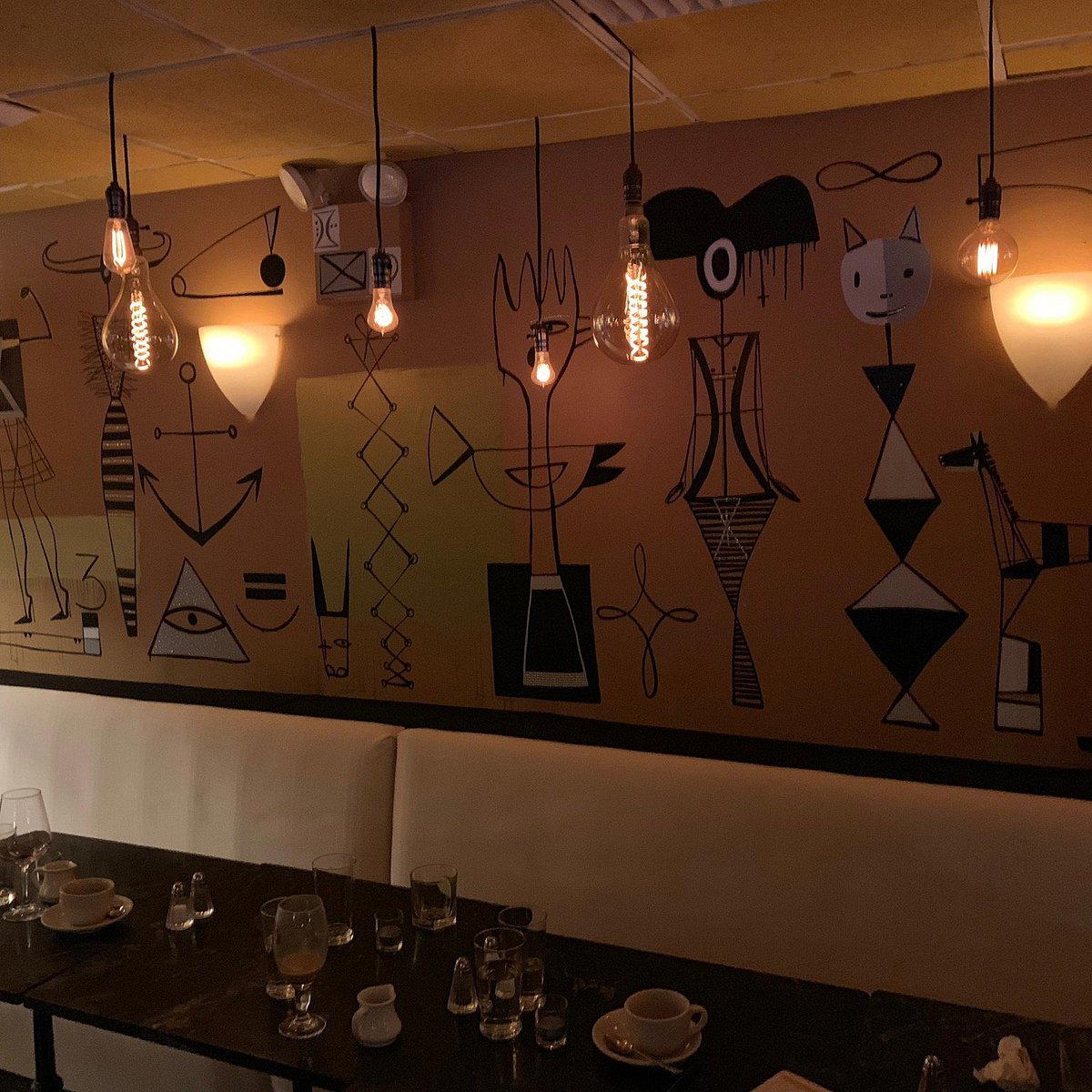
The East Village and the Ethics of Sourcing
New York's fine dining conversation has long been dominated by Midtown's French anchors and the tasting-menu formats of restaurants like Le Bernardin and Per Se. Pangea is a restaurant in New York's East Village at 178 2nd Ave, offering Eclectic Mediterranean-American Fusion at about $30 per person. But a quieter shift has been underway further downtown. The East Village, historically the borough's proving ground for independent operators, has produced a strand of dining where the sourcing question is not an afterthought but a structural premise. Pangea, at 178 Second Avenue, belongs to that tradition.
The broader movement that Pangea fits into has accelerated considerably since the mid-2010s, when farm-to-table ceased to be a differentiator and became, instead, a baseline expectation in certain dining tiers. What has replaced it as a genuine credential is traceability at the ingredient level, waste-reduction practices embedded in kitchen operations, and supply chains short enough that a chef can actually name the producer. At the higher end of American fine dining, venues like Blue Hill at Stone Barns in Tarrytown and Single Thread Farm in Healdsburg have set the standard for what rigorous sourcing looks like when capital and land access are available. Pangea operates at the urban end of the same spectrum, where sourcing discipline is achieved through relationships rather than acreage.
Where It Sits in the New York Scene
New York's higher-end dining has split into fairly legible tiers over the past decade. At the apex sit counter-format and omakase operations, places like Masa, where the format itself removes choice and substitutes trust. Below that, a tier of progressive tasting-menu restaurants, including Atomix and Jungsik New York, has brought Korean-inflected technique into serious Michelin conversation. Pangea occupies a different niche: the independent, neighbourhood-anchored restaurant where the dining experience is shaped less by theatrical format and more by the quality and provenance of ingredients on the plate.
That positioning carries practical consequences for guests. Unlike the allocation-model restaurants of Midtown, or the months-long booking windows of counter formats, an East Village independent typically operates with more flexibility, though specific booking windows and availability at Pangea should be confirmed directly with the venue. The trade-off is that discovery requires more effort: these restaurants rarely advertise, rely on word-of-mouth and editorial coverage, and may not maintain a heavy social media presence. Their guests tend to know what they are looking for before they arrive.
For readers who want to map the national context: the ethical-sourcing strand that Pangea represents has a clear parallel in restaurants like Lazy Bear in San Francisco, Providence in Los Angeles, and Addison in San Diego, each of which has built credibility around sourcing discipline alongside technique. At the broader fine-dining level, Alinea in Chicago and The French Laundry in Napa represent the maximalist technical pole of American dining; Pangea is much closer to the other end of that axis, where restraint and ingredient integrity do more of the work than showmanship.
The Sustainability Frame
The restaurants that have made environmental consciousness a structural feature of their operation, rather than a branding decision, tend to share a few common characteristics. They work with fewer suppliers and maintain those relationships over years. They design menus around what is available rather than sourcing to a predetermined menu. They treat waste reduction as a kitchen discipline, which means using whole animals, fermenting or preserving surplus, and calibrating portion design to minimize plate waste. Internationally, this approach appears in places like Alain Ducasse at Louis XV in Monte Carlo, where the sourcing philosophy has been publicly documented over decades, and in the American South at restaurants like Bacchanalia in Atlanta and Emeril's in New Orleans, each of which has leaned into regional supply chains as a point of differentiation.
In an urban context, achieving that level of supply-chain integrity requires deliberate effort. New York has strong access to regional producers across the Hudson Valley and upstate, and a growing number of operators in the city now treat the greenmarket as a genuine procurement channel rather than a photo opportunity. Restaurants like The Inn at Little Washington have demonstrated that proximity to agricultural sources, when taken seriously, produces a different kind of menu seasonality, one driven by genuine availability rather than the logistics of a national distributor. For guests for whom ingredient provenance is a deciding factor, these are the questions worth asking before booking anywhere: Where does the protein come from? How far back can the kitchen trace its vegetable supply? The answers are informative regardless of the tier.
What to Expect at Pangea
What the restaurant's position and address suggest is a dining format suited to the East Village: accessible in spirit if not necessarily in price, grounded in neighbourhood identity, and more likely to change its menu in response to seasonal supply than to maintain a signature card year-round.
For guests accustomed to the booking formality of Midtown or the structured omakase format of venues like Masa, the independent East Village model may require recalibrating expectations. That is not a drawback. Particularly considered dining in New York happens at this scale, where the room is small enough that kitchen and floor can operate in genuine coordination, and where the guest's experience is shaped by the produce arriving that week rather than by a menu engineered for consistency across hundreds of covers.
Know Before You Go
Address: 178 2nd Ave, New York, NY 10003
Neighbourhood: East Village, Manhattan
Price Range: About $30 per person
Hours: Mon: Closed; Tue: 5–10 PM; Wed: 5–10 PM; Thu: 5–10 PM; Fri: 5–11 PM; Sat: 5–11 PM; Sun: 4–11 PM
Dress Code: Smart casual
Booking and Cost Snapshot
Comparable venues nearby, for context on price, style, and recognition.
| Venue | Price | Notes |
|---|---|---|
| PangeaThis venue — the venue you are viewing | $$ | Not listed |
| MeMe | $$ | West Village, Mediterranean Tapas with Moroccan Influence |
| Olive Tree Cafe | $$ | Greenwich Village, Mediterranean & American |
| ZOI Mediterranean Cuisine | $$$ | Midtown South-Flatiron-Union Square, Modern Mediterranean & Asian Fusion |
| Marlow Bistro | $$$ | Morningside Heights, Modern Mediterranean Bistro |
| ATIK Restaurant | $$$ | Pelham Bay-Country Club-City Island, Modern Mediterranean |
Continue exploring
More in New York City
Restaurants in New York City
Browse all →
Bars in New York City
Browse all →
Hotels in New York City
Browse all →




At a Glance
- Intimate
- Trendy
- Lively
- Cozy
- Date Night
- Special Occasion
- Casual Hangout
- Live Music
- Craft Cocktails
Current opening hours
- Monday
- Closed
- Tuesday
- 5–10 PM
- Wednesday
- 5–10 PM
- Thursday
- 5–10 PM
- Friday
- 5–11 PM
- Saturday
- 5–11 PM
- Sunday
- 4–11 PM
Hours can change for holidays and private events. Last verified .
Cozy and festive with a relaxed, intimate atmosphere enhanced by live entertainment and warm lighting.