Olive Tree Cafe
A fixture on MacDougal Street since the Village's café era, Olive Tree Cafe at 117 MacDougal St occupies a slice of Greenwich Village history that few New York dining rooms can match. The address sits in among the more storied blocks in American bohemian culture, drawing a returning crowd whose loyalty speaks to something beyond the menu.
Pearl is the En Primeur Club membership app — saves, bookings, and concierge access live there. Same editors, same standards.
- Address
- 117 MacDougal St, New York, NY 10012
- Phone
- +12122543480
- Website
- comedycellar.com
- Directions
- Get directions
 Saves & bookings on Pearl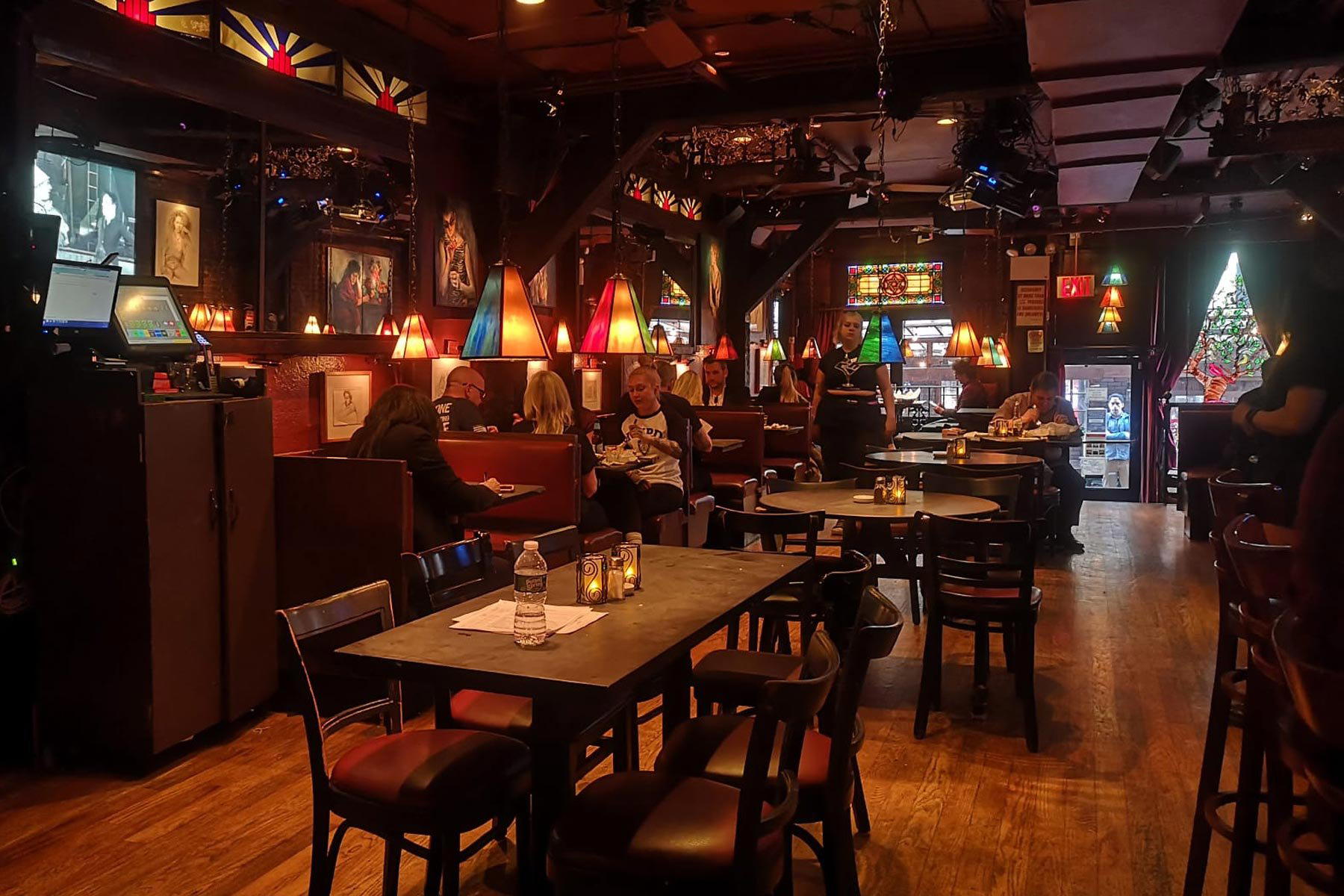
MacDougal Street and the Long Memory of Greenwich Village
Greenwich Village has been systematically priced and polished into a version of itself, but MacDougal Street between Bleecker and West 3rd still carries the physical grammar of the neighborhood's earlier decades. The low-rise buildings, the density of foot traffic, the proximity to NYU's sprawl: these are conditions that have sustained café culture on this block longer than almost anywhere else in Manhattan. Olive Tree Cafe at 117 MacDougal St sits inside that continuity, at an address that has fed and housed the Village's regulars across multiple generations of the city's identity.
That longevity matters as editorial context before it matters as a selling point. New York's dining scene rewards novelty almost pathologically, cycling through openings and closures at a pace that makes any sustained neighborhood presence an anomaly worth examining. The counter-programming to the Michelin-chasing tier, restaurants like Le Bernardin, Per Se, and Masa in Manhattan, or destination-driven operations like Blue Hill at Stone Barns just north of the city, is the café that holds a corner and keeps its regulars returning.
The Regulars' Logic
In neighborhoods like the Village, the café that persists is never the one with the ambitious kitchen. It is the one that has calibrated itself to the rhythm of the people who live and work within a ten-minute walk. MacDougal Street draws NYU students, working writers, musicians from the clubs on Bleecker, and the older residential contingent who predate the neighborhood's transformation into a tourist corridor. A place that survives across that range of constituencies is doing something operationally intelligent, even if it rarely gets written about in those terms.
What loyal visitors to this stretch of MacDougal describe is consistency across visits, the knowledge that the room, the pace, and the general proposition will not have changed since the last time. That is not a low bar in New York. The city's café and casual dining sector operates under constant pressure from rising rents, staff turnover, and the instinct among operators to pivot when traffic softens. A venue that has resisted those pressures long enough to build a returning crowd is making a deliberate choice about what it wants to be.
This is the logic the regulars understand intuitively: the place is not trying to be something else. Compare that orientation to the ambition that drives, say, Atomix or Jungsik New York, venues whose entire architecture is built around progression, evolution, and competitive positioning. The neighborhood café operates in a different register entirely, and Olive Tree's position on MacDougal places it squarely within that tradition of purposeful stability.
The MacDougal Street Address in Context
117 MacDougal is one block from the Bitter End, two blocks from the Minetta Tavern, and within the cluster that once housed the Gaslight Café, the folk music circuit, and the literary underground that made the Village a reference point for American cultural life in the mid-twentieth century. The address does not need to trade on that history explicitly; the geography does the work. Anyone who has spent time on this block understands that it operates as a kind of living archive of the city's creative and countercultural past.
That context shapes the expectations of the people who show up. They are not arriving at 117 MacDougal in the way they might arrive at Alinea in Chicago or The French Laundry in Napa, with a months-ahead booking and a specific anticipation of technical performance. The Village café visit is low-threshold and repeatable, calibrated to the rhythm of the neighborhood rather than the occasion of a special meal. That accessibility is part of what makes regular clientele possible at all.
Internationally, the structural equivalent might be the neighborhood trattoria model or the Parisian café that operates as a fixed point in a local social geography. New York has fewer of these than its mythology suggests. The economics of the city make the kind of tenure that produces genuine regulars genuinely difficult to achieve. Venues that manage it, in the Village, in Carroll Gardens, in Astoria, are often studied less than the destination tier, despite representing a distinct and durable hospitality category. For reference points elsewhere in the U.S. the closest analogues in terms of institutional community presence would be places like Bacchanalia in Atlanta or Emeril's in New Orleans, venues that have built local loyalty into their operating model rather than treating it as a byproduct of critical acclaim.
What the Absence of Data Signals
Olive Tree Cafe does not appear in the major award circuits. In the context of the Village café category, that is not a gap, it is a positioning signal. The venues that operate in this tier are not competing on the metrics that produce award recognition. They are competing on tenure, familiarity, and the specific texture of a neighborhood presence that cannot be replicated through technical ambition alone.
For visitors arriving with the frame of reference built around Providence in Los Angeles, Single Thread Farm in Healdsburg, or Addison in San Diego, the Olive Tree visit requires a deliberate recalibration. The criteria are different. What you are looking for here is not the precision of a tasting menu or the architecture of a sommelier program. You are looking for the accumulated social knowledge of a room that has been in continuous operation on one of Manhattan's most historically loaded blocks.
That is a narrower and more specific form of value than it might initially appear.
Know Before You Go
- Address: 117 MacDougal St, New York, NY 10012
- Neighborhood: Greenwich Village, Manhattan
- Nearest Subway: A/C/E/B/D/F/M to West 4th St–Washington Square (approximately 3 minutes on foot)
- Price Tier: Approx. $25 per person
- Reservations: Walk-in friendly
- Hours: Mon-Sun 12 PM-4 AM
- Awards: None on record
Cost and Credentials
Comparable venues nearby, for context on price, style, and recognition.
| Venue | Price | Notes |
|---|---|---|
| Olive Tree CafeThis venue — the venue you are viewing | $$ | Not listed |
| Lokal Mediterranean Kitchen | $$ | Upper West Side (Central), Mediterranean Small Plates |
| The Smile | $$ | Greenwich Village, Mediterranean-Inspired Cafe |
| Motek NY | $$$ | Midtown South-Flatiron-Union Square, Modern Mediterranean (Kosher-Style) |
| Omar Mediterranean Cuisine | $$ | East Midtown-Turtle Bay, Mediterranean Charcoal Grill |
| Crisp | $$ | Midtown-Times Square, Mediterranean Falafel |
Continue exploring
More in New York City
Restaurants in New York City
Browse all →


Bars in New York City
Browse all →
Hotels in New York City
Browse all →







At a Glance
- Cozy
- Bohemian
- Lively
- Well Known
- Late Night
- Casual Hangout
- Group Dining
- After Work
- Live Music
- Historic Building
- Standalone
- Craft Cocktails
- Beer Program
Current opening hours
- Monday
- 12 PM–4 AM
- Tuesday
- 12 PM–4 AM
- Wednesday
- 12 PM–4 AM
- Thursday
- 12 PM–4 AM
- Friday
- 12 PM–4 AM
- Saturday
- 12 PM–4 AM
- Sunday
- 12 PM–4 AM
Hours can change for holidays and private events. Last verified .
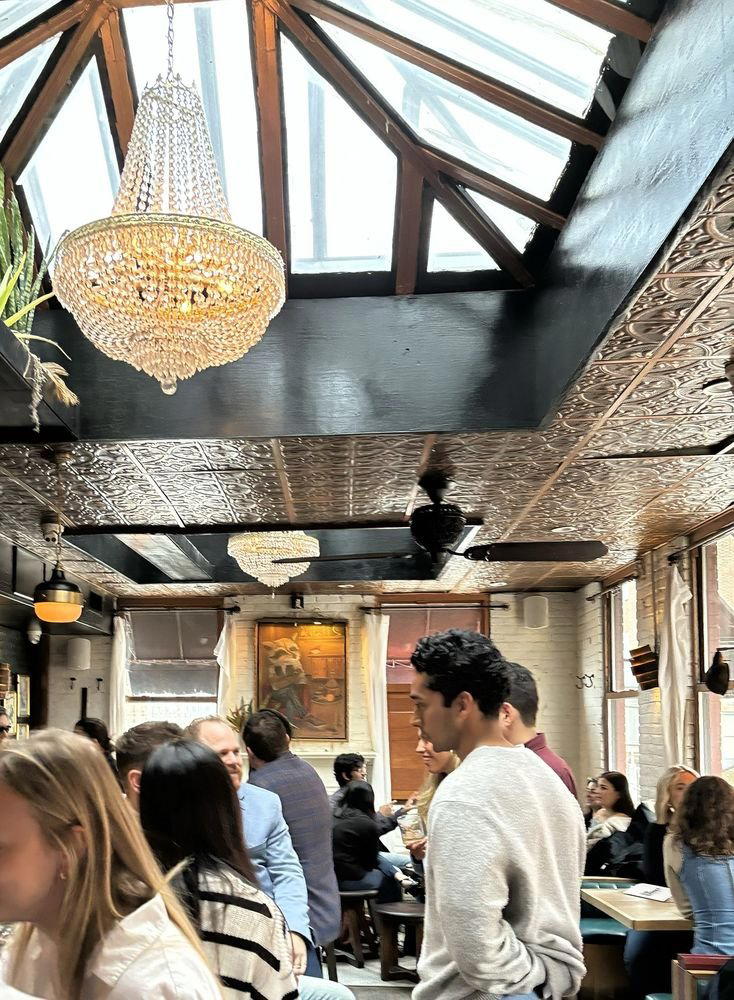
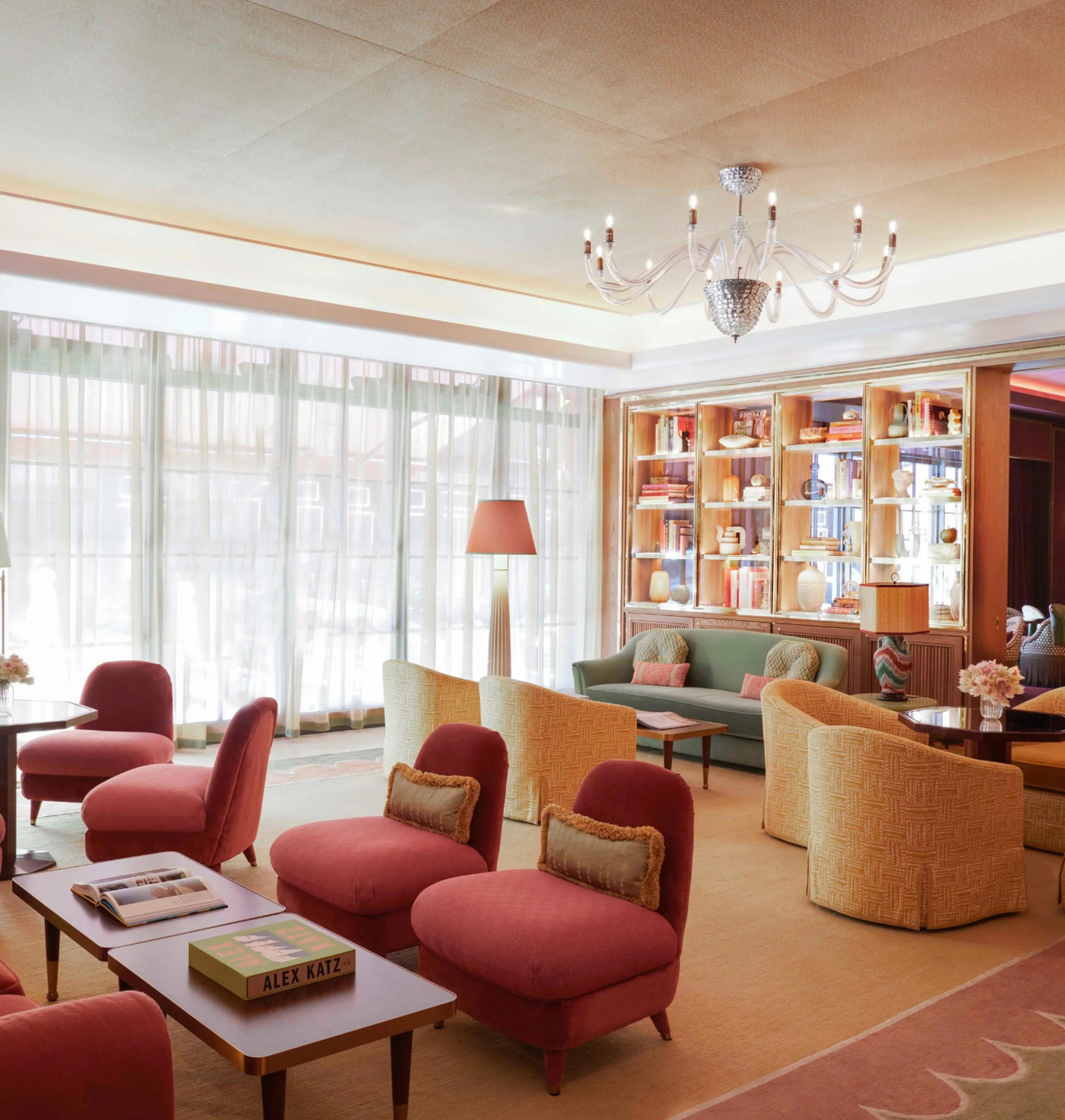
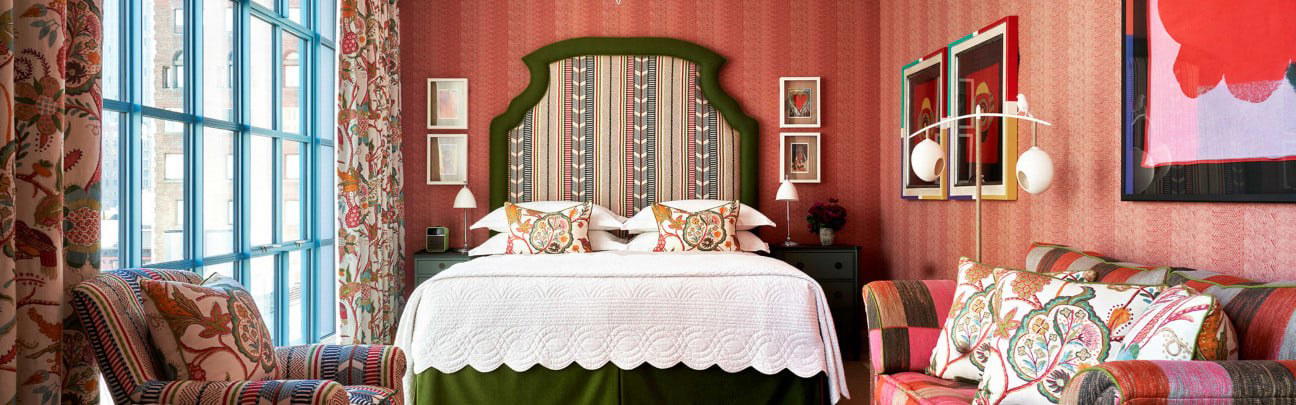
Warm, bohemian atmosphere with amber-hued stained glass, Middle Eastern spices, artistic decor, and a lively comedy scene energy.