Pakwan
Pakwan at 3182 16th Street occupies a well-worn corner of the Mission District where Pakistani and North Indian cooking has drawn a loyal, cross-demographic crowd for decades. The format is counter-service, the portions are generous, and the prices sit at the lower end of San Francisco's dining spectrum. It belongs to a category of neighborhood institution that premium dining cities rarely produce, and rarely celebrate enough.
 Discover on Pearl
Pearl is the En Primeur Club membership app — saves, bookings, and concierge access live there. Same editors, same standards.
- Address
- 3182 16th St, San Francisco, CA 94103
- Phone
- +14152552440
- Website
- pakwanrestaurant.com
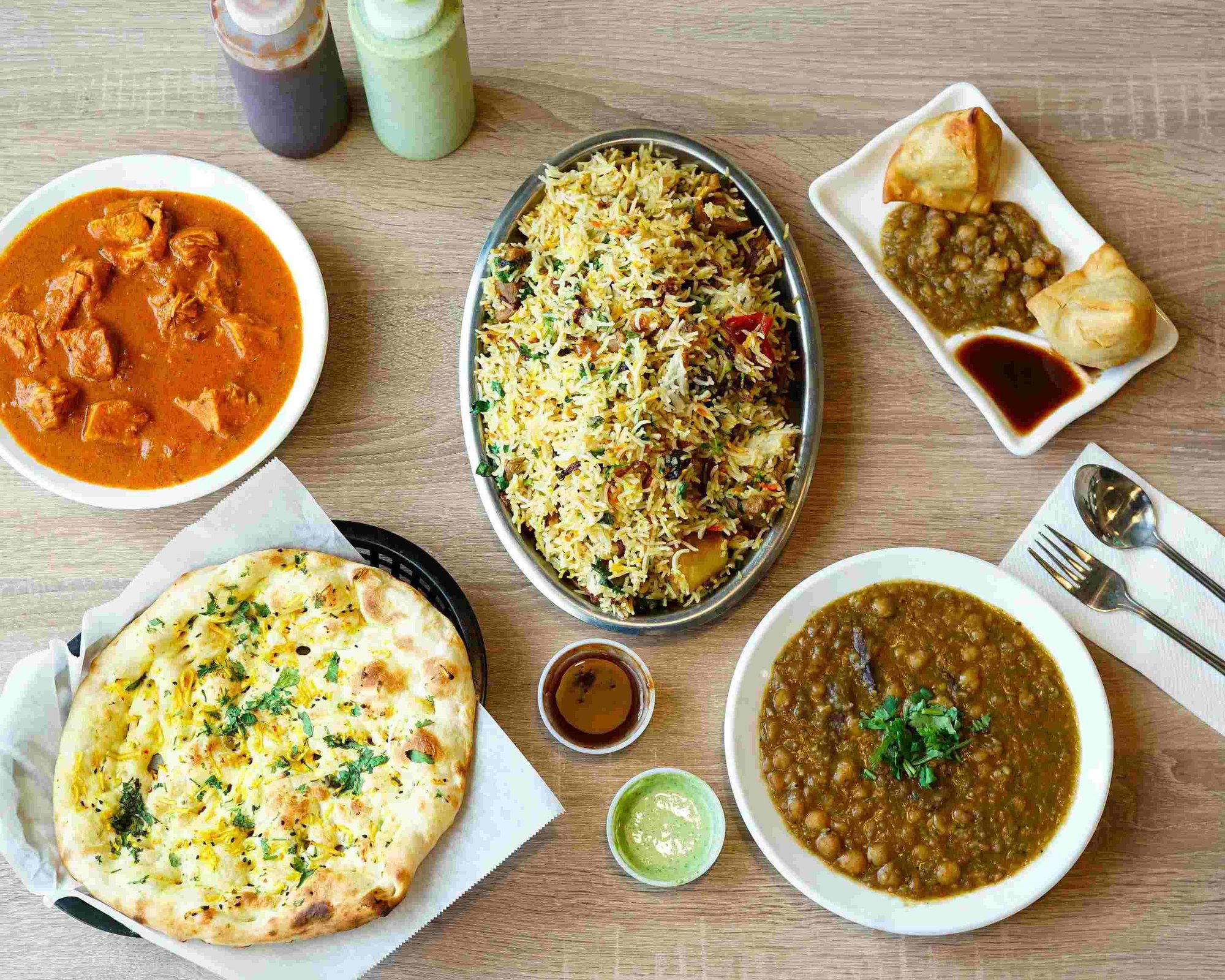
The Mission's Long Game with South Asian Cooking
San Francisco's Mission District has always operated on a different register from the city's fine-dining corridors. While SoMa and Hayes Valley collected Michelin stars, Benu, Atelier Crenn, and Lazy Bear among them, the Mission built its reputation on something harder to manufacture: consistency across decades, a neighborhood character that resisted gentrification's more aggressive culinary rewrites, and a South Asian dining tradition that predated the city's current obsession with global cuisines. Pakwan at 3182 16th Street sits inside that longer history. It is not a recent arrival capitalizing on a trend. It is part of the architecture of the neighborhood itself.
Approaching the address, the cues are immediately legible to anyone who has eaten their way through Lahori street food or the dhaba belt of Punjab. This is not the kind of space that signals itself through design minimalism or chef portraiture on the wall. The room communicates something more durable: that the cooking has been reliable long enough that signage and ambience became secondary concerns. In a city where restaurants at the Quince and Saison tier invest enormously in physical presentation, Pakwan's stripped-back format functions as its own statement, the food is the argument, and the food has been making that argument for years.
What Pakistani Counter-Service Actually Means
The South Asian restaurant category in American cities has undergone a significant sorting over the past two decades. At one end, tasting-menu formats and modernist interpretations of subcontinental cuisine have emerged in major metros, a phenomenon visible in New York's Korean fine-dining scene (see Atomix) and replicated in pockets across the country. At the other end, the counter-service model that characterizes dhaba culture, fast, communal, quantity-forward, spice-honest, has held its ground in neighborhoods with deep South Asian residential and cultural roots.
Pakwan belongs firmly to the latter tradition. Pakistani cooking as practiced in this format centers on karahi preparations, slow-braised nihari, haleem, and tandoor-fired breads that arrive with the char still present. The cooking is not adjusted for heat-aversion or portion delicacy. That is not a criticism, it is the point. Institutions like this operate within a culinary logic that prioritizes fidelity to the source cuisine over adaptation for a broader audience, and the Mission's demographics have historically supported exactly that approach.
For a city that has produced destination-level dining experiences drawing international comparison, the caliber of The French Laundry in nearby Napa or Single Thread Farm in Healdsburg, it is worth noting how rarely the counter-service South Asian tier receives the same critical attention that comparable depth of tradition commands elsewhere. The gap between institutional recognition and actual neighborhood importance is wider here than almost anywhere in American dining.
Evolution Without Reinvention
The editorial angle that applies to Pakwan is not transformation in the dramatic sense, no celebrity chef takeover, no pivot to a tasting menu, no rebrand following a pandemic closure. The evolution has been quieter and, arguably, more sustainable. It is the evolution of a place that has absorbed changes in the neighborhood around it while maintaining the core format that gave it currency in the first place.
The Mission District has changed substantially over the past twenty years. Rising rents have reshaped its restaurant mix, and the corridor around 16th and Valencia has seen turnover that would have seemed improbable in the early 2000s. Counter-service South Asian operations of the kind that once clustered in this part of the city have thinned. The ones that survived did so not through reinvention but through operational depth, loyal customer bases, consistent product, and price points that held even as surrounding costs escalated. Pakwan's longevity in this environment is itself a data point worth treating seriously.
Across American cities, the restaurants that demonstrate this kind of durability at the neighborhood institution tier, think the equivalent of what Bacchanalia represents in Atlanta's fine-dining ecology, or Providence in Los Angeles, tend to be studied eventually for what they got right from the start. Pakwan's version of getting it right has been more modest in profile but no less instructive: stay faithful to the cuisine, keep the format accessible, and let the regulars do the endorsing.
Placing Pakwan in San Francisco's Broader Dining Picture
San Francisco's dining scene at its upper tier rewards ambition and invention. The restaurants that draw international attention, whether the French-Chinese synthesis at Benu or the produce-driven progressive format at Lazy Bear, operate through a logic of high labor, high ingredient cost, and high narrative investment. The comparison set for those venues extends to Le Bernardin in New York, Alinea in Chicago, or Blue Hill at Stone Barns, venues where the price-to-experience logic is built around destination dining.
Pakwan operates in an entirely different part of that ecosystem, and conflating the two tiers misreads both. The value proposition here is not a multi-course exploration of a chef's personal canon, it is consistent, direct access to a cuisine that the Mission has hosted longer than most of its current restaurants have existed. For travelers building a full picture of San Francisco dining beyond the Michelin tier, the neighborhood institution category is as informative as the fine-dining category.
It is also worth contextualizing the South Asian counter-service format against international comparison points. The dhaba tradition that informs Pakwan's format is, in culinary terms, no less sophisticated than the brasserie tradition that underlies much of European casual dining, or the casual-formal split visible in Hong Kong's dining culture, where restaurants like 8½ Otto e Mezzo Bombana exist alongside street-level rice shop operations that feed the same city. The format differential does not imply a quality differential at the level of the base ingredient and technique.
Planning Your Visit
Pakwan is located at 3182 16th Street, San Francisco, CA 94103, in the Mission District, accessible by BART to the 16th Street Mission station less than a block away. The counter-service format means the meal moves at the pace you choose, and the setting suits solo diners, groups, and families equally. Reservations: walk-in friendly. Dress: casual. Budget: about $20 per person. Pakwan is open daily from 11 AM to 11 PM, and the walk-in format makes planning straightforward.
Price Lens
Comparable venues nearby, for context on price, style, and recognition.
| Venue | Cuisine | Price | Awards | Notes |
|---|---|---|---|---|
| PakwanThis venue — the venue you are viewing | Mission, Authentic Pakistani-Indian | $$ | , | |
| Keeva Indian Kitchen | Inner Richmond, Indian Kitchen | $$ | , | |
| Dabba | Financial District, Indian Fusion | $$ | , | |
| Tilak | Bernal Heights, Authentic Indian | $$ | , | |
| Chaat Corner | $$ | , | Financial District/South Beach, Indian Street Food and Chaat | |
| On Waverly | Dining | , | , |
Continue exploring
More in San Francisco
Restaurants in San Francisco
Browse all →
Bars in San Francisco
Browse all →
Hotels in San Francisco
Browse all →
At a Glance
- Cozy
- Family
- Group Dining
- Casual Hangout
- Open Kitchen
Welcoming and flavorful atmosphere with warm hospitality evoking a taste of home.