Keeva Indian Kitchen
Keeva Indian Kitchen on Clement Street occupies the Inner Richmond's most internationally layered dining corridor, where South Asian cooking sits alongside Cantonese, Russian, and Southeast Asian kitchens. The restaurant draws from Indian culinary traditions in a neighbourhood that rewards specificity and regulars over spectacle. Check directly for current hours, booking, and menu details before visiting.
Pearl is the En Primeur Club membership app — saves, bookings, and concierge access live there. Same editors, same standards.
- Address
- 908 Clement St, San Francisco, CA 94118
- Phone
- +14157424010
- Website
- keevasf.com
- Directions
- Get directions
 Saves & bookings on Pearl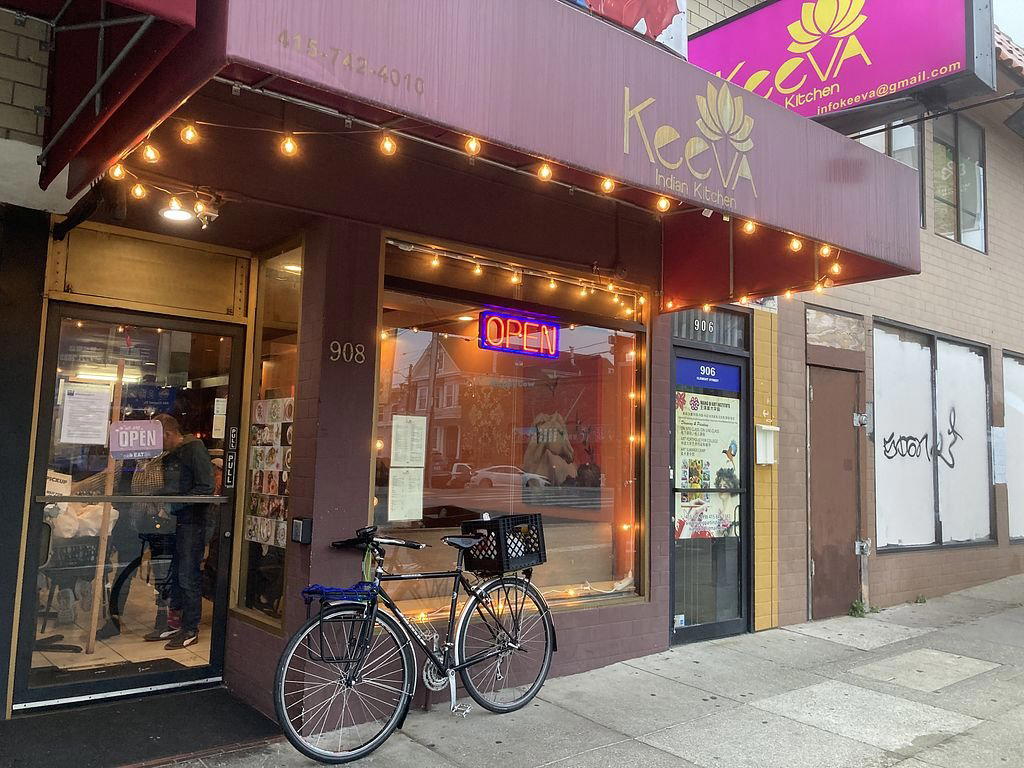
Clement Street and the Case for Indian Cooking in the Inner Richmond
Clement Street runs through San Francisco's Inner Richmond like a practical rebuttal to the city's more photogenic dining districts. There are no velvet ropes on this stretch, no tasting-menu theatrics, no sommelier with a story about a single vineyard. What the street has instead is among the more geographically diverse rows of restaurants in the Bay Area: Cantonese roast-meat shops beside Vietnamese pho houses beside Russian bakeries beside Burmese teahouses. Into that mix, Keeva Indian Kitchen has taken a position at 908 Clement St, a number that places it squarely within the corridor's workaday, neighbourhood-first ethos.
Indian cooking in San Francisco has historically occupied a narrower band of the city's dining imagination than its counterpart communities in London or New York, where regional Indian cuisine has moved steadily into fine-dining territory over the past decade. The Bay Area's Indian restaurant scene skews toward the Tenderloin's budget-driven corridor and the South Bay's suburban lunch trade. A restaurant on Clement Street, then, is making a different argument: that Indian cooking belongs in a neighbourhood defined by daily regulars, honest pricing, and a multicultural dining public that knows what it wants.
What Indian Culinary Tradition Looks Like on This Block
India's kitchen traditions are not monolithic, and the gap between a South Indian tiffin counter and a Punjabi dhaba is as wide as the gap between a Neapolitan trattoria and a Venetian bacaro. What distinguishes the better Indian restaurants in American cities right now is a willingness to stake out a regional position rather than producing a pan-Indian menu that tries to satisfy everyone and satisfies no one particularly well. The Clement Street context suits that approach: the neighbourhood's dining public has been trained by years of Cantonese, Burmese, and Filipino restaurants to expect specificity rather than approximation.
San Francisco's broader dining culture, represented at the leading end by restaurants like Benu, Atelier Crenn, and Lazy Bear, has long prioritised sourcing discipline and culinary heritage as markers of seriousness. That same discipline, when applied to Indian cooking, typically shows up in the spice work: freshly ground masalas rather than pre-mixed blends, tempering done in proper sequence, and proteins or vegetables cooked to the texture their regional tradition actually requires rather than what a generalised audience might expect. These are the signals worth watching for at any Indian restaurant making a serious claim on a city's dining conversation.
The Inner Richmond as a Proving Ground
The Inner Richmond is not where San Francisco's dining press tends to focus its attention. The major critical energy in the city runs through SoMa, the Mission, Hayes Valley, and the Financial District, where tasting menus priced at $200 and above compete for Michelin attention alongside operations like Quince and Saison. That critical geography means that a restaurant on Clement Street earns its audience through word of mouth and repeat visits rather than review cycles, which is a harder and more honest form of credibility.
The neighbourhood's food public is also unusually well-calibrated. Families who have eaten dim sum on this street for two generations have a reference point for what good technique actually looks like in a specific tradition. A restaurant opening here is not educating its audience; it is auditioning for an audience that already knows. That competitive pressure tends to produce better cooking than the kind of captive tourism audience that keeps mediocre hotel-adjacent restaurants solvent in more visible parts of the city.
Across the United States, Indian restaurants have been pushing into more ambitious territory. Atomix in New York has demonstrated that a kitchen rooted in a non-European tradition can operate at the highest level of critical recognition when technique and sourcing are taken seriously. The same argument has been made, with different results, at South Asian-influenced kitchens across major American cities. What that movement has established is that cuisine origin is no longer a ceiling; execution is the only real constraint.
Positioning Keeva Within San Francisco's Indian Dining Tier
At roughly $25 per person, Keeva Indian Kitchen sits in an accessible price range for the area. What the Clement Street address does suggest is a neighbourhood-restaurant operating model rather than a destination-dining one. That model typically implies accessible pricing, a menu built for repeat visits rather than a single-occasion tasting experience, and a kitchen that measures itself against the block's daily standards rather than against the city's Michelin-starred cohort.
For reference, the upper end of San Francisco's overall dining market, represented by restaurants covered in our full San Francisco restaurants guide, runs to multi-course tasting formats at three-figure per-person prices. Comparable neighbourhood Indian restaurants in similar urban markets across the country, from Chicago's Devon Avenue to Jackson Heights in Queens, tend to operate in a considerably more accessible range, where the value proposition is in the cooking rather than the occasion. Alinea in Chicago and Le Bernardin in New York City represent the opposite end of the price and format spectrum, which is useful context for understanding where neighbourhood Indian cooking sits in the broader American dining hierarchy.
Restaurants on Clement Street also compete with a comparable set that is unusually broad. The block's Cantonese and Southeast Asian kitchens have operated at high volume for decades and know how to price a meal for working families without sacrificing kitchen standards. Any Indian restaurant on this street is priced and positioned against those neighbours as much as against other Indian restaurants across the city.
Planning Your Visit
Keeva Indian Kitchen is located at 908 Clement St in the Inner Richmond, reachable by the 1-California or 38-Geary Muni lines, both of which run frequently from downtown San Francisco. Street parking on Clement is available but variable depending on the day and time. Specific hours are Mon: Closed; Tue to Fri: 11:30 AM to 2 PM and 5 to 9 PM; Sat and Sun: 11:30 AM to 9 PM. Booking is recommended.
Budget Reality Check
Comparable venues nearby, for context on price, style, and recognition.
| Venue | Cuisine | Price | Notes |
|---|---|---|---|
| Keeva Indian KitchenThis venue — the venue you are viewing | Inner Richmond, Indian Kitchen | $$ | Not listed |
| Roti Indian Bistro | West of Twin Peaks, Modern Indian | $$ | Not listed |
| Dabba | Financial District, Indian Fusion | $$ | Not listed |
| Amber India Restaurant | Not listed | $$$ | Financial District/South Beach, North Indian |
| Zareen's | Mountain View, Authentic Pakistani | $$ | Not listed |
| August 1 Five | Civic Center, Modern Indian | $$$$ | Not listed |
Continue exploring
More in San Francisco
Restaurants in San Francisco
Browse all →
Bars in San Francisco
Browse all →

Hotels in San Francisco
Browse all →


At a Glance
- Cozy
- Casual
- Family
- Casual Hangout
Current opening hours
- Monday
- Closed
- Tuesday
- 11:30 AM–2 PM, 5–9 PM
- Wednesday
- 11:30 AM–2 PM, 5–9 PM
- Thursday
- 11:30 AM–2 PM, 5–9 PM
- Friday
- 11:30 AM–2 PM, 5–9 PM
- Saturday
- 11:30 AM–9 PM
- Sunday
- 11:30 AM–9 PM
Hours can change for holidays and private events. Last verified .
Quiet and pleasant casual setting ideal for conversation with a neighborhood feel.