
Located on Calle de Padilla in Madrid's Salamanca district, Pagus Madrid sits in one of the city's most restaurant-dense neighbourhoods, where traditional Spanish cooking and contemporary technique share the same postcode.
Pearl is the En Primeur Club membership app — saves, bookings, and concierge access live there. Same editors, same standards.
- Address
- C. de Padilla, 56, Salamanca, 28006 Madrid, Spain
- Phone
- +34911474109
- Website
- pagus.restaurant
- Directions
- Get directions
 Saves & bookings on Pearl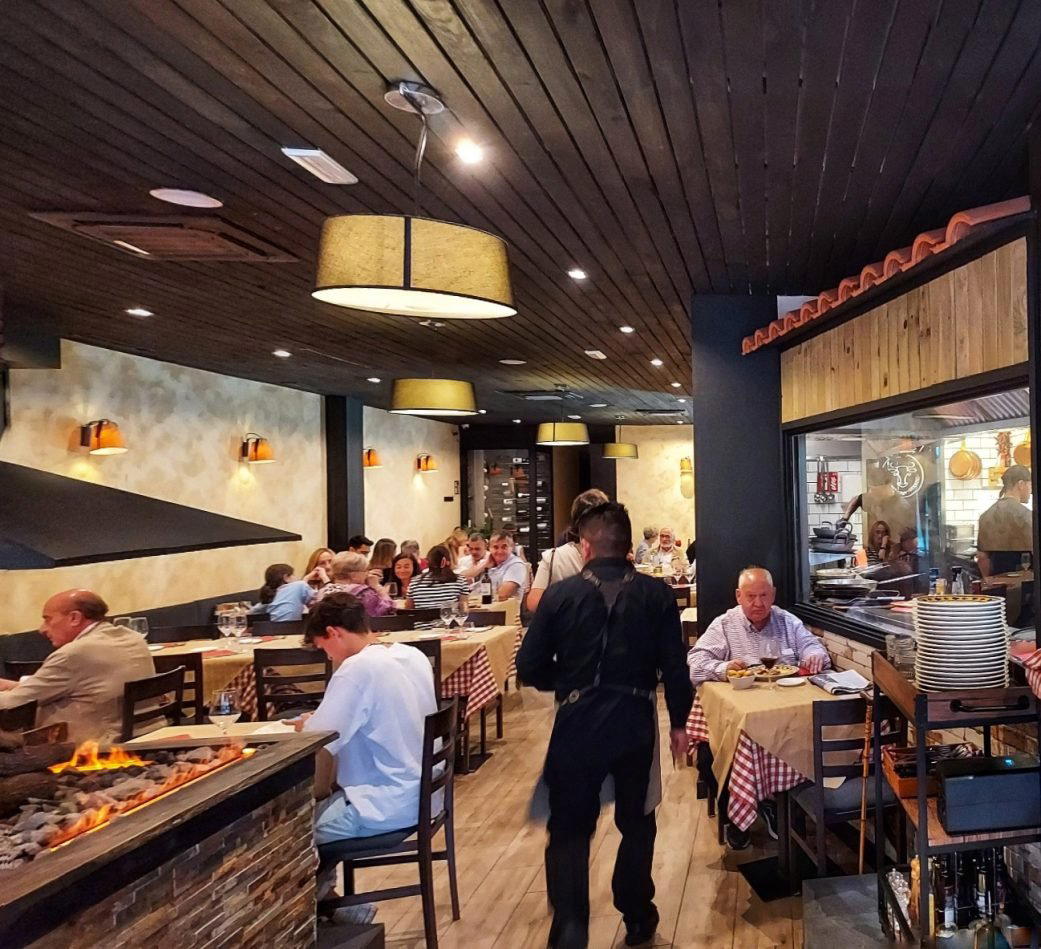
Salamanca's Dining Register
Madrid's Salamanca district has a specific gravity in the city's restaurant economy. The neighbourhood runs on old money and newer professional wealth, and its dining rooms reflect that: formal service rhythms, wine lists with depth rather than novelty, and kitchens that tend toward classical Spanish technique over the kind of experimental formats that cluster around Malasaña or Chueca. Calle de Padilla, where Pagus Madrid sits at number 56, belongs to the quieter residential edge of Salamanca, away from the flagship retail corridors of Serrano and Velázquez. That positioning matters. The street-level approach here is unhurried, the foot traffic local, and the expectation from a room like this one is that the food carries the argument rather than the setting.
Spanish fine dining has fragmented significantly over the past decade. At the upper end, a handful of Madrid addresses compete on the same international stage as Spain's most decorated out-of-capital kitchens: DiverXO, which holds three Michelin stars and operates at the outermost edge of creative cooking in the country, and Coque, which brings a Spanish creative format built around an exceptional cellar. Below that tier, a broader mid-range has developed where cooking quality is high but the format is less theatrical and the price point correspondingly more accessible. Pagus Madrid sits within that mid-register conversation, in a neighbourhood where the competition for a regular diner's loyalty is consistent.
The Castilian Table in Context
Understanding what a restaurant in Salamanca signals requires some reading of what Madrid's dining culture values. Unlike the Basque Country, where restaurants like Arzak in San Sebastián and Mugaritz in Errenteria operate within a clearly articulated regional culinary identity, or Catalonia, where El Celler de Can Roca in Girona and Cocina Hermanos Torres in Barcelona draw on a defined set of local ingredients and traditions, Madrid is a capital city with an aggregator identity. Its cooking draws from the full breadth of Iberian tradition: Castilian roasts, Andalusian seafood, Levantine rice, Basque pintxos culture. The leading rooms in the city don't pretend otherwise. They select from that inheritance deliberately rather than claiming a single regional purity.
That aggregator logic shapes how a Salamanca dining room positions itself. The neighbourhood's clientele is cosmopolitan but not avant-garde. They come expecting craft and precision over provocation, and they tend to return when the kitchen demonstrates consistency across seasons. For that audience, the touchstones are depth of product sourcing, integrity of technique, and a wine list with genuine Spanish breadth. Rooms in this tier compete less with the city's headline creative addresses like DSTAgE or Deessa, and more with each other, for a loyal local regulars' business that sustains a kitchen year-round.
Where Pagus Madrid Fits the Pattern
Spain's restaurant geography rewards specificity. A meal at Aponiente in El Puerto de Santa María is an argument about marine products and southern Spanish tradition. Azurmendi in Larrabetzu operates within a specifically Basque ecological and cultural frame. Quique Dacosta in Dénia uses Valencian coastal produce as its primary creative material. Madrid's leading addresses, by contrast, tend to derive their authority from technique and execution rather than from a single regional ingredient story. Paco Roncero, for instance, built his reputation on a creative format that draws from the full Spanish larder without anchoring to a single territory.
Pagus Madrid's address on Calle de Padilla places it in a quieter competitive register than the city's flagship tasting-menu rooms, but Salamanca is not a forgiving neighbourhood for underperformance. The area's dining population includes enough experienced restaurant-goers that word of mouth travels fast and a kitchen's reputation is tested consistently. A room at this address that delivers at a high level becomes a neighbourhood anchor; one that doesn't gets reassigned in the local calculus quickly. For comparison, Martin Berasategui in Lasarte-Oria, Atrio in Cáceres, and Ricard Camarena in València each demonstrate how a single-city or single-region commitment, maintained at high standard over years, builds the kind of credibility that places a room on the national radar. Madrid's mid-register has its own version of that dynamic, operating at a different scale.
Planning a Visit
The Salamanca address is accessible by metro via the Goya or Lista stations on Line 4, both within a short walk of Calle de Padilla. The neighbourhood runs at a different pace than central Madrid's tourist corridors, and the dining rhythm here tends toward later sittings in the Spanish tradition, with 9pm and 9:30pm the standard dinner hours for a local clientele. Reservations for Salamanca's established rooms are advisable particularly on Thursday through Saturday evenings, when local demand is at its highest.
| Venue | Format | Price Tier | Booking Lead Time |
|---|---|---|---|
| Pagus Madrid | Neighbourhood restaurant, Salamanca | Not confirmed | Advisable weekends |
| DiverXO | Tasting menu, Creative | €€€€ | Several months |
| Coque | Tasting menu, Spanish Creative | €€€€ | Weeks to months |
| Deessa | Modern Spanish, Creative | €€€€ | Weeks in advance |
| Paco Roncero | Creative tasting | €€€€ | Weeks in advance |
For a broader orientation to Madrid's current dining scene across all tiers and neighbourhoods, see our full Madrid restaurants guide. For international reference points in the same fine-dining conversation, Le Bernardin in New York City and Atomix in New York City represent how other cities at the top of the global dining tier approach the relationship between classical discipline and contemporary format.
How Pagus Madrid compares with similar nearby venues.
| Venue | Cuisine | Price |
|---|---|---|
| Taberna Verdejo | Spanish | Not listed |
| El Bajío | Mexican | €€ |
Recognition history
Dated appearances from independent guides and award organizations, with the underlying list record or original source where available.
Macarfi 7.3 Food Rating
Macarfi
Continue exploring
More in Madrid
Restaurants in Madrid
Browse all →
Bars in Madrid
Browse all →
Hotels in Madrid
Browse all →


At a Glance
- Classic
- Cozy
- Date Night
- Group Dining
- Family
- Open Kitchen
- Extensive Wine List
Current opening hours
- Monday
- Closed
- Tuesday
- 1:30–4 PM, 8–11 PM
- Wednesday
- 1:30–4 PM, 8–11 PM
- Thursday
- 1:30–4 PM, 8–11 PM
- Friday
- 1:30–4 PM, 8–11 PM
- Saturday
- 1:30–4 PM, 8–11 PM
- Sunday
- 1:30–4 PM, 8–11 PM
Hours can change for holidays and private events. Last verified .
Large pleasant dining room with checked tablecloths, open grill, and warm authentic Italian atmosphere.
Know Before You Go
- Getting there
- C. de Padilla, 56, Salamanca, 28006 Madrid, Spain