Osteria Laguna
Osteria Laguna occupies a Mid-town Manhattan address at 209 East 42nd Street, placing it squarely in the corridor where business dining and Italian-leaning hospitality intersect. The restaurant draws from a tradition of Italian osteria formats adapted for a demanding New York clientele, where proximity to Grand Central and the UN District shapes both the pace of service and the expectations at the table.
Pearl is the En Primeur Club membership app — saves, bookings, and concierge access live there. Same editors, same standards.
- Address
- 209 E 42nd St, New York, NY 10017
- Phone
- +12125570001
- Website
- osterialagunanyc.com
- Directions
- Get directions
 Saves & bookings on Pearl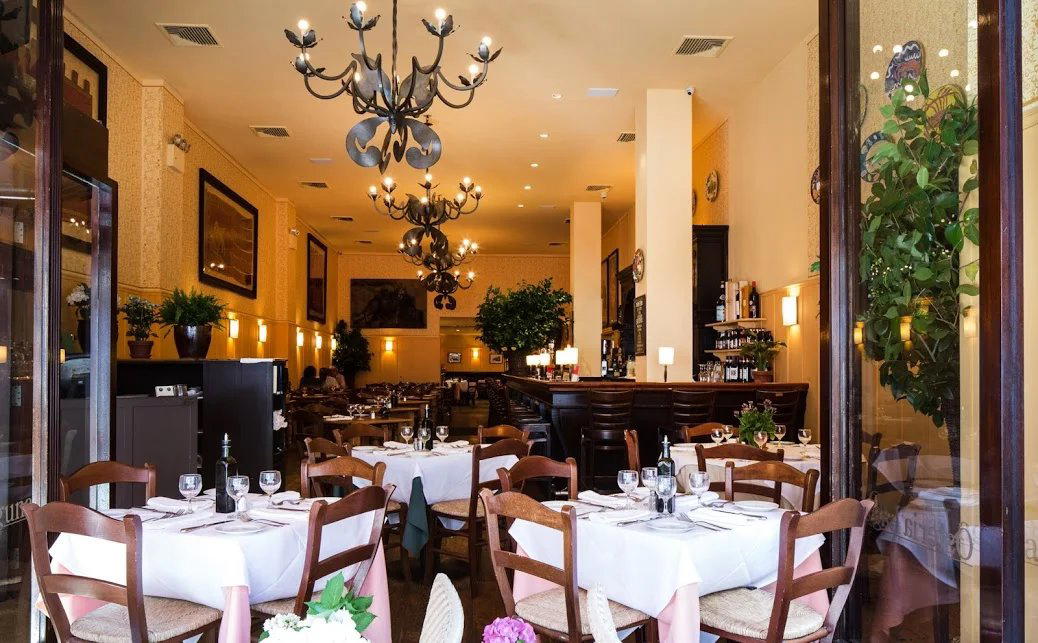
Midtown's Italian Osteria Tradition and Where Laguna Sits Within It
The osteria format has always occupied a specific register in Italian dining culture: less formal than a ristorante, more intentional than a trattoria, and defined by a hospitality logic that assumes the guest already knows what they want. In New York, that format has been adapted, compressed, and in some cases distorted by the demands of a city where lunch runs forty-five minutes and dinner reservations compete with theatre curtains. The Midtown stretch east of Fifth Avenue, where office towers and international institutions set the tempo, has historically supported Italian restaurants that lean into this practical, guest-led model rather than the tasting-menu architecture that dominates the upper tiers of the New York dining scene.
Osteria Laguna, at 209 East 42nd Street, operates inside that tradition. Its address places it a short walk from Grand Central Terminal, in a zone where the dining population skews toward professionals, diplomats, and visitors moving between appointments rather than diners building an evening around a single destination. That neighbourhood reality shapes everything from pacing expectations to the kinds of dishes that anchor a menu built for repeat visits rather than occasions.
For context on how the broader New York fine-dining tier operates, the city's most decorated Italian-adjacent and European-format rooms sit at a considerable remove from the 42nd Street corridor. Restaurants like Le Bernardin and Per Se represent the upper bracket of prix-fixe, multi-course formats where reservations open weeks or months in advance and the experience is structured around a single long sitting. The osteria model works on different terms: à la carte flexibility, a shorter average cover time, and a kitchen philosophy rooted in regional Italian cooking rather than international fine-dining grammar.
The Booking Question: What to Expect Before You Arrive
For a restaurant positioned on East 42nd Street, the booking experience is shaped as much by geography as by reputation. This is not a counter-seat omakase with a three-month waitlist, nor is it a prix-fixe room where covers are strictly limited and walk-ins are structurally impossible. The osteria format, when applied in a high-traffic Midtown address, typically allows for a more fluid approach to reservations than the city's destination-dining tier demands.
That said, the 42nd Street corridor sees significant weekday lunch volume from nearby office and institutional populations. Midtown business-lunch windows compress into narrow time slots, which means that same-day availability at peak hours is not guaranteed. Diners who treat this as a spontaneous drop-in during a Tuesday lunch rush may find the room operating at capacity. The more reliable approach for weekday lunch is a booking made at least a day in advance; weekday dinner and weekend visits tend to carry more flexibility in comparable Midtown restaurants of this format.
Walk-in capacity in osteria-format restaurants often depends on bar or counter seating rather than full-table availability. If you are arriving without a reservation, inquiring about bar dining is generally one productive path. For larger groups or specific table requests, advance booking is the practical default at any Midtown address with consistent occupancy.
Compared to the booking friction at New York's most reservation-intensive rooms, including Atomix, Masa, and Jungsik New York, the accessibility of an osteria format is a feature rather than a limitation. These are restaurants where the cover is structured around a specific seated experience; Laguna's Italian-leaning model is built for a different rhythm.
The 42nd Street Address in Context
Location at this specific Midtown node matters for practical planning. Grand Central Terminal is within walking distance, making Osteria Laguna a logical option for arrivals from the Metro-North network or visitors staying in the cluster of hotels along Lexington and Park Avenues. The UN District sits further east, adding a layer of international clientele that has historically made this stretch of 42nd Street one of the more cosmopolitan dining corridors in Midtown despite its workaday reputation.
The neighbourhood does not carry the culinary density of the Flatiron District or the West Village, where independent restaurants cluster and foot traffic is more dining-specific. But it does support a consistent population of repeat diners, which tends to reward Italian-format restaurants that prioritise reliable execution over seasonal reinvention. The osteria model, when it works in this environment, functions as a trusted fixture rather than a destination, and that durability is its own form of credibility in a city where restaurant turnover is high.
For those building a broader New York dining itinerary, our full New York City restaurants guide maps the city's dining scene across neighbourhoods and formats. For Italian and European formats operating in other major US cities, comparable reference points include Bacchanalia in Atlanta and The Inn at Little Washington in the Mid-Atlantic corridor. Internationally, the osteria tradition is most precisely calibrated at restaurants like Alain Ducasse at Louis XV in Monte Carlo and 8½ Otto e Mezzo Bombana in Hong Kong, which represent how Italian formats travel and adapt across different dining cultures.
For destination-format experiences in the US that sit at the opposite end of the planning spectrum, Alinea in Chicago, The French Laundry in Napa, Blue Hill at Stone Barns in Tarrytown, Single Thread Farm in Healdsburg, Lazy Bear in San Francisco, Providence in Los Angeles, Addison in San Diego, and Emeril's in New Orleans all require significantly more advance planning and represent a different category of dining commitment.
Know Before You Go
- Address: 209 E 42nd St, New York, NY 10017
- Nearest transit: Grand Central Terminal (4, 5, 6, 7, S lines)
- Format: Osteria-style, Italian
- Walk-ins: Possible depending on time and day; bar seating typically one accessible option without a booking
Standing Among Peers
Comparable venues nearby, for context on price, style, and recognition.
| Venue | Cuisine | Price | Notes |
|---|---|---|---|
| Osteria LagunaThis venue — the venue you are viewing | Modern Northern Italian Osteria | $$$ | Not listed |
| Barolo East | Northern Italian | $$$ | East Midtown-Turtle Bay |
| Mezzaluna | Classic Italian Trattoria | $$$ | Upper East Side-Carnegie Hill |
| Sant Ambroeus Lafayette | Modern Milanese Italian | $$$ | SoHo-Little Italy-Hudson Square |
| Mariella | Modern Italian | $$$ | Park Slope |
| L'Angeletto | Northern Italian Pasta | $$$ | Gramercy |
Continue exploring
More in New York City
Restaurants in New York City
Browse all →
Bars in New York City
Browse all →

Hotels in New York City
Browse all →




At a Glance
- Classic
- Cozy
- Elegant
- Business Dinner
- Group Dining
- Casual Hangout
- Open Kitchen
- Local Sourcing
Current opening hours
- Monday
- 12–10 PM
- Tuesday
- 12–10 PM
- Wednesday
- 12–10 PM
- Thursday
- 12–10 PM
- Friday
- 12–10 PM
- Saturday
- 12–10 PM
- Sunday
- 12–10 PM
Hours can change for holidays and private events. Last verified .
Air y and spacious with sunflower-yellow walls, antique country tables, a classic mahogany bar, and a warm, refined Venice-like atmosphere.