Barolo East
On East 49th Street in Midtown, Barolo East occupies a stretch of Manhattan where Italian dining has long served the professional lunch crowd and the pre-theater dinner set. The address places it squarely in the Turtle Bay corridor, where the traditions of northern Italian cooking, the slow braise, the aged wine, the unhurried pace of a meal, sit against the rhythms of a neighborhood that rarely slows down.
Pearl is the En Primeur Club membership app — saves, bookings, and concierge access live there. Same editors, same standards.
- Address
- 214 E 49th St, New York, NY 10017
- Phone
- +12127545710
- Website
- baroloeast.com
- Directions
- Get directions
 Saves & bookings on Pearl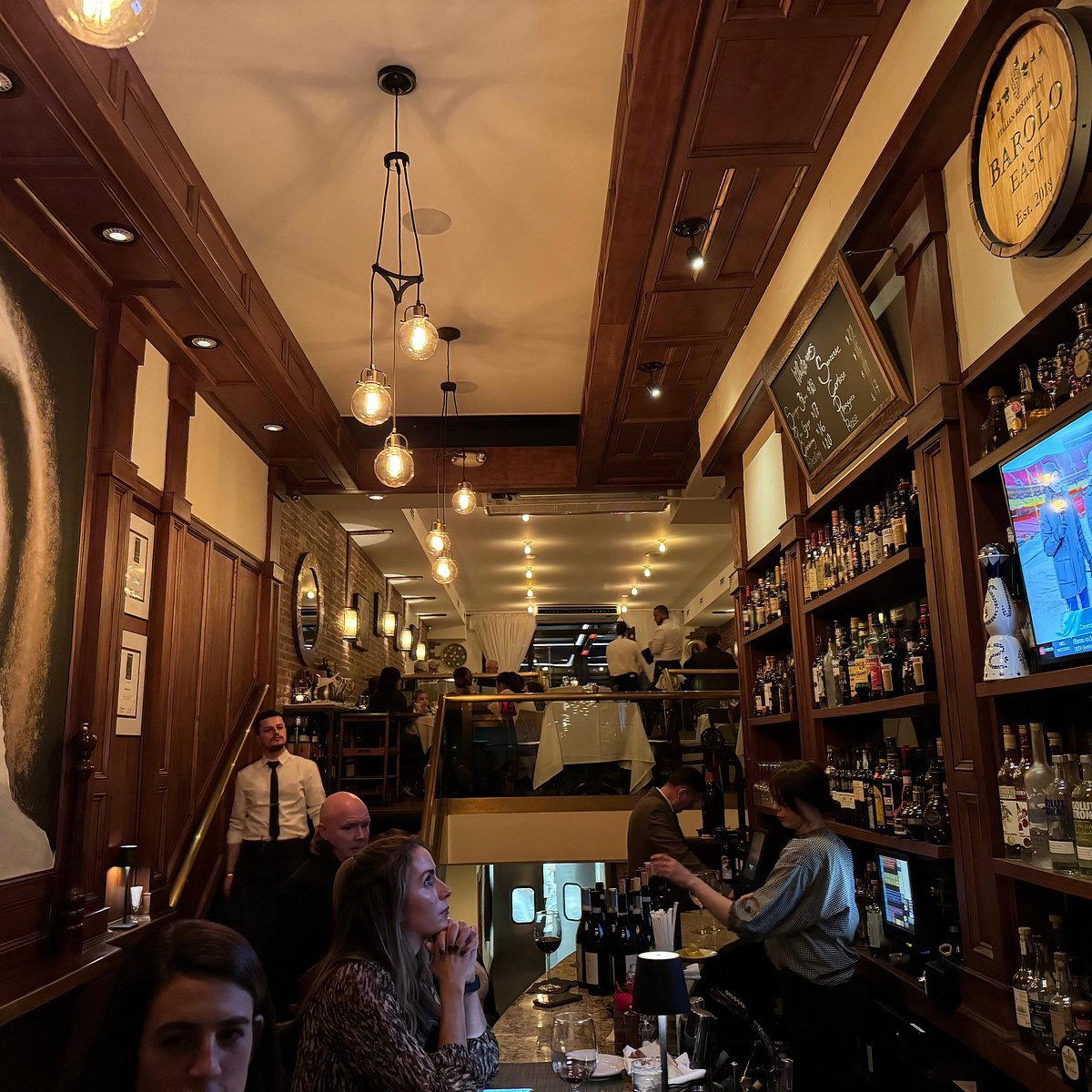
Italian Dining in Midtown: The Turtle Bay Tradition
Barolo East is a Northern Italian restaurant in Turtle Bay, Midtown Manhattan. Barolo East, at 214 East 49th Street, sits in this tradition.
The name signals its allegiances directly. Barolo, the wine, not merely the word, carries specific meaning in Italian dining culture. It is the Nebbiolo-based wine of Piedmont, aged for years before release, structured enough to demand food of some weight and patience from the diner who orders it. A restaurant that puts that name on its door is signaling a focus on Northern Italian cooking and wine.
The Architecture of a Northern Italian Meal
Northern Italian cuisine, Piedmontese in particular, operates around a grammar of courses that predates the contemporary tasting menu by centuries. The antipasto arrives not as an afterthought but as a statement: cured meats, a vitello tonnato, something preserved. The primo follows with pasta or risotto, and here is where the pacing becomes instructive. A proper risotto demands eighteen to twenty minutes of active cooking; ordering one is an act of commitment to the meal's timetable. The secondo, often a braise or a roast, arrives on its own terms. Dessert, if it comes at all, is light, a panna cotta, a small selection of amaro.
This structure contrasts sharply with the format of New York's highest-profile tasting menus, where the kitchen controls every variable of pacing and sequencing. At places like Eleven Madison Park or Per Se, the diner surrenders to a predetermined arc. The northern Italian trattoria model inverts this: the diner chooses, the kitchen responds, and the meal's architecture is a negotiation between the two. That negotiation is, itself, part of the ritual.
Where Barolo East Sits in New York's Italian Tier
New York's Italian restaurant market is deeply stratified. At the leading end, a handful of addresses compete on the same currency as Le Bernardin or Atomix: Michelin recognition, long wine lists priced for expense accounts, menus that change with serious seasonal intention. Below that sits a dense middle tier of neighborhood Italian restaurants, some excellent, some coasting on familiarity, and then the high-volume red-sauce operations that exist primarily to turn tables. Midtown's Italian restaurants generally occupy the middle tier, serving a professional clientele that values reliability and consistency over culinary ambition.
The restaurant address on East 49th Street places it in a corridor that has housed Italian dining for decades. The Turtle Bay neighborhood, bounded roughly by 42nd and 53rd Streets between Second and Third Avenues, developed its restaurant density partly because of its proximity to the United Nations headquarters and the corporate offices that cluster around them. Italian restaurants became a neutral ground for professional entertaining, formal enough to signal seriousness, familiar enough to avoid alienating international guests. That context still shapes what diners expect from a room like this: service that anticipates rather than reacts, a wine list organized for the guest who knows what they want, and a pace that respects the constraints of the business day without rushing the meal.
For comparison across the American fine dining spectrum, the northern Italian tradition that informs the restaurant finds different expressions at Frasca Food & Wine in Boulder, which built its identity on Friulian cuisine and an Italian wine program of unusual depth, and at Dal Pescatore in Runate, which represents the Italian source material itself. In Italy's alpine north, Atelier Moessmer Norbert Niederkofler in Brunico has become a reference point for how northern Italian ingredients and restraint translate into contemporary fine dining.
The Wine Argument at a Barolo-Named Table
Naming a restaurant after a wine is not a casual decision in Italian dining culture. Barolo occupies a specific position in the Italian wine hierarchy: it requires extended aging (at least three years from harvest under DOCG rules, five for Riserva), it is produced in a geographically defined zone in Piedmont's Langhe hills, and it is priced accordingly. A restaurant that invokes the wine is signaling a wine program of some seriousness, or at minimum an aspiration toward one. The practical consequence for the diner is that the wine list should be read with attention, a Barolo-focused list, done properly, will span multiple producers and vintages, and the gap between a young and a mature bottle will be significant in both price and character.
This wine-forward identity also shapes food pairings. The cuisine that works with Barolo, slow-cooked beef, braised short rib, aged cheeses, dishes with enough fat and structure to meet the wine's tannin, differs from the lighter preparations that suit a white-wine-driven Italian table. Diners who arrive expecting something in the register of Masa's minimalism or the produce-led ethos of Blue Hill at Stone Barns in Tarrytown are looking at the wrong address. The logic of the Barolo table is abundance and patience, not reduction and precision.
Planning Your Visit
The restaurant is located at 214 East 49th Street, New York, NY 10017, in Turtle Bay, Midtown Manhattan. Reservations are recommended.
Readers planning a longer itinerary around serious Italian or American fine dining might also consider The French Laundry in Napa, Single Thread Farm in Healdsburg, Smyth in Chicago, Lazy Bear in San Francisco, Providence in Los Angeles, Addison in San Diego, Emeril's in New Orleans, and The Inn at Little Washington in Washington as reference points across American fine dining.
How It Stacks Up
Comparable venues nearby, for context on price, style, and recognition.
| Venue | Cuisine | Price | Notes |
|---|---|---|---|
| Barolo EastThis venue — the venue you are viewing | Northern Italian | $$$ | Not listed |
| Arno | Traditional Northern Italian | $$$ | Midtown-Times Square |
| Isabelle's Osteria | Modern Italian Osteria | $$$ | Midtown South-Flatiron-Union Square |
| Osteria Delbianco Bryant Park | Traditional Northern Italian | $$$ | Midtown-Times Square |
| da Umberto | Classic Tuscan Italian | $$$ | Chelsea-Hudson Yards |
| Palma | Organic Italian with Housemade Pasta | $$$ | West Village |
Continue exploring
More in New York City
Restaurants in New York City
Browse all →
Bars in New York City
Browse all →
Hotels in New York City
Browse all →





At a Glance
- Cozy
- Rustic
- Elegant
- Intimate
- Date Night
- Business Dinner
- Casual Hangout
- Open Kitchen
- Extensive Wine List
Current opening hours
- Monday
- 11:30 AM–11 PM
- Tuesday
- 11:30 AM–11 PM
- Wednesday
- 11:30 AM–11 PM
- Thursday
- 11:30 AM–11 PM
- Friday
- 11:30 AM–11 PM
- Saturday
- 4–11 PM
- Sunday
- 4–10 PM
Hours can change for holidays and private events. Last verified .
Rustic decor with contemporary details and cozy ambience enhanced by friendly staff; quiet and polished atmosphere suitable for dates.