Original Vincent's
One of Mott Street's longest-standing addresses, Original Vincent's has been part of Little Italy's dining fabric for generations. The restaurant occupies a specific place in New York's Italian-American canon, where red-sauce tradition and neighbourhood longevity carry more weight than tasting-menu theatrics. For visitors tracing the borough's immigrant culinary history, it remains a reference point on a block that has seen the neighbourhood shrink and transform around it.
Pearl is the En Primeur Club membership app — saves, bookings, and concierge access live there. Same editors, same standards.
- Address
- 119 Mott St, New York, NY 10013
- Phone
- +12122268133
- Website
- originalvincents.nyc
- Directions
- Get directions
 Saves & bookings on Pearl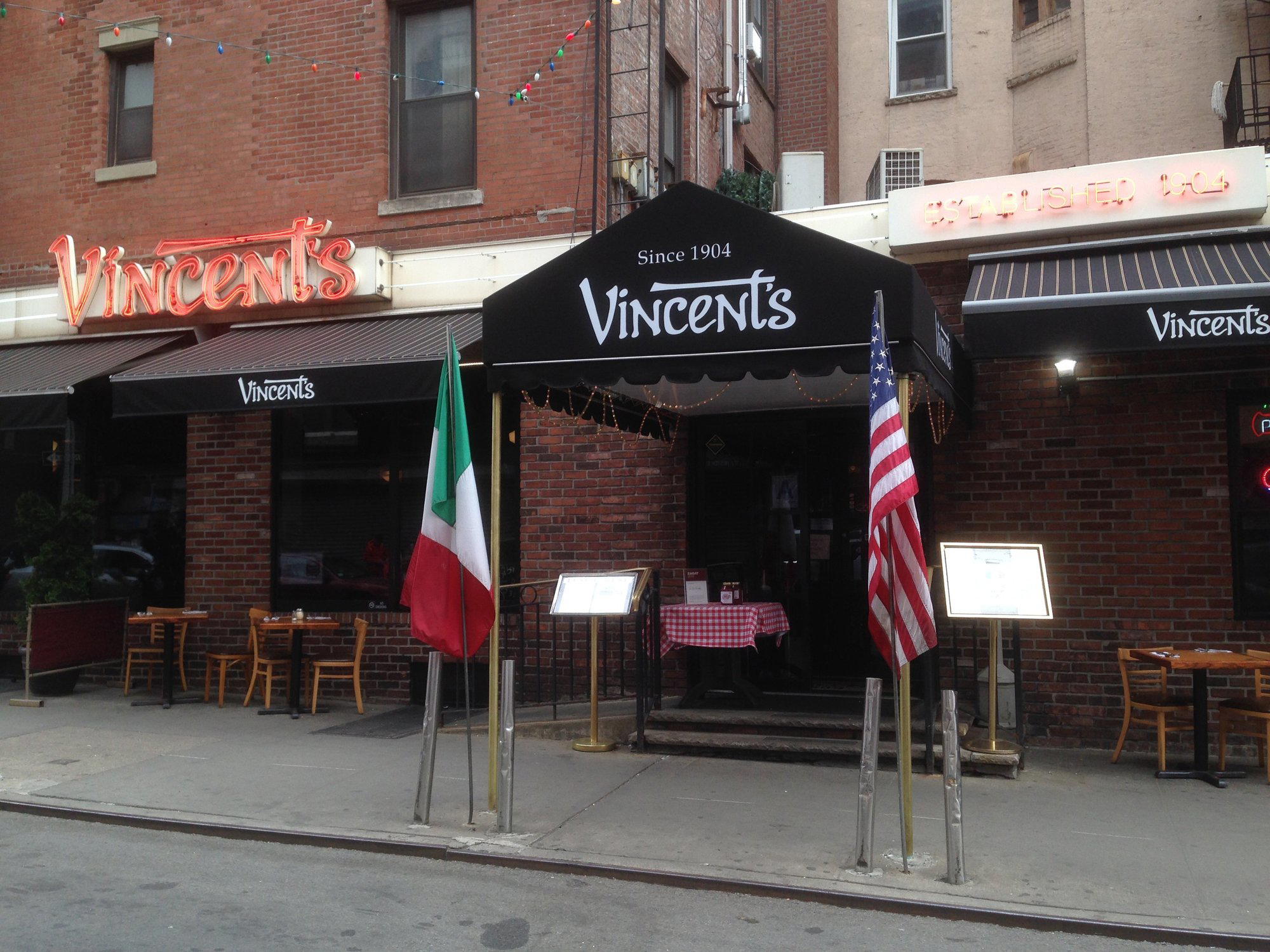
Little Italy's Long Game: Red-Sauce Tradition on Mott Street
Original Vincent's is a classic Italian seafood restaurant at 119 Mott St, New York, NY 10013. New York's Italian-American restaurant culture has always operated on two tracks. One follows the European fine-dining model, refining regional Italian cooking through the lens of Michelin ambition and premium sourcing, a trajectory visible at the city's upper tier alongside French-dominant houses like Le Bernardin or the progressive Korean rooms such as Atomix and Jungsik New York that now anchor the city's serious dining conversation. The other track runs parallel and largely independent: the neighbourhood red-sauce institution, shaped by immigrant pragmatism, local loyalty, and a kitchen logic that prizes consistency over reinvention. Original Vincent's at 119 Mott Street belongs firmly to the second tradition.
Little Italy itself has contracted sharply over the past four decades. What was once a dense Italian-immigrant enclave stretching across lower Manhattan has narrowed to a few concentrated blocks, with Mott Street serving as the neighbourhood's spine. The restaurants that have survived this compression tend to be the ones with the deepest local roots, those that were woven into the social fabric of the community before the demographic shift accelerated. Longevity on this block is not incidental; it reflects a particular kind of institutional trust that no amount of press or awards can replicate.
What Endures: The Red-Sauce Tradition and Its Ethical Dimensions
There is a sustainability argument embedded in the red-sauce restaurant model that rarely gets framed as such. These kitchens have long operated on principles that contemporary farm-to-table programs articulate as progressive: using the whole product, building dishes around accessible, seasonal produce, reducing waste through stocks and long-cooked sauces, and maintaining supply relationships over years rather than seasons. The tomato-based sauces at the core of this tradition reflect generations of kitchen economy, where flavour was extracted from inexpensive ingredients through time and technique rather than through premium sourcing budgets.
Original Vincent's sits within that current dining conversation. While properties like Blue Hill at Stone Barns in Tarrytown or Single Thread Farm in Healdsburg have built explicit ethical-sourcing frameworks into their identity and pricing, the red-sauce institution achieves some of the same ends through tradition rather than programme. The difference is one of articulation, not necessarily practice. Long-standing neighbourhood restaurants tend to maintain supplier relationships spanning decades, which produces a form of traceability that smaller, newer operations actively seek and pay consultants to construct.
Across the country, the restaurants that have absorbed this philosophy most consciously include operations like Bacchanalia in Atlanta, Providence in Los Angeles, and Addison in San Diego. The Italian-American red-sauce house rarely makes that argument explicitly, but its longevity is itself a form of evidence.
Mott Street in Context: What This Block Tells You About the City
Dining on Mott Street in Little Italy places a visitor at one of the more historically layered intersections in New York's restaurant geography. The street runs south from SoHo into what remains of the old Italian quarter before transitioning into the northern edge of Chinatown, and this layering is not merely geographic. It is culinary. The restaurants here have coexisted with, competed against, and occasionally blended with the Cantonese and Fujianese kitchens immediately to the south for generations, producing a block-level dining ecosystem that reflects the actual history of immigrant New York more honestly than most heritage branding exercises manage.
For the visitor whose New York itinerary leans toward the city's current prestige tier, with meals planned at Masa or Per Se, a meal on Mott Street operates as a corrective lens. It is a reminder that the city's dining culture was built on neighbourhood institutions before it was built on tasting menus, and that the former category has not disappeared simply because the latter now dominates the critical conversation. See our full New York City restaurants guide for a wider view of how these tiers interact across the five boroughs.
Where Original Vincent's Sits in the American Italian-American Dining Map
The American restaurant scene has produced its own canon of institution-grade Italian-American addresses. Across the country, the category spans from neighbourhood fixtures to more elaborate productions. Emeril's in New Orleans represents one trajectory, where the neighbourhood institution grew into a named brand. Alinea in Chicago and Lazy Bear in San Francisco represent a different evolution entirely, where the neighbourhood dining format was abandoned in favour of formalist ambition. The restaurant occupies neither of those trajectories. It represents the third option: the institution that stays put, maintains its format, and allows the city to change around it.
That positioning is increasingly rare. The economics of lower Manhattan real estate have forced most long-standing neighbourhood restaurants into either closure or reinvention. The ones that persist on their original terms tend to carry a kind of inertia that functions as both their greatest asset and their primary limitation. They are not positioned to compete with the French Laundry-tier experiences or the international reference points like 8 1/2 Otto e Mezzo Bombana in Hong Kong or Alain Ducasse at Louis XV in Monte Carlo. They are not trying to be. Consider also The Inn at Little Washington for a contrasting model of American longevity built around formal European tradition rather than neighbourhood pragmatism.
Know Before You Go
| Address | 119 Mott St, New York, NY 10013 |
|---|---|
| Neighbourhood | Little Italy, Manhattan |
| Cuisine | Italian-American, red-sauce tradition |
| Price Range | About $30 per person |
| Reservations | Recommended |
| Hours | Thu-Sun: 12-10 PM; Mon-Wed: Closed |
| Getting There | Nearest subway lines serve Canal St and Spring St stations. |
Style and Standing
Comparable venues nearby, for context on price, style, and recognition.
| Venue | Cuisine | Price | Notes |
|---|---|---|---|
| Original Vincent'sThis venue — the venue you are viewing | Classic Italian Seafood | $$ | Not listed |
| Sofia's of Little Italy | Italian Trattoria | $$ | SoHo-Little Italy-Hudson Square |
| Organika Bar & Kitchen | Organic Italian | $$ | West Village |
| Rucola | Rustic Northern Italian | $$ | Downtown Brooklyn-DUMBO-Boerum Hill |
| Piccola Cucina Casa | Regional Italian | $$ | Downtown Brooklyn-DUMBO-Boerum Hill |
| Casa Louie | Contemporary Italian Pizza & Pasta | $$ | Chelsea-Hudson Yards |
Continue exploring
More in New York City
Restaurants in New York City
Browse all →
Bars in New York City
Browse all →

Hotels in New York City
Browse all →






At a Glance
- Classic
- Well Known
- Cozy
- Group Dining
- Casual Hangout
- Late Night
- Historic Building
Current opening hours
- Monday
- Closed
- Tuesday
- Closed
- Wednesday
- Closed
- Thursday
- 12–10 PM
- Friday
- 12–10 PM
- Saturday
- 12–10 PM
- Sunday
- 12–10 PM
Hours can change for holidays and private events. Last verified .
Warm, familial atmosphere with classic charm evoking old-school Little Italy dining.