
A family-run bistro on a narrow lane in Évora's historic centre, Origens holds two consecutive Michelin Plates (2024 and 2025) for its approach to Alentejo cooking: traditional flavours reframed through contemporary technique and a menu that shifts with the season. At the €€ price point, it offers among the more considered regional dining experiences in the city, with à la carte options alongside three- and five-course tasting menus.
Pearl is the En Primeur Club membership app — saves, bookings, and concierge access live there. Same editors, same standards.
- Address
- R. de Burgos 10, 7000-863 Évora, Portugal
- Phone
- +351 964 220 790
- Website
- origensrestaurante.com
- Directions
- Get directions
 Saves & bookings on Pearl
A Lane, a Counter, a Region on a Plate
Évora's medieval street grid does not yield its restaurants easily. Rua de Burgos is the kind of lane that rewards those who came looking rather than those who stumbled past, and the low-key entrance to Origens suits the street entirely. There is no signage theatre, no pavement billboard stacking awards. The room reads as what it is: a family-run space in a historic Portuguese city, compact and deliberate, where the architecture of the meal matters more than the architecture of the room.
That restraint is not accidental. In Alentejo, the dominant culinary tradition is one of deep patience: slow-cooked pork, dried beans coaxed into density, bread repurposed long past its first day. The region's cooking was never about spectacle. Origens draws on that instinct and redirects it through the language of the contemporary bistro, a format that has found particular traction in mid-sized Portuguese cities over the past decade as younger chefs returned to provincial roots with European technique in hand.
The Rhythm of the Meal
The format at Origens is structured but not rigid. Diners can choose à la carte or commit to one of two tasting menus, at three or five courses, a distinction that shapes the pacing of an evening considerably. The shorter menu reads as a sampler of the kitchen's current priorities; the five-course route allows the meal to build momentum, with each dish acting as a chapter in a fairly coherent argument about what Alentejo produces and what it can become when handled with precision.
Across Portugal's Michelin-recognised contemporary restaurants, tasting menus have become the dominant format at the upper end. At Belcanto in Lisbon, the menu runs to multiple courses with corresponding wine pairings. Casa de Chá da Boa Nova in Leça da Palmeira and Ocean in Porches operate at the €€€€ tier with similar commitment to long-form dining. What distinguishes Origens is the €€ price point, which places a considered tasting format within reach of a broader audience without stripping the experience of its structure. In Évora itself, Dom Joaquim anchors the traditional regional end of the market, while Hibrido approaches the city's dining from a more hybrid, modern-cuisine perspective. Origens sits between those reference points, committed to regional identity but unwilling to treat technique as optional.
The wine programme is worth treating as part of the meal's structure rather than a side decision. The sommelier proposes a mystery pairing alongside the tasting menus, a format that works precisely because Alentejo's wine output is strong enough to carry the concept. The region produces reds built around Aragonez and Trincadeira, whites with real textural weight, and a growing number of producers working with lower intervention. Handing that selection to someone who knows the cellar and the kitchen simultaneously is a reasonable bet.
Seasonality as Editorial Logic
The menu at Origens is updated regularly according to regional product availability, which is less a marketing note than a structural fact about how the kitchen is run. In Alentejo, this means broad beans in late spring, black pork through the cooler months, and the cork-oak landscape's supply of game and foraged ingredients across autumn. Dishes shift not because novelty is the goal but because the supply chain dictates the timeline.
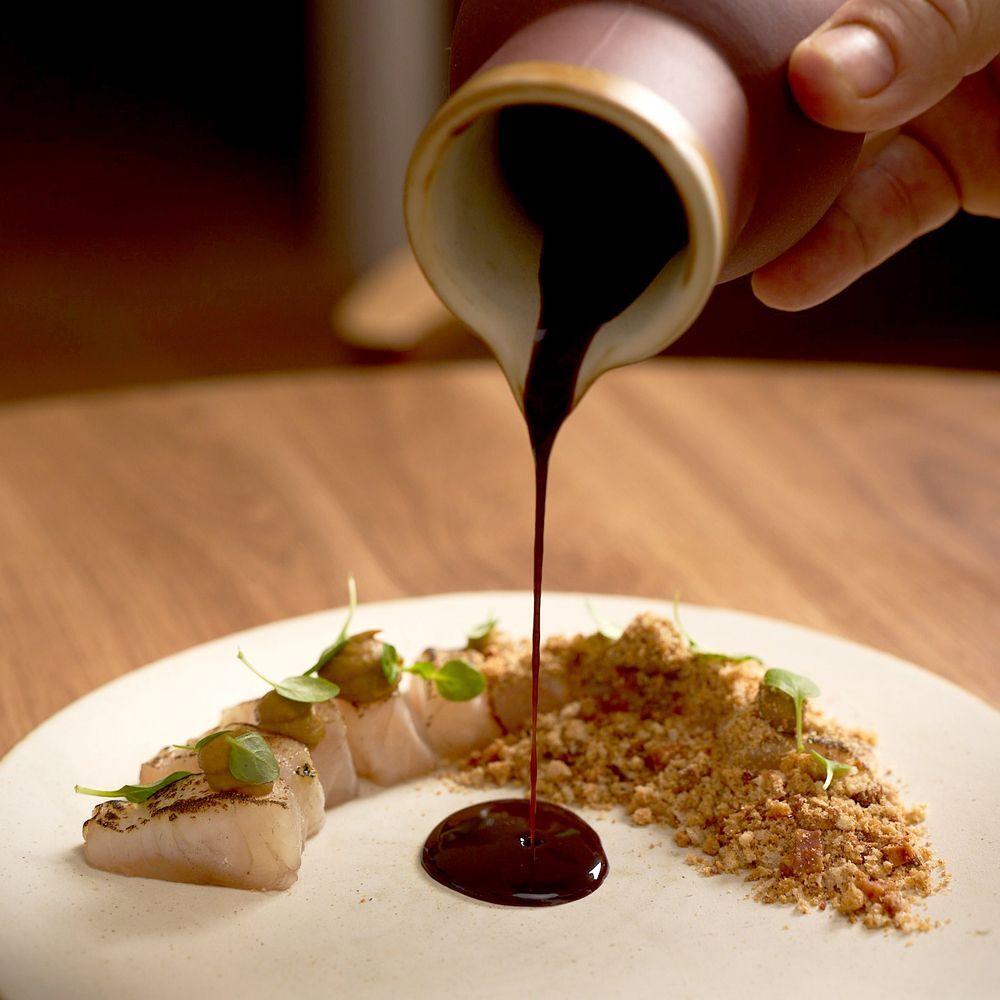
Slow-cooked, served with sprouting greens, shallots, and apricots, the dish draws on the region's central protein while adding the kind of acidic and bitter counterpoints that contemporary technique has borrowed from classical French and Nordic playbooks. The result is recognisably Alentejano in its core ingredient and pacing but not bound by a museum-preservation logic. This is the balance that Michelin's Plate recognition tends to flag: cooking that demonstrates clear technical intent without reaching for novelty as a value in itself.
Globally, the contemporary category has produced versions of this approach in cities with strong regional food identities. Jungsik in Seoul and César in New York City each work at the intersection of local culinary inheritance and international technique, though at significantly different price tiers and scales. The underlying editorial instinct, using a region's produce as both raw material and argument, runs across all of them.
Michelin Recognition in Context
Origens received a Michelin Plate in 2024 and 2025. The Plate designation, introduced as a formal category below Bib Gourmand and stars, recognises restaurants where the inspectors found cooking of good quality: fresh ingredients handled with care and dishes properly prepared. It is not a consolation award. In Portugal's broader Michelin landscape, which includes starred restaurants from Antiqvvm in Porto to Il Gallo d'Oro in Funchal to The Yeatman in Vila Nova de Gaia, the Plate functions as a signal that a restaurant is operating within the guide's quality framework, even without the scores that trigger star classification. For a bistro at the €€ tier in a city the size of Évora, consecutive Plate recognition over two years represents a consistent standard rather than a single strong service.
At that volume, ratings tend to smooth out outlier opinions and reflect a reliable median experience, which here suggests the room is working at a level that sustains broad satisfaction alongside the Michelin signal.
Planning a Visit
Origens sits at Rua de Burgos 10 in Évora's historic centre, within walking distance of the Roman temple and the cathedral precinct that most visitors use as their geographic reference points. The address is manageable on foot from anywhere within the walled city. Given the small scale of the space and the structured menu format, booking in advance is advisable; the combination of Michelin recognition and a compact room creates the conditions for limited availability, particularly at weekends and during the summer season when visitor numbers in Évora climb. Origens operates at about €65 per person, making it accessible relative to Portugal's higher-end contemporary tables. Further afield, A Ver Tavira in Tavira and A Cozinha in Guimarães represent comparable regional-contemporary approaches in other parts of Portugal.
Style and Standing
Comparable venues nearby, for context on price, style, and recognition.
| Venue | Cuisine | Price | Awards | Notes |
|---|---|---|---|---|
| OrigensThis venue — the venue you are viewing | Modern Alentejo | $$$ | Michelin Plate | Not listed |
| Hibrido | Modern Portuguese with Local Seasonal Ingredients | $$$ | Michelin Plate | Centre of Évora |
| Dom Joaquim | Traditional Alentejo with Modern Touch | $$ | Michelin Plate | Historic Centre of Évora |
| Cavalariça Évora | Dining | Not listed | Michelin Plate | Évora |
| Degust'Ar | Modern Alentejo Mediterranean | $$$$ | Not listed | historic centre |
| Casa do Gadanha | Modern Alentejo Contemporary | $$$ | Michelin Plate | historic heart |
Recognition history
Dated appearances from independent guides and award organizations, with the underlying list record or original source where available.
Michelin Plate
Michelin
Michelin Plate
Michelin
Michelin Plate
Michelin
Continue exploring
More in Évora
Restaurants in Évora
Browse all →
Bars in Évora
Browse all →
Hotels in Évora
Browse all →


At a Glance
- Cozy
- Intimate
- Elegant
- Rustic
- Date Night
- Special Occasion
- Open Kitchen
- Extensive Wine List
- Sommelier Led
- Local Sourcing
Current opening hours
- Monday
- Closed
- Tuesday
- 12:30–2 PM, 7–10 PM
- Wednesday
- 12:30–2 PM, 7–10 PM
- Thursday
- 12:30–2 PM, 7–10 PM
- Friday
- 12:30–2 PM, 7–10 PM
- Saturday
- 12:30–2 PM, 7–10 PM
- Sunday
- Closed
Hours can change for holidays and private events. Last verified .
Cozy, welcoming space with clean contemporary decor, characterful small room, lively yet not noisy atmosphere, and open kitchen.