Orange sits within Taipei's mid-to-upper dining tier, where the city's appetite for precise, culturally grounded cooking continues to deepen. The restaurant draws a committed local following and positions itself alongside a generation of Taipei kitchens rethinking what Taiwanese cooking can look like at the table. Specific menu details and pricing are best confirmed directly with the venue before visiting.
Pearl is the En Primeur Club membership app — saves, bookings, and concierge access live there. Same editors, same standards.
- Address
- No. 15, Lane 219, Section 1, Fuxing S Rd, Ren'ai Village, Da’an District, Taipei City, Taiwan 106
- Directions
- Get directions
 Saves & bookings on Pearl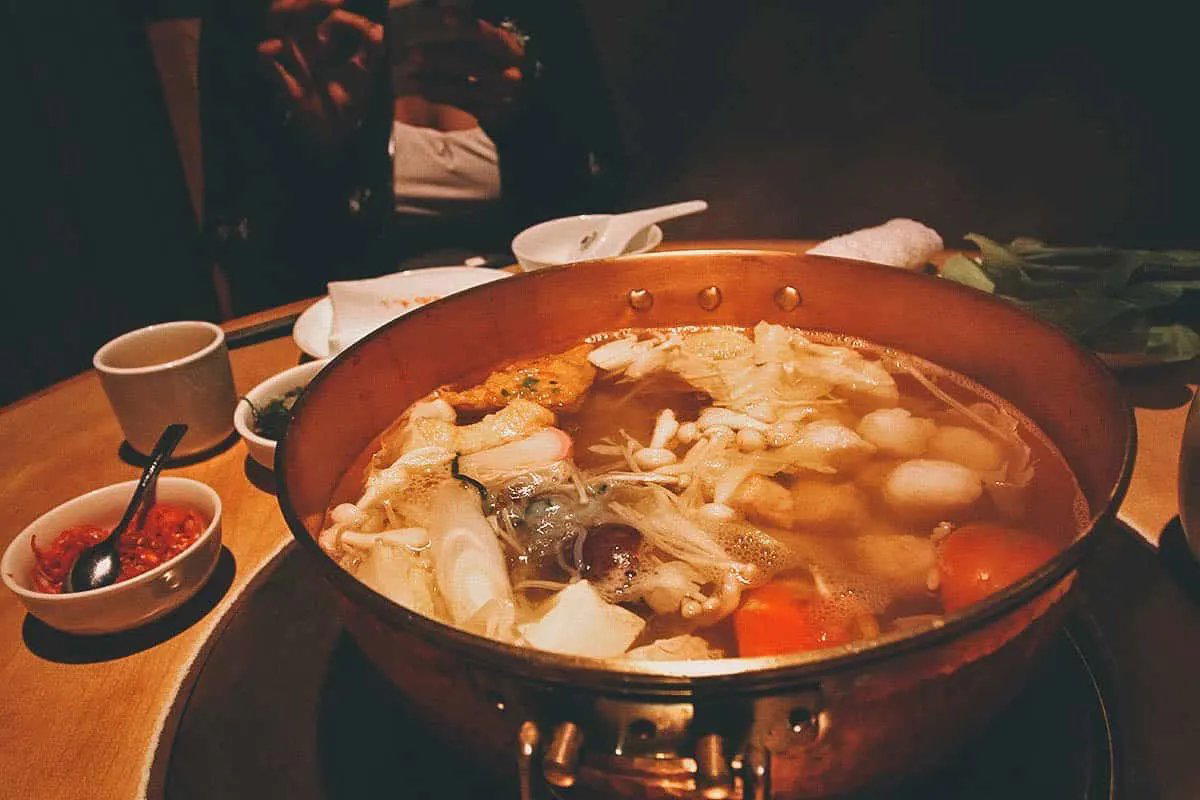
Taipei's Appetite for Precision: Where Orange Fits
Taipei has spent the better part of two decades building one of Asia's most coherent fine-dining ecosystems, and the city's current moment is defined less by spectacle than by specificity. The counters and dining rooms that attract serious attention today tend to share a common trait: they are grounded in a particular culinary argument, whether that argument is made through Cantonese technique at Le Palais, the Franco-Taiwanese dialogue at Taïrroir, or the European-Asian hybrid language that logy has refined into something distinctly its own. Orange is a Japanese Shabu Shabu restaurant in Taipei, priced around $25 per person, operating within a city where the pressure to be contextually rooted has become the defining quality standard.
Taipei's dining culture draws from a genuinely complex set of influences: the Hoklo and Hakka traditions that predate the twentieth century, the influx of mainland Chinese regional cooking that arrived after 1949, the Japanese colonial period's structural imprint on everything from knife culture to ingredient sourcing, and the more recent decades of Western technique absorbed through training stints in Paris, Copenhagen, and New York. What emerges from that accumulation is not fusion in the diluted sense, but something closer to a city-specific grammar that the leading Taipei kitchens have learned to deploy with real authority.
The Cultural Roots on the Plate
Taiwan's culinary identity is often misread from the outside as a subset of Chinese cooking, which misses the degree to which the island developed its own distinct food culture across centuries of layered influence. The braised pork traditions, the seafood-forward coastal cooking, the night-market snack canon, the reverence for seasonal produce from mountain and sea: these are not borrowings but originals, and the more ambitious Taipei restaurants of the current generation have found ways to bring those traditions into a fine-dining register without losing their essential character.
That translation is harder than it looks. The challenge is not technique, which Taipei kitchens now command at a level comparable to any major dining city. The challenge is narrative coherence: making a plate of food that reads as genuinely Taiwanese rather than as French or Japanese cooking with local ingredients swapped in. The restaurants that have solved this most convincingly, places like Taïrroir under its Taiwanese-French framework and logy with its Asian-European dialogue, have done so by positioning local ingredients and local culinary logic as the primary language, with imported technique as a secondary tool. Orange, operating within this same environment, participates in a city-wide project of culinary self-definition that has few parallels in Southeast or East Asia outside of Tokyo and Singapore.
The format serves the story, not the other way around.
Taipei's Upper Tier and Where Orange Sits
Taipei's premium dining tier has consolidated around a cohort of restaurants that compete less on price-point theatrics and more on accumulated credibility: Michelin recognition, consistent press from regional food media, and a booking pattern that reflects genuine demand rather than hype cycles. Le Palais and L'Atelier de Joël Robuchon anchor the established end of that tier. Molino de Urdániz represents the international import model, bringing Spanish contemporary cooking into a Taiwanese context. Orange sits within the domestic contingent, alongside a generation of Taipei-rooted restaurants making the case that interesting cooking in the city comes from looking inward rather than outward.
Taiwan's culinary ambition is not confined to Taipei. JL Studio in Taichung has drawn significant international attention for its Southeast Asian-influenced tasting format, while GEN in Kaohsiung and A Xia in Tainan represent the serious dining scenes developing outside the capital. The broader context matters for visitors planning a Taiwan itinerary: Taipei is the densest concentration of fine dining on the island, but it is not the only conversation worth joining. Within the capital itself, the range extends from casual Taiwanese specialists to tasting-menu formats that compete directly with the upper tiers in Tokyo or Paris.
For reference across the wider island, restaurants in the New Taipei area such as GARDENh in Yonghe District and addresses further afield like Volcanic Rock in Zhubei City indicate how seriously the culinary ambition has spread beyond central Taipei, informing the food culture that restaurants like Orange operate within and respond to.
Planning a Visit
Orange serves dinner daily from 6 to 11 PM, and reservations are recommended. Taipei's better-regarded mid-to-upper restaurants tend to book ahead by several weeks during peak periods, particularly around Golden Week and the Lunar New Year holiday window, when domestic travel concentrates demand across the city's dining options. For first-time visitors arriving without reservations, weekday lunches generally offer more flexibility than weekend evenings across most of Taipei's competitive dining tier. Dress code expectations in Taipei's contemporary restaurant scene lean toward smart casual rather than formal, though specific house policies vary and are worth confirming in advance.
Taiwan's food culture is genuinely distributed, and the capital is best understood as one node in a larger network rather than its totality. Internationally, the parallel comparison might be the contrast between dining in New York at a reference address like Le Bernardin and building a picture of American food culture from a single address: useful, but incomplete without the wider geography.
A Quick Peer Check
Comparable venues nearby, for context on price, style, and recognition.
| Venue | Cuisine | Price | Notes |
|---|---|---|---|
| OrangeThis venue — the venue you are viewing | Japanese Shabu Shabu | $$ | Not listed |
| 小倉屋鰻魚飯 大直店 | Kyushu-style Grilled Unagi | $$ | Dazhi |
| 竹村居酒屋 | Japanese Izakaya | $$ | 信義區 |
| 鮨 天本 | Japanese Cafe | Not listed | Zhengsheng |
| Closet | Modern European Fusion Gastropub | $$ | Guangwu |
| No. 1, Section 1, Bade Rd, Zhongzheng District | Italian-American Pizza Pub | $$ | Meihua |
Continue exploring
More in Taipei
Restaurants in Taipei
Browse all →
Bars in Taipei
Browse all →
Hotels in Taipei
Browse all →
Wineries in Taipei
Browse all →
At a Glance
- Modern
- Trendy
- Group Dining
- Casual Hangout
Current opening hours
- Monday
- 6–11 PM
- Tuesday
- 6–11 PM
- Wednesday
- 6–11 PM
- Thursday
- 6–11 PM
- Friday
- 6–11 PM
- Saturday
- 6–11 PM
- Sunday
- 6–11 PM
Hours can change for holidays and private events. Last verified .
Spacious, chic, and bright atmosphere with friendly service.