OOmasa
A fixture in Little Tokyo's Japanese Village Plaza since the neighborhood's formative years, OOmasa occupies a position that few Los Angeles Japanese restaurants can match: deep community roots in a district where authenticity is measured in decades rather than press cycles. The address places it at the center of one of the country's most historically significant Japanese-American dining corridors.
Pearl is the En Primeur Club membership app — saves, bookings, and concierge access live there. Same editors, same standards.
- Address
- 100 Japanese Village Plaza Mall, Los Angeles, CA 90012
- Phone
- +12136289048
- Website
- oomasarestaurant.com
- Directions
- Get directions
 Saves & bookings on Pearl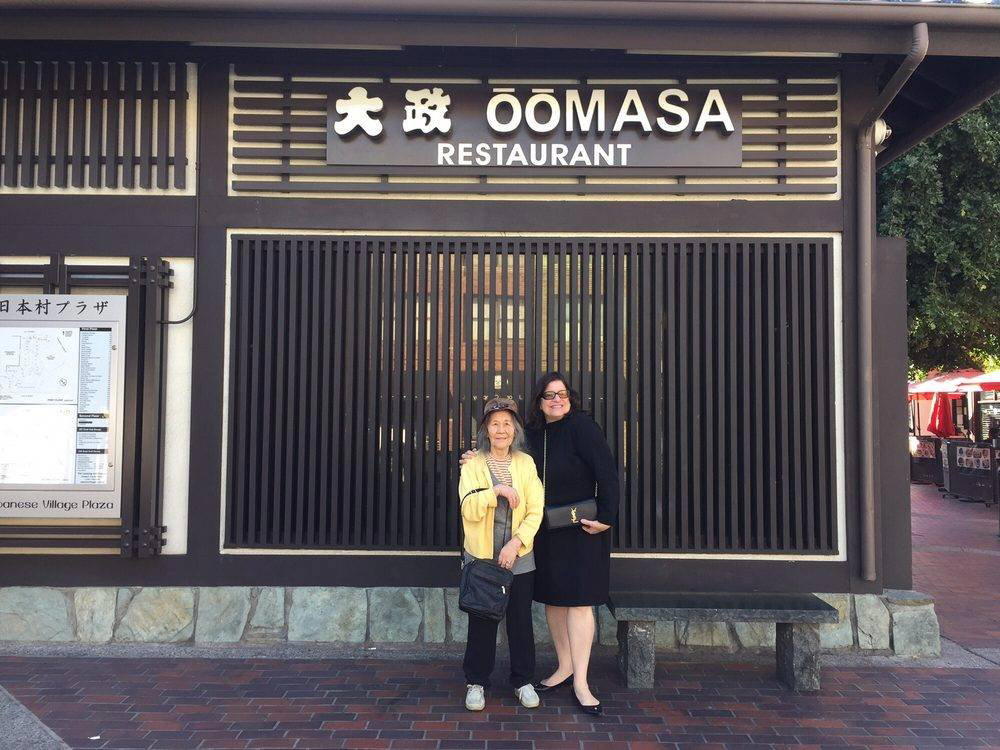
Little Tokyo's Long Game
The open-air mall at 100 Japanese Village Plaza is not a recent lifestyle development; it predates the current wave of Japanese cuisine enthusiasm in the United States by decades, and the restaurants within it have been shaped by forces that have little to do with Yelp trends or chef-celebrity cycles. OOmasa sits inside this context, at an address that carries more historical weight than most dining destinations in the city.
Little Tokyo's dining character differs from the Japanese restaurant clusters that have emerged in West Los Angeles and the San Gabriel Valley. Those corridors tend toward specialist formats: ramen-only counters, high-volume izakayas, and the kind of single-dish precision that travels well on social media. The Village Plaza cluster is older and more community-anchored, its institutions built for a Japanese-American population that needed full-service restaurants, not concepts. That distinction shapes what OOmasa represents within the neighborhood's restaurant ecology.
The Ethics of Sourcing in a Japanese-American Context
The broader conversation around sustainability in Japanese cuisine in the United States has grown considerably more sophisticated in recent years. At the highest tier, restaurants such as Hayato in Los Angeles operate kaiseki formats in which ingredient provenance is integral to the menu structure: specific farms, specific fisheries, specific seasonal windows. That level of sourcing transparency is now an expectation at the $$$$ price tier, where diners at Kato or Somni encounter detailed documentation of where proteins originate.
Community-anchored restaurants like OOmasa operate within a different, more durable, form of ethical sourcing: the long-standing supplier relationship. Japanese-American restaurant districts in cities like Los Angeles and San Francisco developed trade networks with regional wholesalers and importers whose products were not available in mainstream distribution. Those relationships, built over decades rather than assembled for a menu launch, represent a form of supply chain integrity that is often overlooked in conversations that privilege the newest farm-to-table narrative. Longevity in a neighborhood like Little Tokyo is itself a signal of consistency, because restaurants that cut corners on ingredient quality tend not to survive the community's exacting institutional memory.
Nationally, the push toward reduced waste and ethical sourcing in Japanese restaurants has produced formats worth comparing. Single Thread Farm in Healdsburg builds an entire menu architecture around agricultural output from its own property, while Blue Hill at Stone Barns in Tarrytown operates as the discussed model in the country for integrating farm operations with restaurant sourcing. Those are vertically integrated outliers. The more common model, and the more replicable one, is the neighborhood institution that has maintained supplier loyalty and minimal-waste kitchen practices across multiple economic cycles. Both approaches carry environmental logic; they just operate at different scales and price points.
Los Angeles Japanese Dining in Comparative Relief
Los Angeles has developed one of the deepest Japanese restaurant ecosystems outside Japan, and the comparable set against which any Little Tokyo establishment should be read is specific. At the summit of the market, Hayato operates a kaiseki format with months-long booking waits. The city's broader fine dining circuit, which includes Providence, Osteria Mozza, and the tasting-menu operators, represents a price tier and format discipline that is designed for occasion dining rather than neighborhood use.
Little Tokyo's restaurants occupy a different register. They serve the population that actually lives and works in the district, alongside a visitor audience that arrives specifically because the neighborhood's culinary credibility is built on depth rather than novelty. That credibility extends nationally: the Japanese-American dining corridor in Los Angeles is referenced alongside equivalents in San Francisco and New York in most serious surveys of Japanese cuisine in the United States. For comparison purposes, Atomix in New York City demonstrates how deep Korean culinary tradition can be reframed for a fine dining audience; the analogous exercise in Japanese cuisine at the community level is what Little Tokyo has been doing, without reframing, for far longer.
Beyond Los Angeles, the national fine dining conversation includes landmarks like Le Bernardin in New York City, Alinea in Chicago, The French Laundry in Napa, Addison in San Diego, Lazy Bear in San Francisco, Emeril's in New Orleans, Bacchanalia in Atlanta, The Inn at Little Washington, and internationally, 8½ Otto e Mezzo Bombana in Hong Kong. Those venues define the upper bracket of occasion dining in their respective cities. OOmasa's relevance sits in a different category: it is part of the daily-use infrastructure of a culturally significant neighborhood, which carries its own kind of authority.
What the Address Tells You
The Japanese Village Plaza address is itself a locating device. Built as a planned retail and dining development in the 1970s, the mall was part of a larger effort to anchor Little Tokyo's commercial identity after the urban pressures of the postwar decades. The restaurants that have persisted within it survived the economic dislocations of the 1990s, the demographic shifts of the 2000s, and the hospitality disruptions of more recent years. Survival in this specific context is not passive; it requires ongoing relevance to a community that has other options and that applies a different set of quality standards than the tourist trade alone would demand.
For visitors arriving from outside the neighborhood, the Plaza functions as an accessible entry point into Little Tokyo's dining culture. It is walkable from the Metro A and E lines at Little Tokyo/Arts District station, which makes it one of the more transit-accessible dining destinations in a city whose restaurant geography otherwise requires a car.
Planning Your Visit
Location: 100 Japanese Village Plaza Mall, Los Angeles, CA 90012. Access: The Metro A Line and E Line serve the Little Tokyo/Arts District station, approximately a short walk from the Plaza entrance. Reservations: Walk-ins are welcome. Timing: Little Tokyo dining on weekends draws significant foot traffic; weekday visits tend to be less congested. Context: The Japanese Village Plaza hosts multiple dining options; allocating time to explore the broader district is worthwhile for first-time visitors.
A Credentials Check
Comparable venues nearby, for context on price, style, and recognition.
| Venue | Cuisine | Price | Notes |
|---|---|---|---|
| OOmasaThis venue — the venue you are viewing | Traditional Japanese Sushi | $$ | Not listed |
| Izakaya Osen | Traditional Japanese Izakaya | $$ | Silver Lake |
| Ramen Nagi | Authentic Japanese Ramen | $$ | Century City |
| Sushi Go 55 | Traditional Japanese Sushi | $$ | Little Tokyo |
| Ebaes | Asian Fusion Ramen & Sushi | $$ | University Park |
| Tsukiyo Sushi | Handcrafted Japanese Sushi | $$ | Wilshire Center |
Continue exploring
More in Los Angeles
Restaurants in Los Angeles
Browse all →
Bars in Los Angeles
Browse all →

Hotels in Los Angeles
Browse all →

Wineries in Los Angeles
Browse all →
At a Glance
- Classic
- Cozy
- Casual Hangout
- Standalone
- Sake Program
Current opening hours
- Monday
- 11:30 AM–9 PM
- Tuesday
- Closed
- Wednesday
- 11:30 AM–9 PM
- Thursday
- 11:30 AM–9 PM
- Friday
- 11:30 AM–10 PM
- Saturday
- 11:30 AM–10 PM
- Sunday
- 11:30 AM–9 PM
Hours can change for holidays and private events. Last verified .
Thatched-bamboo interior creating a cozy and authentic Japanese atmosphere.