Sushi Go 55
Sushi Go 55 occupies a specific address in Little Tokyo's historic Alameda corridor, placing it within one of Los Angeles's most concentrated Japanese dining districts. The format and counter experience sit inside a broader shift in how LA diners access serious sushi. For planning purposes, contact details and booking windows are best confirmed directly through the venue at 333 Alameda St #317, Los Angeles, CA 90013.
Pearl is the En Primeur Club membership app — saves, bookings, and concierge access live there. Same editors, same standards.
- Address
- 333 Alameda St #317, Los Angeles, CA 90013
- Phone
- +12136870777
- Website
- sushigo55go.twupro.com
- Directions
- Get directions
 Saves & bookings on Pearl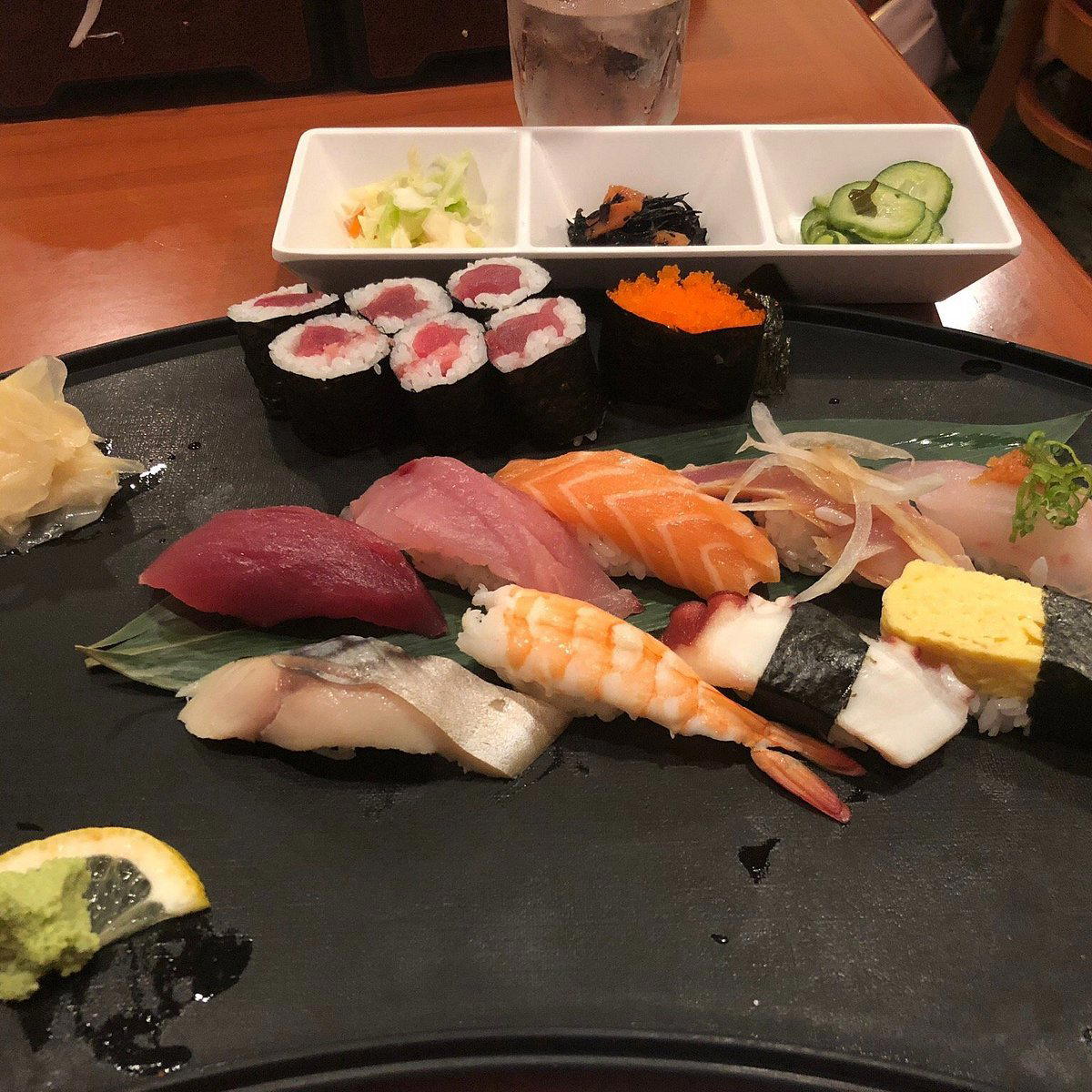
Little Tokyo and the Sushi Counter Evolution in Los Angeles
Los Angeles has become one of the most consequential sushi cities outside Japan, a shift that accelerated over the past two decades as Japanese-American communities in Little Tokyo and the broader Southland produced a generation of counters operating at price points and technical levels that now benchmark against Tokyo's mid-tier omakase scene. The Alameda Street corridor, where Sushi Go 55 is addressed at 333 Alameda St #317, sits inside this geography. Little Tokyo is not simply a cultural neighborhood — it is a working dining district where proximity to Japanese wholesale suppliers, established import channels, and a knowledgeable regular customer base create conditions for serious fish work that neighborhoods further west rarely match.
Within that district, sushi restaurants divide along a few clear axes: high-volume operations running on volume economics and accessible price points, counter-format rooms where the sequencing of nigiri or a kaiseki-adjacent progression defines the experience, and a smaller number of destination-tier venues that draw from across the city and beyond. Sushi Go 55 sits within this competitive geography, at an address associated with Little Tokyo's commercial density rather than its retail perimeter. Understanding where a sushi counter sits in this ecosystem matters more than any single dish description — it sets the expectation frame before you arrive.
For context on how LA's Japanese fine dining has evolved in the same period, Hayato represents the kaiseki end of that spectrum, with a format rooted in Kyoto tradition rather than the Edomae nigiri progression. The two represent different answers to the same question about what Japanese dining at serious price points should look like in a Western city.
The Meal as Sequence: How Counter Sushi Builds Its Argument
The structure of a sushi counter meal is not arbitrary. In the Edomae tradition, which Tokyo's leading counters refined through the 20th century and which has migrated to LA in increasingly faithful form, the progression from lighter, more delicate fish through fatty, aged, or marinated cuts follows a logic similar to classical music: establish a baseline, introduce complexity, resolve in richness. The opening courses, typically lean white fish served at a temperature only slightly below ambient, ask the palate to register texture and natural sweetness before umami accumulates. Shellfish appears mid-sequence in many formats, providing a salinity pivot. The fatty tuna cuts, often the emotional center of a nigiri progression for Western diners, arrive later in the sequence precisely because their richness would flatten perception if served first.
This progression framework is worth carrying into any serious sushi counter experience, including Sushi Go 55. When a counter controls sequencing, it is making editorial decisions about your meal, decisions that distinguish a counter from a menu-driven restaurant where the diner assembles their own order. The difference in format shapes not just what you eat but how you read it.
The Los Angeles sushi scene, at its top tier, has moved in the direction of tighter sequencing and smaller course counts, following the Tokyo model of restrained nigiri programs over sprawling menus. Kato applies a comparable multi-course discipline to Taiwanese-American cooking, and the city's appetite for that format has grown considerably since both venues established themselves. LA diners in 2024 are meaningfully more fluent in counter-format dining than they were a decade ago.
Where Sushi Go 55 Sits in the Los Angeles Counter Scene
The Alameda St address places Sushi Go 55 in a part of the city that serious diners pass through rather than stumble into. Little Tokyo's dining density is real but not tourist-casual, the neighborhood rewards visitors who come with a specific destination in mind. That geographic specificity is itself a signal about the likely customer base: regulars, Japanese-American community members, and food-focused visitors who have done the research.
In comparison to the outer brackets of LA's fine dining, where venues like Providence anchor the contemporary seafood tier with a multi-decade track record and Michelin recognition, or Somni pushes into molecular territory, Sushi Go 55 operates in a more defined culinary lane. Sushi, at counter level, is a format with less interpretive latitude than modernist or French-influenced cooking, the discipline is in execution, sourcing, and sequencing rather than conceptual invention.
That narrower range is a feature rather than a limitation. The counters that have built sustained reputations in LA, and in comparable US markets where Japanese dining has deepened, tend to succeed not through dramatic conceptual moves but through consistency at the technical level: rice temperature, fish provenance, the weight and compression of each piece. Osteria Mozza demonstrates the same principle in an Italian register, longevity in LA's demanding dining market comes from getting the fundamentals right over many services, not from novelty.
Planning Your Visit: Logistics in the Little Tokyo District
Sushi Go 55 is located at 333 Alameda St #317 in Los Angeles, CA 90013, placing it within walking distance of Little Tokyo's core. The suite number indicates a commercial building address rather than a street-front storefront, which is common in the Alameda corridor, visitors should confirm the specific entry point when booking. Phone and website details are not currently listed in public directories; reaching out via available booking channels or the building directory is advisable before a first visit.
Little Tokyo as a district rewards evening visits, when the counter rhythm of the neighborhood's Japanese restaurants operates at full capacity and the wholesale market activity that defines the area's mornings has cleared. Parking is available in nearby structures along Alameda and at the adjacent Japanese Village Plaza. The neighborhood connects easily to the Arts District to the south, making it a natural first or last stop in a broader evening itinerary.
For those building a wider LA dining itinerary, our full Los Angeles restaurants guide maps the city's dining across neighborhoods and price tiers. Nationally, comparable counter-format experiences worth benchmarking against include Lazy Bear in San Francisco for its counter-format progressive American cooking, and Single Thread Farm in Healdsburg for its kaiseki-influenced multi-course precision. Further afield, Le Bernardin in New York City and Atomix in New York City represent what sustained technical focus at the counter and tasting-menu level looks like over a longer arc. For destinations that have built reputations through format discipline, Alinea in Chicago, The French Laundry in Napa, and Blue Hill at Stone Barns in Tarrytown each show how tightly controlled sequencing becomes the identity of a restaurant over time. Regional American programs worth noting in the same conversation include Addison in San Diego, Bacchanalia in Atlanta, The Inn at Little Washington, and Emeril's in New Orleans. For international reference, 8 1/2 Otto e Mezzo Bombana in Hong Kong illustrates how Western fine dining techniques translate across cultural markets, an inversion of the same dynamic that Japanese counter formats are navigating in Los Angeles.
How Sushi Go 55 Los Angeles compares with similar nearby venues.
| Venue | Cuisine | Price |
|---|---|---|
| Sushi Gen | Sushi | Not listed |
| Kinjiro | Japanese | Not listed |
| Tsujita L.A. | Ramen | Not listed |
| 715 | Japanese | $$$$ |
Continue exploring
More in Los Angeles
Restaurants in Los Angeles
Browse all →
Bars in Los Angeles
Browse all →

Hotels in Los Angeles
Browse all →

Wineries in Los Angeles
Browse all →
At a Glance
- Cozy
- Casual Hangout
- Date Night
- Sake Program
Current opening hours
- Monday
- 11:15 AM–2:15 PM, 5:30–10 PM
- Tuesday
- 11:15 AM–2:15 PM, 5:30–10 PM
- Wednesday
- 11:15 AM–2:15 PM, 5:30–10 PM
- Thursday
- 11:15 AM–2:15 PM, 5:30–10 PM
- Friday
- 11:15 AM–2:15 PM, 5:30–10 PM
- Saturday
- 11:30 AM–2:30 PM, 5–10 PM
- Sunday
- 11:30 AM–2:30 PM, 5–10 PM
Hours can change for holidays and private events. Last verified .
Cozy and unassuming with functional decor, mellow atmosphere, and focus on the sushi bar.
Know Before You Go
- Getting there
- 333 Alameda St #317, Los Angeles, CA 90013