Ramen Nagi

Ramen Nagi brings the Japanese chain's customizable tonkotsu-driven format to Century City, sitting at the accessible end of Los Angeles's ramen spectrum. The Santa Monica Boulevard address places it within reach of Westside diners who want a bowl with some technical backbone rather than a fast-food shortcut. A straightforward counter-service model keeps the experience efficient without sacrificing the broth work that defines the brand internationally.
Pearl is the En Primeur Club membership app — saves, bookings, and concierge access live there. Same editors, same standards.
- Address
- 10250 Santa Monica Blvd Ste. #2850, Los Angeles, CA 90067
- Phone
- +13105702826
- Website
- ramennagiusa.com
- Directions
- Get directions
 Saves & bookings on Pearl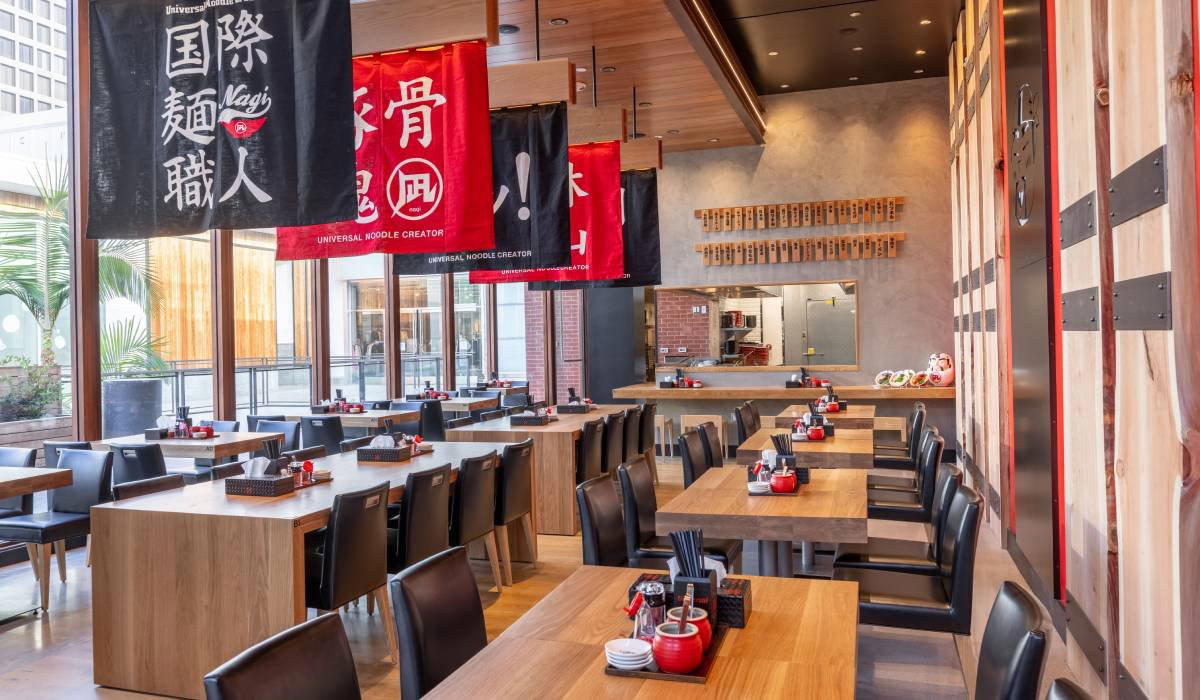
Ramen in Los Angeles: A City That Takes the Bowl Seriously
Los Angeles has developed one of the most consequential ramen cultures outside Japan. The Sawtelle corridor, Little Tokyo, and now the Westside have all contributed to a city where a bowl of tonkotsu is subject to real scrutiny — not the polite appreciation of a novelty dish, but the informed comparison of a dining public that has eaten across Fukuoka, Sapporo, and Tokyo. That context matters when placing Ramen Nagi, located at 10250 Santa Monica Blvd in Century City, within the broader scene. This is not a city where ramen coasts on unfamiliarity.
Japanese ramen, at its cultural core, is a dish of precision obsession. The broth — whether tonkotsu, shoyu, shio, or miso, is the axis around which everything else rotates. Noodle gauge, fat content, tare intensity, topping temperature: each element is calibrated rather than assembled. When Japanese chains expand internationally, the question is always whether that calibration travels with them, or whether the kitchen logic gets simplified for a market assumed to be less exacting. In Los Angeles, that assumption tends to backfire. The city's Japanese-American community and its food-literate dining public have high baseline expectations.
The Century City Setting
The Westfield Century City mall context is worth addressing directly, because it shapes expectations. Mall ramen is a category unto itself, the format prioritizes accessibility, volume, and a broad demographic reach over the specialist atmosphere of a stand-alone counter. Ramen Nagi operates within that format at its Century City address, which places it in a different tier from, say, the focused omakase-adjacent dining available at venues like Hayato or the Taiwanese-rooted tasting precision of Kato. Those are four-dollar-sign operations where a reservation window matters and a meal runs two to three hours. Ramen Nagi is not competing in that tier, and understanding where it sits on the city's dining spectrum is more useful than comparing it to options that occupy a different category entirely.
For the Century City area specifically, the surrounding dining options lean heavily toward the upscale casual and quick-service segments. Ramen Nagi's presence there serves a practical function: it gives the Westside a ramen option with Japanese chain credibility in a location that previously had few meaningful bowl choices at an accessible price point.
The Nagi Model: Customization as Brand Logic
Ramen Nagi's international identity is built around a customization format that allows diners to adjust broth richness, noodle firmness, and spice level. This is a deliberate brand architecture, and it reflects a broader trend in how Japanese ramen chains position themselves for international expansion. Rather than committing to a single house style and asking the customer to adapt, the Nagi model puts the calibration partially in the diner's hands. Whether that produces a better bowl or a more commercially scalable one is a genuine debate among ramen observers, but it does lower the barrier to entry for a dining public less familiar with regional Japanese ramen styles.
The chain's Tokyo origins and its expansion across Asia, Australia, and the United States carry credentials that distinguish it from domestic fast-casual ramen operations assembled without that technical lineage. That lineage is a meaningful differentiator in a city like Los Angeles, where diners at the informed end of the market can tell the difference between broth that has been simmered for twelve hours and a concentrate reconstituted at service.
Where Ramen Nagi Fits in the Los Angeles Bowl Hierarchy
Los Angeles ramen broadly segments into three tiers. At the leading sit specialist counters with defined house styles and lines that form before opening. In the middle are credentialed chain operations and serious stand-alone shops with consistent technical programs. At the accessible end are high-volume, fast-casual formats where price and speed are the primary offer. Ramen Nagi Century City occupies the middle tier on the strength of its brand pedigree, while the mall format and Century City demographics push it toward accessibility rather than pilgrimage status.
That positioning is not a criticism. Los Angeles's dining culture is large enough to need all three tiers operating well. The city's serious ramen options, most concentrated east of the 405, do not cover the Westside adequately for diners in Century City, Brentwood, or West Hollywood who want a bowl without crossing the city. Ramen Nagi fills that gap with a product that has more technical credibility than the alternatives at its price point in the immediate neighborhood.
For readers interested in how Los Angeles handles the full range of serious dining, from ramen through tasting-menu formats, our full Los Angeles restaurants guide covers the city's tiers in detail. Elsewhere on the EP Club platform, comparable precision-driven experiences appear at Providence for contemporary seafood and Somni for molecular work, both operating at the upper end of the city's dining register. Nationally, the conversation around serious restaurant credentials includes venues like Le Bernardin in New York City, Alinea in Chicago, The French Laundry in Napa, Lazy Bear in San Francisco, and Single Thread Farm in Healdsburg. On the East Coast and beyond, Blue Hill at Stone Barns in Tarrytown, The Inn at Little Washington, Atomix in New York City, Addison in San Diego, Bacchanalia in Atlanta, Emeril's in New Orleans, and 8 1/2 Otto e Mezzo Bombana in Hong Kong represent how the EP Club maps serious dining across geographies. Osteria Mozza remains the clearest example of how an Italian format anchors itself within the Los Angeles dining fabric at a level that transcends casual.
Planning Your Visit
Ramen Nagi Century City sits inside Westfield Century City at 10250 Santa Monica Blvd, Suite 2850, Los Angeles, CA 90067. The mall location means parking is handled by the Westfield structure, which simplifies arrival compared to street-side options elsewhere on the Westside. The format lends itself to weekday lunch or early weeknight dinner when mall foot traffic is lighter. No booking infrastructure appears to be in place for this format, which is standard for the counter-service ramen segment.
Quick reference: 10250 Santa Monica Blvd Ste. #2850, Los Angeles, CA 90067. Counter-service format inside Westfield Century City.
Recognition history
Dated appearances from independent guides and award organizations, with the underlying list record or original source where available.
Opinionated About Dining Cheap Eats in North America Recommended
Opinionated About Dining
Continue exploring
More in Los Angeles
Restaurants in Los Angeles
Browse all →
Bars in Los Angeles
Browse all →
Hotels in Los Angeles
Browse all →
Wineries in Los Angeles
Browse all →
At a Glance
- Lively
- Trendy
- Modern
- Casual Hangout
- Open Kitchen
- Sake Program
Current opening hours
- Monday
- 11 AM–2:30 PM, 5–9 PM
- Tuesday
- 11 AM–2:30 PM, 5–9 PM
- Wednesday
- 11 AM–2:30 PM, 5–9 PM
- Thursday
- 11 AM–2:30 PM, 5–9 PM
- Friday
- 11 AM–2:30 PM, 5–9 PM
- Saturday
- 11:30 AM–9 PM
- Sunday
- 11:30 AM–9 PM
Hours can change for holidays and private events. Last verified .
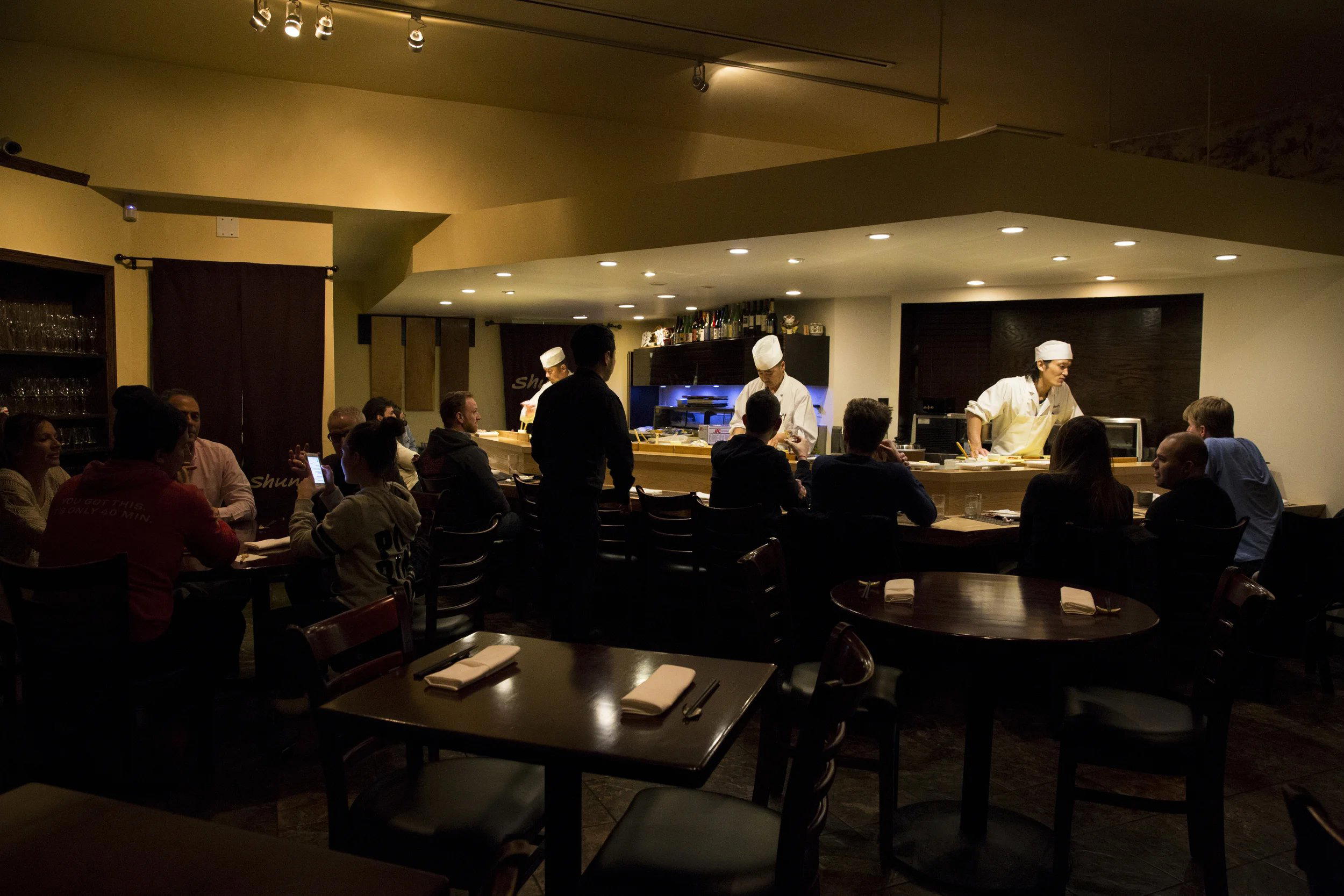
Energetic and lively atmosphere with a culinary show vibe from the open kitchen.
Know Before You Go
- Getting there
- 10250 Santa Monica Blvd Ste. #2850, Los Angeles, CA 90067