Izakaya Osen
On the Silver Lake stretch of Sunset Boulevard, Izakaya Osen operates within a Los Angeles dining tradition that has steadily reframed the izakaya format: less faithful reproduction of a Tokyo template, more a conversation between Japanese technique and California's ingredient calendar. The address places it among a cluster of serious neighborhood restaurants that attract both locals and destination diners willing to travel across the city.
Pearl is the En Primeur Club membership app — saves, bookings, and concierge access live there. Same editors, same standards.
- Address
- 2903 Sunset Blvd, Los Angeles, CA 90026
- Phone
- +13239282220
- Website
- izakayaosen.com
- Directions
- Get directions
 Saves & bookings on Pearl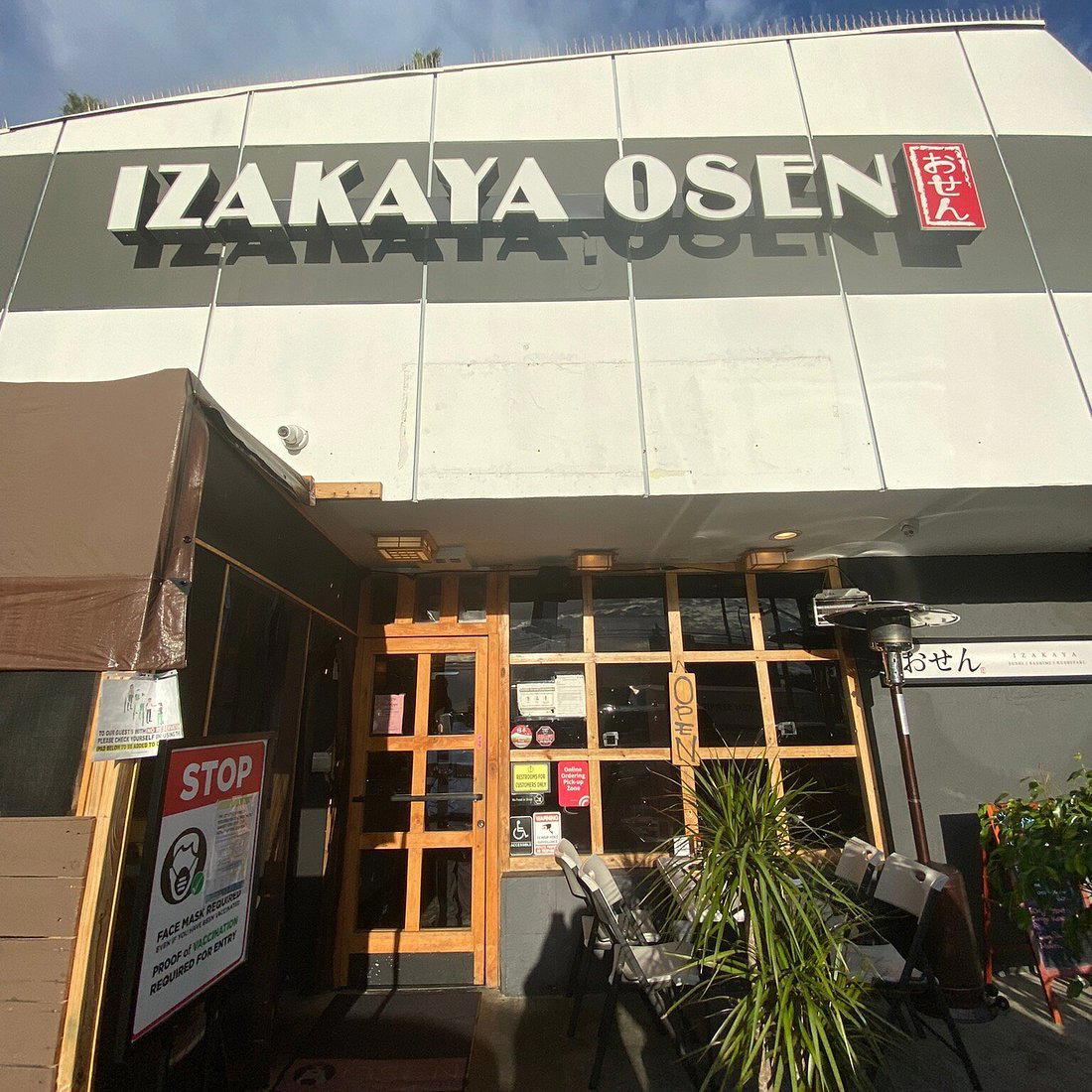
Sunset Boulevard's Izakaya Format, Rethought Through a California Lens
The izakaya as a category has undergone considerable revision in Los Angeles over the past decade. What began as a faithful import, built around yakitori, cold beer, and the social rituals of a Japanese after-work drinking house, has gradually absorbed the city's agricultural abundance and its appetite for culinary crossover. On the Silver Lake side of Sunset Boulevard, Izakaya Osen sits within that revised tradition: a neighborhood address at 2903 Sunset Blvd that signals something more considered than a casual pub-format Japanese restaurant, and something less theatrical than the destination-dining tier occupied by Hayato or Kato.
Silver Lake is an appropriate home for this kind of proposition. The neighborhood has developed a dining character that rewards smaller, ingredient-focused rooms over spectacle, with a regular clientele that tends to know what it is ordering and why. That pressure from a knowledgeable local audience tends to keep kitchens honest in ways that tourist-heavy corridors do not.
Where the Izakaya Tradition Meets California Produce
The izakaya format, at its core, is structured around informal sharing: a long list of small plates designed to accompany drink, with no fixed sequence and no expectation of a composed narrative from first course to last. That informality is a strategic asset in a city like Los Angeles, where dining culture has consistently resisted the European tasting-menu hierarchy that institutions like Somni and, further afield, Alinea in Chicago or The French Laundry in Napa represent.
The editorial angle worth pressing here is the one that defines a growing tier of Los Angeles Japanese restaurants: imported technique applied to indigenous California product. Southern California's access to year-round farmers markets, Pacific seafood, and a citrus and stone fruit season that outpaces most of the country gives any kitchen working in a Japanese idiom a raw material advantage that Tokyo itself cannot replicate. The question for any izakaya in this city is whether that advantage is being used or simply ignored in favor of imported frozen product. At the neighborhood level, the answer is usually visible in the menu's seasonal variance, and in whether the kitchen is treating California ingredients as substitutes for Japanese ones or as subjects worth approaching on their own terms.
This intersection of Japanese precision and local sourcing is not unique to Silver Lake. Across Los Angeles, the broader Japanese dining category has fractured into distinct tiers. At the upper end, Hayato runs a kaiseki format with sourcing that reflects years of relationship-building with specific producers. At the accessible end, the izakaya format remains the most democratic entry point into Japanese technique, the format most willing to let drink and conversation take precedence over the architecture of the meal. Izakaya Osen operates within that accessible register, on a block that has generated genuine dining momentum without requiring the kind of booking infrastructure that defines Providence or Osteria Mozza.
The Silver Lake Dining Context
Silver Lake and its immediate neighbors have become the testing ground for a specific kind of Los Angeles restaurant: chef-driven, relatively compact, oriented around a tight menu that changes with the season rather than a sprawling list built for maximum coverage. That model suits the izakaya format well. The category's traditional breadth, which might include skewers, raw preparations, braised dishes, pickles, and noodles, is easier to execute with quality control when the room is small and the kitchen team is correspondingly focused.
For visitors approaching from central Los Angeles, Sunset Boulevard at this point is a direct east-west corridor. The Silver Lake stretch sits roughly between the dense dining cluster of Koreatown to the west and the Echo Park and Los Feliz neighborhoods to the east, all of which have their own dining identities but feed the same broadly adventurous and price-conscious audience. This is not the Beverly Hills or West Hollywood dining belt, where rooms at Addison in San Diego or the ambitions of Le Bernardin in New York City find their West Coast equivalents. It is a neighborhood corridor, which carries its own set of expectations: value relative to quality, consistency over theater, and the kind of regulars who return weekly rather than annually.
That regular-audience dynamic is worth noting because it shapes what a kitchen in this position actually produces. When the same diners come back every two or three weeks, seasonal menu movement is not optional, and neither is a baseline of technical reliability. Restaurants in this position tend to develop a tighter identity over time than those serving primarily destination traffic. Compare this dynamic to what drives ambition at Blue Hill at Stone Barns in Tarrytown or Single Thread Farm in Healdsburg, where the seasonal sourcing story is the explicit selling point to an out-of-town audience. At a neighborhood izakaya, the sourcing story tends to be quieter, embedded in the menu without announcement.
Where Izakaya Osen Sits in the Los Angeles Japanese Dining Picture
Los Angeles has developed one of the most layered Japanese dining ecosystems outside Japan itself. The city's Japanese-American community, concentrated historically in Sawtelle and Little Tokyo, built the foundation; subsequent waves of chefs, ingredients, and formats have added complexity. At the format level, the city now supports everything from conveyor-belt sushi to multi-course kaiseki at price points that compete with Atomix in New York City. The izakaya occupies a middle register in that system: more ambitious than fast-casual ramen, less structured than omakase, and designed to hold a table for two hours rather than sixty minutes or five.
Venues operating in this middle register face a consistent challenge: differentiation. When the format is familiar and the price point is accessible, the question of what makes one izakaya worth a deliberate visit over another comes down to the granular: the quality of the dashi, the sourcing of the seafood, the discipline of the grill station, and whether the drinks list is genuinely considered or simply functional. These are not questions that resolve themselves from a menu alone. They resolve over multiple visits, which is exactly the kind of relationship the Silver Lake audience is positioned to develop. For readers of our full Los Angeles restaurants guide, Izakaya Osen represents the neighborhood izakaya tier of the city's Japanese dining picture, a category worth understanding alongside the more decorated options at the upper end of the market.
Planning Your Visit
The practical picture for Izakaya Osen is lean on confirmed detail. Address: 2903 Sunset Blvd, Los Angeles, CA 90026, in the Silver Lake neighborhood, accessible by car with street parking typical for this stretch of Sunset. Budget: Price range is not confirmed; the neighborhood izakaya tier in Los Angeles generally runs between $40 and $80 per person with drinks, though this varies by ordering pattern. Dress: No formal code is expected at this address or format type.
How Izakaya Osen Los Angeles compares with similar nearby venues.
| Venue | Cuisine |
|---|---|
| Azizam | Persian |
Continue exploring
More in Los Angeles
Restaurants in Los Angeles
Browse all →
Bars in Los Angeles
Browse all →
Hotels in Los Angeles
Browse all →
Wineries in Los Angeles
Browse all →
At a Glance
- Cozy
- Lively
- Date Night
- Casual Hangout
- After Work
- Open Kitchen
- Sake Program
Current opening hours
- Monday
- 12–10 PM
- Tuesday
- 12–10 PM
- Wednesday
- 12–10 PM
- Thursday
- 12–10 PM
- Friday
- 12–11 PM
- Saturday
- 12–11 PM
- Sunday
- 12–10 PM
Hours can change for holidays and private events. Last verified .
Cozy interior entirely covered in wood paneling with smoke from the yakitori grills creating an authentic Japanese tavern feel.
Know Before You Go
- Getting there
- 2903 Sunset Blvd, Los Angeles, CA 90026