
Tabelog 100 #79
Our verdict
Ooiwa Shokudo brings Tokyo’s South Indian and curry conversation into a small Nishi-Ogikubo setting, with Tabelog 100 selection in Asian and ethnic cuisine for 2022, 2023, and 2024. The draw is the split personality: lunch is value-led and compact, while dinner gives the room more breathing space for drinks, vegetables, fish, and a broader evening rhythm.

Pearl is the En Primeur Club membership app, where members save venues, book tables and use the concierge.
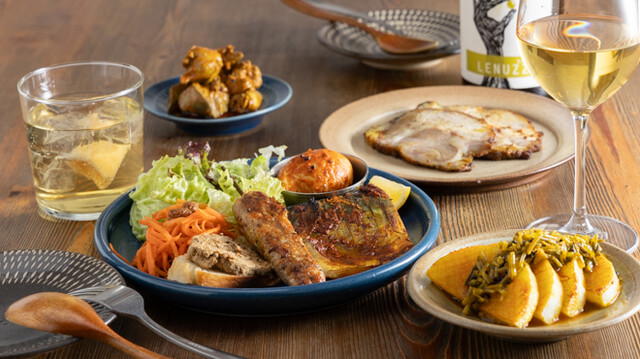
The menu
What to order
- South Indian chicken curry
- Veggie curry of the day
- Pork curry
- Biryani
Within Tokyo’s everyday dining culture, the city changes scale: grand dining rooms and hotel restaurants give way to small counters, tight neighborhood rooms, and kitchens sustained by regulars as much as destination diners. Ooiwa Shokudo belongs to that Tokyo: a compact restaurant listed in Indian and Indian curry categories, with lunch and dinner budgets that keep it accessible.
At lunch, the case is direct. Tokyo rewards precision, restraint, short windows, sharp budgets, and rooms where people eat well without losing the afternoon. Ooiwa Shokudo’s lunch budget is JPY 1,000 to JPY 1,999, placing it in the serious everyday category, not the expense-account bracket.
Dinner shifts the reading. The evening budget moves to JPY 2,000 to JPY 2,999, giving the restaurant a fuller small-format role beyond a quick curry stop. In Tokyo, where many Indian and curry restaurants split between inexpensive set-meal utility and more specialist cooking, Ooiwa Shokudo sits in a useful middle ground without losing accessibility.
Indian curry in Tokyo's small-room economy
Tokyo’s non-Japanese dining scene is often misread from outside as secondary to sushi, tempura, kaiseki, and ramen. Better read: the city has deep micro-scenes around curry, South Asian cooking, Thai regional food, Vietnamese kitchens, and hybrid izakaya formats across Tokyo, often away from the most obvious luxury dining circuits.
Recognition from Tabelog’s Hyakumeiten in 2024 signals consistency in a crowded category. Tabelog’s Tokyo audience is exacting, and selection suggests more than one burst of attention. The listed score of 3.59 is not a luxury trophy number; it reads as a neighborhood-specialist marker, often attached to small rooms with disciplined regular trade.
The food positioning is clearer than a generic restaurant label. The listed categories are Indian and Indian curry, giving diners a practical frame without overclaiming a single regional identity. In Tokyo, that clarity matters: curry can be a quick lunch, a specialist pursuit, or an everyday dinner, depending on budget, pacing, and the room.
Comparison sets expectations. Tsushima Ryu South Indian Kei Karakuchi Ryori Ten Tarikaro, Rahi Punjabi Kitchen, Kitaya, and Isshin Niyou show how broad Tokyo’s Indian and curry conversation can be, even before diners factor in unnamed curry rooms and other casual Tokyo dining. The point is not that one address wins, but that the city’s Indian and curry scene is segmented enough to choose by budget, mood, and meal tempo.
Lunch is the value play; dinner is the fuller read
The lunch-versus-dinner divide is the editorial reason to pay attention. Lunch in Tokyo compresses identity into a set or short list, rewarding kitchens that make the core proposition legible fast. Ooiwa Shokudo can be a practical lunch anchor without turning the meal into an occasion. The listed lunch band keeps the decision easy.
Dinner gives the restaurant’s other signals room. With the budget rising to JPY 2,000 to JPY 2,999, the meal can be read as more than a fast midday stop. In Tokyo, where casual restaurants often carry serious craft at modest prices, that dinner band can be enough to turn a simple plan into a more deliberate evening.
The useful planning note is not to overcomplicate the booking. Ooiwa Shokudo’s appeal sits in its defined category, clear price bands, and Tabelog recognition rather than in luxury ceremony. If the goal is Indian curry in Tokyo at an approachable budget, it belongs on the shortlist.
The room’s limits should be treated practically. This is better framed as a focused, compact Tokyo meal than as a venue for large-scale entertaining. Couples, solo diners, and small groups will usually understand the format faster than travelers trying to make it carry an entire celebration.
Where it fits in a Tokyo dining itinerary
For travelers, the question is whether to leave the central hotel-and-department-store orbit for a small Indian curry restaurant in Tokyo. If the plan is only trophy sushi and skyline bars, this will feel peripheral. If the aim is to understand how Tokyo eats across price tiers and neighborhoods, Ooiwa Shokudo makes sense: it shows the city’s appetite for specialist, non-Japanese cooking at everyday scale.
Tokyo also rewards counter-programming: a day might move from curry and Indian cooking to seafood, yakitori, or cocktail-led evenings elsewhere, rather than treating the city as only prestige counters. For broader planning, Our full Tokyo restaurants guide gives the wider restaurant map, while Our full Tokyo hotels guide, Our full Tokyo bars guide, Our full Tokyo wineries guide, and Our full Tokyo experiences guide place the meal inside a complete city itinerary.
Nearby category contrasts matter more than direct rivalry. Unnamed curry specialists speak to Tokyo’s long-running curry culture, while other casual and specialist rooms show the range of the city’s everyday dining. Beyond any single neighborhood, the same planning logic extends across Tokyo: choose the restaurant not only by fame, but by price band, category, and how much structure the meal needs.
The verdict is measured, not breathless. Ooiwa Shokudo is not a grand-dining substitute, which is its strength. It is a compact Tokyo specialist where lunch price, Tabelog Hyakumeiten 2024 recognition, Indian curry positioning, and accessible dinner pricing sharpen the picture of the city’s everyday ambition. Go at lunch for value and pace; choose dinner when the meal needs more range.
Fast Comparison
Comparable venues to anchor price and recognition.
| Venue | Cuisine | Price | Awards | Notes |
|---|---|---|---|---|
| Ooiwa ShokudoThis venue (the venue you are viewing) | South Indian curry & Sri Lankan-style spice dishes | $20–30 | Tabelog 100 #79 | Not listed |
| shiva curry wara | Japanese‑influenced South Indian Curry House | $20–30 | Tabelog 100 #2 | Setagaya |
| Calical Shimbashi honten | Indian Curry | $1–10 | Tabelog 100 #51 | Minato |
| Accha Kana | European-style curry house in Futakotamagawa | $10–20 | Tabelog 100 #33 | Setagaya |
| Zero One Curry A.o.D. | South Indian Curry & Natural Wine | $20–30 | Tabelog 100 #25 | Minato |
| Minami Indian Nandori | South Indian Meals & Tiffin | $20–30 | Tabelog 100 #97 | Arakawa |
Recognition history
Dated appearances from independent guides and award organizations, with the underlying list record or original source where available.
Tabelog 100 #79 · No. 79
Tabelog · Tabelog 100 - Asian cuisine / Ethnic cuisine - TOKYO - 2024
Continue exploring
More in Tokyo
Restaurants in Tokyo
All restaurants in Tokyo →


Bars in Tokyo
All bars in Tokyo →



Details
- Cozy
- Lively
- Casual Hangout
- Solo
- After Work
- Group Dining
- Standalone
- Local Sourcing
- A La Carte
- Set Menu
- Beer
- Tea
- Vegetarian Friendly
Current opening hours
- Monday
- Closed
- Tuesday
- 11:30 AM–2:30 PM
- Wednesday
- 11:30 AM–2:30 PM, 6–9 PM
- Thursday
- 11:30 AM–2:30 PM, 6–9 PM
- Friday
- 11:30 AM–2:30 PM, 6–9 PM
- Saturday
- 11:30 AM–2:30 PM, 6–9 PM
- Sunday
- Closed
Hours can change for holidays and private events. Hours as of .
A small, homey neighborhood curry restaurant with a stylish yet relaxed feel, warm hospitality, and an inviting, lived-in atmosphere suited to solo diners or small groups after work.