
Tabelog 100 #97
Our verdict
Minami Indian Nandori brings South Indian cooking into a compact Arakawa setting, with an eight-seat room and a menu that changes daily and weekly rather than settling into a fixed curry-house template. Its repeated Tabelog 100 selections for Asian and ethnic cuisine in Tokyo place it among the city’s more closely watched specialist Indian kitchens.

Pearl is the En Primeur Club membership app, where members save venues, book tables and use the concierge.
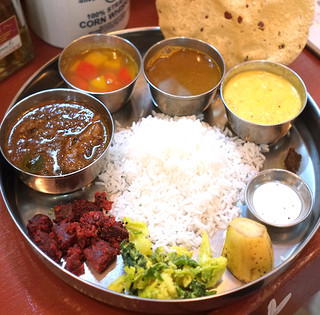
The menu
What to order
- South Indian meals (meals set)
- Tiffin (South Indian light meals)
Tokyo has many different dining rhythms beyond its most polished or late-night dining corridors. Some restaurants read as practical rooms first: straightforward service, focused menus, and an appeal shaped by repeat customers rather than spectacle. That context matters for Minami Indian Nandori, because the appeal is not built around a grand luxury format. It is the concentration of a specialist Indian kitchen into a Tokyo setting, where the category and the everyday usefulness of the restaurant do the talking.
Tokyo’s Indian dining scene is often flattened by the same shorthand: curry, lunch sets, and a familiar grammar that became common through office-district restaurants. Minami Indian Nandori should be approached more carefully than that. The verified category is Indian and Indian curry, but the better measure is not a single assumed dish or a fixed restaurant stereotype. For diners used to judging Indian restaurants by one narrow template, this is a reminder that Tokyo’s casual specialist dining can be more varied than the shorthand suggests.
An Indian menu that sits outside the standard Tokyo curry script
The strongest editorial reason to pay attention is the way Minami Indian Nandori fits into Tokyo’s network of specialist restaurants. In Tokyo, many restaurants build loyalty through a clearly defined focus: a repeatable format, a recognisable point of view, and a price level that encourages regular use rather than one-off ceremony. Minami Indian Nandori belongs in that conversation as a focused Indian and Indian curry address rather than as a broad, generic catch-all.
That format also explains why the restaurant sits slightly apart from Tokyo’s more price-stratified dining categories. It is not competing with higher-ticket counters such as Ikewanagi no Mise Tsugumi An, where the budget sits in a much higher bracket, or with yakitori rooms such as Yakitori Sekine, where the evening spend belongs to a different category. Nor is it the bargain end of Tokyo’s casual noodle and snack economy, represented in this comparison set by places such as Nakazato or Chuka Sobaya Ito. Minami Indian Nandori occupies the specialist middle: inexpensive by Tokyo destination-dining standards, but serious enough to be part of the Tabelog Hyakumeiten conversation.
The recognition is useful because it tracks consistency across categories, not a single moment of attention. The provided 2024 Tabelog Hyakumeiten data lists Minami Indian Nandori with a 3.59 score, a JPY 2,000–JPY 2,999 budget for both lunch and dinner, and the categories Indian and Indian curry. Tabelog scores and lists are not the same as Michelin-style inspection, but in Tokyo they remain a meaningful signal for restaurants with a committed domestic audience.
The room feels edited by necessity
A focused Tokyo dining room changes the terms of a meal. It reduces the sense of anonymity, keeps attention on the kitchen’s choices, and makes the restaurant’s category feel more deliberate. This is not the setting to imagine primarily as a luxury tasting-menu performance; it is closer to Tokyo’s culture of focused restaurants, translated into Indian cooking rather than the city’s more familiar sushi, tempura, or yakitori references.
The useful point is not biography or ceremony. It is the confidence implied by a restaurant that can hold a defined category and a modest budget while still earning attention from a domestic restaurant-ranking platform. Minami Indian Nandori’s appeal is best understood through that combination: approachable pricing, a focused identity, and enough local recognition to make it more than a random casual stop.
The budget is another clue to the character of the place. With both lunch and dinner listed at JPY 2,000–JPY 2,999, it sits in a range that is accessible by Tokyo standards while still allowing for a deliberate meal. That does not make the restaurant a destination for luxury theatre, but it does separate it from the most utilitarian quick-meal model. The category may be Indian and Indian curry; the rhythm of the room is still recognisably Tokyo.
How to place it within a Tokyo food itinerary
For visitors building a Tokyo eating plan, this is the sort of address that belongs between the obvious categories. It will not replace a sushi counter, a kaiseki room, or a late-night izakaya, but it gives a clearer picture of how Tokyo absorbs and refines different cuisines at everyday scale. The Tokyo location also shifts the day away from only the most familiar hotel-and-shopping corridors, which is part of the value for diners who have already covered the city’s headline areas.
Pair it with a broader survey of the city rather than treating it as a standalone trophy meal. EP Club readers comparing casual Tokyo restaurants can use Minami Indian Nandori alongside other dining in Tokyo for a wider view of how different price points and formats operate across the city.
For planning beyond one meal, use Our full Tokyo restaurants guide, then map the rest of the trip through broader Tokyo hotel, bar, winery, and experience research. Travellers extending the itinerary across Japan can compare this casual-specialist register with other unnamed restaurants in major Japanese cities. For a broader international comparison, other cities show how different dining cultures translate familiar formats into tighter, more portable experiences.
Frequently asked questions
Is Minami Indian Nandori okay with children?
EP Club does not have a verified children policy for Minami Indian Nandori. Confirm directly with the restaurant before planning a family meal.
Is Minami Indian Nandori formal or casual?
It reads as casual rather than formal, with a listed price range of JPY 2,000–JPY 2,999 for both lunch and dinner. The 2024 Tabelog Hyakumeiten data gives it credibility, but the positioning remains approachable.
Is Minami Indian Nandori expensive?
Pricing at Minami Indian Nandori is listed as Dinner: JPY 2,000 - JPY 2,999; Lunch: JPY 2,000 - JPY 2,999.
What is Minami Indian Nandori known for?
Minami Indian Nandori is known in Tokyo as an Indian and Indian curry restaurant with 2024 Tabelog Hyakumeiten recognition and a listed Tabelog score of 3.59.
Peers Worth Knowing
Comparable venues in the metro at similar price points.
| Venue | Cuisine | Price | Awards | Notes |
|---|---|---|---|---|
| Minami Indian NandoriThis venue (the venue you are viewing) | South Indian Meals & Tiffin | $20–30 | Tabelog 100 #97 | Not listed |
| Ikewanagi no Mise Tsugumi An | Traditional Japanese Unagi | $500+ | Tabelog Bronze #484 | Unagi (Eel), Yakitori (Grilled chicken skewers), JPY 15,000 - JPY 19,999 JPY 15,000 - JPY 19,999 |
| Yakitori Sekine | Modern Yakitori Counter | $50–100 | Tabelog 100 #86 | JPY 8,000 - JPY 9,999 |
| Nakazato | Traditional Japanese Wagashi Shop | $1–10 | Tabelog 100 #49 | JPY 999 - JPY 999 View spending breakdown |
| Chuka Sobaya Ito | Classic Tokyo niboshi ramen | $1–10 | Tabelog 100 #36 | JPY 999 - JPY 999 View spending breakdown |
Recognition history
Dated appearances from independent guides and award organizations, with the underlying list record or original source where available.
Tabelog 100 #97 · No. 97
Tabelog · Tabelog 100 - Asian cuisine / Ethnic cuisine - TOKYO - 2024
Continue exploring
More in Tokyo
Restaurants in Tokyo
All restaurants in Tokyo →


Bars in Tokyo
All bars in Tokyo →





Details
- Cozy
- Intimate
- Classic
- Solo
- Casual Hangout
- Date Night
- Standalone
- Design Destination
- Local Sourcing
- Street Scene
- A La Carte
- Set Menu
- Vegetarian Friendly
- Vegan Options
- Gluten Free Options
Current opening hours
- Monday
- Closed
- Tuesday
- 11:45 AM–2 PM
- Wednesday
- 11:45 AM–2 PM
- Thursday
- 11:45 AM–2 PM, 5:30–8 PM
- Friday
- 11:45 AM–2 PM, 5:30–8 PM
- Saturday
- 12–2:30 PM
- Sunday
- Closed
Hours can change for holidays and private events. Hours as of .
A small, slightly worn but cozy neighborhood spot where guests eat homestyle South Indian meals while the streetcar passes outside and shelves of Indian film books and DVDs give it a cinephile, cultural-salon feel rather than a polished modern restaurant.