Tabelog 100 #25
Our verdict
Tokyo’s curry culture rewards narrow specialists, and Zero One Curry A.o.D. sits in the Mita-Tamachi corridor with repeated Tabelog 100 recognition for Asian and ethnic cooking. The draw is not luxury theatre but ingredient-led Indian curry, with vegetable, fish and vegetarian options giving the format more range than the city’s standard office-lunch curry counter.

Pearl is the En Primeur Club membership app, where members save venues, book tables and use the concierge.
The menu
What to order
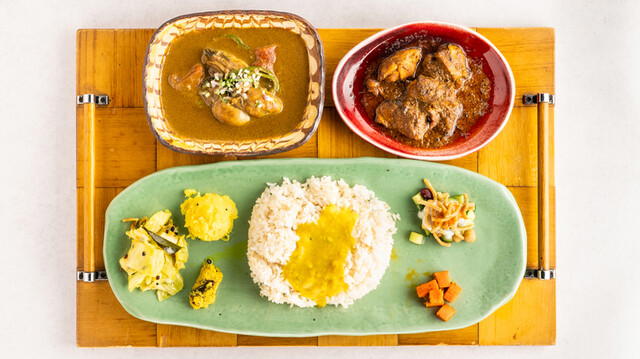
- Chicken Masala
- South Indian Meals set
- Lamb Cutlet
- Ayam Goreng
- Lamb Katsu
Approaching Zero One Curry A.o.D. in Tokyo, the dining rhythm shifts toward focused specialization. The city supports serious everyday eating: ramen counters, yakitori rooms, corporate lunch spots and destination curry addresses can coexist within the same wider dining map. Zero One Curry A.o.D. belongs to the latter camp, where the format is approachable and the judgment rests on spice balance, category focus and whether a curry place can hold attention beyond a single order.
Tokyo curry is not one tradition but several stacked on top of each other. There is yoshoku curry, built for speed and comfort; ramen-shop adjacent curry rice; independent spice-curry styles; and Indian restaurants that range from canteen cooking to more composed menus. The Tabelog Hyakumeiten recognition in 2024 places Zero One Curry A.o.D. inside a competitive category that is broader than curry alone. That matters because the restaurant is being measured against Tokyo’s wider dining field, not just against quick lunch curry shops.
Focused curry in a city that often treats curry as convenience
The useful way to read this address is through its categories rather than spectacle. The public listing places it in Indian, Indian curry and cake categories, which positions the restaurant away from the narrow idea that curry is only a fast convenience meal. In Tokyo, that distinction is meaningful. A curry address can be excellent because it delivers one reliable plate quickly; a more ambitious curry kitchen has to manage spice structure, rice, acidity, texture and the overall balance of the meal.
Zero One Curry A.o.D. is categorized as Indian, Indian curry and cake, an unusual spread only if curry is treated as a narrow genre. In Japan, specialist curry rooms often sit between restaurant, café and canteen, with dessert or tea-adjacent habits folded into the meal rather than separated into another occasion. The category mix signals a looser dining format than a formal restaurant, while its 2024 Tabelog Hyakumeiten recognition and 3.73 score give it a stronger credibility trail than a casual format might suggest.
Tokyo gives that credibility a sharper edge. Ramen Jiro Mita honten anchors one version of the city’s food identity: low-priced, queue-driven, intensely specific. Yakitori Katou operates in a different dinner register, while Chinese Hanten Mita ten shows how Tokyo can carry both lunch utility and higher-spend evening dining. Against that spread, Zero One Curry A.o.D. occupies a valuable middle position: more considered than a generic curry stop, less ceremony-bound than a tasting-menu evening, and aimed at diners who care about curry as a focused restaurant choice.
Why the Tokyo setting matters
Tokyo’s strongest casual restaurants often thrive where office density, student traffic and residential regulars overlap. The city has that mix in abundance. It does not need theatrical interiors to sustain demand; it rewards places that can serve lunch with discipline and dinner with enough depth to justify a return. In that context, a focused curry room is not a compromise. It is a scale and format in which a kitchen can stay close to prep, adjust batches and keep a distinct identity without becoming a chain-like operation.
The comparison set also explains why this is not a substitute for every Tokyo curry craving. Ramen Jiro Mita honten is about volume, ritual and a genre-defining bowl. Chuogo Hanten Mita is a ramen reference point. Sushi Mikata belongs to another dining language entirely. Zero One Curry A.o.D. is for the diner who wants spice craft and curry focus without moving into formal dining. For visitors mapping a Tokyo eating day, that makes it especially useful around lunch or an early evening, where high-end reservations can dominate planning and leave little room for casual precision.
The broader dining note attached to this kind of restaurant is also worth reading carefully. Curry is not automatically simple: spice, heat, sweetness and acidity can punish lazy cooking. A curry room that earns attention in Tokyo’s dining culture is participating in a broader shift, where casual specialists are judged with some of the seriousness once reserved for more formal counters. That does not turn the meal into fine dining. It does suggest a culture in which curry is being treated as food with structure, not just comfort.
How to place it in a Tokyo itinerary
For a Tokyo restaurant itinerary, Zero One Curry A.o.D. works as a counterweight to the city’s reservation-heavy meals. It belongs with other focused casual stops rather than with omakase or kaiseki planning. Readers comparing curry addresses can use it as one point in a broader citywide curry thread, while wider Tokyo dining research can start with Our full Tokyo restaurants guide. Nearby and citywide contrasts include other Tokyo dining rooms, each showing a different version of the city’s specialist-restaurant economy.
For travelers building beyond restaurants, Tokyo’s hospitality and nightlife layers sit in separate guides: Our full Tokyo hotels guide, Our full Tokyo bars guide, Our full Tokyo wineries guide and Our full Tokyo experiences guide. Regional comparisons sharpen the point further: other curry specialists in Japan frame the genre through different local habits, while other dining rooms elsewhere show how regional cooking can travel across a wider metropolitan setting. For wider Japan and overseas context, the same lesson applies: casual formats can still carry serious intent when the cooking has focus.
The editorial case is simple: Tokyo has endless curry, but not every curry address earns recognition in the Tabelog Hyakumeiten field. Zero One Curry A.o.D. is valuable because it treats curry as a focused meal, not background fuel. In a city with powerful casual-food identities, that is enough to make it a serious Tokyo stop for diners who want specificity without ceremony.
Frequently asked questions
What price level is Zero One Curry A.o.D.?
Pricing at Zero One Curry A.o.D. is listed as Dinner: JPY 2,000 - JPY 2,999; Lunch: JPY 1,000 - JPY 1,999.
What's Zero One Curry A.o.D.'s location?
Tokyo.
How far ahead should I plan for Zero One Curry A.o.D.?
Plan ahead as you would for a recognized Tokyo specialist. Its Tabelog Hyakumeiten 2024 recognition and 3.73 score point to meaningful demand.
What's the signature at Zero One Curry A.o.D.?
There is no single named signature listed in the provided public record. The clearest read on the kitchen is its listing under Indian, Indian curry and cake categories. Check the venue's official channels for the latest details.
Do they accommodate allergies at Zero One Curry A.o.D.?
For specific allergy needs, check the venue's official channels at +81-3-6722-6380 before visiting.
Price Lens
Comparable venues for cuisine and category context.
| Venue | Cuisine | Price | Awards | Notes |
|---|---|---|---|---|
| Zero One Curry A.o.D.This venue (the venue you are viewing) | South Indian Curry & Natural Wine | $20–30 | Tabelog 100 #25 | Not listed |
| Eric South Masala Diner | Modern South Indian diner & curry house | $20–30 | Tabelog 100 #47 | Shibuya, Modern South Indian diner & curry house |
| Curry Spice Gelateria KALPASI | Indian-style curry and spice gelato | $10–20 | Tabelog 100 #17 | Setagaya, Indian-style curry and spice gelato |
| negombo33 Kouenji | Indian-style curry & café | $10–20 | Tabelog 100 #55 | Suginami, Indian-style curry & café |
| Ooiwa Shokudo | South Indian curry & Sri Lankan-style spice dishes | $20–30 | Tabelog 100 #79 | Suginami, South Indian curry & Sri Lankan-style spice dishes |
| Indian Restaurant Aarti | Indian Curry | $10–20 | Tabelog 100 #7 | Chiyoda, Indian Curry |
Recognition history
Dated appearances from independent guides and award organizations, with the underlying list record or original source where available.
Tabelog 100 #25 · No. 25
Tabelog · Tabelog 100 - Asian cuisine / Ethnic cuisine - TOKYO - 2024