
Tabelog 100 #2
Our verdict
In Sangenjaya’s compact dining orbit, shiva curry wara represents Tokyo’s small-room curry culture at a serious level: 11 seats, counter seating, Indian and Indian curry categories, and repeat Tabelog 100 selections across curry and Asian or ethnic cuisine. The draw is not ceremony but scale, focus, and a room built for quick concentration rather than lingering spectacle.

Pearl is the En Primeur Club membership app, where members save venues, book tables and use the concierge.
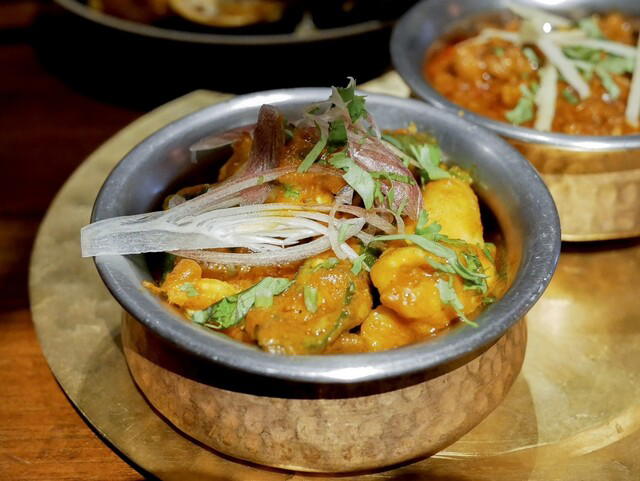
The menu
What to order
- Butter chicken curry
- Coriander curry
- Seasonal vegetable curry
- Keema de Chipotle
- South Indian vegetarian meals
Tokyo dining is rarely grand at this scale: stairways, second-floor rooms, narrow shopfronts, and small counters where the city compresses a meal into close quarters. shiva curry wara fits that Tokyo grammar: a compact room where curry is framed by proximity rather than theatre. In a city where luxury often means omakase choreography or hotel polish, this is a more useful seriousness: small, specific, and built on repetition.
Tokyo curry resists one definition. It includes Japanese curry rice, South Asian regional cooking, spice bars, lunch-counter institutions, and chef-driven rooms that borrow across traditions without becoming fusion for its own sake. Curry is not a consolation meal beneath sushi, tempura, or kaiseki; it has its own rankings, pilgrimage routes, and price logic. Tabelog’s Hyakumeiten selections have made that visible, especially for restaurants without international awards but with strong local demand.
A small Tokyo room built for curry, not spectacle
The design signal is scale. A small restaurant changes a meal’s rhythm: the room is less forgiving, the kitchen feels closer, and turnover can become part of the experience. Counter-style Tokyo curry rooms often use practical architecture rather than decoration, for food that arrives without a tasting menu’s long arc. The format puts attention on the plate and service cadence, not a dining room narrative.
Tokyo shapes the read. Compared with the city’s most polished dining districts, this kind of restaurant culture can feel looser: neighborhood regulars, destination diners, cafés, small bars, and casual rooms with serious reputations but few luxury codes. Nearby comparison venues such as Nicolas, Mikazuki Do, CAFE Mame-Hico Sangenjaya honten, Imagawayaki Kashiwaya, and Baker Bounce point to an ecosystem where modest spend and repeat local use matter as much as destination status. Here, a curry specialist feels less like an outlier than part of the city’s daily dining intelligence.
The useful comparison is not Tokyo’s most formal dining rooms, but the city’s tightly focused curry specialists. shiva curry wara is listed in Indian and Indian curry categories, and its recognition places it in that lane: a 2024 Tabelog Hyakumeiten listing with a posted score of 3.74. The signal is not theatrical luxury; it is the public visibility of a focused restaurant within a category Tokyo diners take seriously.
Recognition without luxury pricing
Tokyo often separates prestige from comfort, but curry compresses them. A restaurant can carry serious local recognition while remaining materially casual. The reported spend band is JPY 1,000 to JPY 1,999 for lunch and JPY 3,000 to JPY 3,999 for dinner, keeping it outside the city’s tasting-menu decision set. For travelers, the meal can be a focused stop rather than the day’s main production.
The Tabelog score of 3.74 deserves context. On Tabelog, scores above the mid-threes can signal strong local consensus, especially in categories less covered by international guides. The 2024 Tabelog Hyakumeiten recognition gives the room a public trust signal without changing its compact, direct format. That is the appeal of Tokyo’s better curry addresses: recognition accumulates, but the physical container often stays modest.
The point is the food category and the format rather than a long list of amenities. shiva curry wara is best approached as a focused Tokyo curry address, with the planning expectations that come with smaller independent restaurants. In this tier, practical details such as timing, queues, and payment methods can matter, so diners should confirm current service information before making the trip.
That planning mindset is part of the pleasure. Compact Tokyo restaurants often reward diners who treat the meal as specific rather than casual filler: arrive with flexibility, expect a direct format, and let the restaurant’s scale set the rhythm. The attraction is not a private-room or tasting-menu proposition, but the clarity of a small room built around curry.
How it fits into a Tokyo food itinerary
For visitors mapping Tokyo through food, shiva curry wara belongs with focused, small-format restaurants, not as a fine-dining substitute. It makes sense on a Tokyo day built around casual specialist dining, especially for travelers who know the city’s strongest meals are not always in high-gloss districts. The city rewards category depth: a day can move from curry to yakitori, café culture, or seafood without forcing every meal into the same formality.
For broader planning, EP Club’s Tokyo coverage can place that choice in context: Our full Tokyo restaurants guide, Our full Tokyo hotels guide, Our full Tokyo bars guide, Our full Tokyo wineries guide, and Our full Tokyo experiences guide. Within the restaurant map, useful contrasts include other curry references, different counter-led Japanese formats, seafood and charcoal cooking, Tokyo neighborhood dining, and the city’s café-as-design impulse.
The national comparison also helps: Japan’s casual specialist rooms vary sharply by city. Unnamed curry specialists, cafés, small-format bars, and regional dining rooms show how tightly focused venues travel across Japan’s dining map. Farther afield, Japanese-inspired formats outside Japan underline how portable these ideas can be, even as the best Tokyo examples remain tied to local habits and demand.
The editorial case is simple: this is a small Tokyo curry room with current local recognition, not a room imitating luxury dining. Its value lies in the discipline of the format, the Tokyo setting, and the way a compact space can make curry feel central rather than casual filler. In Tokyo, that distinction matters.
Frequently asked questions
Where exactly is shiva curry wara?
shiva curry wara is located in Tokyo.
What time does shiva curry wara open and close?
Current opening hours for shiva curry wara should be confirmed directly with the restaurant before visiting.
What's the pricing like at shiva curry wara?
Pricing at shiva curry wara is listed as JPY 3,000 - JPY 3,999 for dinner and JPY 1,000 - JPY 1,999 for lunch.
What is shiva curry wara known for?
It is known as a Tokyo curry restaurant listed in Indian and Indian curry categories, with 2024 Tabelog Hyakumeiten recognition and a posted Tabelog score of 3.74.
Peers You’d Cross-Shop
Comparable venues to calibrate price, style, and recognition.
| Venue | Cuisine | Price | Awards | Notes |
|---|---|---|---|---|
| shiva curry waraThis venue (the venue you are viewing) | Japanese‑influenced South Indian Curry House | $20–30 | Tabelog 100 #2 | Not listed |
| Nicolas | Japanese-style cafe and sweets | $10–20 | Tabelog 100 #70 | JPY 1,000 - JPY 1,999 JPY 1,000 - JPY 1,999 View spending breakdown |
| Mikazuki Do | Traditional Japanese Izakaya | $20–30 | Tabelog 100 #50 | JPY 1,000 - JPY 1,999 JPY 1,000 - JPY 1,999 View spending breakdown |
| CAFE Mame-Hico Sangenjaya honten | Not listed | $10–20 | Tabelog 100 #82 | JPY 1,000 - JPY 1,999 JPY 1,000 - JPY 1,999 View spending breakdown |
| Imagawayaki Kashiwaya | Traditional imagawayaki & Japanese sweets stand | $1–10 | Tabelog 100 #96 | JPY 999 - JPY 999 View spending breakdown |
| Baker Bounce | American Burger Diner | $10–20 | Tabelog 100 #46 | JPY 1,000 - JPY 1,999 JPY 1,000 - JPY 1,999 |
Recognition history
Dated appearances from independent guides and award organizations, with the underlying list record or original source where available.
Tabelog 100 #2 · No. 2
Tabelog · Tabelog 100 - Asian cuisine / Ethnic cuisine - TOKYO - 2024
Continue exploring
More in Tokyo
Restaurants in Tokyo
All restaurants in Tokyo →


Bars in Tokyo
All bars in Tokyo →






Details
- Cozy
- Lively
- Intimate
- Casual Hangout
- Solo
- After Work
- Group Dining
- Standalone
- Chefs Counter
- A La Carte
- Set Menu
- Counter Dining
- Vegetarian Friendly
Current opening hours
- Monday
- Closed
- Tuesday
- 11:20 AM–3 PM, 6–10 PM
- Wednesday
- 11:20 AM–3 PM, 6–10 PM
- Thursday
- 11:20 AM–3 PM, 6–10 PM
- Friday
- 11:20 AM–3 PM, 6–10 PM
- Saturday
- 11:20 AM–3 PM, 6–10 PM
- Sunday
- 11:20 AM–3 PM, 6–10 PM
Hours can change for holidays and private events. Hours as of .
A snug second‑floor neighborhood spot with just 11 non‑smoking seats, counter and small tables packed close together, creating a casual, lively, curry‑shop atmosphere rather than a formal restaurant feel.