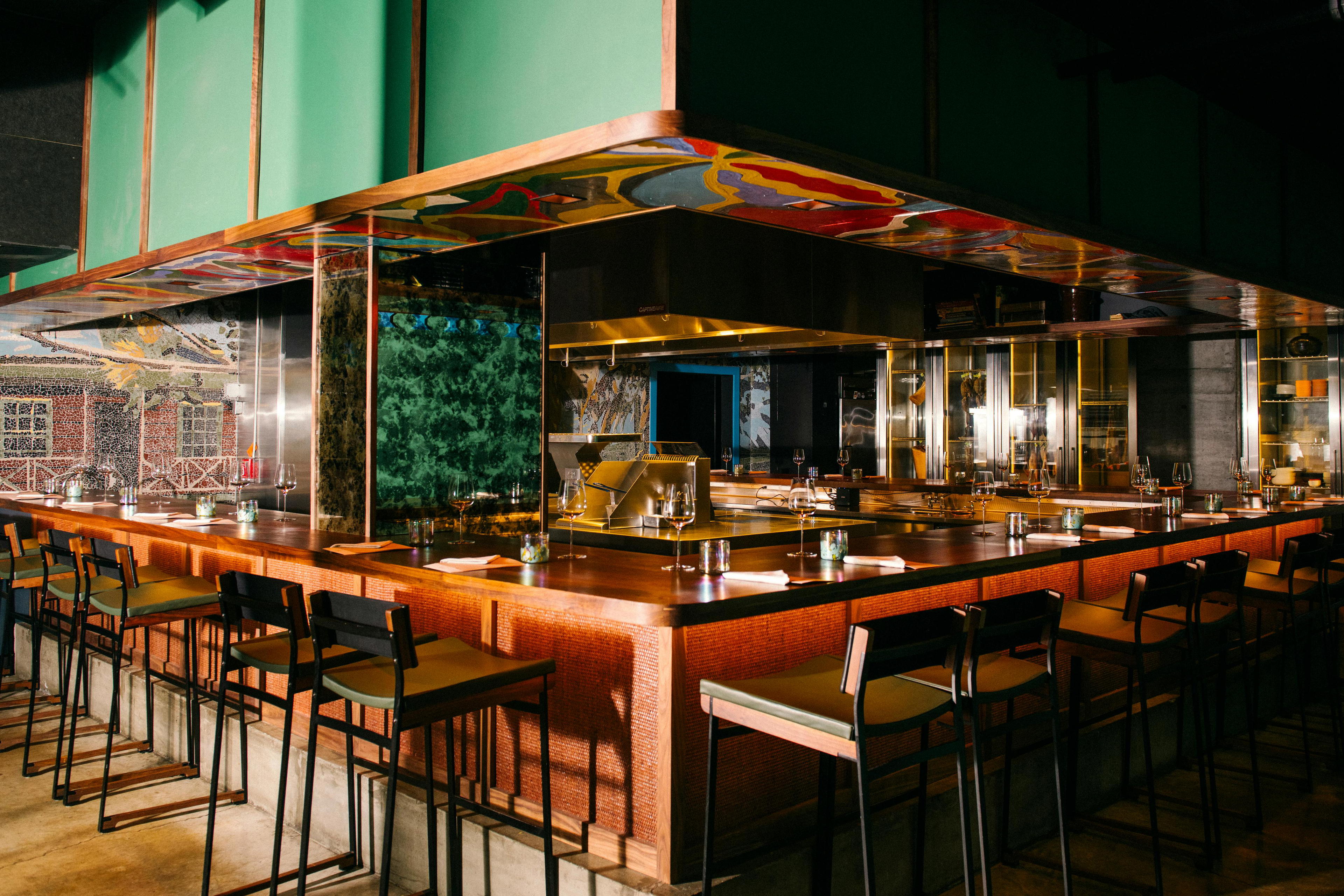
Only Goods
Our verdict
Only Goods brings Puerto Rican and Latin American cooking into New York City's halal dining conversation, occupying a niche that few restaurants in the city address with this kind of cultural specificity. The cuisine draws on the Caribbean's layered food history, and the halal framework opens that tradition to a broader audience without diluting it. For New Yorkers tracking where the borough's most culturally specific cooking is happening, this is a name worth knowing.

Pearl is the En Primeur Club membership app — saves, bookings, and concierge access live there. Same editors, same standards.
- Address
- New York City, United States
Where Puerto Rican Cooking Meets a Broader Table
New York's Latin American restaurant scene has always been more fractured than its reputation suggests. The city has long had Dominican counters in Washington Heights, Cuban spots in Jackson Heights, and Nuyorican staples scattered across the South Bronx and East Harlem, but the restaurants that synthesize those traditions into something coherent for a wider dining public have been slower to emerge. Only Goods occupies an interesting position in that context: a Puerto Rican and Latin American kitchen operating under halal certification, which expands its reach to Muslim communities while keeping its culinary identity rooted in Caribbean specificity.
That halal framing is not incidental. Across New York's outer boroughs, the intersection of Caribbean and Muslim communities, particularly from West Africa, South Asia, and the Arab world, has created demand for food that speaks to multiple cultural registers at once. Halal Puerto Rican cooking is not a novelty act; it reflects a real demographic reality in neighborhoods where those communities overlap. Only Goods sits inside that broader shift toward culturally hybrid but culturally grounded dining.
The Culinary Roots of Puerto Rican Cooking
To understand what Only Goods is doing, it helps to understand what Puerto Rican cuisine actually is, because it tends to get flattened in broader Latin American conversations. The food is a direct product of Taino, Spanish, and West African culinary contact over several centuries. Sofrito, the aromatic base that underpins much of the cooking, is itself a synthesis: Spanish technique applied to indigenous and African ingredients. Plantains, rice, beans, and slow-cooked proteins form the structural backbone, but the depth comes from seasoning traditions that are specific and layered, not generic.
That specificity matters when evaluating any restaurant claiming this cuisine. Puerto Rican cooking is not difficult to approximate at a surface level, but the difference between a kitchen that understands the tradition and one that merely assembles its components is usually apparent in the details: the balance of the sofrito, the texture of the pernil, the way a dish of arroz con gandules holds or loses its integrity. These are the markers that separate culturally grounded cooking from category tourism.
New York's wider dining conversation tends to reward European and East Asian fine dining most visibly. Restaurants like Le Bernardin, Atomix, Masa, Per Se, and Jungsik New York occupy the city's highest-prestige tier, all at the $$$$ price point, all receiving sustained critical attention. Caribbean cooking, by contrast, rarely enters that conversation at a formal level, which means the restaurants doing it seriously tend to operate outside the usual critical frameworks. That is partly a structural gap in how the city's food media works, not a reflection of the food's depth or ambition.
Halal Certification and What It Signals
The halal designation at Only Goods functions as more than a dietary marker. In New York City, where an estimated one million Muslim residents represent one of the largest urban Muslim populations in the United States, halal certification is increasingly a signal of culinary seriousness directed at an audience that the mainstream restaurant industry has historically underserved. The growth of halal fine dining and halal-certified casual restaurants across Brooklyn, Queens, and the Bronx reflects both demographic pressure and genuine entrepreneurial ambition from within those communities.
What makes the Only Goods combination notable is the pairing of halal certification with a cuisine, Puerto Rican and Latin American, that does not automatically read as halal-friendly to outside observers. Pork is central to traditional Puerto Rican cooking in the form of lechon and pernil, so a halal-certified kitchen operating in that tradition has to make deliberate choices about substitution, adaptation, and transparency. That requires a more considered approach to the menu than a kitchen simply serving chicken and beef within a more permissive culinary framework.
Across the United States, restaurants working at similar intersections of Latin American cuisine and halal certification remain a small cohort. The equivalent conversation in other American cities, from New Orleans to San Francisco to Chicago, has not produced many comparable examples, which positions New York, with its specific demographic composition, as the most natural city for this kind of restaurant to exist and find an audience.
Positioning in New York's Broader Restaurant Map
Only Goods does not compete in the same tier as the city's major tasting-menu destinations. The reference points for what it is doing are different: culturally specific neighborhood cooking that takes its source material seriously, offered to an audience that includes both community insiders and curious outsiders. That is a different kind of ambition than what drives the fine dining programs at Single Thread Farm, The French Laundry, or Providence, but it is not lesser ambition.
The restaurants that the New York critical establishment celebrates most consistently, whether in the fine dining category or in the broader prestige casual space, tend to share certain properties: clearly legible culinary traditions, telegenic presentation, and a price point that signals seriousness. Puerto Rican and Latin American cooking operating under halal certification does not fit neatly into any of those frames, which may explain why it receives less systematic attention than its quality would otherwise warrant.
For context on how other American cities handle their most culturally specific restaurants, it is worth noting that places like Blue Hill at Stone Barns, Addison, The Inn at Little Washington, Bacchanalia, 8 1/2 Otto e Mezzo Bombana, and Alain Ducasse at Louis XV all succeed by making their cultural specificity legible and their ambition explicit. The more interesting question for a restaurant like Only Goods is whether the New York market, with its specific demographics and its increasingly diverse critical infrastructure, is ready to extend that same framework to Caribbean and halal cooking. The signs suggest it is moving in that direction.
For a broader map of where New York's most culturally specific cooking is happening right now, see our full New York City restaurants guide.
Planning Your Visit
Given the nature of smaller culturally specific restaurants in New York, availability can shift quickly and is worth verifying directly before visiting. This is the kind of restaurant that tends to build its audience through community word-of-mouth before broader media attention arrives, so reaching out directly for current details is the most reliable approach.
Frequently asked questions
Is Only Goods one of the few halal-certified Puerto Rican restaurants in New York City?
The combination of Puerto Rican and broader Latin American cuisine with halal certification places Only Goods in a narrow category within New York City's restaurant map. Most Caribbean restaurants in the city do not carry halal certification, and most halal-certified establishments do not specialise in Puerto Rican cooking specifically. For Muslim diners seeking that intersection in New York, the options are limited enough that Only Goods represents a distinct rather than a routine choice.
What's the best thing to order at Only Goods?
Puerto Rican cooking at its core runs through sofrito-based stews, rice dishes built on West African and Taino foundations, and slow-cooked proteins — so those categories are where the cuisine's identity tends to show most clearly. Check directly with the restaurant for current offerings.
Should I book Only Goods in advance?
Contacting the restaurant directly before visiting is the practical approach, particularly on weekends.
What's the defining dish or idea at Only Goods?
The defining idea is the intersection of Puerto Rican and Latin American cooking with halal certification — a combination that is genuinely rare in New York City. Puerto Rican cuisine itself carries Taino, Spanish, and West African culinary lineages, and the halal framework extends that table to Muslim diners in a city of an estimated one million observant residents. That convergence, not any single dish, is what positions Only Goods distinctly.
Does Only Goods justify its prices?
What is clear is that culturally specific cooking with halal certification occupies a narrow category in New York, which typically means limited direct competition and a dining room shaped by genuine community demand rather than trend cycles.
Is Only Goods better for lunch or dinner?
In New York, Caribbean restaurants with a community-first audience frequently carry strong lunch momentum, since the midday meal holds cultural weight in Puerto Rican and Latin American food traditions. Verify current service times directly with the restaurant before planning your visit.
Nearby-ish Comparables
Comparable venues nearby, for context on price, style, and recognition.
| Venue | Cuisine | Price | Notes |
|---|---|---|---|
| Only GoodsThis venue — the venue you are viewing | Dining | Not listed | Not listed |
| Pomona | Contemporary American | $50–100 | Central Park |
| Mombar | Traditional Egyptian | $20–30 | Astoria (Central) |
| Kabab King | 24/7 Pakistani & Indian kebab diner | $10–20 | Jackson Heights |
| Taco Mix | Authentic Mexican Street Tacos | $1–10 | East Harlem (North) |
| Otto's Tacos | Southern California-Style Tacos | Not listed | East Village |
Only Goods
Featured Guides

Continue exploring