Kabab King

Our verdict
Kabab King puts Jackson Heights’ Pakistani and Indian late-night grill culture in blunt focus: clay-oven breads, kebabs, biryani, and a room where speed matters more than polish. It is a low-price Queens institution with a public reputation built as much on brusque service as on tandoor-driven cooking.

Pearl is the En Primeur Club membership app, where members save venues, book tables and use the concierge.
The menu
What to order
- Beef kabab
- Chicken tikka
- Chicken biryani
- Haleem
- Naan rolls
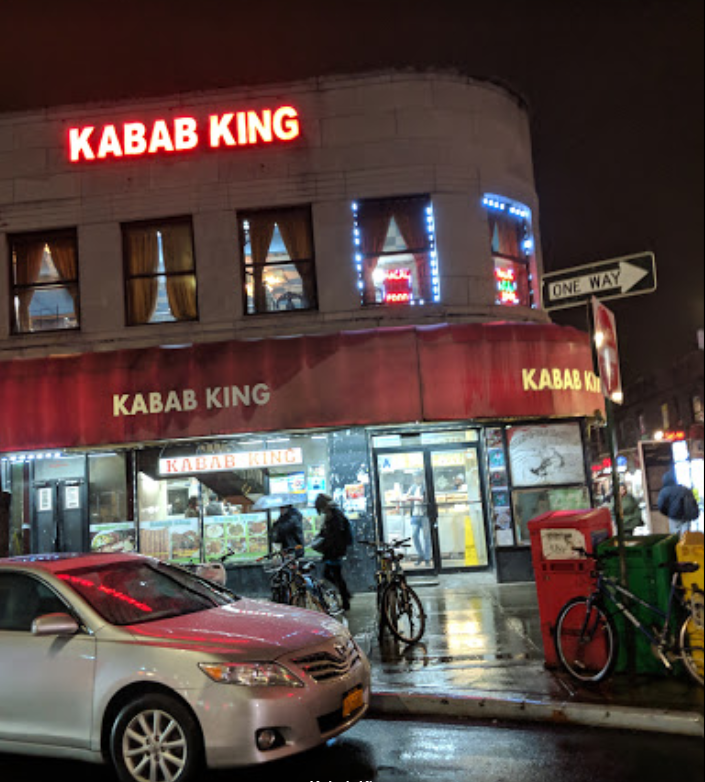
New York City does not ease diners gently into appetite. The city works in steam, traffic noise, phone-shop signage, busy storefronts, and the smell of food meeting heat. Kabab King belongs to that grammar: a proudly direct Pakistani and Indian restaurant where the point is not ceremony, but appetite, pace, comfort, and the social confidence of a place that fits naturally into the city’s everyday dining life.
The cooking is identified with Pakistani and Indian traditions, a distinction that matters in New York City, where broad cuisine labels can sometimes flatten very different restaurants into the same shorthand. The meal makes more sense when approached through contrast, balance, and shared ordering rather than through a generic idea of the category: something immediate, something hearty, something aromatic, and dishes that let spice, texture, and comfort do much of the talking.
Direct cooking, New York tempo, and the case for blunt service
New York City dining culture often rewards directness. Restaurants in this register are judged less by interior finish than by usefulness, consistency, value, and how well a kitchen handles demand. Kabab King’s appeal fits that pattern: the room is not best understood through theatrical hospitality, but through the briskness of a place that knows how to feed people in the city’s everyday rhythm.
That matters because it places the restaurant in a wider city pattern: immigrant and neighborhood dining rooms often become public institutions before they become polished hospitality products. The room’s value is measured through repetition. Workers come in for a quick meal, families order across the table, late diners read the menu with confidence, and the kitchen keeps moving. This is not the tasting-menu model, where pacing and explanation create the evening. Here, the central question is whether the restaurant can keep its nerve.
For ordering, the sharper strategy is to build the table around contrast. Pakistani and Indian menus in New York City can sprawl, but the useful read is structural: mix textures, temperatures, spice levels, and richer dishes with lighter ones. A table that thinks in those terms will understand the kitchen better than one that treats the menu as a checklist.
Why this kind of restaurant still defines New York City
New York’s premium dining conversation often points toward reservations, counter formats, and chef-led scarcity. Kabab King offers a different form of authority. In the city’s dense dining landscape, daily use carries weight because the audience is not captive; diners can find other options nearby. A restaurant survives in that environment by being useful, fast, affordable, and sufficiently consistent for regulars to forgive the rough edges.
The broader Pakistani and Indian food culture of New York City has also shaped how the city eats beyond any single dining room. Restaurants across the city now borrow the language of specificity, but everyday dining has practiced it through retail density and regular use: food businesses, shops, commuters, and residents sharing the same pedestrian flow. Kabab King is not an isolated curiosity in that setting. It is one example of a larger ecosystem where food, migration, commuting, and neighborhood commerce overlap without needing a lifestyle narrative.
The cooking style is useful for reading the meal because it cuts through the generic “Indian restaurant” label. Texture, timing, seasoning, and balance are more revealing measures than décor or scripted hospitality. The restaurant’s $ price positioning also changes expectations: value here is not about luxury for less, but about access to Pakistani and Indian cooking that remains embedded in everyday New York life.
How to place it in a New York food day
Kabab King works better as part of a New York City eating itinerary than as a standalone destination framed with ceremony. The right context is the city itself: arrive hungry, order for contrast, and accept that the room’s friction is part of the local register. The reward is not polish. It is a direct encounter with a dining form that has resisted the city’s tendency to turn every good meal into a reservation product.
For broader city planning, EP Club’s New York coverage is split by category: start with Our full New York City restaurants guide, then cross-check Our full New York City hotels guide, Our full New York City bars guide, Our full New York City wineries guide, and Our full New York City experiences guide. Other restaurant pages can be useful for building a wider map of how casual, specialist, and neighborhood formats read across New York City and beyond, but Kabab King should be understood first on its own terms: affordable, direct, and rooted in Pakistani and Indian cooking.
Frequently asked questions
What's the price range at Kabab King?
Pricing at Kabab King is listed as $.
Is Kabab King award-winning?
Kabab King is included in the 2026 New York Times Best Restaurants in New York City list.
What style of cooking does Kabab King do?
Kabab King serves Pakistani, Indian cuisine.
Where is Kabab King in New York City?
Kabab King is located in New York City.
Reputation & Price
Comparable venues nearby, for context on price, style, and recognition.
| Venue | Cuisine | Price | Notes |
|---|---|---|---|
| Kabab KingThis venue (the venue you are viewing) | 24/7 Pakistani & Indian kebab diner | $10–20 | Not listed |
| Gandhi Cafe | Authentic Anglo-Indian | $20–30 | West Village, Authentic Anglo-Indian |
| Raja Sweets & Fast Food | Authentic Indian Vegetarian Fast Food & Sweets | $10–20 | Jackson Heights, Authentic Indian Vegetarian Fast Food & Sweets |
| Bombay Grill house | Traditional Indian | $20–30 | Greenpoint, Traditional Indian |
| Spice Symphony Times Square | Authentic Indian with Indo-Chinese Fusion | $30–50 | Hell's Kitchen, Authentic Indian with Indo-Chinese Fusion |
| Exceed Physical Culture | Vegetarian Health Food | Not listed | Upper East Side-Yorkville, Vegetarian Health Food |
Recognition history
Dated appearances from independent guides and award organizations, with the underlying list record or original source where available.
New York Times Best Restaurants in New York City #100
New York Times
Continue exploring
More in New York City
Restaurants in New York City
All restaurants in New York City →
Bars in New York City
All bars in New York City →




Details
- Lively
- Casual
- Energetic
- Casual Hangout
- Family
- Group Dining
- Solo
- Late Night
- After Work
- Standalone
- A La Carte
- Counter Dining
- Halal
- Vegetarian Friendly
Current opening hours
- Monday
- 7 AM–4 AM
- Tuesday
- 7 AM–4 AM
- Wednesday
- 7 AM–4 AM
- Thursday
- 7 AM–4 AM
- Friday
- 7 AM–4 AM
- Saturday
- 7 AM–4 AM
- Sunday
- 7 AM–4 AM
Hours can change for holidays and private events. Hours as of .
Bright, bustling, no-frills diner atmosphere with cafeteria-style counters and constant foot traffic, more functional than decorative, focused on fast, hearty South Asian comfort food rather than design.