
Okura Mochi Tokoname honten gives Tokoname a serious wagashi address rather than another quick stop near the airport corridor. Its Tabelog 100 selection for Japanese traditional sweets and sweets cafes in EAST 2023 places it in a selective category where rice, beans, ice, and tea-room pacing matter more than restaurant theatre.
Pearl is the En Primeur Club membership app — saves, bookings, and concierge access live there. Same editors, same standards.
- Address
- Japan, 〒479-0838 Aichi, Tokoname, Koiehonmachi, 2 Chome−2−1
- Phone
- +81 569-35-2676
- Website
- ohkuramochi.jp
- Directions
- Get directions
 Saves & bookings on Pearl
Approaching a Japanese sweets house in Tokoname asks for a different tempo from the city’s noodle counters and casual kitchens. The appeal is not heat, speed, or smoke, but the quiet discipline of mochi, anko, shaved ice, and the tea-adjacent grammar of wagashi. Okura Mochi Tokoname honten belongs to that slower register: a sweets cafe and take-out shop where the main point is the handling of rice and seasonal sweetness rather than a chef-led tasting menu.
That distinction matters in Tokoname. The city’s dining map is often read through practical meals, especially around bowls and local everyday formats. Nearby options such as Hanzou Seimen and Menbo Showa Tei sit in a low-cost noodle bracket, while ル クーリュズ points to another side of the local restaurant mix. A wagashi cafe plays a separate role. It is less about lunch utility and more about how regional sweets culture survives in a city better known to many travellers for ceramics, the airport, and short-stop itineraries.
Rice, beans, and shaved ice carry the argument
Wagashi shops are judged on narrow margins: texture, sweetness, temperature, and restraint. Mochi is unforgiving because rice work announces mistakes quickly, and anko can become heavy when sugar is used as cover rather than structure. Kakigori adds another test, since shaved ice depends on balance rather than abundance. The strongest sweet shops in Japan do not need a long menu to make their case; they need consistency across familiar forms.
Okura Mochi Tokoname honten’s category spread, cafe featuring Japanese sweets, Japanese traditional sweets, and kakigori, places it at the intersection of shop and sit-down cafe. That hybrid is common in Japan but often misunderstood by visitors who expect dessert to follow a meal. Here, sweets are the reason to stop. The Tabelog 100 selection for Japanese traditional sweets and sweets cafes in EAST 2023 is the clearest public signal: this is not merely a neighbourhood snack counter, but a Tokoname address recognised within a regional sweets category.
The ingredient story is embedded in the format. Mochi culture starts with rice rather than pastry technique, and Japanese sweets use beans, starch, sugar, ice, and tea-room proportions with a precision that differs from Western dessert architecture. Tokoname’s ceramics identity adds useful context without needing to romanticise it: this is a city where material craft is part of the civic vocabulary, and wagashi sits comfortably beside that sensibility. Clay and rice are not the same craft, but both reward patience, handwork, and attention to small variations.
A sweets cafe, not a restaurant pretending to be one
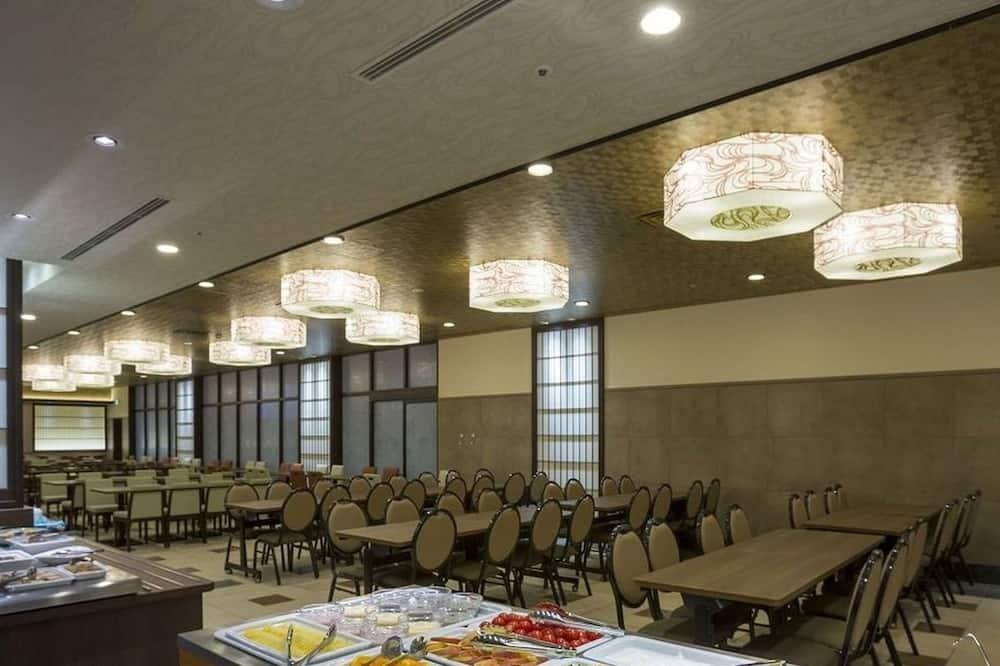
The room supports the format rather than dressing it up. Counter seating, tatami seating, wheelchair access, a non-smoking policy, and take-out service all point to a practical Japanese sweets house with broad local use. Children are welcome, solo diners are a natural fit, and the experience works for friends who want a pause rather than a full dining production. That flexibility is part of the appeal: wagashi culture is formal in origin, but in regional cafes it often becomes democratic.
Scale also matters. With 50 seats, this is not the tiny counter model that dominates global fine-dining attention, nor is it a chain-style cafe built for anonymous turnover. It occupies a middle ground: large enough for everyday use, specific enough to carry a sweets identity. In Tokoname, that makes it a useful counterpoint to noodle-led meals and casual restaurants, especially for travellers building a day around ceramics streets, airport transit, or a short Aichi detour.
For broader planning, Our full Tokoname restaurants guide is the better frame than treating this as an isolated stop. Travellers pairing food with lodging can cross-check Our full Tokoname hotels guide, while longer itineraries may also use Our full Tokoname bars guide, Our full Tokoname wineries guide, and Our full Tokoname experiences guide. The point is sequence: wagashi usually lands better as a deliberate afternoon stop than as an afterthought tacked onto a heavy meal.
Where it fits in a Japan sweets itinerary
Japan’s premium food conversation often over-indexes on sushi counters, kaiseki rooms, and ramen queues. Sweets require a different literacy. Recognition in a wagashi and sweets-cafe list is meaningful because the category is broad, regional, and crowded with long-running local shops. A Tabelog score of 3.62 and inclusion in the 2023 EAST selection give enough evidence to position Okura Mochi Tokoname honten above casual convenience without inflating it into fine dining.
That positioning is useful for travellers who already know the difference between a destination meal and a destination stop. This is the latter: a focused sweet-shop visit that explains something about Tokoname’s local rhythm. It also gives contrast to food itineraries elsewhere in Japan, from beef-led meals such as -Grilled beef Sukiyaki- KAMAKURA TANUKIAN 鎌倉 たぬき庵 in Kamakura to casual city formats like. 鮪と炭火焼き うお炭 秋葉原店 in Tokyo.cafe in Osaka.know in Kumamoto, (Shoku) Vietnam in Kawasaki, [Curry Senmon Ten] Maruyama Kyoju. in Sapporo, [ki:] in Kyoto, and #肉といえば松田 奈良本店 in Kashihara. For readers tracing Japanese food culture abroad, Jōdo Saké Bar in Los Angeles and Onigiri Time in Pasadena show how narrower formats travel, adapt, and become legible outside Japan.
The editorial case is simple: choose this when the itinerary needs a sweets stop with recognised category credibility, not when it needs a full restaurant set piece. Tokoname rewards that kind of pacing. A serious wagashi cafe gives the day a softer hinge, and rice-based sweets make a clearer local argument than another generic coffee break.
A Quick Peer Check
Comparable venues by cuisine and price in the same metro.
| Venue | Cuisine | Price | Notes |
|---|---|---|---|
| Okura Mochi Tokoname honten | Traditional Japanese wagashi & kakigori cafe | $ | .null |
| Hanzou Seimen | Modern Japanese ramen & tsukemen | $$ | Chubu Centrair International Airport |
| Menbo Showa Tei | Seafood-focused Japanese Ramen | $$ | Tokoname |
| ル クーリュズ | Chita Peninsula French | $$$$ | Tokoname |
| 首里そば | Traditional Okinawan Soba | $ | Shuri |
| カツカレーの店 KAPPA | カツカレー専門洋食 | $ | 倉敷えびす通り商店街 |
Recognition history
Dated appearances from independent guides and award organizations, with the underlying list record or original source where available.
Tabelog 100 #82 · No. 82
Tabelog · Tabelog 100 - Japanese traditional sweets / Japanese sweets cafe - EAST - 2023


At a Glance
- Classic
- Cozy
- Quiet
- Solo
- Family
- Casual Hangout
- After Work
- Standalone
- Design Destination
- Local Sourcing
Current opening hours
- Monday
- Closed
- Tuesday
- 9 AM–6 PM
- Wednesday
- 9 AM–6 PM
- Thursday
- 9 AM–6 PM
- Friday
- 9 AM–6 PM
- Saturday
- 9 AM–6 PM
- Sunday
- 9 AM–6 PM
Hours can change for holidays and private events. Last verified .
A relaxed, traditional Japanese sweets cafe with tatami seating and counter seats, non‑smoking, and a calm, homey atmosphere suited to quietly enjoying wagashi and shaved ice.