Okoze
On Union Street in San Francisco's Cow Hollow, Okoze occupies a position where the city's appetite for ethical sourcing and restrained Japanese technique converge. The restaurant draws on a tradition of spare, ingredient-led cooking that places sustainability as structure rather than slogan. For San Francisco diners who have exhausted the obvious tasting-menu circuit, it represents a quieter, more considered entry point.
Pearl is the En Primeur Club membership app — saves, bookings, and concierge access live there. Same editors, same standards.
- Address
- 1207 Union St, San Francisco, CA 94109
- Phone
- +14155673397
- Website
- okozesushi.com
- Directions
- Get directions
 Saves & bookings on Pearl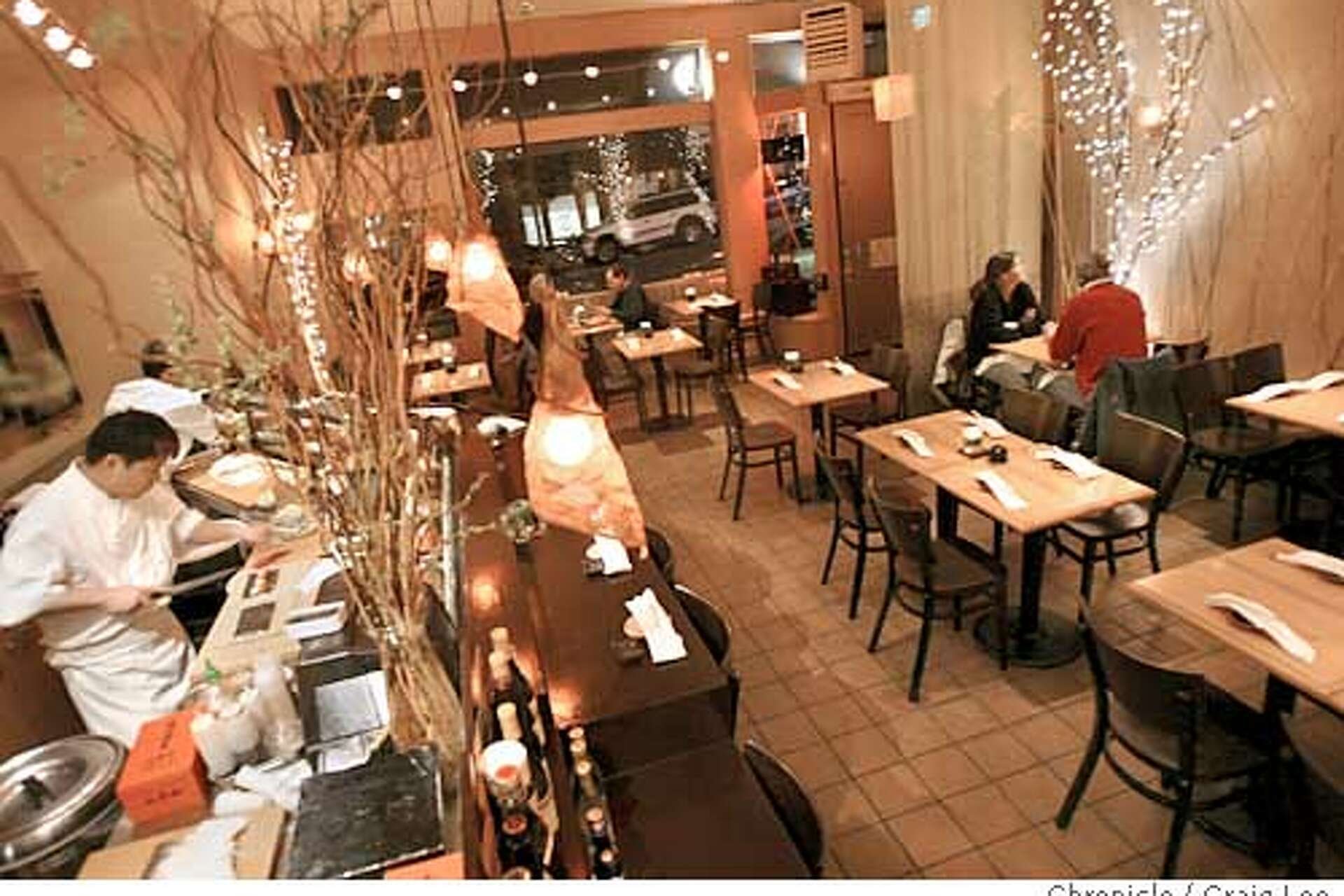
Where Union Street Meets the Ethos of Less-Is-More Dining
San Francisco's Cow Hollow has long functioned as a residential counterweight to the louder dining corridors further south. Union Street retains a neighbourhood grain that Hayes Valley and SoMa have gradually traded away, and it is in this context that Okoze operates at 1207 Union St. The physical approach is low-key by design: no marquee signage, no canopied entrance. Address: 1207 Union St, San Francisco, CA 94109. The restraint of the exterior tends to signal something deliberate about what happens inside, a move increasingly common among San Francisco restaurants that treat quietness as a form of credibility.
That credibility, in this part of the city, is almost always built on sourcing. The farms-to-fork infrastructure of Northern California remains among the more developed in the United States, and the restaurants that use it seriously tend to show it in the menu's architecture rather than in bullet-pointed provenance lists. Okoze fits that pattern. The name itself refers to a type of Japanese scorpionfish, a creature associated in Japanese culinary tradition with careful, skilled handling due to its venomous spines. It is a pointed choice for a restaurant operating in a register where the ingredient demands more respect than the technique.
Sustainability as Structure, Not Decoration
The conversation around ethical sourcing in fine dining has matured considerably over the past decade. Early iterations treated sustainability as a marketing addendum, a line at the bottom of the menu noting a single farm relationship. The more serious iteration, which has become the standard among the city's better independent restaurants, treats it as a structural constraint: you build the menu around what is available, traceable, and responsibly harvested, rather than sourcing to a pre-written menu.
This approach is particularly visible in restaurants working with seafood, and it carries specific weight in San Francisco, a city with direct access to the Pacific and a fishing culture that predates the current sustainability discourse by generations. The Japanese culinary tradition that Okoze draws on has its own parallel ethic: mottainai, the principle of using every part of an ingredient without waste, has been embedded in Japanese kitchen culture long before the word sustainability entered Western restaurant menus. A restaurant that takes both seriously is working at the intersection of two traditions rather than borrowing the aesthetics of one.
For context, the San Francisco restaurants that have built particularly durable reputations in sustainable seafood and ethical sourcing tend to share certain operational characteristics: direct relationships with day-boat fishermen, seasonal rather than fixed menus, and a willingness to work with less commercially familiar species when the more recognizable options are not responsibly available. Saison built its identity partly on live-fire cooking and direct producer relationships. Single Thread Farm in Healdsburg takes the farm-integrated model further, operating its own agricultural program. Okoze operates at a smaller, more neighbourhood-specific scale, but the underlying commitment to ingredient traceability places it in the same broader current.
The Competitive Set on the San Francisco Tasting-Menu Circuit
San Francisco's high-end dining has consolidated significantly around a handful of formats: the open-fire Californian, the French-inflected tasting menu, and the Japanese-informed counter. Atelier Crenn and Benu represent the upper tier of that circuit, carrying Michelin recognition and pricing that positions them against peer counters in New York and Tokyo rather than against neighbourhood restaurants. Lazy Bear and Quince occupy adjacent territory, the former with its communal-table format, the latter with its Italian-Californian synthesis.
Okoze sits at a different register. Its Union Street address places it outside the downtown and Mission corridors where most of the city's tasting-menu competition clusters. That geographical separation is meaningful: the restaurant is not positioning itself as an alternative to The French Laundry in Napa or Le Bernardin in New York City. It is doing something more specific and more local. Among restaurants nationally that have built comparable sustainability-first Japanese seafood programs, the peer references include Providence in Los Angeles, which has maintained a rigorous sustainable seafood certification for years, and Blue Hill at Stone Barns in Tarrytown, where the farm-to-table model operates at an institutional level.
Beyond California, restaurants like Addison in San Diego, Atomix in New York City, and Alinea in Chicago define different poles of the contemporary American fine-dining conversation. Okoze's Japanese-inflected sourcing ethos connects it more directly to Atomix's Korean-technique precision and to the ingredient-reverence that defines the leading Japanese-American kitchens on the West Coast.
What to Expect from the Format
Given the name's reference to a demanding ingredient and the address's neighbourhood character, the format at Okoze is likely closer to a compact, counter-adjacent experience than to a large dining room built for volume. San Francisco restaurants of this type typically book several weeks in advance, particularly for weekend seatings. The city's dining public has become sophisticated about this tier, and the restaurants that operate without the amplification of major awards or social media programs tend to fill through word-of-mouth among a committed local base.
The practical implication for visitors is timing. Booking is recommended. Walk-in availability at this type of San Francisco restaurant is inconsistent at peak periods.
Planning Your Visit
| Venue | Format | Price Tier | Sourcing Focus | Location |
|---|---|---|---|---|
| Okoze | Japanese-inflected, ingredient-led | $50 per person | Sustainable seafood / Japanese technique | Cow Hollow, Union St |
| Saison | Live-fire Californian tasting menu | $$$$ | Direct producer relationships | SoMa |
| Atelier Crenn | Modern French tasting menu | $$$$ | Farm partnerships, plant-forward | Cow Hollow |
| Benu | French-Chinese tasting menu | $$$$ | Seasonal, Korean-influenced sourcing | SoMa |
| Lazy Bear | Progressive American, communal | $$$$ | Seasonal Californian producers | Mission |
Visitors to San Francisco with an interest in how Japanese culinary discipline intersects with California's ethical sourcing infrastructure will find Okoze worth a visit. It is not a restaurant that advertises itself loudly, which is precisely the point.
The Quick Read
Comparable venues nearby, for context on price, style, and recognition.
| Venue | Cuisine | Price | Notes |
|---|---|---|---|
| OkozeThis venue — the venue you are viewing | Russian Hill, Japanese Sushi and Seafood | $$ | Not listed |
| Matsuyama Shabu House | Pacific Heights, Japanese Shabu-Shabu | $$ | Not listed |
| Delica | Not listed | $$ | Financial District/South Beach, Japanese Deli Sozai |
| Ryoko's Japanese Restaurant & Bar | Nob Hill, Lively Japanese Sushi Bar | $$ | Not listed |
| Marufuku Ramen | Japantown, Hakata-Style Tonkotsu Ramen | $$ | Not listed |
| Nojo Ramen Tavern | Not listed | $$ | Hayes Valley, Modern Chicken Paitan Ramen Izakaya |
Continue exploring
More in San Francisco
Restaurants in San Francisco
Browse all →
Bars in San Francisco
Browse all →
Hotels in San Francisco
Browse all →

At a Glance
- Cozy
- Intimate
- Date Night
- Casual Hangout
- Sake Program
- Local Sourcing
Current opening hours
- Monday
- Closed
- Tuesday
- 5–9:30 PM
- Wednesday
- 5–9:30 PM
- Thursday
- 5–9:30 PM
- Friday
- 5–10 PM
- Saturday
- 5–10 PM
- Sunday
- Closed
Hours can change for holidays and private events. Last verified .
Quiet and cozy with a fabulous, intimate atmosphere ideal for weeknight dinners.