OJIGI occupies a discreet address inside Mannheim's Plankenhofpassage, a covered arcade that filters foot traffic away from the city's busier commercial corridors. The name, borrowed from the Japanese gesture of respectful bowing, signals an orientation toward restraint and consideration that runs through the experience. For visitors mapping Mannheim's serious dining options, it belongs on the same itinerary as the city's other destination addresses.
Pearl is the En Primeur Club membership app — saves, bookings, and concierge access live there. Same editors, same standards.
- Address
- Plankenhofpassage, P6 25, 68161 Mannheim, Germany
- Phone
- +4962171849999
- Website
- ojigi-mannheim.de
- Directions
- Get directions
 Saves & bookings on Pearl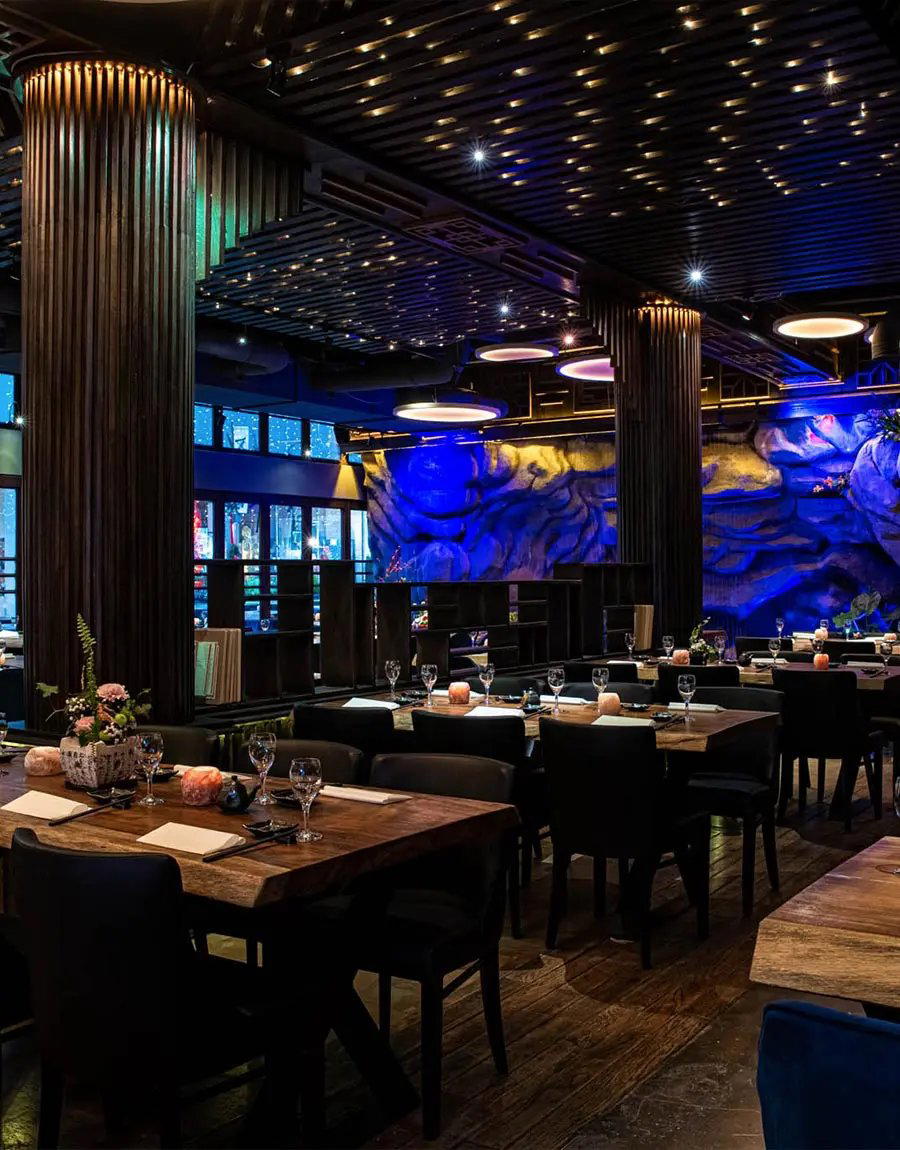
An Arcade Address That Earns Attention
Covered passages in European city centres tend to age in one of two directions: they either fossilise into tourist-facing retail or attract a quieter, more considered kind of occupant that prefers low footfall to high visibility. The Plankenhofpassage in Mannheim's P6 quarter lands firmly in the second category. Approaching from the street, the shift in atmosphere is immediate, ambient noise drops, the pace slows, and the architecture creates a contained, slightly formal environment that reads as deliberate rather than accidental. OJIGI sits within this passage at number 25, and the address is part of its character before you even reach the door.
The name itself carries weight. In Japanese, ojigi refers to the bow, the physical act of greeting, deference, and acknowledgement that governs social exchange. For a restaurant to adopt that as its identity marker is a positioning choice, one that suggests the kitchen and floor operate with precision and intention rather than volume and bravado. Whether the execution fully honours that framing is the question serious diners should bring with them.
Where OJIGI Sits in Mannheim's Dining Scene
Mannheim occupies an underappreciated position in Germany's fine dining geography. The city has produced OPUS V, a Modern European address at the leading price tier, and Dobler's, which anchors the classic cuisine tradition in the city. Between those formal anchors and more casual addresses like Akropolis, Black Angus Food Truck, and Café Frida Kahlo, there is a mid-to-upper tier where OJIGI appears to operate, a space that rewards specificity over spectacle.
Germany's serious restaurant culture has been evolving toward smaller, more defined formats. Addresses like Aqua in Wolfsburg and JAN in Munich have demonstrated that cities outside Berlin and Hamburg can sustain kitchens of genuine ambition, and the Black Forest's Schwarzwaldstube in Baiersbronn has long proven the point at the highest tier. OJIGI enters this broader conversation from an unlikely urban pocket, a Rhine-Neckar city more associated with its university and trade fairs than with destination dining. That context makes the restaurant's positioning more interesting, not less.
The Sensory Register of the Plankenhofpassage
Fine dining in covered arcade settings has a particular quality that open-street restaurants rarely achieve. In winter months, the contrast between the cold exterior and the warmer, enclosed passage interior sharpens arrival in a way that open-frontage restaurants in temperate climates cannot replicate. Seasonally, late autumn through early spring is when an address like the Plankenhofpassage earns its keep as a dining destination: the architecture does environmental work that summer terrace culture renders unnecessary.
The name's Japanese reference point also suggests a sensory register worth tracking through the meal. Japanese dining culture at the serious end, from the omakase counters of Ginza to the kaiseki houses of Kyoto, and its European equivalents like CODA Dessert Dining in Berlin or Atomix in New York City, tends to foreground restraint as an aesthetic discipline. Presentation is precise, portions are considered, and the sequence of a meal is treated as a designed experience rather than a parade of plates. Whether OJIGI deploys that sensibility directly or uses the name as a more abstract signal, the expectation it sets is clear.
Mannheim's Position in the German Fine Dining Circuit
For visitors travelling to Germany specifically to eat well, the standard itinerary concentrates on Munich, Hamburg, Berlin, and the rural southwest. The notable houses in that last category, Vendôme in Bergisch Gladbach, ES:SENZ in Grassau, Victor's Fine Dining by Christian Bau in Perl, Waldhotel Sonnora in Dreis, and Schanz in Piesport, tend to reward dedicated detours. Mannheim sits within range of this southwestern cluster, positioned roughly equidistant from the Black Forest, the Palatinate wine region, and the Rhine Hesse. A dinner at OJIGI connects naturally to that wider circuit for anyone building a focused gastronomic trip through the region.
The city's grid street plan, an unusual urban structure dating to the early seventeenth century, means addresses are navigated by sector rather than named streets in the traditional sense. P6 places the restaurant in the central district, walkable from Mannheim's main station and the Baroque palace quarter. For travellers arriving by rail, the high-speed connections to Frankfurt, Stuttgart, and Heidelberg make Mannheim more accessible than its dining reputation would suggest, the location removes most logistical friction.
Hamburg's Restaurant Haerlin and Le Bernardin in New York City represent the kind of institutional weight that takes decades to accumulate. OJIGI is at a different point in that trajectory, operating in a city where the dining narrative is still being written. For the reader whose interest lies in tracking that narrative rather than arriving after the fact, the timing is worth noting.
Planning a Visit
OJIGI's address in the Plankenhofpassage at P6 25 places it in central Mannheim, accessible on foot from the Hauptbahnhof in under fifteen minutes. OJIGI is open daily, with lunch-to-late service most days and Sunday evening service from 5 to 11 PM. Reservations are recommended. For visits tied to the colder months, the arcade setting offers a more sheltered and atmospherically distinct arrival than the city's open-street options.
City Peers
Comparable venues nearby, for context on price, style, and recognition.
| Venue | Cuisine | Price | Notes |
|---|---|---|---|
| OJIGIThis venue — the venue you are viewing | Authentic Japanese Sushi & Fine Dining | $$$ | Not listed |
| Pardis Restaurant Mannheim | Authentic Persian Cuisine | $$ | Neckarstadt-Ost/Wohlgelegen |
| Restaurant Franco L'Osteria Vineria | Authentic Italian Osteria | $$$ | R7 |
| Black Angus Food Truck | Black Angus Burger Food Truck | $$ | Mannheim |
| Restaurant Costa Smeralda | Authentic Italian Sardinian | $$$ | Schwetzinger Straße |
| Akropolis | Traditional Greek Grill | $$ | K4 |
Continue exploring
More in Mannheim
Restaurants in Mannheim
Browse all →
Bars in Mannheim
Browse all →
Hotels in Mannheim
Browse all →
At a Glance
- Modern
- Cozy
- Elegant
- Date Night
- Open Kitchen
- Sake Program
Current opening hours
- Monday
- 12–11 PM
- Tuesday
- 12–11 PM
- Wednesday
- 12–11 PM
- Thursday
- 12–11 PM
- Friday
- 12 PM–12 AM
- Saturday
- 12 PM–12 AM
- Sunday
- 5–11 PM
Hours can change for holidays and private events. Last verified .
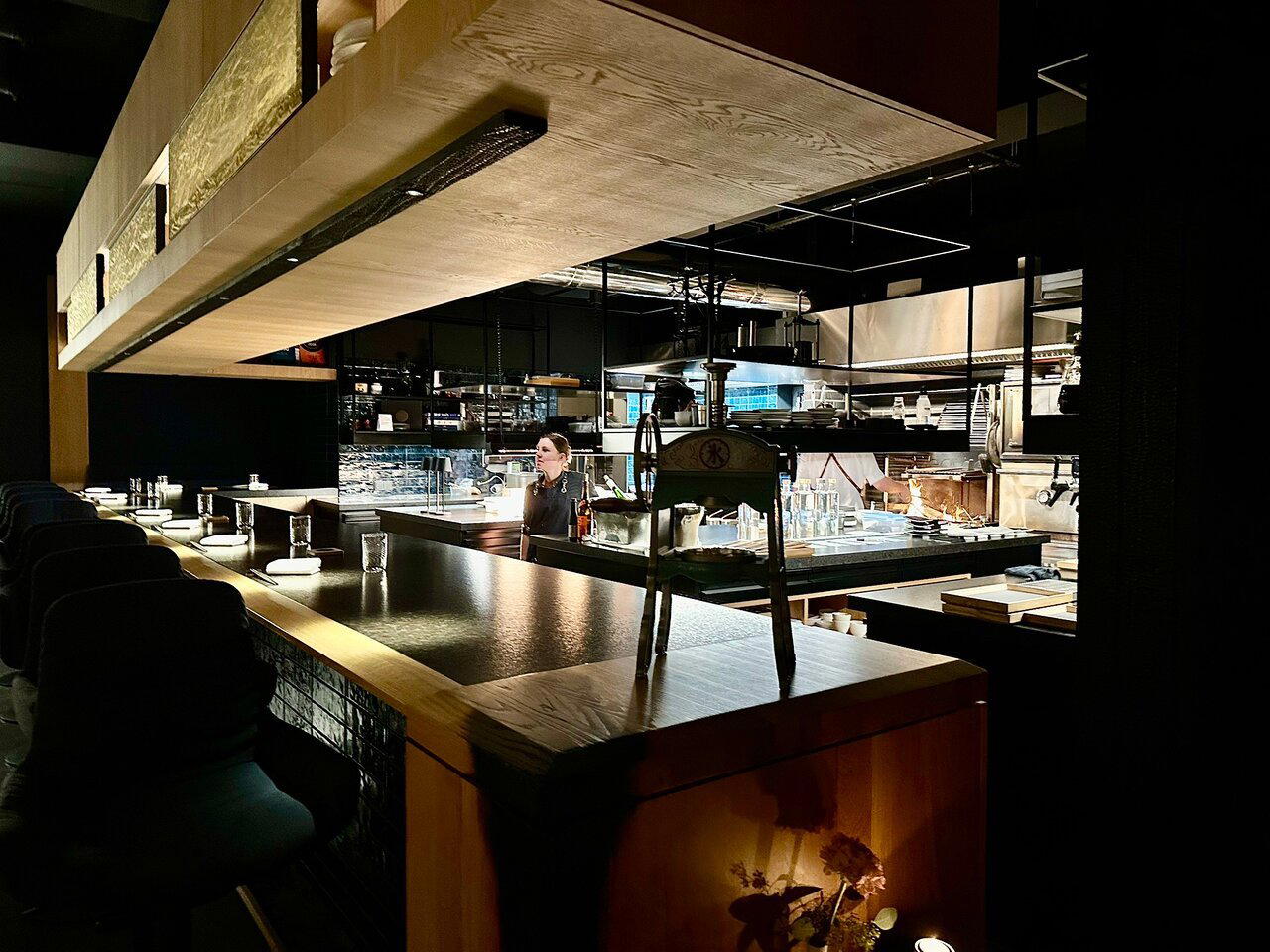
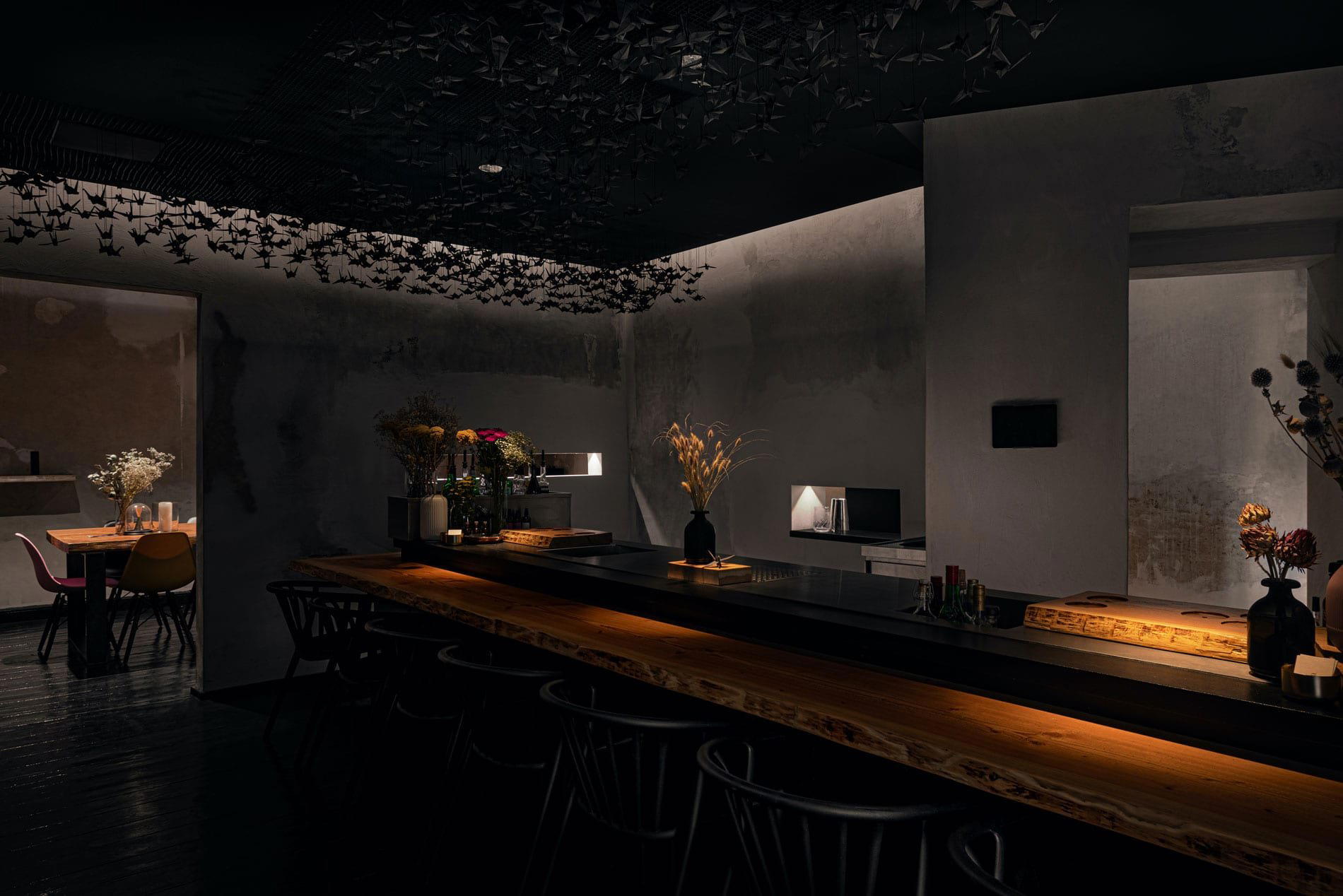
Modern and stylish interior with cozy atmosphere, praised for its Asian aesthetics.