Akropolis occupies a grid-address slot in central Mannheim's K-block, placing it squarely inside the city's everyday dining infrastructure rather than its fine-dining tier. The name signals a Greek or Mediterranean orientation, and the K4 address puts it within walking distance of the Wasserturm district and the main pedestrian spine. For Mannheim diners looking outside the €€€€ bracket occupied by OPUS V and Dobler's, this represents a different register entirely.
Pearl is the En Primeur Club membership app — saves, bookings, and concierge access live there. Same editors, same standards.
- Address
- K4 11, 68159 Mannheim, Germany
- Phone
- +496211788545
- Website
- akropolis1955.de
- Directions
- Get directions
 Saves & bookings on Pearl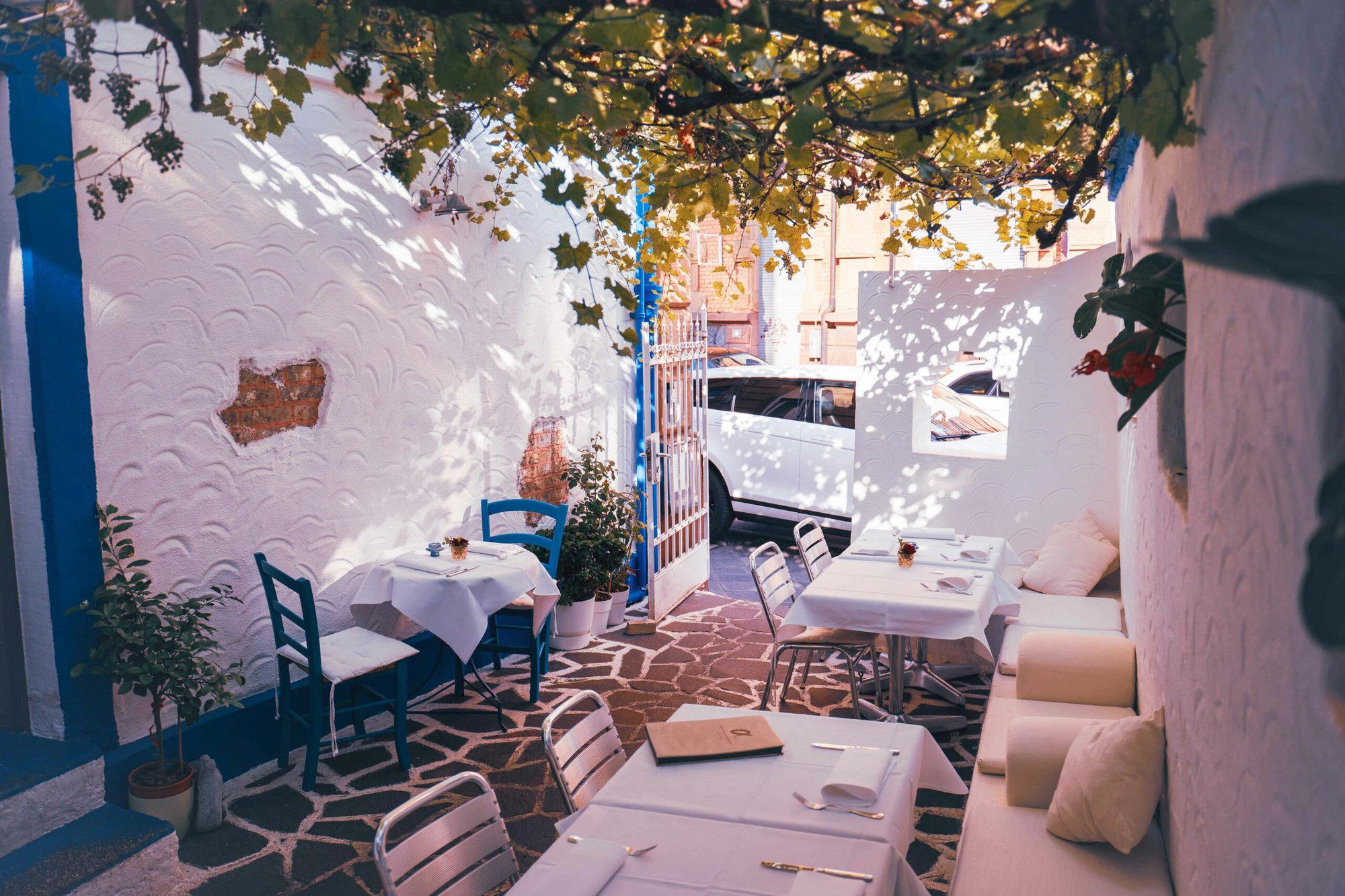
Where Mannheim's Grid Meets Everyday Eating
Mannheim is one of the few German cities whose street plan is a literal coordinate system: blocks designated by letter-number combinations radiating from the central Paradeplatz. K4 sits in that inner grid, close enough to the Wasserturm and the Fressgasse corridor that foot traffic is built into the address rather than earned. Restaurants here compete on accessibility and daily relevance rather than destination appeal. Akropolis is a Greek restaurant in Mannheim, Germany, serving Traditional Greek Grill cooking at about $20 per person.
The city's restaurant scene splits into recognisable tiers. At the upper end, OPUS V operates at the €€€€ level with a Modern European program, while Dobler's holds a similar price position in classic cuisine. Below that tier, the mid-range is dense and varied: Le comptoir 17 represents the French bistro format at the €€ level, and street-facing operations like the Black Angus Food Truck occupy the casual end. Akropolis, with its central grid address, positions itself in the middle of that range, where the question is not prestige but consistency and sourcing integrity.
The Greek Table in a German City
Greek restaurants in German cities carry a long institutional history. The post-war labour migration that brought Greek workers to industrial centres like Mannheim, Stuttgart, and Munich established a dining category that has since stratified significantly. At one end sit the taverna-format rooms that have operated continuously for decades, cooking from the same regional playbook of grilled meats, olive-oil-dressed vegetables, and feta-forward meze. At the other end, a smaller cohort of newer operations has tried to reframe Greek cuisine through a modern European lens, emphasising ingredient provenance and wine pairings over quantity and price.
The ingredient question is where Greek cooking either justifies or loses its audience. Genuine imported olive oil from the Peloponnese or Crete, feta with PDO certification, and dried oregano sourced from specific mountain regions carry flavour profiles that domestic substitutes cannot replicate. For diners who have eaten in Greece, the difference is immediate. For those who have not, the comparison is harder to draw but still registers as a quality gap. A restaurant at the K4 address in Mannheim, operating in a competitive mid-market position, faces the decision of how far to pursue sourcing authenticity versus how far to adapt to local supply chains and price ceilings.
That tension defines a large portion of the Greek and broader Mediterranean category in German cities. Café Frida Kahlo on Mannheim's scene illustrates how cultural-origin restaurants can build distinct identities through décor and atmosphere even when the ingredient sourcing question is secondary. The rooms that succeed long-term in this category tend to anchor at least a portion of their supply in origin-specific products, because those products are harder to replicate and create a repeatable reason to return.
Reading the Address: K4 in Mannheim's Inner Grid
The practical reality of dining at K4 11 is that it sits inside the part of Mannheim where office workers, students from the nearby university, and residents of the central Quadrate blocks all converge at lunchtime and again in the early evening. Restaurants in this zone tend to keep broader hours and a casual service style. That is not a critique; it describes the operating logic of central European city-centre restaurants that serve a genuine neighbourhood function.
For visitors approaching from the main station, the K-block grid is walkable in under ten minutes. From the Wasserturm, the address is even closer, sitting inside the same compact central district. Mannheim's grid makes orientation unusually easy for a German city of its size, so finding K4 requires only basic navigation rather than local knowledge. The restaurant is reachable without a taxi or transit connection from most central accommodation.
Mannheim in the Wider German Dining Context
Mannheim does not occupy the same position in the German fine-dining conversation as Hamburg, Munich, or the Black Forest corridor. The region around it, however, is serious restaurant territory. Schwarzwaldstube in Baiersbronn and Waldhotel Sonnora in Dreis represent the Michelin-heavy end of southwest German dining, while JAN in Munich and Vendôme in Bergisch Gladbach demonstrate the range of ambition operating elsewhere in the country. At the more experimental end, CODA Dessert Dining in Berlin has reframed what a dessert-focused format can achieve at serious price points.
Further afield, operations like Aqua in Wolfsburg, Victor's Fine Dining by Christian Bau in Perl, ES:SENZ in Grassau, Schanz in Piesport, and Restaurant Haerlin in Hamburg define the upper tier of German fine dining, a peer group that also includes destination rooms across the Atlantic like Le Bernardin in New York City and Lazy Bear in San Francisco. Akropolis does not compete in that category, nor does it need to. The value of knowing that broader field is calibration: understanding where a central Mannheim restaurant sits relative to the full range helps set expectations accurately rather than either over- or under-selling the experience.
Planning a Visit
Akropolis is located at K4 11, 68159 Mannheim, in the inner grid district that forms the commercial and residential core of the city. The address is walkable from the central station and from the Wasserturm area. Akropolis is recommended for reservations and keeps casual dress.
How It Stacks Up
Comparable venues nearby, for context on price, style, and recognition.
| Venue | Cuisine | Price | Notes |
|---|---|---|---|
| AkropolisThis venue — the venue you are viewing | Traditional Greek Grill | $$ | Not listed |
| Pardis Restaurant Mannheim | Authentic Persian Cuisine | $$ | Neckarstadt-Ost/Wohlgelegen |
| Black Angus Food Truck | Black Angus Burger Food Truck | $$ | Mannheim |
| Restaurant Costa Smeralda | Authentic Italian Sardinian | $$$ | Schwetzinger Straße |
| Café Frida Kahlo | Persian-Mexican Soul Food Café | $ | Schwetzinger Vorstadt |
| OJIGI | Authentic Japanese Sushi & Fine Dining | $$$ | Plankenhofpassage |
Continue exploring
More in Mannheim
Restaurants in Mannheim
Browse all →
Bars in Mannheim
Browse all →
Hotels in Mannheim
Browse all →
At a Glance
- Cozy
- Classic
- Group Dining
- Casual Hangout
- Open Kitchen
- Street Scene
Current opening hours
- Monday
- 6–11 PM
- Tuesday
- 6–11 PM
- Wednesday
- 6–11 PM
- Thursday
- 6–11 PM
- Friday
- 6 PM–1 AM
- Saturday
- 6 PM–1 AM
- Sunday
- 6–11 PM
Hours can change for holidays and private events. Last verified .
Cozy family atmosphere with a central charcoal grill as the heart of the restaurant.