Our verdict
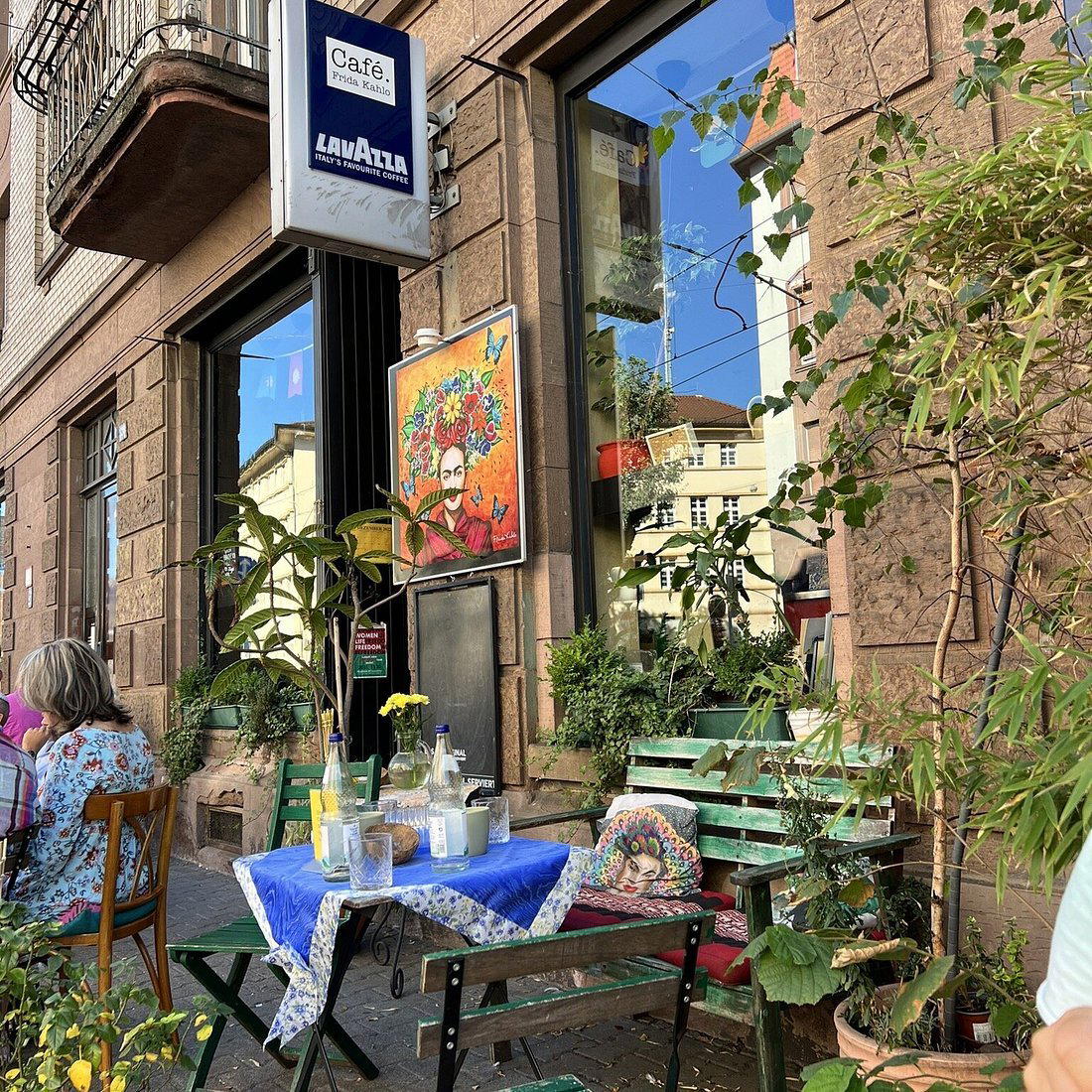
Named after one of Mexico's most recognisable painters, Café Frida Kahlo on Seckenheimer Strasse brings a distinct cultural reference point to Mannheim's mid-range dining scene. The café sits in the Oststadt district, a neighbourhood where independent operators have gradually displaced chain formats over the past decade. It occupies a niche that Mannheim's restaurant circuit rarely fills with this degree of personality.

Pearl is the En Primeur Club membership app, where members save venues, book tables and use the concierge.
The menu
What to order
- Persian potato salad
- Lentil soup
- Curries
- Brownies
- Ice cream
Where Oststadt's Independent Scene Finds Its Colour
Seckenheimer Strasse does not announce itself. The street runs through Mannheim's Oststadt with the quiet self-assurance of a neighbourhood that knows its own value, lined with the kind of independent operators that take years to accumulate in any mid-sized German city. Café Frida Kahlo sits on this stretch at number 120, and the name alone signals something about the register it is working in: not the studied minimalism of a modern European tasting menu, nor the functional efficiency of a traditional German Gaststätte, but something borrowing from a different cultural grammar entirely.
The reference to Frida Kahlo matters beyond the decorative. Her work was rooted in material specificity: the physical body, the Mexican landscape, the objects of everyday life rendered with precision and intensity. A café operating under that name in a city like Mannheim is making an implicit editorial choice about the relationship between art, sourcing, and domestic cooking traditions. Whether the kitchen honours that inheritance through its ingredients is the question worth asking.
The Sourcing Question in a Mid-Range German Context
German cities outside the top tier of fine dining have a complicated relationship with ingredient sourcing. The country's farm-to-table movement arrived later and more unevenly than in Scandinavia or northern France, and in cities like Mannheim, the conversation about provenance is often concentrated at the upper end of the market. OPUS V, Mannheim's Modern European benchmark at the €€€€ tier, operates with the kind of sourcing rigour that Michelin-adjacent kitchens are expected to maintain. Dobler's, in the classic cuisine bracket at the same price point, draws on a long-standing relationship with regional producers.
The interesting question for a café in the mid-range is where it positions itself relative to that conversation. Latin American-inflected cooking, when done with attention to its source traditions, is built around specific ingredient logic: dried chillies with distinct regional identities, masa prepared from heirloom corn varieties, herbs and citrus that carry particular aromatic profiles. A kitchen that sources those components with care is making a substantively different product from one that substitutes generic equivalents. That distinction is not always visible from the street, but it shapes everything on the plate.
Mannheim's position at the intersection of Baden-Württemberg and the Palatinate gives it access to some of Germany's more productive agricultural corridors. The Rhine valley produces stone fruit, asparagus, and wine-adjacent ingredients that can translate interestingly into non-European cooking contexts. Whether Café Frida Kahlo draws on that local geography or sources more directly from specialist importers for its core flavour profile is the kind of detail that separates a neighbourhood café with a strong identity from one that wears its name as decoration only.
Mannheim's Neighbourhood Dining Circuit
The Oststadt sits east of the city's famously grid-planned centre, and it has developed a dining character distinct from the pedestrian zones and commercial strips closer to the Wasserturm. Independent cafés and smaller restaurants here tend to serve a local clientele that values regularity and personality over occasion dining. The format suits a café named after an artist: it implies everyday ritual rather than special-event positioning.
For context on how Mannheim's mid-range diversity has developed, Le Comptoir 17 in the French €€ bracket represents one model of how a European regional cuisine can be delivered with precision at accessible price points. Akropolis and Black Angus Food Truck illustrate the breadth of the city's appetite for non-German cuisines across different formats and price tiers. Café Frida Kahlo occupies a specific cultural slot within that diversity: a Latin American cultural reference in a city where that particular culinary tradition has relatively few dedicated operators.
That relative scarcity is worth noting. Germany's Mexican and wider Latin American restaurant scene is concentrated in Berlin, Munich, and Hamburg. In cities like Mannheim, the operators who do work within that tradition tend to either serve a purely functional audience or develop a genuine community around their kitchen. The name Frida Kahlo suggests the latter ambition.
Germany's Fine Dining Comparison Set
For readers calibrating Mannheim against Germany's broader restaurant geography, the country's highest-performing kitchens occupy a different register entirely. Schwarzwaldstube in Baiersbronn, Aqua in Wolfsburg, and JAN in Munich represent the country's Michelin-heavy tier. Vendôme in Bergisch Gladbach, ES:SENZ in Grassau, Victor's Fine Dining by Christian Bau in Perl, Waldhotel Sonnora in Dreis, and Restaurant Haerlin in Hamburg and Schanz in Piesport complete a picture of where Germany's most decorated tables operate. CODA Dessert Dining in Berlin shows how the capital has absorbed format experimentation at the awarded level.
None of that is the competitive set for a neighbourhood café in Oststadt. It is, however, useful framing for understanding why mid-range operators in German cities outside the fine dining corridor carry a different kind of cultural weight. In the absence of a local Michelin ecosystem, the independent café becomes the primary locus of food culture for most residents. Internationally, the same dynamic plays out at flagship dining rooms: Le Bernardin in New York City and Atomix in New York City anchor scenes that are supported by thousands of mid-market operators whose identity work makes the whole ecosystem function.
Planning Your Visit
Café Frida Kahlo is located at Seckenheimer Strasse 120, 68165 Mannheim, placing it in the Oststadt district within walking distance of the city's eastern residential neighbourhoods. The venue is accessible by tram from Mannheim Hauptbahnhof, with several lines serving the Seckenheimer Strasse corridor. Mannheim's independent café circuit tends toward walk-in formats at this tier, though weekend visits during peak hours benefit from arriving early. For a broader orientation to the city's restaurant options across all price tiers and cuisines, the full Mannheim restaurants guide provides comparative context.
Frequently asked questions
Can I bring kids to Café Frida Kahlo?
Café Frida Kahlo sits on Seckenheimer Strasse in Mannheim's Oststadt, a residential neighbourhood where family foot traffic is part of the daily rhythm. The setting is consistent with the informal, community-facing character typical of independent venues in this district. For specific child menu options or high-chair availability, check the venue's official channels before visiting.
What's the vibe at Café Frida Kahlo?
Seckenheimer Strasse 120 places the café firmly in Oststadt, a district that has built its dining identity around independent operators rather than commercial chains. The name references the Mexican painter known for colour and self-expression, which typically signals an interior with personality rather than neutral hospitality design. Expect a relaxed, neighbourhood register rather than a formal dining room.
Is Café Frida Kahlo a Mexican-inspired café or does the name simply reference the artist?
Mannheim's Oststadt has a varied independent dining scene, and cafés in this district range across cuisines without following obvious naming logic. Reaching out to the café at Seckenheimer Strasse 120 in Mannheim before visiting is the clearest way to establish what the kitchen actually serves. Check the venue's official channels for the latest details.
What's the signature dish at Café Frida Kahlo?
Given the venue's Oststadt address and independent positioning in Mannheim, the kitchen likely reflects the neighbourhood's preference for straightforward, characterful cooking over high-concept tasting formats.
A Quick Peer Check
Comparable venues nearby, for context on price, style, and recognition.
| Venue | Cuisine | Price | Notes |
|---|---|---|---|
| Café Frida KahloThis venue (the venue you are viewing) | Persian-Mexican Soul Food Café | $10–20 | Not listed |
| Black Angus Food Truck | Black Angus Burger Food Truck | $20–30 | Mannheim |
| Nabati | Syrian Vegetarian Middle Eastern | Not listed | G7 |
| Akropolis | Traditional Greek Grill | $20–30 | K4 |
| Restaurant Costa Smeralda | Authentic Italian Sardinian | $50–100 | Schwetzinger Straße |
| Pardis Restaurant Mannheim | Authentic Persian Cuisine | $20–30 | Neckarstadt-Ost/Wohlgelegen |
Continue exploring
More in Mannheim
Restaurants in Mannheim
All restaurants in Mannheim →
Bars in Mannheim
All bars in Mannheim →
Hotels in Mannheim
All hotels in Mannheim →
Details
- Cozy
- Bohemian
- Casual Hangout
- Solo
- Brunch
- After Work
- Standalone
- Beer Program
- A La Carte
- Family Style
- Beer
- Wine
- Vegetarian Friendly
- Vegan Options
Current opening hours
- Monday
- Closed
- Tuesday
- 2–10 PM
- Wednesday
- 2–10 PM
- Thursday
- 2–10 PM
- Friday
- 2–10 PM
- Saturday
- 10 AM–6 PM
- Sunday
- 10 AM–6 PM
Hours can change for holidays and private events. Hours as of .
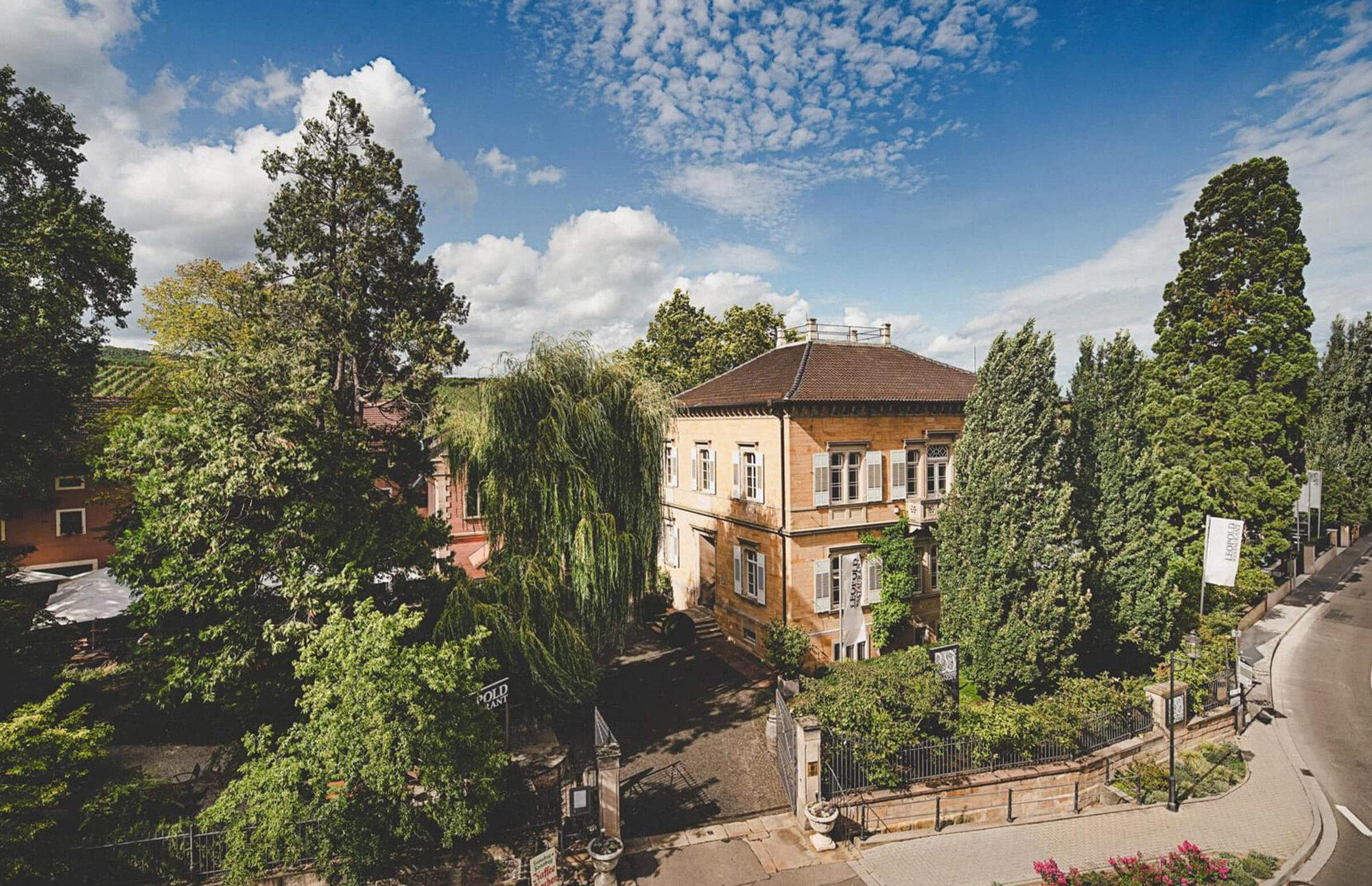
Cozy and friendly atmosphere with lively, artistic décor; intimate setting that encourages social interaction and cultural exchange.