Weingut Knipser

Weingut Knipser operates from the village of Laumersheim in the Pfalz, one of Germany's most productive wine regions, where deep loess and limestone soils shape wines of considerable structure. For serious Pfalz exploration, Knipser is a reference-point address.
Pearl is the En Primeur Club membership app — saves, bookings, and concierge access live there. Same editors, same standards.
- Address
- Hauptstraße 47, 67229 Laumersheim
- Phone
- +49 6238 742
- Website
- weingut-knipser.de
- Directions
- Get directions
 Saves & bookings on Pearl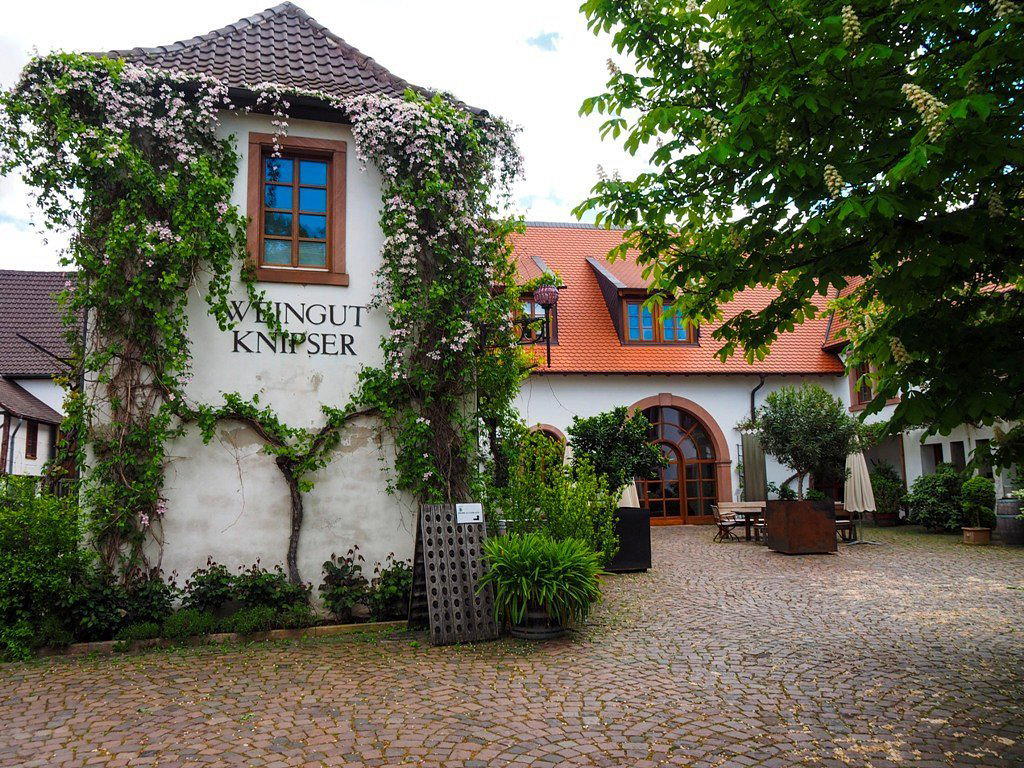
Laumersheim and the Geology Beneath It
The Pfalz stretches south from the Palatinate Forest along a corridor of notable soil diversity, and Laumersheim sits within its northern reaches where the ground shifts between heavy loess deposits, limestone subsoil, and pockets of red sandstone. These aren't interchangeable growing conditions. Loess retains heat and drains quickly, favouring wines with a fuller body and rounded fruit character. Limestone introduces tension and acidity. The northern Pfalz, less celebrated in casual wine conversation than the Mittelhaardt villages of Deidesheim or Wachenheim, produces wines with a structural edge that rewards cellaring rather than immediate consumption. Weingut Knipser, at Hauptstraße 47 in Laumersheim, works directly within this geological argument.
In a region where the gap between commercial production and estate-quality winemaking is pronounced, that distinction carries weight. For context, comparable Pfalz addresses at this recognition level include Weingut A. Christmann in Neustadt an der Weinstraße and Weingut Bassermann-Jordan in Deidesheim, both working in the more commercially prominent Mittelhaardt zone. Knipser's positioning in Laumersheim offers a less traffic-heavy entry point into the same tier of quality.
What the Northern Pfalz Adds to the Glass
German wine discourse has long been dominated by Riesling, and rightly so. But the Pfalz has always been a region of greater varietal breadth than the Mosel or the Rheingau. Red varieties, particularly Spätburgunder and Dornfelder, have been taken seriously here for decades, and the northern Pfalz's heavier soils give those reds a density that lighter sites cannot replicate. The loess and limestone combination that defines much of the Laumersheim terroir functions differently from the blue-slate soils of the Mosel, where producers like Weingut Clemens Busch in Pünderich or Weingut Fritz Haag in Brauneberg draw on entirely different mineral registers. Pfalz wines carry warmth and weight where Mosel wines carry precision and lift. This is not a hierarchy; it is a difference in idiom.
Within that Pfalz idiom, the northern stretch around Laumersheim produces wines that lean toward structure over immediate opulence. The fruit expression tends toward darker profiles in red wines and crisper citrus in whites, compared to the sometimes broader, more generous character of southern Pfalz.
A Village Address in Context
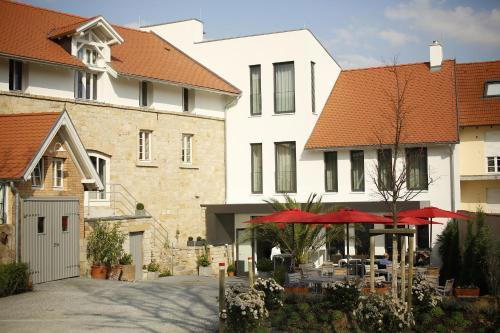
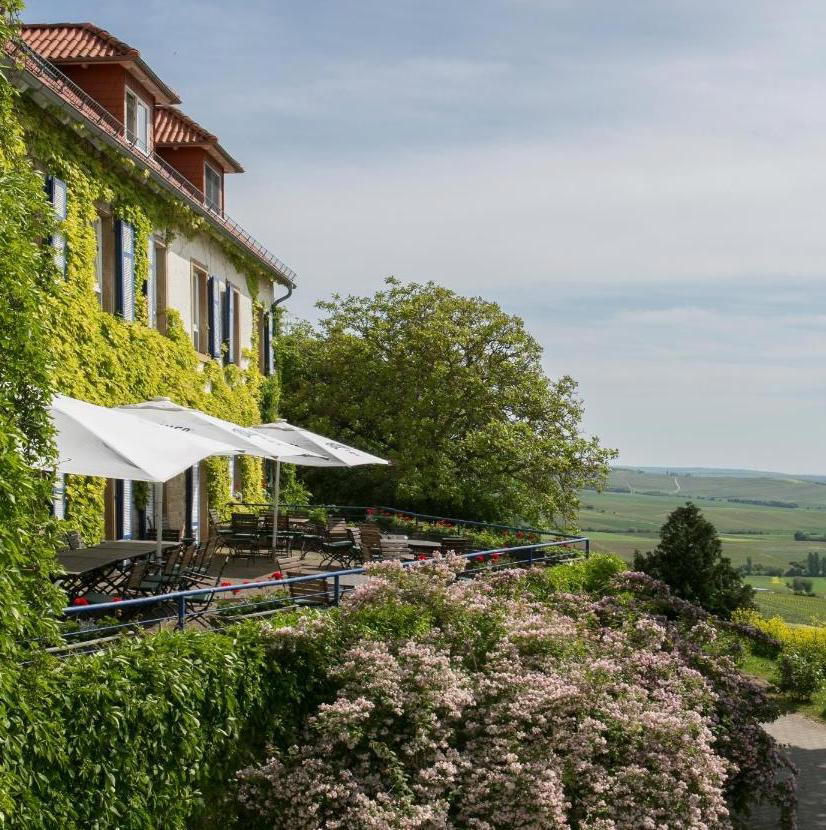
Arriving in Laumersheim requires intent. This is not a wine village with a well-worn tourist infrastructure. The Rhine Plain stretches out to the east, the Palatinate Forest rises to the west, and the village itself sits in the agricultural flatlands between them. The address at Hauptstraße 47 is a working estate address in a working agricultural village, which is precisely the context from which serious Pfalz wine production has historically operated. The more photogenic villages of the Mittelhaardt draw visitors in numbers; Laumersheim draws people who have done their research.
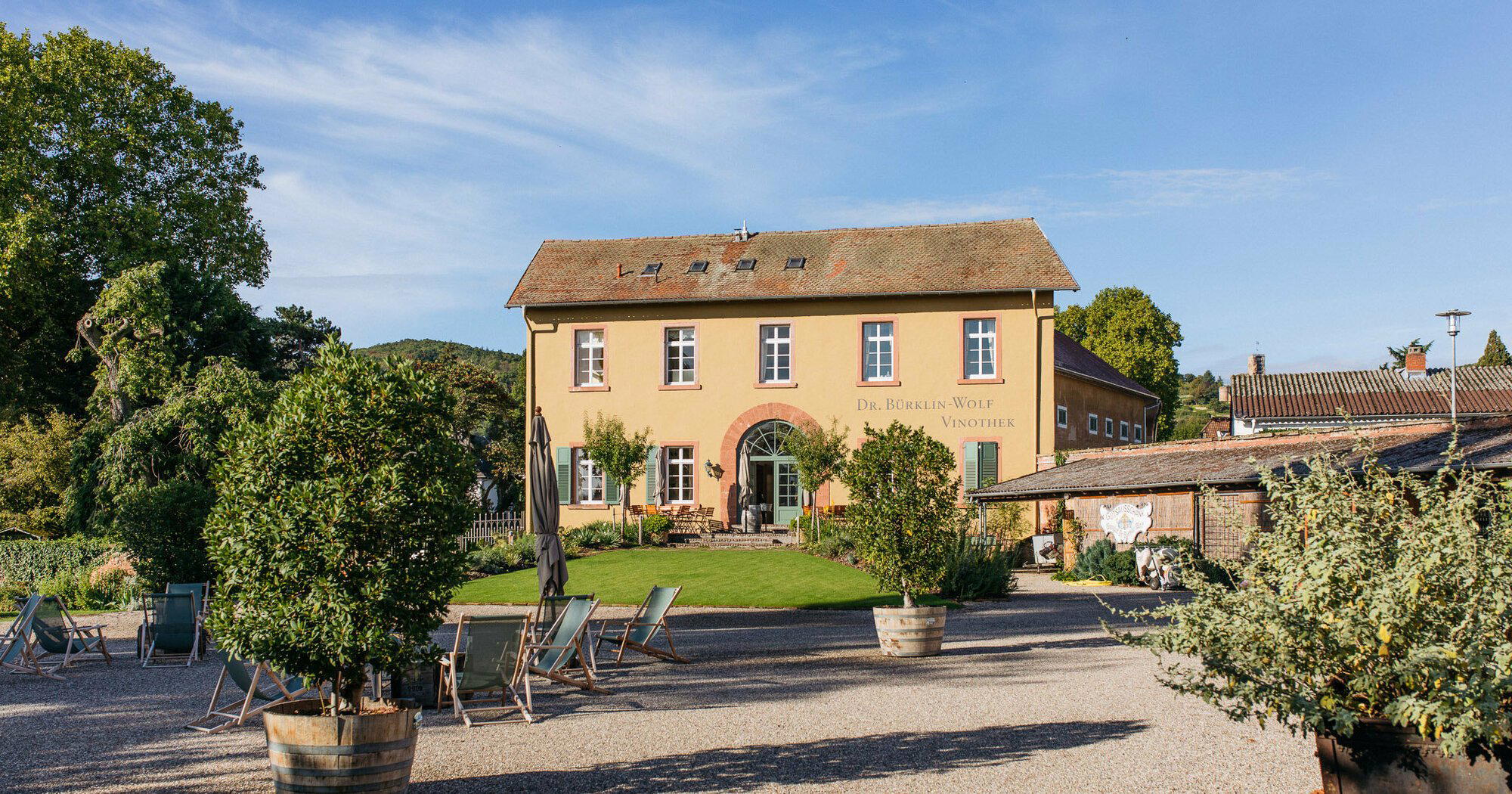
Nearby, Weingut Philipp Kuhn operates from the same village, making Laumersheim a two-estate destination for anyone making the drive north along the Deutsche Weinstraße. The concentration of quality in a single small village is unusual enough to justify the detour from the better-known Mittelhaardt addresses. For those building a broader Pfalz itinerary, the combination of Laumersheim's northern estates with the historic prestige of Weingut Dr. Bürklin-Wolf in Wachenheim an der Weinstraße offers a useful cross-section of the region's range.
The village is small enough that arriving without advance contact is a reasonable strategy during harvest season, though the estate's prestige-tier status suggests that appointment-based visits may yield more depth than walk-in access.
The Pfalz in a Wider German Context
Germany's wine regions compete on different axes. The Mosel's slate-driven Rieslings carry an acidity architecture that has defined the country's fine wine reputation internationally. Franken, represented by estates like Weingut Bürgerspital zum Heiligen Geist in Würzburg, offers Silvaner-anchored wines with a different kind of mineral density. The Rheinhessen, where Weingut Battenfeld-Spanier in Hohen-Sülzen works with limestone-heavy soils, has developed a reputation for Riesling and Pinot Noir of genuine depth.
The Pfalz occupies a warmer, more southerly position in this map. Its growing season is longer, its yields historically higher, and its varietal range broader than most German regions. That breadth has sometimes worked against its prestige image: high-volume production from the region's cooperative sector has created a perception gap between what the Pfalz can produce and what it is often assumed to produce. For those tracking the same quality signal in other German regions, the Weingut Allendorf in Oestrich-Winkel and Weingut Grans-Fassian in Leiwen offer comparative reference points in the Rheingau and Mosel respectively.
Outside Germany entirely, the international fine wine circuit produces different reference points. Accendo Cellars in St. Helena and Aberlour in Aberlour represent entirely different traditions, but they share with Knipser a recognition-tier positioning that implies quality floors worth taking seriously.
Our full Laumersheim restaurants guide covers the broader village context for visitors planning extended stays in the northern Pfalz.
Planning Your Visit
Weingut Knipser is located at Hauptstraße 47, 67229 Laumersheim. Harvest season, typically running from late September through October in this part of the Pfalz, is one atmospheric time to visit the region, with the vineyards in active use and the broader Deutsche Weinstraße circuit operating at full tempo. Spring visits, from April onward, offer quieter access to the same estates and the chance to taste wines from the prior vintage before summer allocation moves them through trade channels.
Quick Comparison
Comparable venues nearby, for context on price, style, and recognition.
| Venue | Cuisine | Price | Notes |
|---|---|---|---|
| Weingut KnipserThis venue — the venue you are viewing | Spätburgunder, Pinot Noir | $$$ | Not listed |
| Weingut Philipp Kuhn | Riesling, Pinot Noir | $$$ | Laumersheim |
| Weingut Wittmann | Riesling, Pinot Blanc | $$$ | Westhofen |
| Weingut Müller-Catoir | Riesling, Scheurebe | $$$ | Haardt |
| Weingut Friedrich Becker | Pinot Noir, Chardonnay | $$$ | Schweigen-Rechtenbach |
| Weingüter Wegeler | Riesling, Pinot Noir | $$$ | Oestrich-Winkel |
Recognition history
Dated appearances from independent guides and award organizations, with the underlying list record or original source where available.
Falstaff Winery - 5 Stars
Falstaff
Continue exploring
More in Laumersheim
Wineries in Laumersheim
Browse all →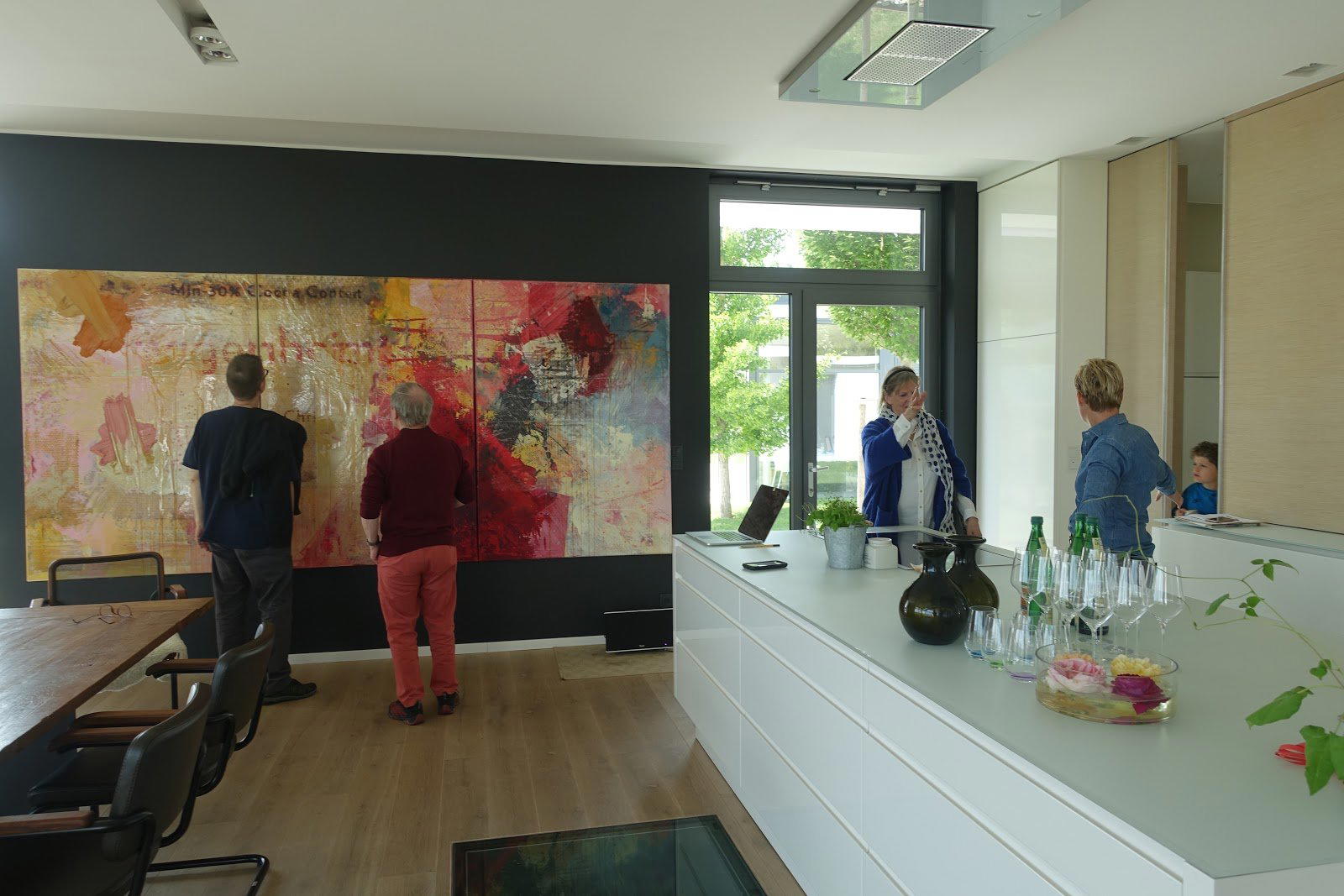
Bars in Laumersheim
Browse all →
Restaurants in Laumersheim
Browse all →
At a Glance
- Classic
- Elegant
- Sophisticated
- Scenic
- Wine Education
- Group Outing
- Special Occasion
- Estate Grounds
- Barrel Room
- Vineyard
- Pfalz
- Spätburgunder
- Pinot Noir
- Riesling
- Chardonnay
- Cabernet Sauvignon
- Merlot
- Cabernet Franc
- Syrah
- Still Red
- Still White
- Sparkling
- Wine Tasting
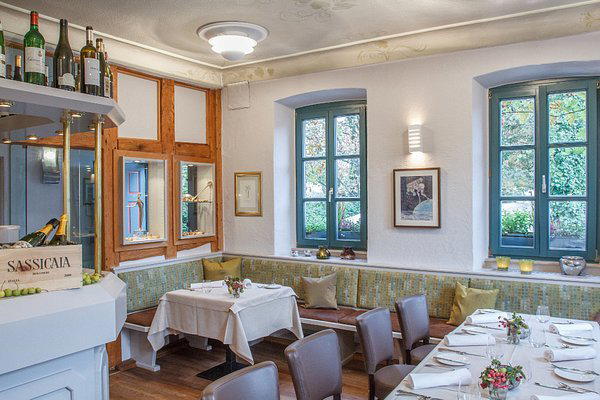
Professional and welcoming tasting room with knowledgeable staff; friendly and competent atmosphere that conveys passion for winemaking.