Tabelog 100 #64
Our verdict
Ochanomizu Ogawa Ken belongs to Tokyo’s practical yoshoku tradition: Western-derived cooking adapted to Japanese daily life, supported here by cake and café formats rather than ceremony. Its Tabelog 100 Yoshoku EAST 2025 selection, 20-seat scale, and modest JPY 1,000–1,999 pricing place it in a useful category for travelers who want Tokyo dining with craft, restraint, and low waste of time or money.

Pearl is the En Primeur Club membership app, where members save venues, book tables and use the concierge.
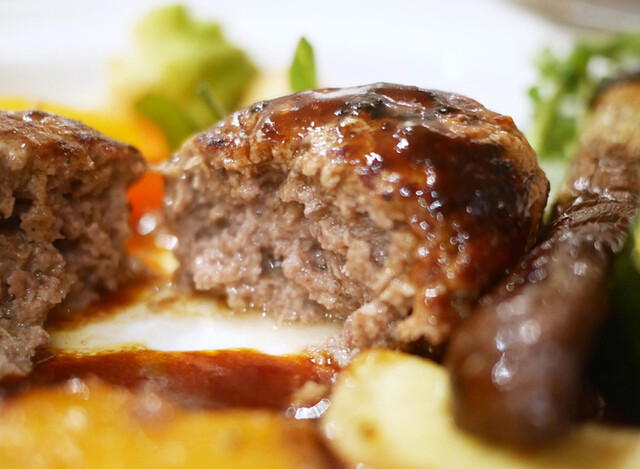
Approaching Ochanomizu Ogawa Ken in Tokyo, the mood shifts from transit urgency to a quieter, more everyday rhythm. Ochanomizu Ogawa Ken fits this terrain better than a flashier dining district. Its format spans restaurant, cake, and cafe uses, and its cooking belongs to yoshoku, Japan’s long conversation with Western dishes translated through local expectations of portion, sauce, rice, and everyday value.
Visitors often mistake yoshoku for retro comfort food alone. In Tokyo, it is also efficient discipline. A strong yoshoku room manages sauce work, frying, baking, cafe service, and repeat local custom without turning meals into productions. The sustainability angle is practical, not slogan-driven: smaller menus, daytime demand, and cake-and-cafe crossover can reduce the gap between kitchen output and actual use. No moral theatre of luxury sourcing is required; this is a format built around steady city consumption, not excess.
Yoshoku as Tokyo's low-waste luxury of restraint
Tokyo’s premium restaurant conversation often favors counters with high booking friction and tasting-menu economics. Yoshoku sits elsewhere: craft cooking with fewer barriers, sauces made for repetition, cakes and cafe service that extend kitchen use beyond one seating pattern, and prices that keep the audience broader than special-occasion diners. Ochanomizu Ogawa Ken’s published budget of JPY 1,000–1,999 for both lunch and dinner places it near everyday Tokyo spending rather than destination fine dining, while its Tabelog Hyakumeiten recognition for 2025 shows the category is judged seriously, not only nostalgically.
The comparison set clarifies its position. Takeya and Amanoya occupy similarly accessible Tokyo territory, and Honkatry sits in a comparable everyday band. à table belongs to a different, higher-spend bracket, useful as contrast: yoshoku is not trying to mimic formal French dining, even when it borrows Western technique. Rangitoto Tokyo points to Tokyo’s appetite for category-specific rooms. Against that spread, Ochanomizu Ogawa Ken reads as a focused specialist, not a prestige address. The recognition matters because it acknowledges cuisine whose value is measured in consistency, not spectacle.
The everyday scale reinforces the point. Tokyo rooms do not automatically need scarcity theatre; often they reflect fixed city economics, careful use, and a service model where steady demand matters. For travelers crossing town rather than locals fitting lunch into a workday, planning is sensible. The restaurant, cake, and cafe categories make the operation contemporary without losing old yoshoku grammar.
Tokyo gives the meal its context
Tokyo is not one dining mood, and that difference helps. The city’s quieter dining character is shaped by office workers, students, local regulars, and visitors moving between errands and appointments. Restaurants in this register are judged less by theatrical arrival than by how well they serve repeatable demand. A yoshoku address in this setting must be credible at lunch, as a cake stop, and for a modest dinner. That multi-use pattern helps explain why the cuisine endures in Tokyo while trend-led formats cycle through busier areas.
The format, combining restaurant, cake, and cafe roles, also reflects older urban logic: one address doing several jobs. In a city of varied restaurant footprints and persistent rent pressure, mixed-use food businesses often conserve space and labor better than single-purpose dining rooms. The sustainability story is embedded in structure, not carbon-accounting claims: a Tokyo operation serving several kinds of demand from one site.
For readers mapping a day here, the appeal is precision. Tokyo is the practical anchor, and the surrounding city rewards walking over taxis. Yoshoku here becomes a useful midpoint in a day that could otherwise default to convenience-chain eating. For a broader city dining map, use Our full Tokyo restaurants guide, while full-itinerary travelers can cross-reference Our full Tokyo hotels guide, Our full Tokyo bars guide, Our full Tokyo wineries guide, and Our full Tokyo experiences guide.
How to place it within a Tokyo food itinerary
This is not the venue for maximal ceremony. Choose it when the day calls for Japanese-Western cooking with evidence behind it: Tabelog Hyakumeiten recognition for 2025, a Tabelog score of 3.53, and a modest price band that makes planning reasonable. The craft sits in the category rather than chef mythology. No chef narrative is needed; yoshoku’s history supplies the frame.
A broader Tokyo itinerary should balance this meal with sharper contrasts. Other Tokyo dining rooms move toward different specialties, while curry houses and cafes show how adapted Western forms have become part of everyday Japanese eating. The point is not to rank every format against yoshoku, but to notice how quickly the city changes register, from focused cooking to visual cafe culture.
Outside this stop, the same category-specific logic carries across Tokyo and beyond. Diners can build days around focused formats, from cafe culture to curry, grilled dishes, or casual specialist counters, without needing every meal to become a luxury performance. Ochanomizu Ogawa Ken belongs to that map because it is specific, accessible, and grounded in a recognizable category.
The editorial case for Ochanomizu Ogawa Ken is simple: Tokyo dining need not be expensive to be serious. A yoshoku, cake, and cafe operation in Tokyo, recognized by Tabelog Hyakumeiten and priced for repeat use, teaches more about the city’s food culture than another overproduced special-occasion meal. It belongs on itineraries for travelers who care how Tokyo eats between its acclaimed counters.
Frequently asked questions
Is Ochanomizu Ogawa Ken suitable for children?
The restaurant is in Tokyo and serves yoshoku, cake, and cafe fare at accessible prices in the JPY 1,000–1,999 range. That format may suit families better than a formal counter dining room, though visitors should plan around the venue’s everyday style.
What kind of setting is Ochanomizu Ogawa Ken?
Expect a Tokyo venue built around yoshoku, cake, and cafe use. The setting is better understood as an everyday specialist than as a formal special-occasion dining room.
What's the pricing like at Ochanomizu Ogawa Ken?
Pricing at Ochanomizu Ogawa Ken is listed as JPY 1,000 - JPY 1,999 JPY 1,000 - JPY 1,999 View spending breakdown.
What's Ochanomizu Ogawa Ken's location?
Tokyo.
Should I book Ochanomizu Ogawa Ken in advance?
Planning ahead is sensible, especially for lunch or dinner, because Ochanomizu Ogawa Ken has Tabelog Hyakumeiten recognition for 2025 and sits in an accessible everyday price range.
What makes Ochanomizu Ogawa Ken worth seeking out?
Its case rests on consistency, not spectacle: Tabelog Hyakumeiten recognition for 2025, a Tabelog score of 3.53, and a modest JPY 1,000–1,999 budget for lunch and dinner. Add the Tokyo setting and the three-part category profile of yoshoku, cake, and cafe, and it reads as a disciplined everyday address with recognition.
How It Stacks Up
Comparable venues at the same tier for side-by-side context.
| Venue | Cuisine | Price | Awards | Notes |
|---|---|---|---|---|
| Ochanomizu Ogawa KenThis venue (the venue you are viewing) | Japanese Western / Yoshoku Cafe | $10–20 | Tabelog 100 #64 | Not listed |
| tonkatsu.jp表参道 | Premium Tonkatsu Specialist | $20–30 | Tabelog 100 #86 | Omotesando |
| Kaneko Hannosuke (金子半之助) | Edo-style Tempura Rice Bowls (Tendon) | $10–20 | Not listed | Nihonbashi |
| Tomita at NRT | Japanese Ramen and Tsukemen | $10–20 | Not listed | Narita Airport |
| 鮨・四季創作 心陽 (こはる) | Fresh Sushi & Seafood Bowls | $10–20 | Not listed | Harajuku / Kita-Sando |
| Amanoya | Traditional Japanese sweets café & okonomiyaki | $20–30 | Tabelog 100 | Chiyoda |
Recognition history
Dated appearances from independent guides and award organizations, with the underlying list record or original source where available.
Tabelog 100 #64 · No. 64
Tabelog · Tabelog 100 - Yoshoku - EAST - 2025