
A Michelin Plate-recognised address on Rue Guillaume Puy, Numéro 75 occupies Avignon's mid-range traditional cuisine tier alongside La Fourchette, where the emphasis falls on Provençal cooking executed with discipline rather than spectacle. It reads as a reliable, practised room rather than a destination for novelty-seekers.
Pearl is the En Primeur Club membership app — saves, bookings, and concierge access live there. Same editors, same standards.
- Address
- 75 Rue Guillaume Puy, 84000 Avignon, France
- Phone
- +33 4 90 27 16 00
- Website
- numero-75.com
- Directions
- Get directions
 Saves & bookings on Pearl
Where Traditional Provençal Cooking Finds Its Register
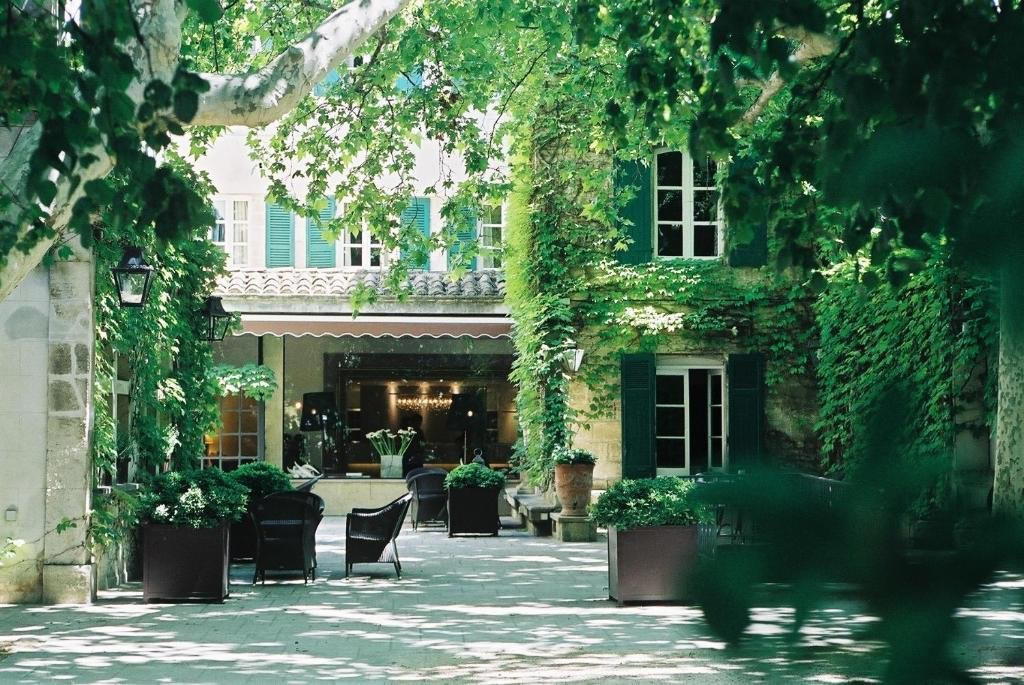
Numéro 75 is a restaurant on Rue Guillaume Puy in Avignon's walled city, serving Seasonal French Market Bistro cooking at the €€ tier. The street has the character of a neighbourhood that feeds actual residents rather than performing for visitors, and that context shapes what Numéro 75 is. The building sits in the kind of Southern French streetscape where shuttered facades and plane-tree shade do more architectural work than any interior decorator could. Before you step inside, the setting already tells you something about the register: this is a room that takes the food seriously without using the space as a stage set.
That distinction matters in a city like Avignon, where the dining options now span from high-capital modern cuisine at addresses such as Pollen and La Vieille Fontaine down to tourist-adjacent brasseries content to coast on the city's festival traffic. Numéro 75 occupies the middle band of that range: traditional cuisine, €€ pricing, Michelin Plate recognition in both 2024 and 2025. The Michelin Plate, awarded to restaurants producing good cooking without the star infrastructure, is a signal worth reading carefully. It indicates a kitchen applying genuine technique to accessible formats, the kind of restaurant that a food-literate traveller returns to rather than merely checks off.
The Collaborative Engine: Kitchen, Floor, and Cellar
In French traditional cuisine houses operating at the €€ tier, the kitchen rarely works in isolation from the dining room. The restaurants that hold Michelin Plate recognition across consecutive years, as the restaurant has done through 2024 and 2025, tend to do so because the front-of-house team amplifies what the kitchen produces rather than simply delivering plates. At this price point, the margins that allow for extensive brigade depth don't exist, which means each person working the room carries more weight. The sommelier or floor lead at a house like this is often the one who shapes the final experience: reading the table, calibrating the pace, steering wine choices toward Rhône producers that suit the cooking rather than the margin.
Avignon sits at the gateway to some of France's most food-sympathetic wine country. Châteauneuf-du-Pape, Gigondas, and Vacqueyras are all within reach, and a room focused on traditional Provençal cooking has strong logic for building its list around southern Rhône appellations. The pairing discipline at this kind of address, when it works, is less about formal sommelière theatre and more about the accumulated knowledge of a tight team that has worked the same menu repeatedly and knows which glass shifts a dish from competent to considered.
This team-led model contrasts with the chef-as-singular-auteur framing that dominates coverage of high-end French restaurants. Compare the comparable set: La Mirande operates with the formal infrastructure of a grand hotel, Acte 2 sits in the modern cuisine bracket where tasting-menu architecture places the chef at the centre. The restaurant, like La Fourchette, belongs to a different tradition: the French neighbourhood restaurant where the whole operation functions as a unit and the guest's experience is assembled in the room as much as on the pass.
Traditional Cuisine in the Provençal Frame
Traditional French cuisine at the Michelin Plate level in a city like Avignon generally means cooking anchored in regional produce and classical technique, executed without extensive innovation but with the kind of accuracy that distinguishes a serious kitchen from a competent one. Provence contributes a strong larder: olive oils from Les Baux, lamb from the Crau plain, vegetables from the Vaucluse market gardens, and coastal fish from within reasonable driving distance. A kitchen working this geography honestly doesn't need to import novelty from elsewhere.
The distinction between this approach and the modern cuisine direction taken by Pollen or Sevin (€€€) is not simply one of ambition. Traditional cuisine, when done with rigour, makes different demands: the flavours are more transparent, the technique has fewer places to hide, and the margin for under-seasoning or mistimed cooking is smaller. Michelin Plate recognition across two consecutive years at a €€ price point is evidence that the kitchen at the restaurant has been meeting those demands consistently, not occasionally.
For context on where this sits within the broader French traditional cuisine conversation, that Michelin Plate addresses in provincial cities often operate at a higher practical standard than their star-free status suggests. Restaurants like Auberge Grand'Maison in Mûr-de-Bretagne illustrate how seriously the Guide takes cooking quality independent of the formal star hierarchy. The Plate is not a consolation; it is a recommendation in its own right.
Planning a Visit: What the Numbers Tell You
That volume and score combination, for a single-site neighbourhood restaurant in a mid-sized French city, indicates consistent execution across a range of diners rather than a handful of peak experiences. For comparison, restaurants at the €€€€ tier such as La Vieille Fontaine or Pollen serve smaller numbers by format, so their review volumes reflect different dining populations.
The €€ pricing places the restaurant accessibly within the Avignon dining range, making it a practical choice for a weekday dinner during the Festival d'Avignon in July, when the city fills and higher-end rooms book out weeks in advance. The address on Rue Guillaume Puy is walkable from the walled centre, and the neighbourhood character means it functions as well for a quiet evening as for a meal embedded in a longer Avignon programme.
Paul Bocuse's Auberge du Pont de Collonges, Bras in Laguiole, Troisgros in Ouches, Flocons de Sel in Megève, Mirazur in Menton, and Alléno Paris au Pavillon Ledoyen.
Compact Comparison
Comparable venues nearby, for context on price, style, and recognition.
| Venue | Cuisine | Price | Notes |
|---|---|---|---|
| Numéro 75This venue — the venue you are viewing | Traditional Cuisine | $$$ | Not listed |
| Le Goût du Jour | Intra-muros, Modern Provençal French | $$$ | Not listed |
| La Fourchette | Not listed | $$ | historic city centre, Provençal French Bistro |
| Bibendum | Intra-muros, Modern French Bistronomique | $$$ | Not listed |
| Première édition | Not listed | $$$ | centre historique, Modern French Bistronomique |
| Le Joat | Not listed | $$$ | Old Avignon, Modern French Seasonal Fine Dining |
Recognition history
Dated appearances from independent guides and award organizations, with the underlying list record or original source where available.
Michelin Plate
Michelin
Michelin Plate
Michelin
Continue exploring
More in Avignon
Restaurants in Avignon
Browse all →
Bars in Avignon
Browse all →
Hotels in Avignon
Browse all →
At a Glance
- Cozy
- Elegant
- Intimate
- Scenic
- Date Night
- Special Occasion
- Terrace
- Courtyard
- Historic Building
- Extensive Wine List
- Local Sourcing
- Garden
Current opening hours
- Monday
- 12–2:30 PM, 7–10 PM
- Tuesday
- 12–2:30 PM, 7–10 PM
- Wednesday
- 12–2:30 PM, 7–10 PM
- Thursday
- 12–2:30 PM, 7–10 PM
- Friday
- 12–2:30 PM, 7–10 PM
- Saturday
- Closed
- Sunday
- Closed
Hours can change for holidays and private events. Last verified .
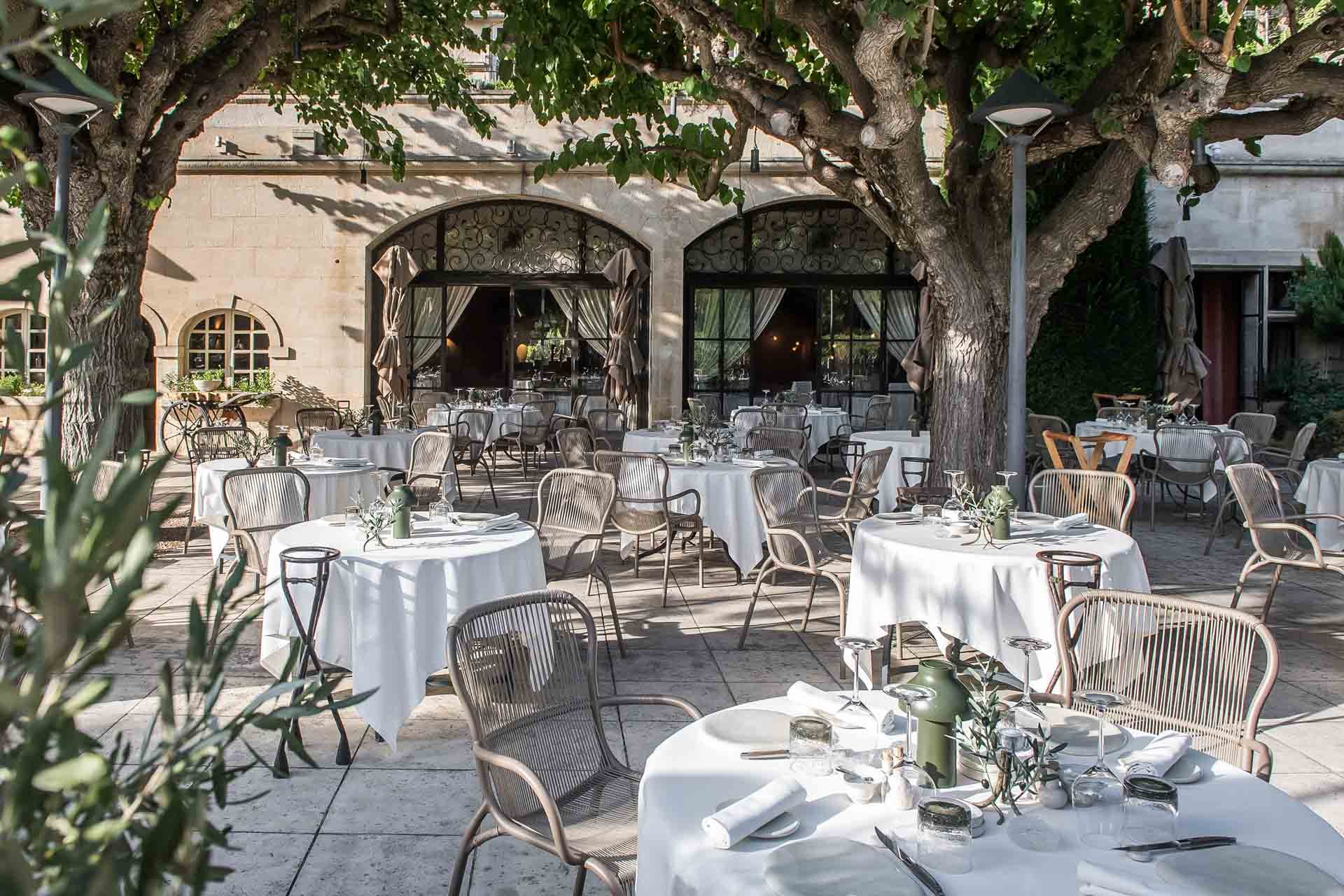
Warm, convivial atmosphere in a verdant, shaded courtyard with climbing plants; lively interior colors in historic setting.