Our verdict
A Bambalapitiya address places this venue inside one of Colombo's most food-dense residential corridors, where Sri Lankan home cooking traditions and imported influences have long intersected. Cross-reference with our Colombo guide before booking.

Pearl is the En Primeur Club membership app, where members save venues, book tables and use the concierge.
Bambalapitiya and the Dining Logic of Colombo's Southern Corridor
Colombo's restaurant scene does not distribute evenly. The city's most interesting eating tends to concentrate in a band running south from Fort through Kollupitiya and into Bambalapitiya, where older residential streets and commercial strips produce a different kind of dining density than the Cinnamon Gardens hotel cluster to the north. Bambalapitiya specifically has long functioned as a middle zone: not tourist-facing, not aggressively upscale, but consistently populated by the kind of neighbourhood restaurants that serve a local clientele with clear expectations about ingredient quality and price. That context matters when assessing any venue operating from a Colombo 3 address.
Sri Lanka's food supply chain has become a more frequent editorial subject in recent years, and for good reason. The island's short distances between coast, hill country, and lowland agricultural zones mean that a Colombo kitchen drawing on local sourcing has access to a supply line that most South and Southeast Asian cities cannot match for variety. Sprats from the Negombo lagoon, jak fruit from the Western Province, highland greens from Nuwara Eliya, and reef fish from the southwest coast can all, in principle, reach a Colombo kitchen within hours. Whether a given venue is actually structured to take advantage of that supply chain is the more important question, and one that no database entry alone can answer.
Ingredient Sourcing and What It Signals in Colombo Dining
The sourcing question is particularly relevant in a city where the gap between restaurants that engage with Sri Lanka's agricultural calendar and those that default to imported commodity ingredients is wide and not always legible from price or presentation. At the upper end of the Colombo market, venues like Ministry of Crab have built a large part of their identity on a specific sourcing commitment, centering Sri Lankan lagoon crab caught and transported under documented conditions. That is an unusually explicit sourcing claim for the regional market, and it sets a standard against which other Colombo restaurants are increasingly measured, fairly or not.
Further along the sourcing spectrum, venues operating in the mid-range of Colombo's residential neighbourhoods often source through Pettah market or directly from supplier relationships built over years. The practical result is that seasonal availability rather than menu engineering tends to drive what appears on the table. This is not a weakness in the Sri Lankan context: it is, in fact, closer to how the island's leading home kitchens have always operated, where the morning's catch or the week's vegetable delivery shapes the meal rather than the reverse. Venues in Bambalapitiya with roots in that tradition are worth understanding on those terms.
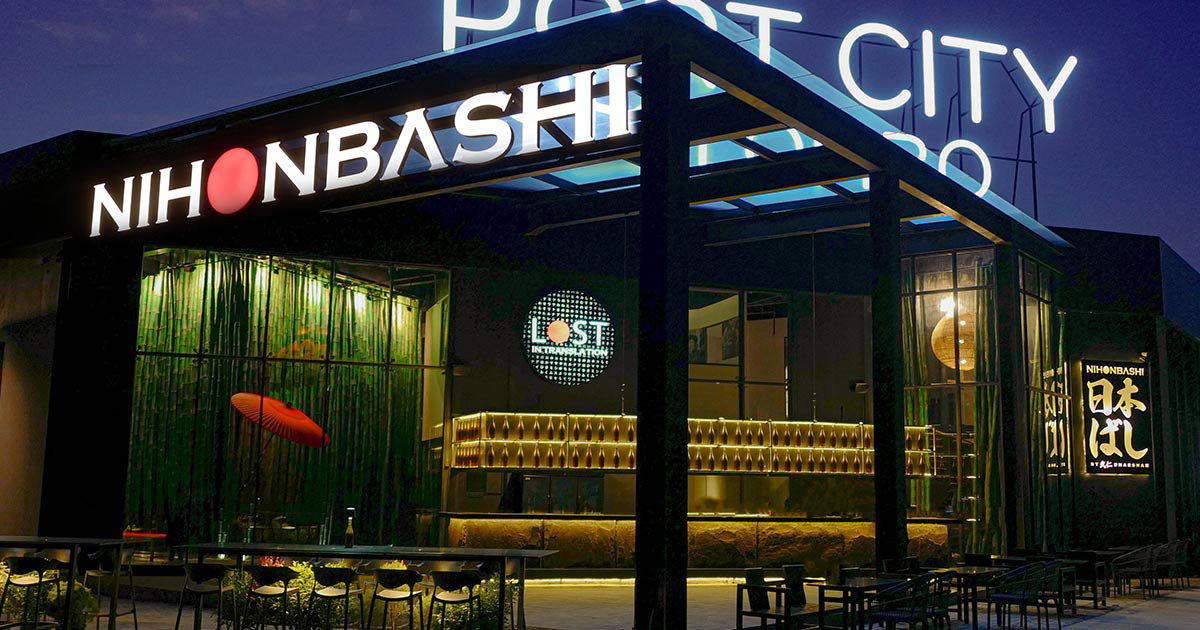
For a comparative sense of how Sri Lankan sourcing philosophy plays out across formats and price points, the contrast between Nihonbashi's precision-led kitchen and the more informal registers found across Bambalapitiya is instructive. Nihonbashi's long-standing position in the Colombo market reflects a different kind of sourcing logic, one oriented toward imported technique applied to local produce. The neighbourhood restaurants of Colombo 3 generally invert that priority.
Colombo 3 on the Ground: What the Postcode Tells You
A Colombo 3 address in Bambalapitiya carries practical implications beyond cuisine type. The neighbourhood is accessible by tuk-tuk from most central Colombo points in under fifteen minutes outside peak traffic, and by the commuter rail line that runs along the coast from Fort, with Bambalapitiya station serving the area directly. This accessibility has historically kept the neighbourhood's restaurants oriented toward repeat local trade rather than destination dining, which in turn shapes pricing and format expectations.
Venues here tend not to require advance booking weeks ahead, unlike the tighter-capacity counters that have emerged in the hotel-adjacent districts. For reference, the experience of planning a meal at The Gallery Café or The Bayleaf involves a different set of logistics than arranging dinner in a neighbourhood like Bambalapitiya, where walk-in culture remains common and tables turn across a longer service window. Whether that applies specifically to this venue cannot be confirmed from available data, and direct contact before visiting is advisable.
For those building a longer Sri Lanka itinerary, the island's dining scene extends well beyond Colombo. AQUA Forte in Galle and Cape Weligama in Weligama represent how coastal sourcing and kitchen ambition intersect outside the capital, while The Theva Cuisine in Kandy offers a hill country perspective on Sri Lankan ingredients. Venues in the north, like U.S. Restaurant in Jaffna, reflect an entirely different agricultural and culinary tradition from the island's south and west.
Reading the Colombo Restaurant Market in 2024 and 2025
Colombo has attracted increasing editorial attention from international food media since 2022, partly driven by Sri Lanka's broader return to tourism following the economic crisis of that year, and partly by a genuine shift in how the city's kitchens are approaching the question of local identity. The pressure to serve a cuisine that makes legible sense to foreign visitors while maintaining credibility with a domestic audience that has its own reference points is one that Colombo restaurants are negotiating with varying degrees of success.
The venues drawing the most attention internationally, including those that have appeared in regional iterations of the 50 Best platform and in Asia-focused food journalism, tend to share a common trait: they treat Sri Lankan ingredients not as background material for a fusion exercise but as the primary subject of the kitchen's work. Nana's and the wider set of locally rooted Colombo restaurants operate in this territory, each finding a different answer to the same underlying question about what contemporary Sri Lankan cooking should look like when it is taken seriously on its own terms rather than filtered through a tourist expectation or a Western fine-dining template.
For a broader orientation to what Colombo's restaurant scene currently offers across formats and price points, our full Colombo restaurants guide covers the city's dining geography in more detail. Venues elsewhere in the region, from COAST in Yala to Nelum Kole in Thimbirigasyaya, extend the picture into Sri Lanka's more remote eating contexts. For those whose dining references extend to formats like Le Bernardin in New York or Lazy Bear in San Francisco, the distance between those kitchens and a Bambalapitiya neighbourhood restaurant is not just geographical: it reflects a fundamentally different relationship between sourcing, format, and the expectations a kitchen is trying to meet.
Planning Your Visit
The Bambalapitiya postcode is direct to reach from central Colombo, and the neighbourhood has enough dining density that a visit to the area can be structured around multiple stops if a first choice is unavailable or closed. Cross-referencing with Crystal Jade, Kim's Family Korean, and Laya Safari for regional context may also be useful depending on your wider itinerary. Coconut Sambol similarly reflects how Sri Lankan staple ingredients are being treated as primary subjects rather than supporting material across the island's evolving restaurant culture.
Frequently asked questions
Does this Bambalapitiya restaurant work for a family meal?
A Colombo 3 address in Bambalapitiya is accessible by tuk-tuk from most central areas, which lowers the friction for group visits.
What's the address for Not available?
Not available is located at Bambalpitya, Colombo 00300, Sri Lanka, Colombo.
Should I book Not available in advance?
Reservations are recommended for Not available in Colombo. Confirm current policy via the venue's official channels.
What's the vibe at this Bambalapitiya restaurant?
Bambalapitiya sits within the band of Colombo neighbourhoods that has drawn the most editorial attention from international food media since 2022, as tourism and dining investment returned to Sri Lanka.
| Venue | Cuisine | Price | Awards |
|---|---|---|---|
| Not availableThis venue (the venue you are viewing) | This venue | Not listed | Not listed |
| Ministry of Crab | Sri Lankan Mud Crab Seafood | $50–100 | World's 50 Best #94 |
| Nana's | Sri Lankan Street Food | Not listed | Not listed |
| Nihonbashi | Authentic Japanese Fine Dining | $30–50 | Not listed |
| The Bayleaf | Authentic Italian in Colonial Villa | $10–20 | Not listed |
| The Gallery Café | Sri Lankan Fusion | $10–20 | Not listed |
Continue exploring