
Nose to Tail puts Tokyo yakiniku into a compact Kagurazaka format: counter-only, reservation-only, and priced in the JPY 15,000 to JPY 19,999 dinner tier. Its Tabelog 100 Yakiniku Tokyo selections in 2023, 2024, and 2025 place it among the city’s more closely watched grill counters, where repeat diners value sequence, pacing, and cut selection over spectacle.
Pearl is the En Primeur Club membership app — saves, bookings, and concierge access live there. Same editors, same standards.
- Address
- Japan, 〒162-0825 Tokyo, Shinjuku City, Kagurazaka, 3 Chome−2-6 3階
- Phone
- +817084910829
- Website
- restaurant.ikyu.com
- Directions
- Get directions
 Saves & bookings on Pearl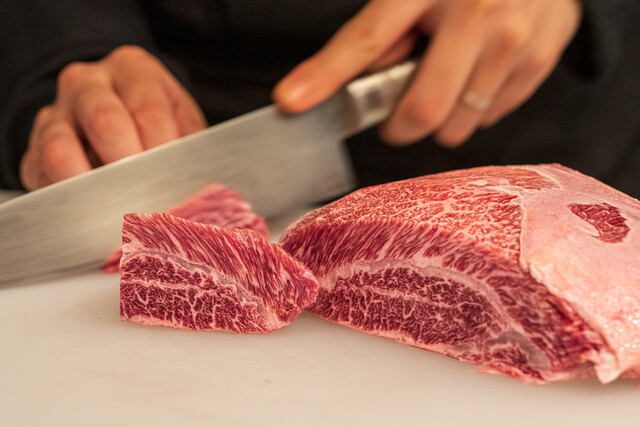
Kagurazaka changes register quickly after dark: the slope, the side streets, the shift from izakaya noise to smaller rooms above street level. In that setting, Tokyo yakiniku has been moving away from the large-table, smoke-heavy model toward compact counters where the grill becomes part of the meal’s rhythm. Nose to Tail belongs to that newer bracket: a small, counter-only yakiniku room in Shinjuku’s Kagurazaka area, built for diners who already understand that the point is not volume, but control.
The regulars’ logic is easy to read. Tokyo has plenty of beef restaurants for celebratory excess, but the more serious repeat trade tends to return to places that manage pacing, heat, and portioning with discipline. Counter yakiniku narrows the margin for error. Cuts arrive in sequence rather than as a pile of plates, the cookery is watched closely, and the room’s scale makes the evening feel closer to a kappo counter than a standard grill restaurant. That format explains why a small yakiniku address can carry more weight than a larger dining room with a longer menu.
Counter yakiniku for diners who care about sequence
Yakiniku in Tokyo sits on a broad spectrum, from casual post-work tables to expensive wagyu-focused counters. The higher tier is less about novelty than about editing: how many cuts, how much seasoning, when leaner meat appears, when fat is allowed to dominate, and how the meal avoids fatigue. Nose to Tail’s name signals a whole-animal sensibility, but the editorial interest is the format around it. A counter compresses the meal into a line of decisions: grill temperature, timing, rest, sauce, salt, and the pause before the next piece.
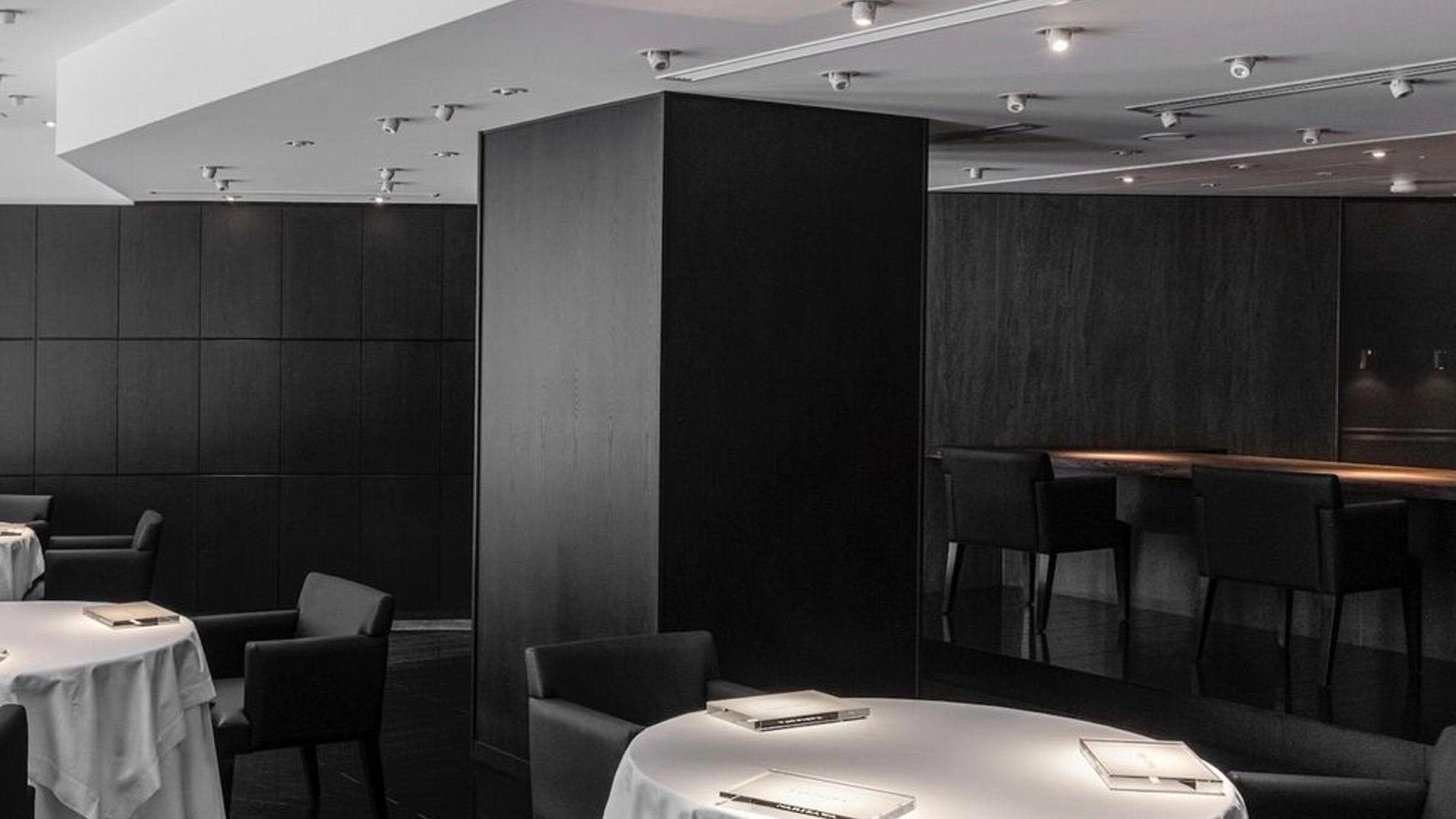
That matters in Kagurazaka, a neighbourhood with a habit of rewarding smaller, more deliberate restaurants. The area’s dining identity is neither Ginza formality nor Shinjuku sprawl. It is more intimate, more stairwell-driven, more dependent on regulars who know which floors matter. In that context, a 12-seat counter fits the district better than a grand room would. The limited capacity also changes the social contract. Diners are not anonymous in the room; pace, conversation, and attention carry more weight.
Recognition from Tabelog’s Yakiniku Tokyo 100 list in 2023, 2024, and 2025 gives the restaurant a clear trust signal within Japan’s user-review culture. Tabelog selections do not function like Michelin stars, and they should not be read as the same kind of endorsement. They do, however, matter for Tokyo diners because they map category depth. In a city where yakiniku competition is intense and highly local, repeated inclusion suggests sustained relevance rather than a single-year spike.
Where Kagurazaka's regulars place it
The useful comparison is not with sushi counters or French rooms, but with other Tokyo restaurants that ask diners to choose a specific mood before booking. Sushi Kagura sits in a different tradition entirely, where rice temperature, neta sourcing, and counter etiquette define the value proposition. Guchokuni points toward a broader Japanese dining register. LUGDUNUM Bouchon Lyonnais brings Kagurazaka’s French thread into view, a reminder that the neighbourhood has long supported serious restaurants outside the usual luxury hotel orbit. Nose to Tail belongs to the grill side of that map, but shares the same dependence on a small-room audience.
That regulars’ perspective is important because yakiniku can be misread by visitors as a simple premium-beef exercise. In Tokyo, the more compelling version is often cumulative. Diners return for calibration: a familiar room, a known level of control, and the confidence that the meal will not drift into excess. The absence of private rooms reinforces the point. This is not a sealed-off business-dinner restaurant; it is a counter experience where the format is exposed.
Price also positions the meal. The JPY 15,000 to JPY 19,999 dinner range places it well above casual yakiniku and below the city’s more extravagant luxury beef rooms. That middle-high band is crowded, so the counter format and repeated Tabelog recognition do much of the differentiating. For travellers, it is a stronger choice when the goal is to understand Tokyo’s contemporary yakiniku culture rather than simply add another expensive wagyu dinner to an itinerary.
How to fit it into a Tokyo dining week
A Kagurazaka dinner works differently from a Roppongi or Ginza evening. The neighbourhood rewards arriving with time to walk, especially around Iidabashi and the smaller lanes that climb away from the station. It also pairs well with a Tokyo itinerary that balances counter dining across categories: yakitori one night, sushi another, yakiniku here. For a fuller map of the city’s dining range, start with Our full Tokyo restaurants guide, then cross-check nearby or contrasting choices such as 124. KAGURAZAKA (Yakitori), 12/10 Shinjuku ten, 3 Chome no Curry Ya San, 2D Cafe, and. 鮪と炭火焼き うお炭 秋葉原店.
Travellers building a broader Japan route can use the same lens elsewhere: category, format, and neighbourhood matter more than a checklist of famous names. For regional contrasts, see -Grilled beef Sukiyaki- KAMAKURA TANUKIAN 鎌倉 たぬき庵 in Kamakura, [ki:] in Kyoto.cafe in Osaka.know in Kumamoto, (Shoku) Vietnam in Kawasaki, and [Curry Senmon Ten] Maruyama Kyoju. in Sapporo. For the wider trip architecture, the useful companion pages are Our full Tokyo hotels guide, Our full Tokyo bars guide, Our full Tokyo wineries guide, and Our full Tokyo experiences guide. Overseas Japanese-adjacent references such as Jōdo Saké Bar in Los Angeles and Onigiri Time in Pasadena show how differently Japanese formats translate once they leave Japan.
Snapshot
Comparable venues at a glance for context.
| Venue | Cuisine | Price | Notes |
|---|---|---|---|
| Nose to TailThis venue — the venue you are viewing | High-end Yakiniku & Offal (Nose-to-Tail Beef) | $$$ | Not listed |
| Kuzushi Teppan AVAGURA Kanda ten | Modern Teppanyaki | $$$ | Chiyoda |
| 伯雲 | Traditional Japanese Kaiseki | $$$ | Minato |
| Soba Sasuga | Traditional Ginza soba with 100% buckwheat noodles | $$$ | Chūō |
| Hon to Saya | Traditional Charcoal Yakiniku | $$$ | Taitō |
| 立喰 鮨となり | Standing Sushi | $$$ | Azabujuban |
Recognition history
Dated appearances from independent guides and award organizations, with the underlying list record or original source where available.
Tabelog 100 #34 · No. 34
Tabelog · Tabelog 100 - Yakiniku - TOKYO - 2025









At a Glance
- Intimate
- Modern
- Elegant
- Date Night
- Special Occasion
- Business Dinner
- Group Dining
- After Work
- Chefs Counter
- Standalone
- Sake Program
- Local Sourcing
An intimate 12-seat counter with a calm, refined atmosphere where guests focus on charcoal-grilled premium meat; lighting and setting are modern and understated rather than flashy, creating a special-occasion feel.