Our verdict
Positioned on Amiens Street at The Address Connolly, NORTH occupies a stretch of Dublin 1 that has quietly accumulated serious dining ambition. The restaurant's kitchen-to-floor collaboration model places it within a broader shift in Irish hospitality toward integrated, team-led service. For context on what Dublin's current dining tier looks like, it belongs in a conversation with the city's better modern tables.

Pearl is the En Primeur Club membership app — saves, bookings, and concierge access live there. Same editors, same standards.
- Address
- Amiens St, Mountjoy, Dublin 1, D01 X6P6, Ireland
- Phone
- +4401412606471
- Hours
- Mon–Wed 12–8:45 PMThu–Fri 12–9:45 PMSat 12–9:30 PMSun 12–9:45 PM
- Website
- northeatery.com
- Directions
- Get directions
- Booking
- Book on OpenTable
The menu
What to order
- Wood-Fired Pizza
- Fish and Chips
- McGETTIGANS STEAK BURGER
Amiens Street and the Northside's Changing Dining Register
For most of Dublin's restaurant history, the serious dining conversation stayed south of the Liffey. Merrion Street, Stephen's Green, and the Georgian southside concentrated the city's Michelin holders, its long-standing French institutions, and its higher-spend tables. The northside, and Dublin 1 in particular, operated at a different register: casual, neighbourhood-led, transit-adjacent. That pattern has been shifting. Amiens Street, running from Connolly Station toward the docklands, now sits inside a part of the city where investment in hospitality infrastructure and the arrival of hotel-anchored dining rooms have begun to raise the ambient quality of the offer. NORTH at The Address Connolly is part of that repositioning, operating from a hotel base on a street that would have been an unlikely address for considered dining a decade ago.
Hotel restaurants in Ireland occupy an awkward position in the critical imagination. The category carries associations with buffet breakfast service and banquet catering that the more ambitious properties have spent years trying to shed. The approach that has worked, in Dublin and in comparable European capitals, involves decoupling the restaurant from the hotel's general service culture: dedicated kitchen leadership, a front-of-house team with its own identity, and a food and wine program that operates with the same logic as a standalone site. Whether a given hotel restaurant achieves that separation is the central question for any serious diner considering it. For context, the most credentialed examples in Ireland's hotel dining sector, including Lady Helen in Thomastown and Terre in Castlemartyr, have made that case through sustained kitchen programmes and consistent critical recognition.
The Team Dynamic as the Structural Argument
The most durable argument for any restaurant in this tier is not a single chef's biography but the coherence of its team. Dublin's strongest modern tables have increasingly been defined by what happens between the kitchen, the floor, and the cellar. At Chapter One by Mickael Viljanen, the front-of-house and kitchen work at a tempo that is calibrated rather than choreographed. At Glovers Alley and D'Olier Street, the wine program contributes editorial weight to the meal rather than functioning as an afterthought. The same test applies to NORTH: the quality of service integration, the willingness of the floor team to translate what the kitchen is doing into something legible for the guest, and the degree to which the sommelier's choices are in dialogue with the cooking rather than simply running parallel to it.
This team-led model represents a maturation in Irish hospitality that has accelerated since roughly 2015. The era of the solo-star kitchen, where a single named chef carried the entire critical weight of a restaurant, has given way to something more distributed. Producers, fermenters, and floor teams now share the editorial frame in how serious Irish restaurants present themselves. That shift is visible across geographies: Aniar in Galway has built its reputation on a tight connection between the kitchen's terroir philosophy and the front-of-house's ability to narrate it. Bastible on Leonard's Corner operates with a similar integration, where the floor reads as a considered extension of the kitchen's sensibility rather than a separate department. NORTH's location within a hotel property makes this integration both harder to achieve and more consequential when it lands, since the gravitational pull of general hotel service culture is always present.
Dublin 1 in the Wider Irish Dining Map
Southside Dublin holds the densest concentration of awarded tables. Patrick Guilbaud on Merrion Street remains the city's senior Michelin address, two stars held over a long arc. The modern Irish tier has its strongest cluster in the inner southside and along the canal. North of the Liffey, the serious dining offer is thinner, which means NORTH is operating with less immediate competition in its immediate neighbourhood but also with less of the ambient credibility that proximity to a known dining district provides.
Nationally, Ireland's restaurant culture has developed a strong provincial tier over the past decade. Liath in Blackrock, dede in Baltimore, Bastion in Kinsale, Chestnut in Ballydehob, Homestead Cottage in Doolin, Campagne in Kilkenny, and House in Ardmore all demonstrate that the most interesting Irish cooking is no longer concentrated in the capital. Dublin's advantage remains in volume, diversity, and accessibility for international visitors arriving through Connolly or the city's hotels. NORTH's address, directly adjacent to Connolly Station, positions it as a practical first or last stop for rail and ferry travellers as much as a destination for local diners. For a broader orientation, our full Dublin restaurants guide maps the city's current dining character across neighbourhoods and price points.
International Reference Points and What They Signal
The turn toward team-led, integrated dining rooms is not an Irish phenomenon alone. At the highest international level, places like Le Bernardin in New York City have demonstrated for decades that the floor and the cellar can carry as much of a restaurant's identity as the kitchen. The Korean fine dining tier in New York, exemplified by Atomix, has taken that integration further, treating the dining room as an educational as well as a hospitality space. Irish restaurants operating in the considered tier increasingly reference these models, not by copying format but by taking the same underlying premise: that the guest's experience is shaped as much by how service teams communicate as by what arrives on the plate.
For a hotel restaurant on Amiens Street, the aspiration is more grounded than those international comparisons, but the structural logic is the same. A kitchen that is cooking with intention, a floor team that can hold a conversation about what and why, and a wine list that reflects considered buying rather than category filling: these are the signals that separate hotel dining rooms that are worth a deliberate visit from those that serve their function adequately but not memorably.
Know Before You Go
Planning Notes
- Address: Amiens St, Mountjoy, Dublin 1, D01 X6P6, Ireland
- Location context: Adjacent to Connolly Station, Dublin 1, northside city centre
- Hotel: The Address Connolly
- Booking: Contact the hotel directly; specific online booking at time of publication
- Price range: Not confirmed at time of publication; contact the venue for current menu pricing
- Practical note: Connolly Station is the immediate landmark; DART, Luas Red Line, and intercity rail all stop here, making the address one of the most accessible hotel dining rooms in the city
Frequently asked questions
What part of town is NORTH at The Address Connolly in?
NORTH at The Address Connolly is located at Amiens St, Mountjoy, Dublin 1, D01 X6P6, Ireland, Dublin.
How does NORTH at The Address Connolly compare to other hotel restaurants in Dublin city centre?
Most of Dublin's higher-profile hotel dining has historically concentrated south of the Liffey, around Merrion Street and St Stephen's Green. NORTH at The Address Connolly, located on Amiens Street in Dublin 1, occupies a different geography entirely, one where the competitive set is less dense and the hotel's direct rail connectivity to Belfast, Sligo, and the DART network brings in a more varied dining room demographic than a purely southside city-centre address would attract.
What's the best thing to order at NORTH at The Address Connolly?
Confirmed menu details are not available at time of publication, so a dish-specific recommendation would be speculation. At hotel restaurants operating at this tier in Dublin 1, the kitchen's strengths tend to emerge in produce-led dishes that reflect the Irish seasonal calendar. Arriving with an open brief and asking the floor team for their current preference is the more reliable approach.
Should I book NORTH at The Address Connolly in advance?
The Address Connolly sits directly on Amiens Street adjacent to Connolly Station, the main intercity rail hub serving Belfast, Sligo, and Wexford routes as well as DART coastal services. That positioning draws both hotel residents and transit-adjacent diners, which compresses availability at peak times. Booking ahead, particularly for weekend evenings, is the sensible move rather than relying on walk-in availability.
What has NORTH at The Address Connolly built its reputation on?
NORTH sits within a category of Dublin hotel dining rooms working to separate themselves from the generic hotel-restaurant model, where the floor and kitchen operate as an integrated unit rather than two disconnected departments. Its location in Dublin 1, on the Northside where serious dining attention has historically lagged behind the city's southside Georgian core, positions it as part of a broader shift in where the city's dining weight is moving.
Is NORTH at The Address Connolly good for vegetarians?
Modern Irish kitchens operating at this level in Dublin have largely moved away from token vegetarian options, with plant-led dishes often drawing from the same seasonal Irish produce sourcing as the broader menu. Contacting the restaurant directly via The Address Connolly hotel on Amiens Street, Dublin 1 is the reliable way to confirm current provision.
Is eating at NORTH at The Address Connolly worth the cost?
If the kitchen and floor are operating as a coherent unit, the cost-to-experience ratio at this category tends to sit more favourably than at destination-only standalone restaurants.
Credentials Lens
Comparable venues nearby, for context on price, style, and recognition.
| Venue | Cuisine | Price | Awards | Notes |
|---|---|---|---|---|
| NORTH at The Address ConnollyThis venue — the venue you are viewing | Modern European with Irish Produce | $20–30 | Not listed | Not listed |
| Alfies | Modern European & International | $20–30 | Not listed | Royal Exchange A |
| Coda Eatery | Modern European | Not listed | Not listed | North Dock B |
| Matt The Thresher | Irish Seafood Gastro Pub | Not listed | Not listed | Mansion House B |
| Bunsen | Classic American Burgers | $10–20 | World Best Burgers World's 101 Best Burgers #23 | Royal Exchange A |
| La Cosa Nostra | Authentic Italian Pizza & Pasta | $20–30 | Not listed | Merchants Quay A |
Continue exploring
More in Dublin
Restaurants in Dublin
Browse all →
Bars in Dublin
Browse all →

Hotels in Dublin
Browse all →
Wineries in Dublin
Browse all →
Details
- Modern
- Lively
- Cozy
- Brunch
- Group Dining
- Business Dinner
- Casual Hangout
- Hotel Restaurant
- Open Kitchen
- Craft Cocktails
- Local Sourcing
- A La Carte
- Craft Cocktails
- Vegetarian Friendly
- Vegan Options
- Gluten Free Options
Current opening hours
- Monday
- 12–8:45 PM
- Tuesday
- 12–8:45 PM
- Wednesday
- 12–8:45 PM
- Thursday
- 12–9:45 PM
- Friday
- 12–9:45 PM
- Saturday
- 12–9:30 PM
- Sunday
- 12–9:45 PM
Hours can change for holidays and private events. Last verified .
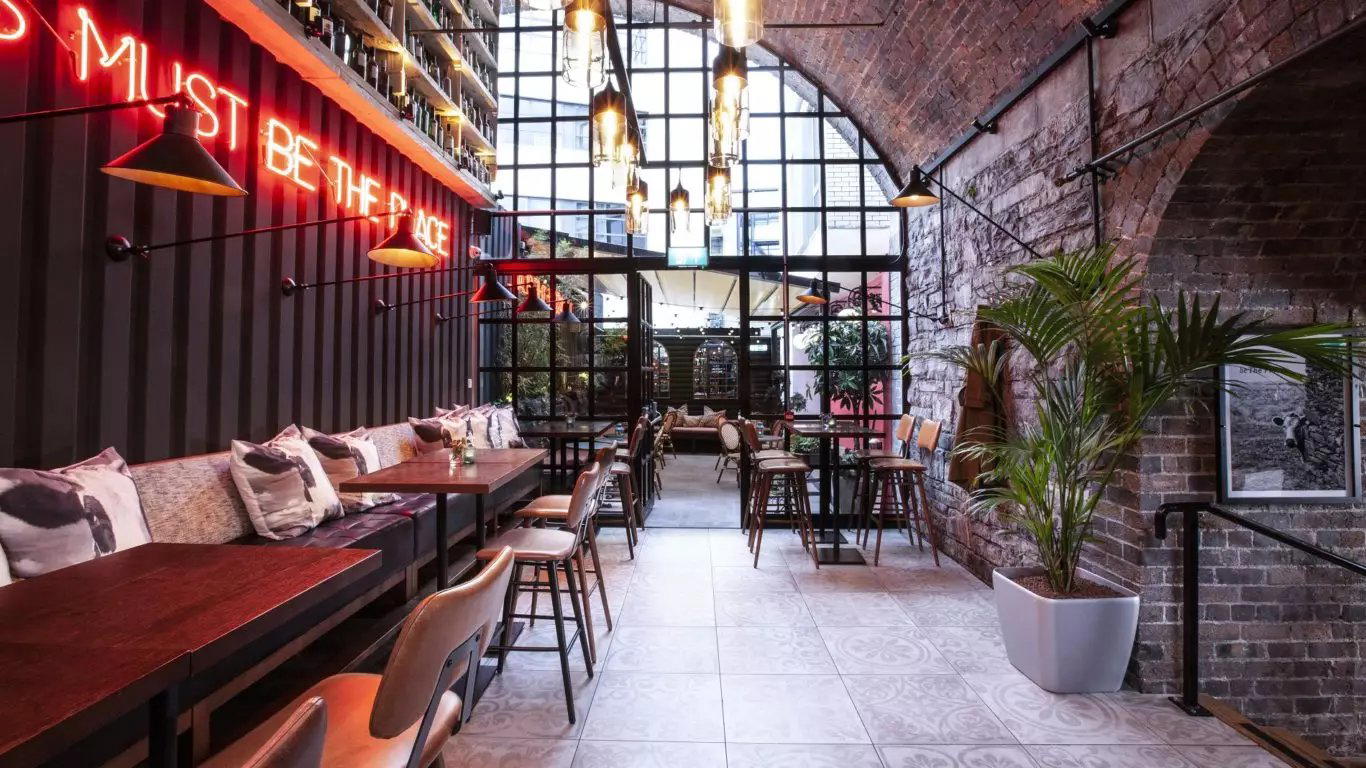
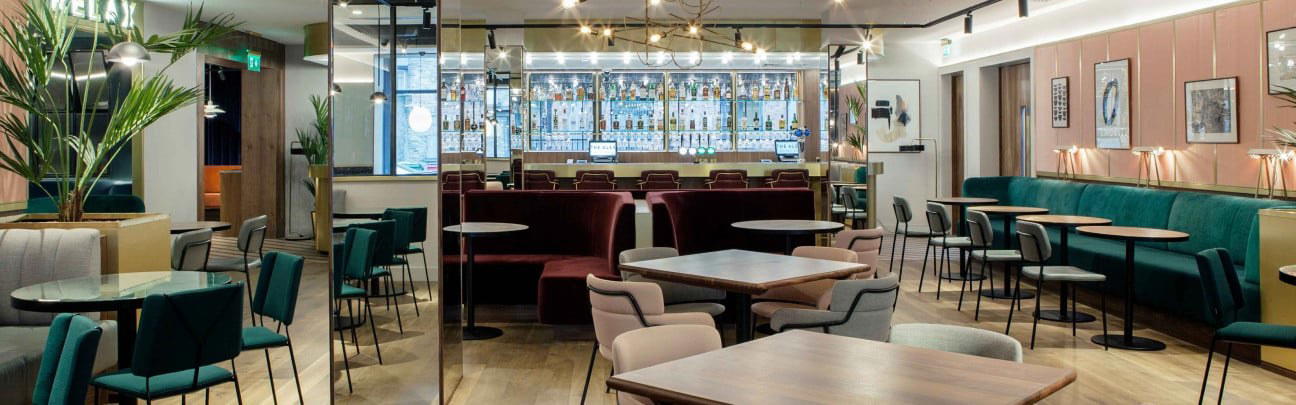
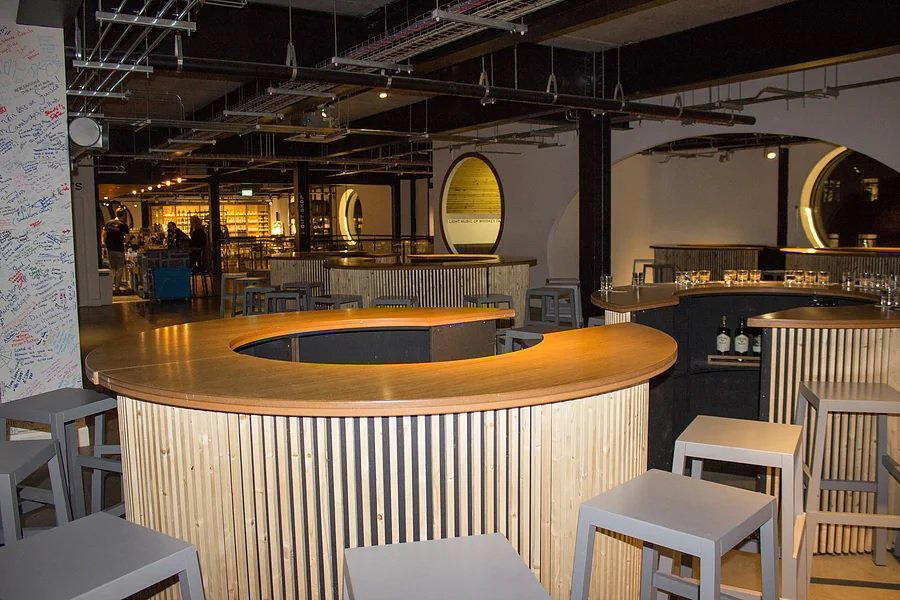
Lively seating with soft ambient lighting, striking bar, and warm welcoming atmosphere.