Náncsi Néni is a long-standing Budapest restaurant on Ördögárok utca in the Buda hills, trading in the kind of Hungarian home cooking that the city's fine-dining circuit has largely moved away from. Its address in the residential II. district sets the tone: this is a neighbourhood room with deep local loyalty rather than a destination built for visiting critics. Lunch and dinner here pull different crowds and serve different purposes.
Pearl is the En Primeur Club membership app — saves, bookings, and concierge access live there. Same editors, same standards.
- Address
- Budapest, Ördögárok u. 80, 1029 Hungary
- Phone
- +3613972742
- Website
- nancsineni.hu
- Directions
- Get directions
 Saves & bookings on Pearl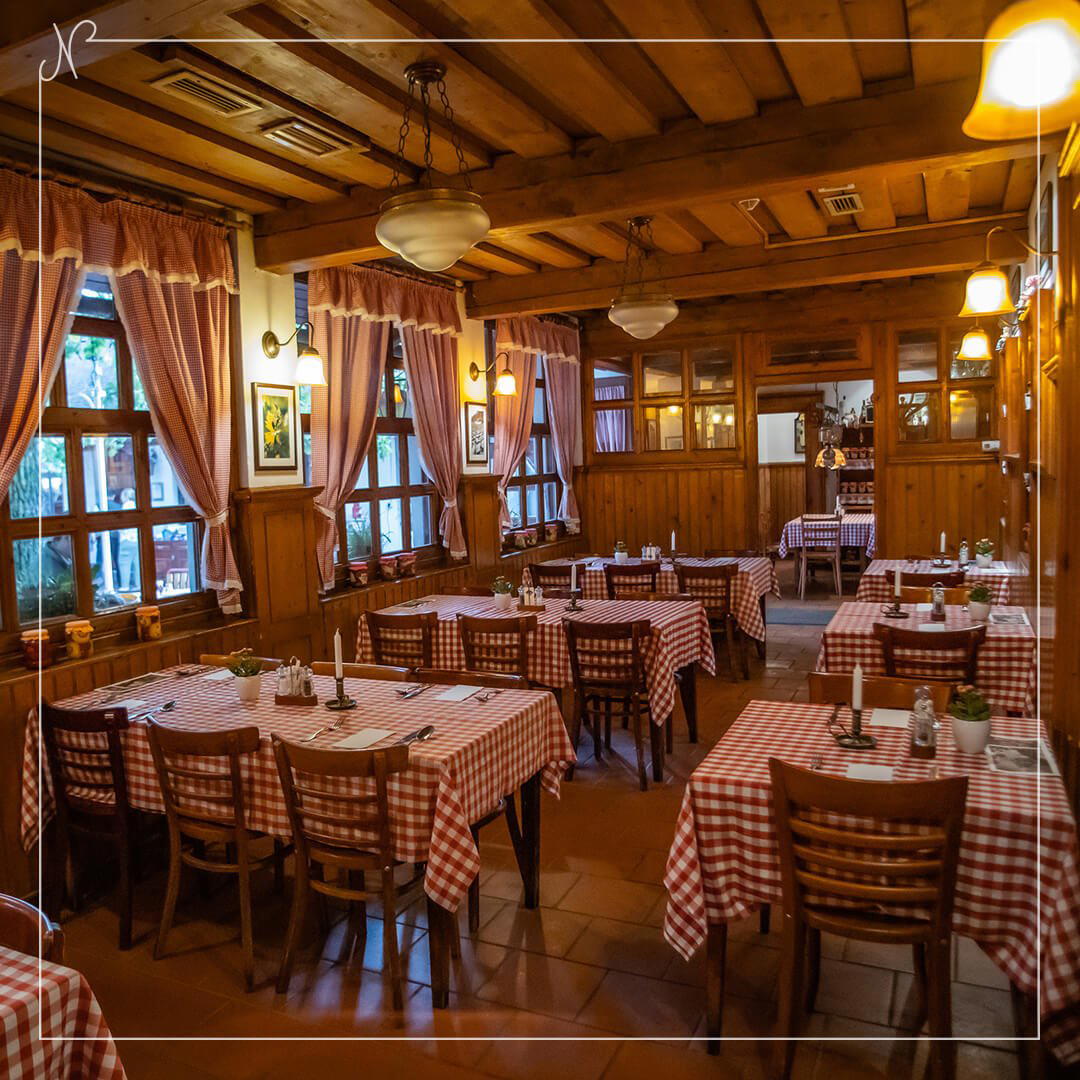
Buda's Quieter Side of the Table
Budapest's restaurant conversation tends to anchor itself in Pest: the modern rooms like Borkonyha Winekitchen and Costes, the tasting-menu formats at Stand and Babel. Across the river, the Buda hills operate on a different rhythm. Restaurants here draw a residential crowd rather than a tourist one, and longevity tends to matter more than novelty. Náncsi Néni on Ördögárok utca sits in this tradition: a room with deep roots in the II. district, offering Hungarian home cooking at a remove from the competitive pressures of the city centre fine-dining tier.
The address itself signals the register. Ördögárok utca runs through a quiet, leafy stretch of the Buda hills, a part of the city where locals go for a walk rather than a selfie. In a dining environment where properties like essência and Borkonyha Winekitchen compete for international recognition, Náncsi Néni operates in a parallel register entirely. Its competitive set is not the Michelin room but the trusted neighbourhood vendéglő, a category that Hungarian cities do well and that Budapest visitors with time to cross the bridge consistently find rewarding.
Lunch vs. Dinner: Two Different Restaurants
The lunch-versus-dinner divide runs through most traditional Hungarian restaurants, and Náncsi Néni is no exception to that pattern. Midday service in this part of Budapest draws working locals, families, and the occasional walker descending from the Buda hills. The mood at lunch in a room like this is functional and familiar: faster pacing, lighter ordering, the kind of meal that ends with an espresso and a return to the afternoon. Hungarian lunch culture still treats the midday meal as the main event of the day in a way that Western European cities have largely abandoned, and a traditional Buda vendéglő is one of the better places to observe that rhythm directly.
Evening service shifts the register. The Buda hills at night feel quieter than Pest by several degrees, and dinner here tends toward the unhurried. Tables fill with residents rather than visitors, the tempo slows, and the logic of ordering changes: more courses, more wine, less inclination to leave early. This split between a functional lunch and a sociable dinner is common across Hungary's traditional restaurant tier, and it shapes the experience in practical terms. Visitors coming specifically to understand Hungarian cooking in a local context will find dinner the more instructive service; those wanting a quick, affordable, and genuinely local midday meal will find lunch the more efficient option.
For comparable dining traditions outside Budapest, the pattern holds across the country. Restaurants like Aranysárkány Vendéglő in Szentendre and BoriMami in Gyöngyös operate in similar registers: regional Hungarian cooking, local loyalty, and a lunch trade that differs meaningfully from the evening crowd.
What Hungarian Home Cooking Actually Means Here
The term "home cooking" in the Hungarian restaurant context carries specific meaning that is worth unpacking. It does not describe informality of service or a simplified menu. It describes a culinary tradition built around slow-cooked meats, paprika-heavy sauces, layered stews, and seasonal produce handled without much technical intervention. The cooking of the Hungarian countryside, particularly from regions like the Great Plain and the Transdanubian hills, relies on technique that is time-intensive but not elaborate: long braises, rendered fats, handmade pastry. A restaurant that operates in this tradition is making a different set of arguments than the modern Hungarian kitchens at Stand or Babel, which treat classical Hungarian ingredients as material for reinterpretation.
Across Hungary, interesting examples of this cooking are sometimes found outside the capital: Platán Gourmet in Tata works regional produce into more composed presentations, while Pajta in Őriszentpéter operates in a rural setting that connects cooking directly to its agricultural context. The restaurant's version of this tradition is an urban one, embedded in a residential Buda neighbourhood rather than countryside, but the underlying logic is the same: cooking that reflects where it comes from rather than where it is trying to go.
Placing It in Budapest's Wider Picture
Budapest's dining scene has stratified clearly over the past decade. At the leading, a cluster of Michelin-recognised restaurants competes for the attention of international visitors and the Hungarian upper-middle class. Below that, a tier of modern bistros and wine restaurants, including the €€€ rooms like Borkonyha Winekitchen, serves a well-travelled local clientele comfortable with natural wine and contemporary plating. Further down, the traditional vendéglő tier operates largely outside international critical attention but with significant local loyalty. The restaurant belongs to this third category, which is neither a consolation prize nor a compromise. For a visitor who has already covered the Michelin circuit, or who arrived specifically to understand how Budapestians actually eat on a Tuesday, the vendéglő tier is the logical next stop.
The Buda hills location adds practical context for planning. Getting to Ördögárok utca requires either a taxi or a willingness to work out the bus connections from the city centre, which puts it at a natural remove from the walk-in tourist trade. That distance is part of what has kept it a neighbourhood room rather than a destination. Visitors who make the trip tend to do so with purpose, which changes the dynamic of the room. For those covering Hungary more broadly, Forst-Ház Étterem és Kávézó in Eger and Halasi Pince Panzió in Villány offer comparable traditional-register experiences in the context of Hungary's wine country.
Internationally, the question of how traditional cooking sits alongside modern technical ambition is one that cities from New York, where Le Bernardin and Atomix occupy entirely different positions in the same conversation, to Budapest continue to work through in different ways.
A Pricing-First Comparison
Comparable venues nearby, for context on price, style, and recognition.
| Venue | Cuisine | Price | Notes |
|---|---|---|---|
| Náncsi NéniThis venue — the venue you are viewing | Pesthidegkut, Traditional Hungarian | $$$ | Not listed |
| Marumba | Belvaros, Modern Vegetarian Hungarian | $$$ | Not listed |
| Kacsa Étterem | Not listed | $$$ | Varhegy, Classic Hungarian Duck Specialties |
| Café Kör | Varhegy, Traditional Hungarian Bistro | $$ | Not listed |
| Remiz | Not listed | $$ | Huvosvolgy, Traditional Hungarian Gourmet |
| Kéhli Vendéglő | Obuda, Traditional Hungarian | $$ | Not listed |
Continue exploring
More in Budapest
Restaurants in Budapest
Browse all →
Bars in Budapest
Browse all →
Hotels in Budapest
Browse all →

At a Glance
- Rustic
- Cozy
- Classic
- Intimate
- Family
- Group Dining
- Date Night
- Casual Hangout
- Garden
- Historic Building
- Standalone
- Beer Program
- Local Sourcing
- Garden
Current opening hours
- Monday
- 12–10 PM
- Tuesday
- 12–10 PM
- Wednesday
- 12–10 PM
- Thursday
- 12–10 PM
- Friday
- 12–10 PM
- Saturday
- 12–10 PM
- Sunday
- 12–10 PM
Hours can change for holidays and private events. Last verified .
Warm, homely atmosphere reminiscent of dining in a grandmother's kitchen, with rustic surroundings and peaceful leafy garden setting under shady trees.