Niyom Thai
On Noordeinde, Den Haag's antique-dealer street that runs toward the royal palace, Niyom Thai occupies a position that says something about the city's appetite for Southeast Asian cooking beyond the tourist mainstream. Thai cuisine in the Netherlands carries genuine depth, and Niyom's address in the Hofkwartier places it in a neighbourhood where the dining expectations run high and the footfall is deliberately local.
Pearl is the En Primeur Club membership app — saves, bookings, and concierge access live there. Same editors, same standards.
- Address
- Noordeinde 13, 2514 GB Den Haag, Netherlands
- Phone
- +31 70 211 0034
- Website
- niyomthai.nl
- Directions
- Get directions
 Saves & bookings on Pearl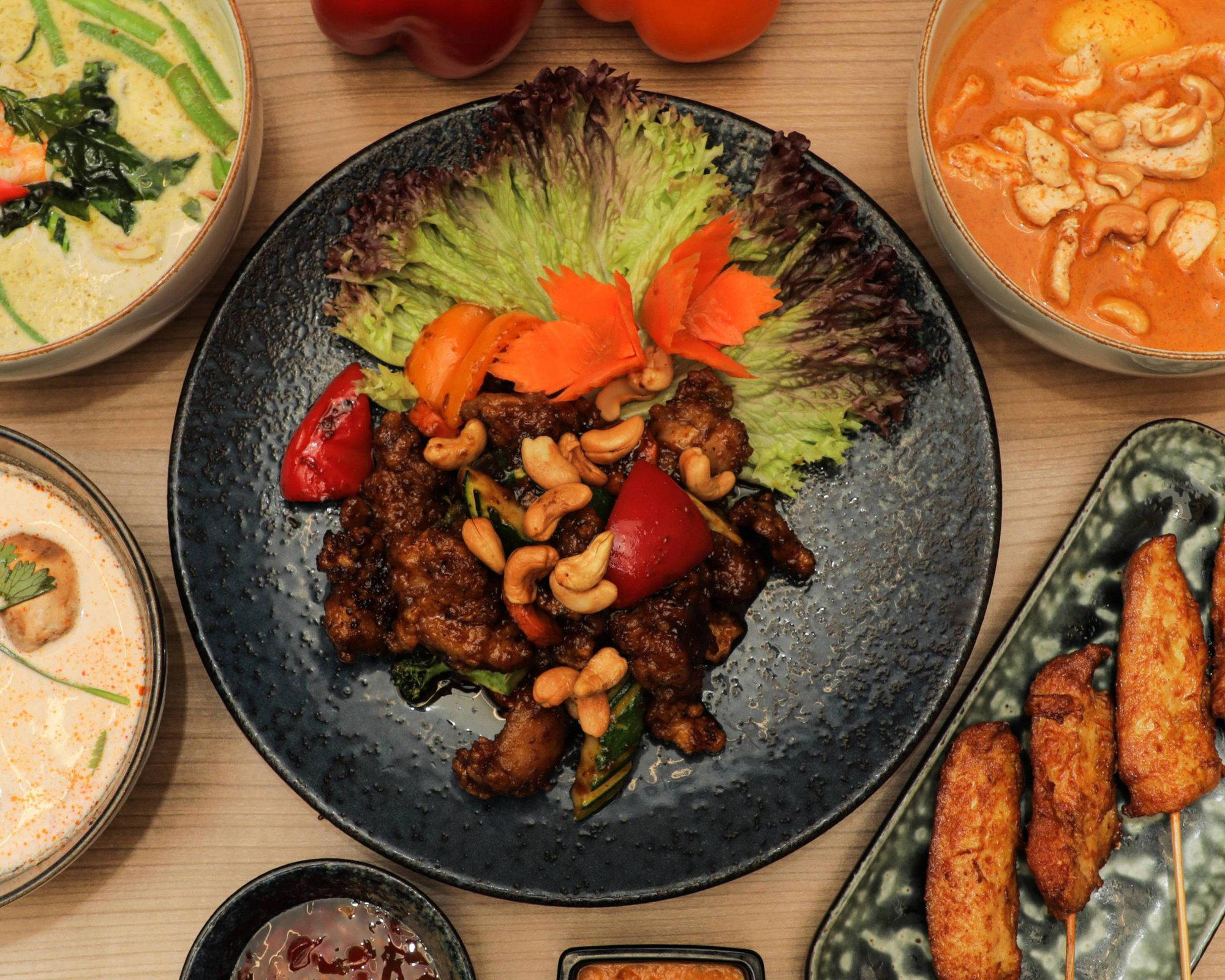
Thai Cooking in the Hofkwartier: What the Address Tells You
Noordeinde is not a restaurant street in the conventional sense. It runs from the centre of Den Haag toward the working royal palace, lined mostly with antique dealers, art galleries, and the kind of independent retailers that have survived because their neighbourhood clientele is consistent and loyal. A Thai restaurant at number 13 positions Niyom Thai inside one of the city's most considered dining corridors, where the surrounding competition tends toward the formal end of Dutch and European cooking, and where a Southeast Asian kitchen has to earn its place on different terms.
Den Haag's relationship with Southeast Asian food is longer and more layered than most Western European cities can claim. The Netherlands' colonial history with Indonesia created among the more extensive Indonesian food cultures outside Southeast Asia itself, and that familiarity with the region's broader pantry, with galangal, lemongrass, tamarind, shrimp paste, coconut, shaped a local palate that does not treat these flavours as exotic or marginal. Thai food here lands in a city that already knows how to eat across Southeast Asia's register, which raises the bar considerably. The question is never whether people will accept the cuisine. The question is whether the kitchen is working at a level that matches what the neighbourhood demands.
The Cultural Logic of Thai Cooking in the Netherlands
Thai cuisine is among the more technically demanding in the world to execute at a serious level, and also among the more frequently diluted for mass-market palatability. The distance between a passable pad thai and a properly balanced nam prik, or between a sweetened green curry and one built on fresh paste ground to order, is enormous, and that distance is exactly where restaurant reputations are made or lost. In cities with strong Southeast Asian communities, the benchmarks tend to be set by home-style operations that prioritise authenticity over presentation. In a city like Den Haag, where the dining scene also includes high-end European houses, the Netherlands has produced serious fine-dining credentials at restaurants including De Librije in Zwolle, 't Nonnetje in Harderwijk, and Aan de Poel in Amstelveen, the expectations around technique, sourcing, and service translate across cuisines regardless of their origin.
Thailand's regional cooking is far more varied than the single national canon most Western menus present. The cooking of Chiang Mai diverges sharply from Bangkok street food; southern Thai cuisine, with its heavier use of turmeric and coconut, is a different register again from the aromatic, herb-forward dishes of the northeast. A kitchen that understands these distinctions and reflects them on the menu is working at a different level from one that treats Thai cooking as a single, interchangeable tradition. This is the context in which Niyom Thai sits, in a city where the audience for Southeast Asian food is experienced enough to notice the difference.
Den Haag's Dining Context
Den Haag's restaurant scene occupies an interesting position in the Dutch dining map. It is not Amsterdam, where international attention and tourism drive a restaurant economy that rewards visibility and novelty. Den Haag functions more like a city of regulars: a government and diplomatic capital with a dense professional population that eats out frequently and returns to places that hold their quality over time. This is a good environment for a neighbourhood restaurant to build a real reputation, and a harder one for operations that depend on passing trade.
The city's Southeast Asian dining options include a range of Indonesian restaurants that reflect the Netherlands' particular historical connection to that cuisine, Waroeng Padang Lapek is one reference point for that tradition. Thai cooking sits alongside this as a distinct but related category, and the Hofkwartier location means Niyom Thai is drawing from a different demographic than the city's Indonesian warung circuit. The crossover is the palate: guests who understand how a curry paste should taste, what fresh versus dried herbs do to a dish, and why the balance of sour, salt, sweet, and heat matters beyond personal preference.
Other strong European kitchen references in the Netherlands include Ciel Bleu in Amsterdam, De Bokkedoorns in Overveen, Brut172 in Reijmerstok, De Groene Lantaarn in Staphorst, De Lindehof in Nuenen, De Lindenhof in Giethoorn, De Nieuwe Winkel in Nijmegen, De Treeswijkhoeve in Waalre, FG - François Geurds in Rotterdam, and Inter Scaldes in Kruiningen, all of which define the technical ceiling against which any serious kitchen in the Netherlands is implicitly measured, regardless of cuisine type.
Beyond the Netherlands, the global reference points for serious Thai and Asian cooking at the upper end of the market, operations like Atomix in New York City or technically rigorous European seafood houses like Le Bernardin in New York City, set a standard for what it means to take a non-Western culinary tradition seriously at a fine-dining level. The Den Haag dining scene also has its own plant-forward and contemporary reference in Botanica, which signals that the city's appetite for considered, ingredient-led cooking extends well beyond its European fine-dining heritage.
Budget and Context
Comparable venues nearby, for context on price, style, and recognition.
| Venue | Cuisine | Price | Notes |
|---|---|---|---|
| Niyom ThaiThis venue — the venue you are viewing | Den Haag centrum, Thai | $$ | Not listed |
| Waroeng Padang Lapek | Not listed | $$ | Kortenbos, Traditional Sumatran & Padang Cuisine |
| Botanica | Not listed | $$ | Voorhout, Dutch Seasonal Cuisine with Garden Setting |
| Mekong Deventer | centrum, Authentic Thai | $$ | Not listed |
| thai by Jai | Nieuwestad, Authentic Thai | $$ | Not listed |
| Kalun | Chinatown, Authentic Cantonese Chinese | $$ | Not listed |
Continue exploring
More in The Hague
Restaurants in The Hague
Browse all →
Bars in The Hague
Browse all →
Hotels in The Hague
Browse all →
Wineries in The Hague
Browse all →
At a Glance
- Casual
- Lively
- Casual Hangout
- Solo
- Family
- Standalone
Current opening hours
- Monday
- Closed
- Tuesday
- 1–9 PM
- Wednesday
- 1–9 PM
- Thursday
- 1–9 PM
- Friday
- 1–9 PM
- Saturday
- 1–9 PM
- Sunday
- 1–9 PM
Hours can change for holidays and private events. Last verified .
Casual, welcoming neighborhood Thai delivery and takeaway restaurant with a focus on authentic home-style cooking.