On Boxhagener Strasse in Friedrichshain, Niko Niko Ramen occupies the kind of address that Berlin's casual-dining scene has built its reputation on: neighbourhood-rooted, unassuming from the street, and serious about a single culinary tradition. Ramen in Berlin has moved well beyond the novelty phase, and spots like this one track that maturation at the street level, where craft and consistency matter more than ceremony.
Pearl is the En Primeur Club membership app — saves, bookings, and concierge access live there. Same editors, same standards.
- Address
- Boxhagener Str. 26, 10245 Berlin, Germany
- Phone
- +493084426700
- Website
- nikoniko-ramen.com
- Directions
- Get directions
 Saves & bookings on Pearl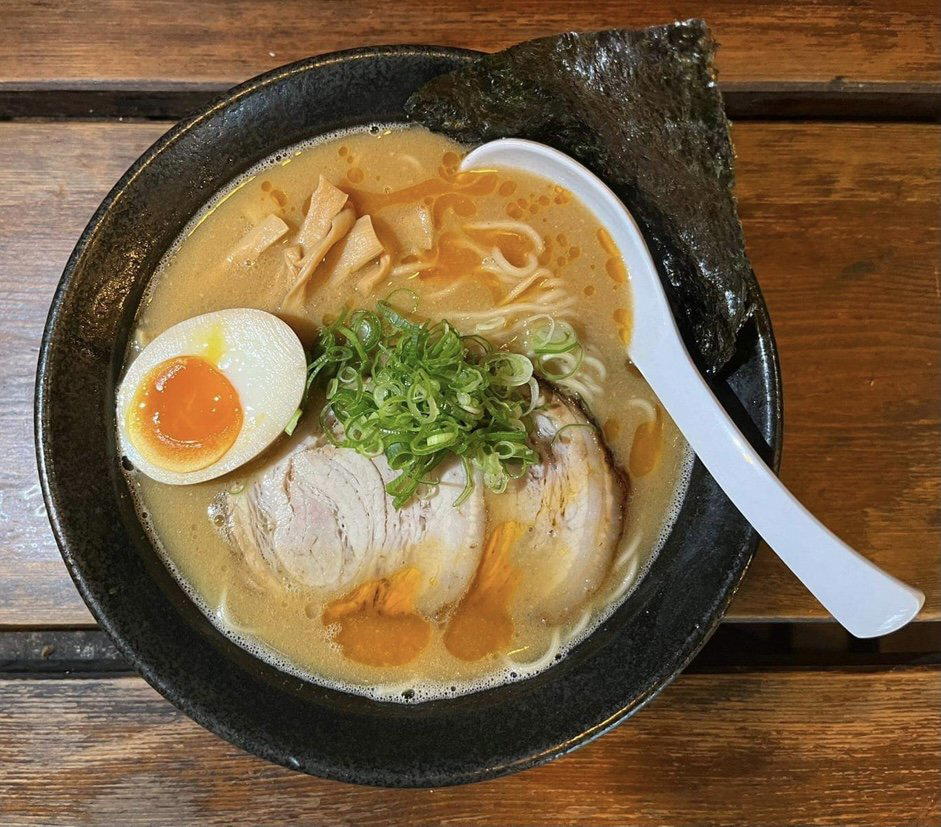
Friedrichshain and the Ramen Shift
Boxhagener Strasse runs through the core of Friedrichshain, one of the districts where Berlin's post-reunification food culture took its earliest and most durable shape. The street's rhythm is decidedly local: independent shops, a weekly flea market at the square, and a density of small restaurants that serve the neighbourhood rather than the tourist circuit. Niko Niko Ramen sits at number 26, within that fabric, and the address tells you something before the food does. This is not the kind of ramen operation that opened to capitalise on a trend. Friedrichshain has been eating seriously for long enough that novelty alone does not sustain a place here.
Ramen's trajectory in German cities mirrors a broader European pattern. What arrived initially as a curiosity, associated with Japanese fast food or student budgets, has since split into distinct tiers. At the accessible end, tonkotsu broths and instant-adjacent formats hold their ground. At the more considered end, smaller operations have pushed toward longer cook times, regional Japanese bowl styles, and sourcing that reflects genuine engagement with the tradition. Berlin is further along this curve than most German cities, partly because its restaurant culture rewards specialisation and partly because the city's Japanese community and diaspora connections have kept standards honest.
What the Format Signals
A ramen counter, even a small one, runs on coordination. The broth is a days-long project; the tare, the fat, and the toppings each require separate attention; the noodles have a narrow window between well-suited and overdone. When a bowl arrives correctly, it reflects a kitchen team that has built reliable internal processes, not just a single talented cook. At Niko Niko Ramen on Boxhagener Strasse, the format itself, ramen-focused, neighbourhood-pitched, implies a front-of-house operation that keeps pace with that kitchen tempo. Speed and warmth are not opposites in a good ramen shop; they are the same thing expressed differently.
Berlin's mid-tier dining scene, the space between casual kebab stands and the Michelin-tracked rooms like Rutz, Nobelhart & Schmutzig, and FACIL, has grown more interesting over the past decade precisely because formats like ramen created a middle ground: specialist enough to reward attention, accessible enough to sustain repeat visits. CODA Dessert Dining occupies a comparably specialist niche in the dessert format, just at a higher price point. Niko Niko Ramen operates closer to the street-level end of that specialist spectrum.
Ramen as a Collaborative Craft
The leading ramen operations, whether in Tokyo's Shinjuku, Sydney's Surry Hills, or Berlin's Friedrichshain, share a structural characteristic: the bowl is assembled by committee. The broth cook, the noodle maker or noodle buyer, the person managing toppings, and the front-of-house who delivers the bowl at the right temperature within the right window all carry equal weight. A technically correct broth is undone by a noodle sitting ten seconds too long, or a bowl that cools on the pass. This is why the team dynamic, how the kitchen and floor operate as a unit, matters more in ramen than in many other formats. You can mask a slow kitchen in a tasting menu restaurant with pacing. In a ramen shop, the product either arrives correctly or it does not.
Germany has a handful of ramen addresses that have built real followings. Beyond Berlin, cities like Munich and Hamburg have developed their own small cohorts of serious operations. For comparison across German dining formats and regions, EP Club covers JAN in Munich, Restaurant Haerlin in Hamburg, and destinations further afield like Aqua in Wolfsburg and Schwarzwaldstube in Baiersbronn. Those are different price tiers and formats entirely, but they map the range of what serious eating in Germany looks like beyond Berlin's own concentrated scene.
The Neighbourhood as Context
Friedrichshain's dining character has stayed more local-facing than Mitte or Prenzlauer Berg, which have absorbed more tourism infrastructure over the same period. The Boxhagener Platz area in particular retains a residentially grounded quality. Restaurants here succeed by building a regular clientele, not by capturing foot traffic from nearby hotels. That dynamic tends to produce more honest cooking: the kitchen is cooking for people who will return next week and remember what the bowl tasted like last time.
The Saturday flea market at Boxhagener Platz draws a significant local crowd and makes the neighbourhood worth a longer visit rather than a dedicated trip from across the city. Pairing a ramen meal with an afternoon at the market is the kind of low-key itinerary that Friedrichshain rewards.
Cuisine Context
Comparable venues nearby, for context on price, style, and recognition.
| Venue | Cuisine | Price | Notes |
|---|---|---|---|
| Niko Niko RamenThis venue — the venue you are viewing | Authentic Japanese Ramen | $$ | Not listed |
| Sasaya | Traditional Japanese Sushi | $$ | Prenzlauer Berg |
| DASHI | Asian Diner Fusion | $$ | Mitte |
| MIYO Sushi Experience | Modern Japanese Sushi | $$$ | Charlottenburg |
| XXX Ramen | Japanese Ramen | $$ | Charlottenburg |
| KUCHI Mitte | Japanese Asian Fusion Sushi | $$ | Mitte |
Continue exploring
More in Berlin
Restaurants in Berlin
Browse all →
Bars in Berlin
Browse all →
Hotels in Berlin
Browse all →
Wineries in Berlin
Browse all →
At a Glance
- Cozy
- Trendy
- Casual Hangout
- Late Night
- Open Kitchen
- Sake Program
Current opening hours
- Monday
- 3–10 PM
- Tuesday
- 12–10 PM
- Wednesday
- 12–10 PM
- Thursday
- 12–10 PM
- Friday
- 12–10 PM
- Saturday
- 12–10 PM
- Sunday
- 12–10 PM
Hours can change for holidays and private events. Last verified .
Cozy Japanese ramen shop with counter seating, open kitchen views, and inviting aromas of simmering broths.