
Tabelog 100 #59
Our verdict
Nara Seimen places a compact Yoyogi noodle counter inside Tokyo’s serious udon conversation: an 8-seat room, a JPY 1,000–1,999 budget, and selection for Tabelog 100 Udon EAST in 2022 and 2024. Its interest lies in menu architecture rather than ceremony, with udon, ramen, sake, and wine arranged for a quick but closely judged meal near Shinjuku’s commuter edge.

Pearl is the En Primeur Club membership app, where members save venues, book tables and use the concierge.
The menu
What to order
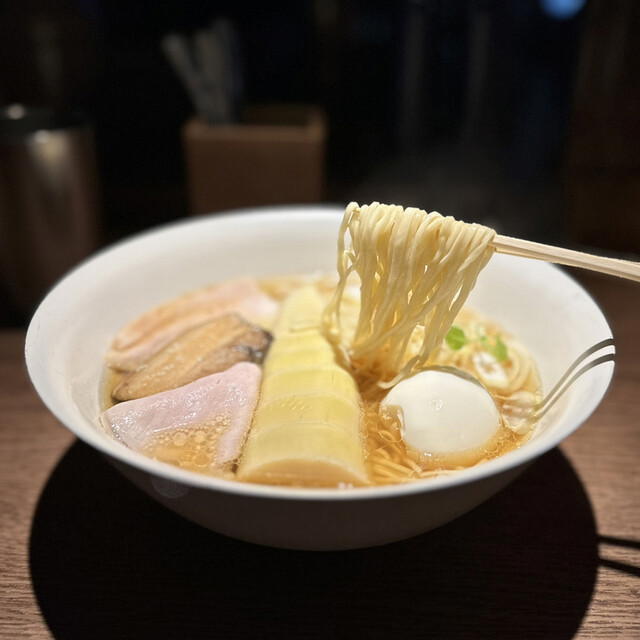
- Shio ramen with house-made wheat noodles
- Chicken shiratsuyu ramen
- Special shoyu (soy sauce) ramen
Tokyo’s noodle culture is not built only around grand entrances. Across the city, the scene often shifts from station traffic to everyday dining streets, and the restaurants that matter can announce themselves through pace, focus, and a clear reason to sit down for a bowl. Nara Seimen belongs to that Tokyo category: a noodle-focused shop where the format keeps attention on the meal rather than design theatre. The emphasis is on category, value, and the way a concise noodle stop can carry more intent than a more elaborate restaurant plan.
The location is Tokyo, which makes it easy to fold into a broader city dining day without forcing the meal into luxury codes or destination-restaurant ceremony. That distinction matters. Tokyo’s noodle map is often read through ramen queues and late-night bowls, yet the listed categories here include udon, ramen, and noodles, giving the shop a broader noodle identity. A serious noodle meal does not need luxury signals to be worth studying. It needs a clear structure and enough discipline for small choices to read clearly.
A noodle shop built around wheat, broth, and menu discipline
The menu architecture is the point here. The public category set lists udon, ramen, and noodles, which places the shop in a more elastic bracket than single-style noodle specialists. That breadth can be a warning sign in less focused rooms, but in Tokyo’s everyday noodle culture, it can also indicate a practical intelligence: a noodle shop working within a narrow price band while allowing different noodle formats to carry the same house logic. At JPY 1,000–1,999 for lunch and dinner, the value proposition sits closer to everyday craft than occasion dining.
Recognition through Tabelog Hyakumeiten in 2024 gives the shop its clearest public credential. In Japan, Tabelog’s Hyakumeiten lists function less like luxury awards than category maps, identifying venues with enough consensus inside a specific food tradition to merit attention. For noodle shops, that matters because the category can be intensely technical: chew, broth restraint, seasoning, and contemporary hybrids can all compete under broad public labels. Nara Seimen’s recognition places it within that judged field rather than merely among casual noodle shops in Tokyo.
The listed categories are also telling. Udon counters are often read as fast, functional meals, but a shop that appears across udon, ramen, and noodles suggests the meal can be approached with more than one expectation. That does not turn the room into a tasting-menu restaurant. It simply changes the reader’s expectation: this is a noodle stop where the public listing supports a deliberate lunch, an early dinner, or a low-key meal built around wheat noodles rather than sushi-counter ceremony.
Why Tokyo changes the reading of a noodle meal
Location affects how a restaurant should be judged. In some Tokyo dining rooms, the experience may be read through price escalation and reservation scarcity. Elsewhere, the benchmark is convenience, everyday density, and repeatable value. Nara Seimen sits within those city pressures. Tokyo has enough office and residential traffic to support regulars, enough transit access to pull destination diners, and enough range to reward places with a narrower point of view.
That is where Nara Seimen’s format becomes useful rather than merely casual. A noodle-focused meal creates a different social contract from a large dining room: the experience is direct, the spend is modest, and the meal’s success depends on clarity rather than spectacle. The everyday lens remains the most useful way to understand the experience. For visitors trying to understand Tokyo beyond omakase and high-rise hotel dining, this is the type of format that explains how much precision the city expects from inexpensive food.
The comparison set around Tokyo underlines the point. A meal at KINO_ belongs to a different financial and experiential bracket, while moonbow occupies the same JPY 1,000–1,999 budget band, which shows how much variation Tokyo compresses into modest pricing. Noodle shops and other casual dining formats can share a spend level while asking for completely different expectations from the diner.
For restaurant context, start with Our full Tokyo restaurants guide. Nearby category-hopping can be approached through other Tokyo dining rooms without assuming they belong to the same mood, price logic, or meal structure. For cross-city perspective on Japan’s casual dining range, compare unnamed casual restaurants in other Japanese cities and consider how noodle shops, curry counters, cafés, and casual izakaya formats can share informality while delivering very different experiences. Travellers building a fuller itinerary can layer in broader Tokyo hotel, bar, winery, and experience planning; outside Japan, Japanese casual formats also translate into many different international versions.
Know Before You Go
- Format: Noodle-focused shop with udon, ramen, and noodle categories listed.
- Recognition: Listed through Tabelog Hyakumeiten in 2024.
- Budget: JPY 1,000–1,999 at lunch and dinner.
- Seating: Treat the format as a casual Tokyo noodle meal; check current details before visiting.
- Access: Located in Tokyo.
- Payment: Plan practically for a casual Tokyo noodle meal, and check current payment details before visiting.
- Useful detail: The listed score is 3.65, useful context for readers comparing Tokyo noodle options within the same price band.
Frequently asked questions
What price level is Nara Seimen?
Pricing at Nara Seimen is listed as JPY 1,000 - JPY 1,999 JPY 1,000 - JPY 1,999.
Where do I go for Nara Seimen?
Tokyo.
What days is Nara Seimen closed?
Current opening days and hours are not provided here; check directly before visiting.
What's the standout thing about Nara Seimen?
The defining detail is its Tokyo noodle-shop focus: udon, ramen, and noodles are listed as categories, with JPY 1,000–1,999 pricing and Tabelog Hyakumeiten recognition in 2024.
Cuisine and Credentials
Comparable venues to place this listing in its category.
| Venue | Cuisine | Price | Awards | Notes |
|---|---|---|---|---|
| Nara SeimenThis venue (the venue you are viewing) | Modern Japanese ramen / udon noodle shop | $10–20 | Tabelog 100 #59 | Not listed |
| Re:s Cafe Bar & Sweets | Japanese Dessert Cafe | $20–30 | Not listed | Nishi Waseda |
| 鮨・四季創作 心陽 (こはる) | Fresh Sushi & Seafood Bowls | $10–20 | Not listed | Harajuku / Kita-Sando |
| Gandhi | Japanese-style European curry house | $10–20 | Tabelog 100 #80 | Shinjuku |
| Tsunahashi Shinjuku | Traditional Japanese Tempura | $20–30 | Not listed | Shinjuku |
| Satei Zenkashoin Shibuya hikarie ShinQs ten | Kyoto-style Japanese Tea Cafe | $10–20 | Tabelog 100 #36 | Shibuya |
Recognition history
Dated appearances from independent guides and award organizations, with the underlying list record or original source where available.
Tabelog 100 #59 · No. 59
Tabelog · Tabelog 100 - Udon - EAST - 2024
Continue exploring
More in Tokyo
Restaurants in Tokyo
All restaurants in Tokyo →




Bars in Tokyo
All bars in Tokyo →







Details
- Cozy
- Modern
- Intimate
- Solo
- Casual Hangout
- After Work
- Date Night
- Chefs Counter
- Standalone
- Design Destination
- Beer Program
- A La Carte
- Counter Dining
- Beer
- Soft Drinks
Current opening hours
- Monday
- 11 AM–9 PM
- Tuesday
- 11 AM–9 PM
- Wednesday
- 11 AM–9 PM
- Thursday
- 11 AM–9 PM
- Friday
- 11 AM–9 PM
- Saturday
- 11 AM–9 PM
- Sunday
- 11 AM–10 PM
Hours can change for holidays and private events. Hours as of .
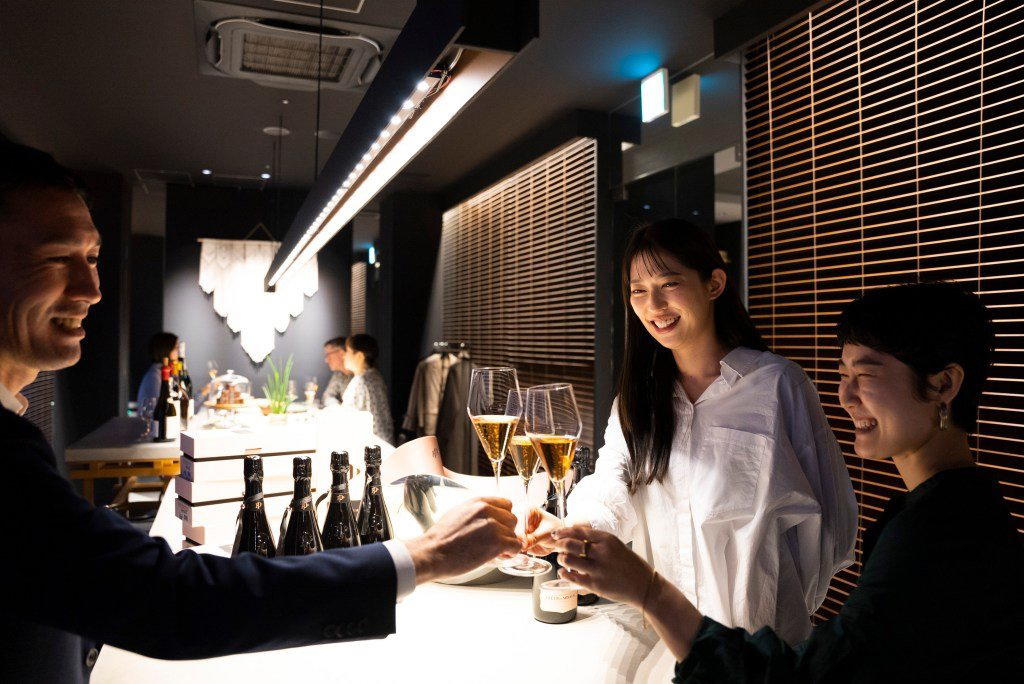
A small, counter-focused space with a minimalist, elegant feel often described as a refined ramen shack: calm, clean, quietly stylish, and well-suited to solo or couple dining rather than large groups.