Our verdict
Nand Di Hatti is a name that circulates persistently among those who track Delhi's older, neighbourhood-rooted eating culture. Positioned outside the hotel dining circuit that defines much of the capital's premium conversation, it represents the kind of address where local loyalty and culinary specificity do more work than awards or press coverage. A useful counterpoint to Delhi's formal restaurant tier.

Pearl is the En Primeur Club membership app — saves, bookings, and concierge access live there. Same editors, same standards.
- Address
- New Delhi, India
- Hours
- Mon–Sat 10:30 AM–5 PMSun Closed
- Directions
- Get directions
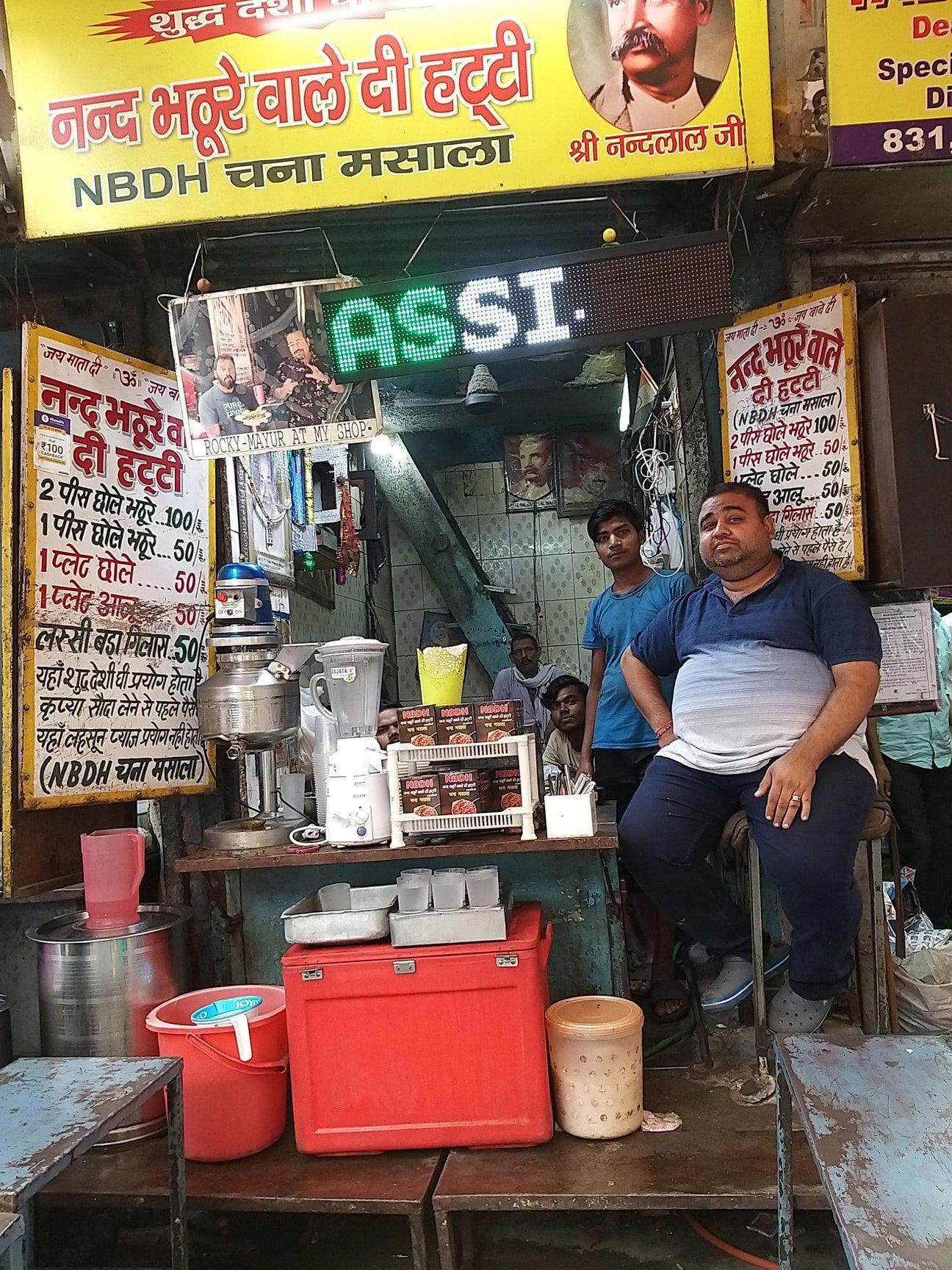
The menu
What to order
- Desi Ghee Ke Chole Bhature
Old Delhi's Gravitational Pull on the Serious Eater
Delhi's dining conversation tends to organise itself around two poles. At one end sit the grand hotel restaurants — Bukhara, Dum Pukht, Indian Accent — with their tasting menus, wine lists, and international press coverage. At the other end sit the neighbourhood institutions, the hattis and dhabas and century-old stalls, where the food is often more technically specific, more historically grounded, and far less documented. Nand Di Hatti belongs to the second category. It is the kind of address that does not require a reservation system or a social media presence to maintain a queue, because the neighbourhood already knows where it is.
This split matters for any visitor trying to understand how Delhi actually eats, as opposed to how Delhi presents itself to outsiders. The hotel-restaurant tier, from Inja to AQUA, offers controlled environments, English-language menus, and format legibility. The older neighbourhood tier offers something different: food shaped by decades of local demand, priced for repeat daily visits, and carrying a specificity of technique that formal restaurants often reference but rarely replicate at the same cost-to-quality ratio.
What a Hatti Means in the Delhi Food Structure
The word hatti in North Indian usage historically referred to a small shop or stall, often specialising in a single category of food or goods. In Delhi's eating culture, particularly in the older Chandni Chowk and surrounding areas, a hatti that has survived across generations tends to carry the weight of that specialisation. It is not a restaurant in the contemporary sense: there is no menu designed for variety, no kitchen trying to satisfy a broad demographic. The hatti exists to do one or a few things with accumulated precision.
This model contrasts sharply with what Indian restaurant culture has produced elsewhere in the country. Farmlore in Bangalore represents one extreme of the contemporary Indian dining conversation, ingredient-forward, chef-driven, internationally legible. Americano in Mumbai sits in an entirely different register, western-inflected and urban-contemporary. Nand Di Hatti operates outside both of those frameworks. Its authority comes not from a chef's biography or a concept document, but from repetition, neighbourhood trust, and the kind of institutional memory that accumulates in a single location over time.
The Neighbourhood as the Dining Room
Where a restaurant sits in Delhi shapes what kind of experience it delivers, and Old Delhi in particular produces a sensory context that no interior design budget can replicate. Arriving at an address in this part of the city means navigating lanes that narrow faster than expected, past wholesale spice markets and silver merchants and tea stalls that have operated in roughly the same spot for longer than most formal restaurants have existed anywhere in the world. The eating, when you reach it, arrives pre-contextualised by the journey.
This neighbourhood framing is relevant to how Nand Di Hatti should be approached logistically. Walking, or arriving by rickshaw, is standard. The area's street-level density means that the physical experience of reaching the venue is part of the visit in a way that is simply not true of, say, a hotel restaurant with a designated car entrance. Visitors accustomed to the latter category, including those familiar with ITC Maurya's address or the five-star corridor along Sardar Patel Marg, will find Old Delhi eating to be a substantively different exercise in orientation and patience.
For those travelling from elsewhere in India, the regional comparison is instructive. Beera Chicken House in Amritsar operates on a similar logic of neighbourhood institution, single-category authority, and local-trust credibility. Esphahan in Agra represents a more formal, hotel-anchored interpretation of Mughal-heritage cuisine. Nand Di Hatti sits closer to the Beera model in terms of format and social positioning, while drawing on a culinary tradition that is distinctly Dilli in character.
Planning a Visit: What the Absence of Information Tells You
The practical details that normally anchor a dining guide, address, hours, booking method, price range, are not publicly catalogued for Nand Di Hatti in any consolidated way. This is itself a data point. The result is that planning a visit requires the kind of on-the-ground inquiry that formal restaurant visits do not.
The most reliable approach is to arrive in the Old Delhi area with time flexibility. Queues at hattis of this reputation tend to operate on a first-come basis, and peak hours, typically mid-morning for breakfast-category formats, or around lunch, concentrate demand in ways that a two-hour window may not accommodate. Visitors arriving with a tight schedule and an expectation of the booking confirmations that places like Naar in Kasauli or 5868 Restaurant in Gandhinagar provide will need to recalibrate.
Cost, based on the general pricing structure of Old Delhi's neighbourhood eating, is low by any comparative standard, significantly below what hotel restaurants charge for dishes that trace the same culinary lineage. This makes Nand Di Hatti relevant not just as a cultural visit but as a value argument: the food tradition that Bukhara charges premium prices to present in a controlled environment can often be traced back to street-level and neighbourhood sources where the pricing reflects daily-visitor economics rather than hospitality overhead.
For a broader map of where Nand Di Hatti sits within the capital's eating options, our full New Delhi restaurants guide covers the range from hotel fine dining to neighbourhood institutions across multiple categories and price points.
How It Compares Internationally
The category Nand Di Hatti occupies has rough equivalents in other food cities, the kind of address that serious visiting eaters prioritise precisely because it is not set up to receive them. In New York, the distinction between, say, Le Bernardin and a neighbourhood institution in Flushing or Jackson Heights maps onto a similar split between formal legibility and embedded local authority. Atomix represents the chef-driven, internationally-oriented end of that city's Korean dining conversation; the neighbourhood pojangmacha or the decades-old tofu house represents the other. Nand Di Hatti is Delhi's version of the latter category.
This framing is useful because it clarifies what kind of eating experience is on offer. The value is not in controlled comfort or format sophistication. It is in access to a food tradition practised at close to its original social and economic register, in the neighbourhood that produced it, without the mediation of a tasting-menu format or a hotel dining room. For the reader who has already worked through Delhi's formal tier, and for whom Leela Kerala Terrace in Trivandrum or WelcomCafe Oceanic Restaurant in Visakhapatnam represent familiar reference points, Nand Di Hatti offers a different axis entirely.
Frequently asked questions
What makes Nand Di Hatti different from other Old Delhi street food stops?
The name itself carries generational weight in a food city where the most serious eating often happens at addresses without websites, phone numbers, or listed hours — details absent from Nand Di Hatti's public record. In Old Delhi's dense food corridor, that kind of operating posture typically signals a long-established local clientele that has never required outside attention to sustain demand. The distinction, compared to newer or more publicised New Delhi food stops, is precisely that continuity.
What dish is Nand Di Hatti famous for?
Nand Di Hatti operates in the hatti tradition, meaning it has built its reputation around a focused, narrow menu rather than a broad spread. The specific signature dish is not catalogued in public dining databases, which itself signals something: addresses like this in Old Delhi are discovered through local networks, not press releases. Ask in the immediate neighbourhood — vendors within a two-stall radius will tell you exactly what to order.
How far ahead should I plan for Nand Di Hatti?
Old Delhi hatties do not operate reservation systems — the queue, if there is one, forms in real time. Planning here means logistics: Old Delhi's lanes are best approached on foot, auto-rickshaw access is limited in the older galis, and peak hours around lunch can compress the area considerably. Build a morning or early-lunch window into your Delhi itinerary rather than attempting an evening visit on a tight schedule.
What's the defining dish or idea at Nand Di Hatti?
The defining idea is specialisation itself. In a food city where hotel restaurants compete on range and hotel kitchens on scale, Old Delhi hatties like Nand Di Hatti hold their position by doing one thing repeatedly and without variation across years. That consistency is the credential — not a menu refresh or a seasonal concept, but accumulated repetition of a single preparation.
Can Nand Di Hatti handle vegetarian requests?
Old Delhi's hatti culture is historically well-suited to vegetarian eating — many of the oldest specialist stalls in this part of New Delhi built their entire offering around dairy, legumes, or grain-based preparations. Confirm on arrival.
Is Nand Di Hatti good value for money?
Old Delhi hatti pricing is structured around volume throughput and low overhead, not margin-per-cover. Addresses in this category across New Delhi consistently deliver portions at a fraction of what comparable flavour intensity costs in south or central Delhi's sit-down restaurants. No specific price data is catalogued for Nand Di Hatti, but the hatti format in this city has never been an expensive proposition.
The Essentials
Comparable venues nearby, for context on price, style, and recognition.
| Venue | Cuisine | Price | Notes |
|---|---|---|---|
| Nand Di HattiThis venue — the venue you are viewing | Classic Punjabi Chole Bhature | $1–10 | Not listed |
| Daryaganj | North Indian Heritage Cuisine | $10–20 | Connaught Place, North Indian Heritage Cuisine |
| Copper Chimney, North Indian Restaurant in Rajouri Garden- New Delhi | North Indian | $10–20 | Rajouri Garden, North Indian |
| Kake Di Hatti | Authentic North Indian Vegetarian | $1–10 | Chandni Chowk, Authentic North Indian Vegetarian |
| Common Time | Contemporary Coffee & Bakery Café | $10–20 | Lodhi Colony, Contemporary Coffee & Bakery Café |
| Omya | Modern Indian Fine Dining | $100–150 | Lodhi Road, Modern Indian Fine Dining |
Continue exploring
More in New Delhi
Restaurants in New Delhi
Browse all →


Details
- Lively
- Well Known
- Casual Hangout
- Family
- Historic Building
- A La Carte
- Vegetarian Friendly
Current opening hours
- Monday
- 10:30 AM–5 PM
- Tuesday
- 10:30 AM–5 PM
- Wednesday
- 10:30 AM–5 PM
- Thursday
- 10:30 AM–5 PM
- Friday
- 10:30 AM–5 PM
- Saturday
- 10:30 AM–5 PM
- Sunday
- Closed
Hours can change for holidays and private events. Last verified .
Bustling street food stall in crowded Sadar Bazaar market with minimal seating on benches under shade and lively atmosphere.